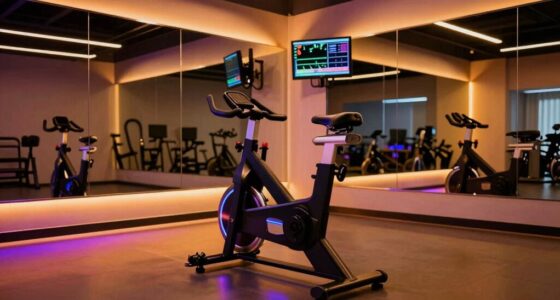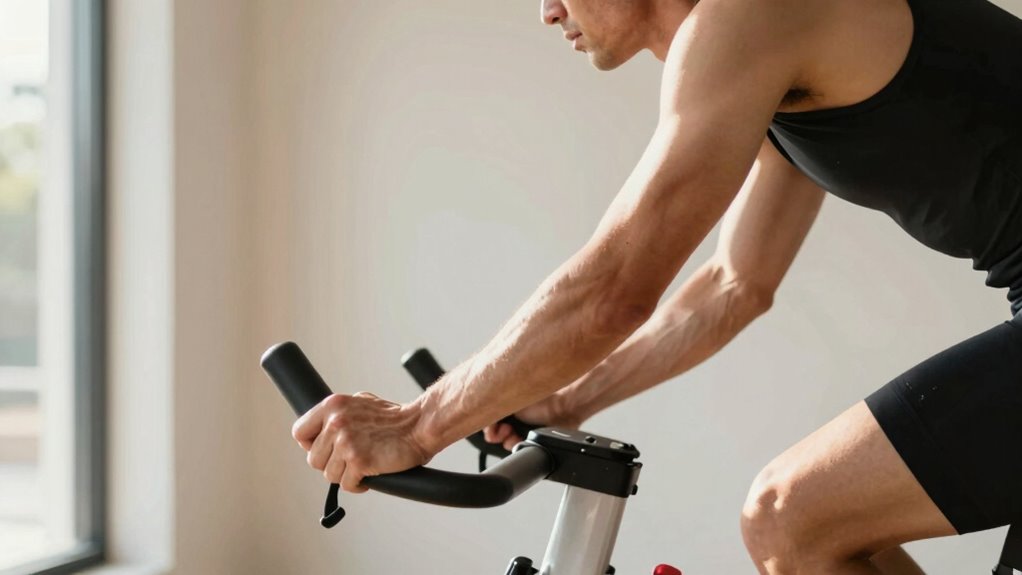

To relieve indoor cycling neck pain, start with an ergonomic bike setup: adjust your saddle to keep hips level and raise your handlebars to keep your head in a natural, relaxed position. Focus on engaging your core muscles to support proper posture and avoid craning your neck. Relax your shoulders and maintain a neutral head alignment throughout your ride. Implementing these simple posture resets can make a world of difference—and more tips to keep your neck pain-free await below.

Get workout gear delivered free with Prime
- Fast, free delivery on millions of items
- Prime Video, Amazon Music and more included
- Member-only deals all year
Key Takeaways
- Adjust handlebar height to a more upright position, reducing neck extension and strain during rides.
- Ensure saddle height and position support proper hip alignment for better overall posture.
- Engage your core muscles to stabilize your upper body and maintain a neutral head and neck alignment.
- Keep shoulders relaxed and avoid tensing upper muscles to prevent neck discomfort.
- Incorporate regular stretching of the neck and upper back to relieve tension and promote flexibility.
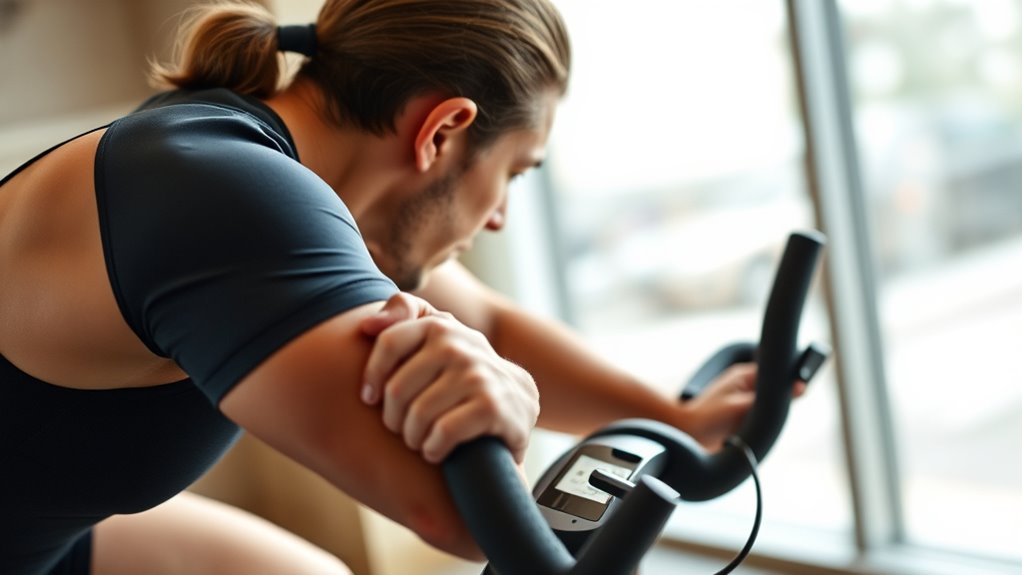
Indoor cycling is a popular way to stay fit, but many riders experience neck pain during or after their sessions. If you find yourself in this situation, it’s essential to look at your posture and how you’re engaging with your bike. One of the first steps is making ergonomic adjustments to your setup. Your saddle height, handlebar position, and overall bike fit play a pivotal role in preventing unnecessary strain. For instance, if your handlebars are too low, you’ll tend to crane your neck upward, which can quickly lead to discomfort. Raising the handlebars slightly or adjusting the saddle height so that your hips are level can help you maintain a more natural and relaxed head position. These small changes can markedly reduce tension in your neck muscles during rides.
Beyond bike adjustments, focusing on core stabilization is essential. Your core muscles support your entire upper body and help maintain proper alignment throughout your workout. When your core is weak or disengaged, your neck and shoulders overcompensate to hold your head up, leading to fatigue and pain. Incorporating exercises that strengthen your core—like planks, bridges, or abdominal work—can make a noticeable difference. As your core becomes more stable, you’ll find it easier to keep your head and neck in a neutral position, even during longer, more intense sessions. This not only alleviates neck pain but also enhances your overall riding efficiency and endurance. Additionally, understanding ergonomic bike setup and how it influences posture can further prevent discomfort and improve your riding experience.
It’s also helpful to pay attention to your riding technique. Keep your shoulders relaxed and avoid shrugging or tensing up. Your neck should stay in line with your spine, not jut forward or tilt excessively. Regularly check in with your body during rides—if you notice tension building, take a moment to reset your posture. Stretching your neck and upper back after workouts can also help relieve tightness that might have developed.
Frequently Asked Questions
Can Specific Stretches Reduce Indoor Cycling Neck Pain?
Yes, specific neck stretches and posture exercises can reduce indoor cycling neck pain. Incorporate gentle neck stretches like tilting your head side to side and rotating your neck to ease tension. Additionally, focus on posture exercises that strengthen your upper back and neck muscles, helping you maintain proper alignment during rides. Consistently practicing these stretches and exercises can improve your posture and alleviate discomfort, making your cycling sessions more comfortable.
What Are Common Mistakes Causing Neck Pain During Indoor Cycling?
You often cause neck pain by poor bike setup and riding technique. If your handlebars are too high or too low, it strains your neck as you stretch or hunch forward. Additionally, poor posture, such as craning your neck or looking down excessively, worsens discomfort. Make sure your bike is properly adjusted, keep your head aligned with your spine, and relax your shoulders. These adjustments can considerably reduce your neck pain during indoor cycling.
How Long Does It Take to See Improvement After Posture Adjustments?
Like planting a seed and watching it sprout, your posture awareness and incremental progress shape your recovery. Usually, you’ll notice improvements within a few weeks, but it can take up to a month or more to fully see the difference. Stay consistent, listen to your body, and celebrate small victories. With patience and dedication, your neck pain will gradually diminish as your new posture becomes second nature.
Are There Recommended Ergonomic Accessories for Indoor Cycling?
Yes, there are recommended ergonomic gear and bike accessories that can help reduce neck pain. Consider investing in padded handlebar grips, ergonomic saddle seats, and adjustable bike stems to better align your posture. Using bike accessories like handlebar extenders or cushioned grips can also provide extra comfort. These ergonomic gear options help you maintain proper positioning, preventing strain and making your indoor cycling sessions more comfortable and enjoyable.
Should I See a Doctor for Persistent Indoor Cycling Neck Pain?
Yes, you should see a doctor for persistent indoor cycling neck pain. A medical consultation can help determine if an injury assessment reveals underlying issues like muscle strain or nerve problems. Don’t ignore ongoing discomfort, as early diagnosis and treatment can prevent further injury. Taking this step guarantees you get proper care and guidance on adjusting your posture or activity levels to avoid future pain.
Conclusion
By resetting your posture, you can steer clear of indoor cycling neck pain like a ship finding smooth waters. Remember, small adjustments can make a big difference—think of it as tuning an instrument to produce perfect harmony. Keep mindful of your alignment, stay flexible, and listen to your body’s signals. With these simple steps, you’ll be riding pain-free, turning your indoor cycling sessions into a smooth, enjoyable journey rather than a rough ride.
Fall Picks
fall essentials
As an affiliate, we earn on qualifying purchases.