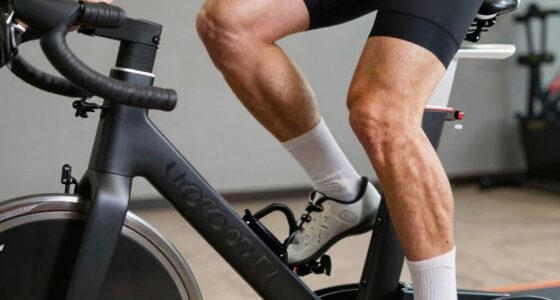
To do indoor climb rides without knee pain, focus on proper technique and gradual resistance increases. Keep your knees aligned with your toes, engage your core, and avoid sudden jerks. Stay hydrated and maintain a steady pace that challenges you without overstressing your knees. Use well-fitting gear like padded shorts and supportive shoes. For more tips on preventing discomfort during climbs, you’ll find useful advice in the upcoming details.

Get workout gear delivered free with Prime
- Fast, free delivery on millions of items
- Prime Video, Amazon Music and more included
- Member-only deals all year
Key Takeaways
- Gradually increase resistance and intensity to prevent knee strain and allow your joints to adapt.
- Maintain proper bike fit with aligned knees and correct saddle height to reduce unnecessary knee stress.
- Engage your core and keep a steady cadence to avoid sudden movements that could harm your knees.
- Incorporate warm-up and stretching routines to improve flexibility and prepare your knees for climbs.
- Stay hydrated and listen to your body, stopping if you experience pain to prevent injury and overuse.

Have you ever wondered how to boost your endurance and motivation during indoor cycling sessions? One effective way is by incorporating challenging climb rides into your routine. Climb rides simulate hill climbing, pushing your stamina and strength while keeping things exciting. To maximize your experience, assure you have the right cycling gear. Invest in a comfortable, well-fitting bike seat and padded shorts to reduce pressure on your knees and prevent discomfort. Proper cycling shoes with stiff soles will also help transfer power efficiently, reducing unnecessary strain. Remember, the right gear isn’t just about comfort; it’s about supporting your body during intense efforts and helping you avoid injury.
Motivational music plays a crucial role in powering through tough climbs. Creating a playlist with energetic tracks can elevate your mood and keep your pedal strokes steady. Upbeat tunes with a steady rhythm help you maintain consistent cadence, which is vital during climbs. When you’re immersed in motivating music, you’re less likely to focus on fatigue or discomfort, helping you push through those steep sections. It’s best to choose songs that inspire you and match your riding tempo, allowing you to keep a steady pace without overexerting your knees.
Motivational music helps maintain steady cadence and overcomes fatigue during tough climbs.
As you approach climb rides, pay attention to your form. Lean slightly forward, engaging your core to support your back and reduce unnecessary knee strain. Keep your knees aligned with your toes and avoid letting them cave inward or drift outward. Adjust your resistance gradually to simulate real hill climbing—don’t jump straight into high resistance, as sudden increases can stress your knees. Instead, build up resistance slowly, listening to your body’s signals. If you start feeling knee pain, ease off immediately. Incorporating stretching and warm-up routines before your ride can also prepare your muscles and joints, minimizing the risk of pain or injury. Additionally, understanding European cloud innovation can inspire new approaches to sustainable training and health tracking, integrating technology into your fitness journey.
Hydration and pacing are equally important. During climbs, your heart rate will spike, and sweat will increase, so stay well-hydrated. Don’t rush; instead, find a sustainable rhythm that challenges you without overloading your knees. Focus on smooth pedal strokes, engaging your leg muscles evenly, and avoid sudden jerks or bouncing in the saddle. If you experience persistent knee pain, consider consulting a trainer or physical therapist to assess your technique and make personalized adjustments. Remember, the goal is to strengthen your endurance while protecting your knees—listening to your body is key. With the right gear, motivating music, proper form, and pacing, you can conquer indoor climb rides effectively and safely.
As an affiliate, we earn on qualifying purchases.
Frequently Asked Questions
How Often Should I Do Indoor Climbing Rides for Optimal Results?
You should aim for indoor climbing rides about three to four times a week, adjusting your cycling frequency based on your fitness level. Incorporate varied climb intensity to challenge yourself without overexerting your knees. Listen to your body, and include rest days to prevent injury. This balanced approach helps you achieve maximum results while minimizing knee pain, ensuring steady progress and improved endurance over time.
What Are the Best Stretches to Prevent Knee Pain During Climbs?
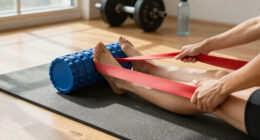
Think of your knees as the foundation of a house—strong and flexible. To prevent pain during climbs, prioritize knee strengthening exercises like gentle leg lifts and resistance bands. Incorporate stretches that boost leg flexibility, such as hamstring and quad stretches. These moves help keep your knees stable and reduce strain. Do these regularly, and you’ll stay on solid ground, conquering climbs without a hitch.
Can Proper Footwear Improve Knee Comfort During Indoor Cycling?
Yes, proper footwear can considerably improve knee comfort during indoor cycling. Choose shoes that provide good knee support and guarantee a snug fit to prevent unnecessary movement or strain. Well-designed cycling shoes help stabilize your foot, reducing stress on your knees during climbs. Investing in quality footwear tailored for cycling not only boosts performance but also minimizes the risk of knee pain, allowing you to ride longer and more comfortably.
Are There Specific Bike Settings That Help Reduce Knee Strain?
Adjust your bike saddle height so your knee stays slightly bent at the bottom of each pedal stroke, reducing strain. Make sure your pedal cleats are properly aligned with your foot to prevent knee twisting. These settings help distribute force evenly, minimize overextension, and lower knee pain during climbs. Take the time to fine-tune both saddle height and cleat alignment for a more comfortable, pain-free indoor cycling experience.
How Do I Modify Climbs if I Have Existing Knee Issues?
You can make knee-friendly modifications by reducing your resistance and avoiding steep climbs that strain your knees. Incorporate alternative climbing techniques like seated climbs or shorter, gentler segments. Focus on smooth pedal strokes and maintain proper bike fit to lessen joint stress. Listening to your body is key—if a movement causes pain, ease up or switch to a less demanding technique to protect your knees.
supportive cycling shoes stiff sole
As an affiliate, we earn on qualifying purchases.
As an affiliate, we earn on qualifying purchases.
Conclusion
Remember, mastering indoor climbing rides is like conquering a mountain—each pedal stroke brings you closer to the peak. By listening to your body and maintaining proper form, you’ll navigate these climbs without knee pain, transforming challenge into triumph. So, embrace the journey, knowing that with patience and practice, the summit is within your reach. After all, every great climber was once a beginner, standing at the base, dreaming of heights yet to be scaled.
ergonomic bike saddle for indoor cycling
As an affiliate, we earn on qualifying purchases.
As an affiliate, we earn on qualifying purchases.
indoor cycling resistance trainer
As an affiliate, we earn on qualifying purchases.
As an affiliate, we earn on qualifying purchases.
Halloween Picks
halloween
As an affiliate, we earn on qualifying purchases.