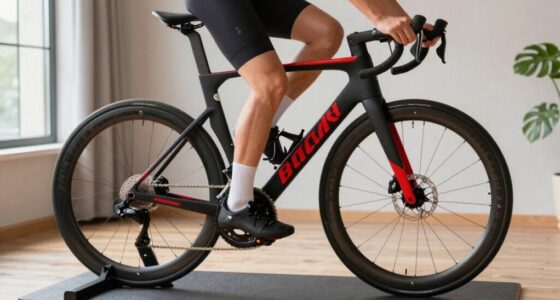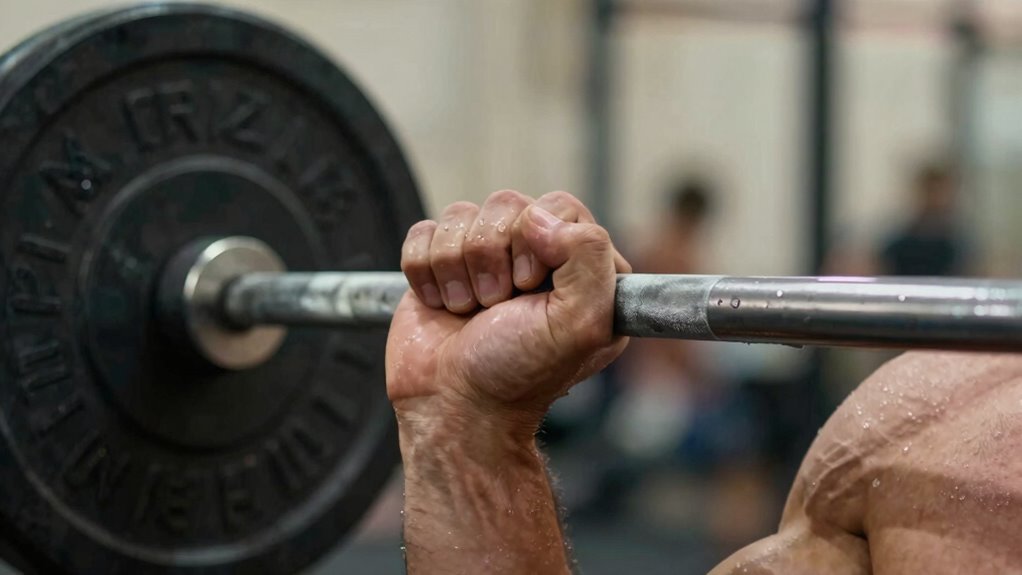

When power numbers aren’t available, focus on your perceived effort to gauge workout intensity. Use a scale from 1 to 10 to monitor how tough each exercise feels, aiming for a 7 or 8 for a challenging but manageable effort. Stay mindful of your body signals—like muscle fatigue and breathing—to adjust intensity on the spot. By tuning into these cues, you can optimize your training without precise metrics. Keep exploring to learn practical tips for sharpening this skill.
Key Takeaways
- Use a 1-10 RPE scale to gauge exercise difficulty and adjust effort accordingly.
- Focus on internal body signals like muscle fatigue, breathing, and stability during each set.
- Maintain mental presence by concentrating on technique and sensations to accurately assess effort.
- Aim for an effort level of 7 or 8 to ensure challenging but sustainable training.
- Regularly practice mindful awareness to refine your perception of effort over time.
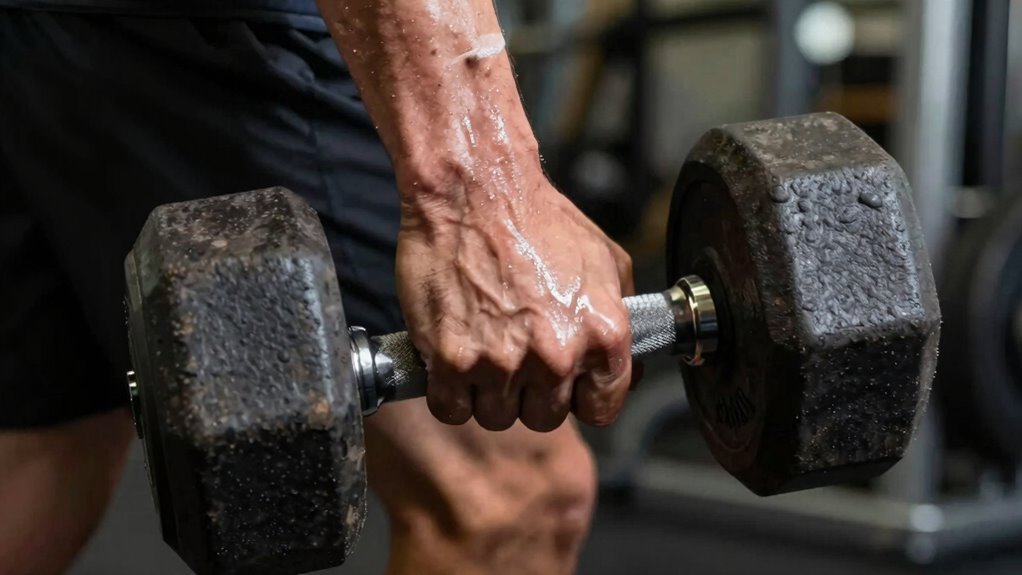
Understanding how to use perceived effort can considerably enhance your training and performance. When power numbers aren’t available, relying on perceived effort becomes essential for maintaining the right intensity and progress. Instead of obsessing over exact measurements, you focus on how hard the exercise feels, which requires a keen sense of technique application and mental focus. This approach helps you stay in tune with your body, ensuring you don’t push too hard or hold back unnecessarily.
Using perceived effort optimizes training by tuning into your body’s signals and maintaining appropriate intensity without relying solely on measurements.
To effectively use perceived effort, you need to develop a clear understanding of effort scales, such as the Rate of Perceived Exertion (RPE). This scale typically ranges from 1 to 10, with 1 being extremely easy and 10 representing maximum effort. When you perform an exercise, you assess how challenging it feels in real-time. For example, if a set feels like a 7 or 8 on the scale, you’re working hard but still able to maintain proper technique and control. If it pushes toward a 9 or 10, you know you’re near your limit. This immediate feedback loop helps you adjust your effort on the fly, ensuring your training remains effective without overexertion.
Mental focus plays a vital role here. By staying mentally present during each set, you hone your awareness of effort and technique application. Instead of mindlessly completing repetitions, you actively monitor how your body responds. Are your muscles burning? Is your breathing labored? Do you feel unstable or shaky? These cues inform your perception of effort. Concentrating on form and breathing keeps you engaged, preventing you from going beyond your limits or undertraining. It’s about cultivating a sharp, mindful connection with your body, which increases the accuracy of your effort assessment. Developing this internal awareness is also supported by understanding perceived effort and how it relates to your overall training strategy. Additionally, aligning your effort perception with internal cues can help optimize your training outcomes. Over time, this mental focus boosts your ability to gauge effort accurately, making your training more personalized and sustainable. Incorporating consistent practice in mindful training can further refine your perception of effort and improve overall results. Recognizing the importance of body awareness can help you make more informed adjustments during your workouts, further enhancing your progress. Moreover, understanding the connection between effort perception and training adaptation can help you tailor your workouts for better long-term gains.

ACKUEAOK RPE Scale – Rate of Perceived Exertion Chart for Workout Intensity Monitoring, Educational Wall-Art for Home Gym and Living Room(Unframed,08x12inch(20x30cm))
- Framing Margin Included: 0.6in white margin for framing
- Durable Canvas Material: Resistant to humidity and environmental damage
- Color Variations Possible: Slight color differences due to monitor settings
As an affiliate, we earn on qualifying purchases.
As an affiliate, we earn on qualifying purchases.
Frequently Asked Questions
How Do I Calibrate Perceived Effort Accurately?
To calibrate perceived effort accurately, focus on consistent subjective exertion. Pay attention to how hard an activity feels across different sessions, and compare it to your previous experiences. Keep track of your perceived effort ratings, like on a scale from 1 to 10, and note patterns. Over time, this helps refine your perceived effort calibration, making your subjective exertion more precise and reliable, even without power numbers.
Can Perceived Effort Replace Actual Power Measurements?
Perceived effort can’t fully replace actual power measurements, but it’s useful when those numbers aren’t available. By paying close attention to your subjective feedback, you learn to gauge intensity accurately. Over time, your sense of perceived effort improves, helping you push hard without overtraining. Use perceived effort as a reliable guide for intensity control, but remember it’s a subjective tool that works best when combined with other cues like fatigue and breathing.
What Cues Indicate High Perceived Effort?
Effort assessment and perceived exertion cues reveal when you’re pushing hard. You notice increased breathing, muscle fatigue, and a struggle to maintain your pace. Your heart rate rises, conversation becomes difficult, and form may begin to break down. These signals indicate high perceived effort. Recognizing these cues helps you gauge intensity without power numbers, ensuring you train effectively while listening to your body’s signals and staying within safe limits.
How Does Perceived Effort Vary Between Individuals?
Effort perception varies widely between individuals due to differences in fitness, experience, and mental state. What feels challenging for one person might be manageable for another, reflecting individual differences in effort perception. You should pay attention to your own cues, like breathing and muscle fatigue, rather than comparing yourself to others. Recognizing these variations helps you tailor your workout intensity, ensuring you push yourself safely while respecting your unique effort perception.
Is Perceived Effort Reliable for Long-Term Training?
Perceived effort can be reliable for long-term training if you stay consistent and monitor your progress. It helps you adapt workouts based on how you feel, especially when power numbers aren’t available. To keep motivated, use motivation strategies like setting small goals and tracking improvements. Training consistency is key, so trust your perception, but also listen to your body to avoid overtraining and guarantee steady progress over time.
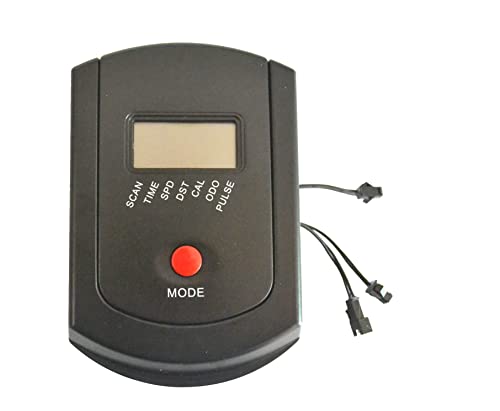
Digital Exercise Bike Monitor Console, LCD Display with Speedometer and Heart Rate Tracking, JST Connector
- Estimate Speed and Distance: Based on pedal cadence, not precise measurements
- Compatibility with JST Port Bikes: Suitable for most stationary bikes with JST connectors
- Multiple Connection Ports: Includes 3x 2-pin connections for speed and pulse tracking
As an affiliate, we earn on qualifying purchases.
As an affiliate, we earn on qualifying purchases.
Conclusion
Think of perceived effort like steering a ship without a GPS—you rely on your instincts and feel to stay on course. When power numbers aren’t available, listen to your body’s signals, adjust your effort, and trust your judgment. With practice, you’ll develop a keen sense of how hard you’re working, keeping your progress steady and safe. Remember, just like piloting rough waters, mastering perceived effort keeps you moving forward, even when the numbers aren’t clear.

Breathing Exercise Device – Visual Airflow Trainer for Lung Fitness, Mindful Breathing, Relaxation, Focus, and Wellness Practice to Improve Airflow Awareness & Breathing Strength
- Deep Breathing Practice: Supports steady, controlled breathing
- Guided Visual Feedback: Visual airflow guides breathing rhythm
- Build Better Breathing Habits: Strengthens muscles and enhances endurance
As an affiliate, we earn on qualifying purchases.
As an affiliate, we earn on qualifying purchases.

HUIESON Snooker Pool Cue Tip, 2024 New Version Billiard Pool Stick Tip with 3 in 1 Billiard Pool Cue Accessories Tool, Scuffer, Shaper and Aerator, Practical Gifts for Husbands, Best Friends (Black)
- 3-in-1 Pool Cue Tip Tool: Includes Scuffer, Shaper, and Aerator
- Enhances Gaming Experience: Suitable for all skill levels and cues
- Easy to Use: Simple roughening, shaping, and aerating functions
As an affiliate, we earn on qualifying purchases.
As an affiliate, we earn on qualifying purchases.