

Tempo runs are the essential “missing middle” in your training because they bridge easy recovery runs and hard sprints. They help you improve speed and endurance by pushing just outside your comfort zone in a controlled, steady pace. This type of run trains your body to handle higher intensities, boost performance, and increase efficiency. To discover how to make tempo runs a key part of your routine, keep exploring the strategies that release their full potential.
Key Takeaways
- Tempo runs are workouts at a challenging, steady pace just below or near the lactate threshold, serving as the “missing middle” between easy runs and all-out efforts.
- They help improve speed, endurance, and the body’s ability to clear lactate, bridging the gap between easy recovery runs and hard interval sessions.
- Tempo runs focus on maintaining a controlled effort, avoiding burnout, and training the body to sustain faster paces over longer periods.
- This middle-intensity training enhances running economy, mental focus, and prepares athletes for race conditions without excessive fatigue.
- Consistent tempo running develops resilience and efficiency, making faster speeds feel more sustainable and less taxing over time.

Tempo runs are a key training tool that help you improve your speed and endurance by pushing you just outside your comfort zone. When you incorporate tempo runs into your routine, you focus on maintaining a steady, challenging pace that elevates your effort without pushing you into complete exhaustion. This type of workout is designed to enhance your ability to sustain faster speeds for longer periods, ultimately boosting your overall performance. At the core of effective tempo runs is mastering pace control, which means finding and maintaining the right intensity level that targets your lactate threshold—the point where lactic acid begins to accumulate faster than your body can clear it. By running near this threshold, you train your body to become more efficient at processing and clearing lactate, which translates into better endurance and faster race times.
When you run at this specific intensity, you’re not sprinting all-out, but you’re also not jogging easily. It’s a challenging, controlled effort that requires focus and discipline. To get the most benefit, you need to dial in your pace so that you’re running just fast enough to push your lactate threshold, but not so hard that your form breaks down or you start to fatigue prematurely. This is where pace control becomes essential. Using tools like a GPS watch or running apps can help you stay on track, ensuring you stick to the right speed throughout your workout. Consistently running at this pace trains your body to become more efficient at clearing lactate, which means you’ll be able to run faster for longer durations without hitting that wall. Additionally, understanding the importance of high-quality training can help you optimize your tempo runs for better results.
Incorporating tempo runs into your training schedule regularly will gradually raise your lactate threshold, allowing you to handle higher intensities with less fatigue. Over time, you’ll notice that maintaining a faster pace feels easier, and you’ll recover more quickly from hard efforts. Because tempo runs mimic the demands of racing conditions, they prepare you mentally and physically for race day, giving you the confidence that you can sustain a challenging pace. Remember, the key is consistency and precise pace control. It’s better to run slightly slower and stay within your lactate threshold than to push too hard early on and risk burnout. With disciplined training, you’ll develop a stronger, more resilient running economy and access new levels of speed and endurance you might not have thought possible.

COROS PACE 3 GPS Sport Watch – Lightweight, Comfortable Running Watch, 17-Day Battery Life, Accurate GPS, Heart Rate Monitor, Navigation, Sleep Tracking – Black Silicone
Comfort, Lightweight, Durable: Designed as the ultimate running watch, the COROS PACE 3 GPS sports watch merges an…
As an affiliate, we earn on qualifying purchases.
As an affiliate, we earn on qualifying purchases.
Frequently Asked Questions
How Often Should I Incorporate Tempo Runs Into My Training?
You should incorporate tempo runs into your training about once a week. This frequency helps build race day preparation and improves your speed without overtraining. Make sure to include proper recovery strategies, like stretching and rest, after each session. Balancing tempo runs with easy and hard days prevents injury and enhances performance, ultimately making you more prepared for race day. Consistency is key to reaping their full benefits.
What Are the Common Mistakes to Avoid During Tempo Runs?
When doing tempo runs, avoid common mistakes like not calibrating your pace correctly, which can lead to running too hard or too easy. Focus on maintaining a steady, challenging pace that aligns with your target effort. Also, don’t neglect recovery strategies; incorporate proper cool-downs and rest to prevent injury and fatigue. Staying mindful of these aspects helps you get the most benefit from your tempo runs without overtraining.
How Do I Determine My Ideal Tempo Pace?
To determine your ideal tempo pace, start by using pacing strategies that feel comfortably challenging but sustainable. Aim for a pace where you’re breathing hard but can still speak in short sentences. Monitor your target heart rate, ideally around 80-90% of your max, to keep your effort steady. Adjust based on how you feel during the run, ensuring it’s challenging yet manageable over the duration.
Can Tempo Runs Help Improve My Marathon Time?
Yes, tempo runs can considerably improve your marathon time by enhancing your race strategies and endurance. They help you maintain a challenging yet sustainable pace, preparing you for the race’s tougher segments. Plus, incorporating tempo runs into your training can aid in injury prevention by building strength and resilience. Consistent tempo training ensures you’re better equipped to handle race day pressure, ultimately boosting your performance and finishing times.
What Are the Signs of Overtraining From Tempo Runs?
If you’re ignoring signs of overtraining, you might find yourself sore, fatigued, or mentally drained—basically, running turns into a chore. Pay attention to persistent soreness, declining performance, or frequent injuries. Recovery strategies like rest, proper nutrition, and easy runs can prevent injury and keep you in shape. Overtraining warns you to back off; otherwise, you risk burnout and setbacks, turning your tempo runs into a recipe for trouble rather than progress.
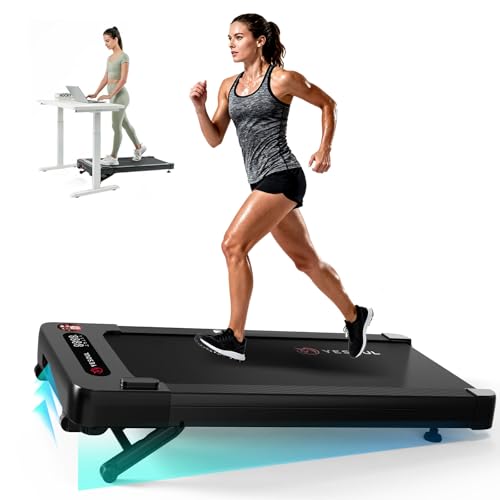
Yesoul Walking Pad Treadmill with 10% Auto Incline, Under Desk Treadmill for Home Walking, Hiking & Running, 300lbs Capacity, Smart App Scenic Routes & Live Classes, Remote & LED Display
【10% Auto Incline for More Effective Workouts】Boost your calorie burn and muscle engagement with a treadmill that adjusts…
As an affiliate, we earn on qualifying purchases.
As an affiliate, we earn on qualifying purchases.
Conclusion
Now that you’ve uncovered the secret power of tempo runs, you’ll slice through your runs like a hot knife through butter, leaving fatigue and doubt in the dust. Imagine feeling unstoppable, like a freight train roaring down the tracks with fire in your belly and lightning in your legs. Embrace the middle ground, and watch as your speed skyrockets, turning every run into a blazing trail of victory. Get ready to crush your limits—nothing can stand in your way!
lactate threshold running shoes
As an affiliate, we earn on qualifying purchases.
As an affiliate, we earn on qualifying purchases.

Polar H10 Heart Rate Monitor Chest Strap – ANT + Bluetooth, Waterproof HR Sensor for Men and Women, Black, M-XXL
WORKS WITH EVERYTHING: Polar HRM works with ALL HRM compatible Equipment.
As an affiliate, we earn on qualifying purchases.
As an affiliate, we earn on qualifying purchases.