
To use caffeine for workouts without ruining your sleep, time your intake about 30 to 60 minutes before exercising so it’s absorbed effectively. Avoid caffeine late in the day, especially in the evening, and consider low-dose options if needed later. Stay well-hydrated and eat small, carbohydrate-rich snacks to support energy levels and recovery. Being mindful of your caffeine sensitivity helps prevent sleep disruptions—keep these tips in mind to optimize both performance and rest.

Get workout gear delivered free with Prime
- Fast, free delivery on millions of items
- Prime Video, Amazon Music and more included
- Member-only deals all year
Key Takeaways
- Consume caffeine 30-60 minutes before exercise and avoid late-day intake to prevent sleep interference.
- Stay well-hydrated and eat hydrating foods to support caffeine metabolism and recovery.
- Tailor caffeine use based on personal sensitivity and monitor sleep quality to adjust timing accordingly.
- Balance nutrition and hydration to boost energy and reduce reliance on caffeine during workouts.
- Prioritize early caffeine consumption and proper timing to maximize performance without disrupting sleep.
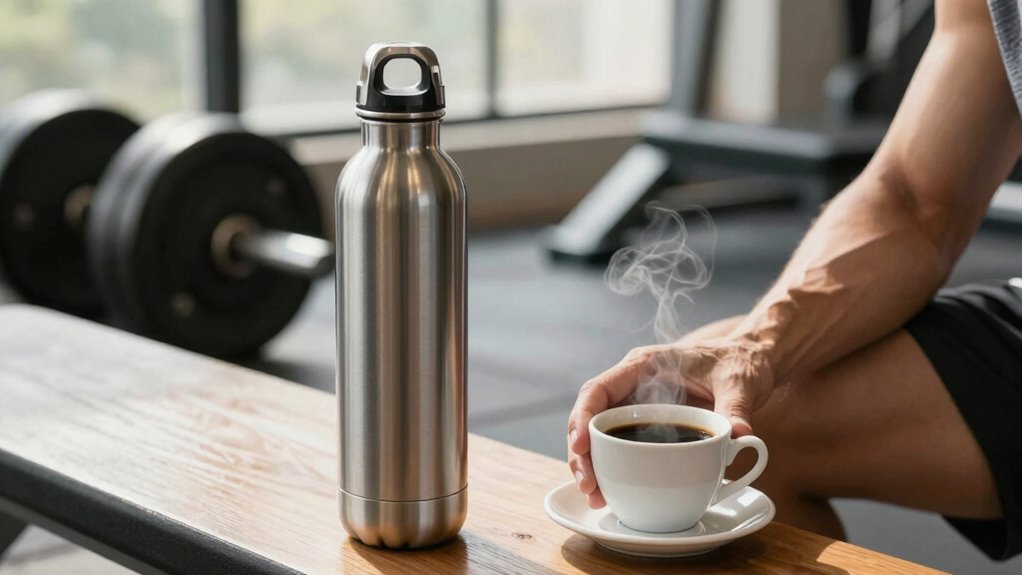
Many fitness enthusiasts rely on caffeine to boost their workout performance, but it can also interfere with your sleep if not timed correctly. To maximize benefits and minimize disruptions, you need to pay close attention to your hydration strategies and nutritional timing. Proper hydration before, during, and after your workout helps your body process caffeine more efficiently, reducing the risk of dehydration that caffeine can cause. Drinking water consistently throughout the day, especially in the hours leading up to your workout, ensures you’re well-hydrated, which allows your body to metabolize caffeine more effectively. When you hydrate properly, you also support muscle function and recovery, making the most of your workout while avoiding the jitters or dehydration that can interfere with sleep. Understanding how your body responds to caffeine can help you tailor your intake for optimal results.
Nutritional timing is equally critical. Consuming caffeine too late in the day can linger in your system, making it harder to fall asleep at night. Ideally, you should consume caffeine about 30 to 60 minutes before your workout, giving your body enough time to absorb it and experience its performance-boosting effects. After that window, avoid caffeine if you’re aiming for a good night’s sleep. If you work out in the evening, consider switching to caffeine-free alternatives or lower-dose options to prevent interference with your sleep cycle. Also, balancing your pre-workout intake with a small, carbohydrate-rich snack can help stabilize your blood sugar levels, support energy levels, and prevent crashes, without relying solely on caffeine. Incorporating hydrating foods like fruits and vegetables into your diet can further enhance hydration and recovery. Being mindful of your body’s caffeine sensitivity can help you better tailor your intake and avoid negative sleep impacts. Paying attention to overall hydration and nutritional balance will support your performance and recovery while safeguarding your sleep quality.
Timing your caffeine intake strategically helps you reap its benefits without sacrificing restful sleep. Keep in mind that your body’s sensitivity to caffeine varies, so listen to how your body reacts and adjust accordingly. If you notice difficulty falling asleep or poor sleep quality, cut back on caffeine in the late afternoon or evening. Incorporating hydrating foods like fruits and vegetables into your diet, and focusing on consuming your caffeine early enough to allow its effects to wear off before bedtime, are essential steps. Remember, even if caffeine boosts your workout, neglecting proper nutritional timing and hydration can undermine your sleep quality, leaving you less recovered and more fatigued the next day. By paying attention to these factors, you can harness caffeine’s energizing power while maintaining healthy sleep habits. Being aware of caffeine metabolism can also help you better plan your intake for optimal effects and minimal sleep disruption.
Products Worth Considering

Levoit Vital 100S-P Air Purifier with Washable Pre-Filter

Garmin Venu 3S GPS Fitness Smartwatch, 41 mm, French Gray

Garmin Venu X1 GPS Smartwatch, 51 mm, Black
As an affiliate, we earn on qualifying purchases.
Frequently Asked Questions
Can Caffeine Improve Workout Performance Without Losing Sleep?
Yes, caffeine can boost your workout performance without causing sleep disruption if you understand your caffeine metabolism. By consuming caffeine early enough in the day—about 4-6 hours before sleep—you allow your body to process it fully. This minimizes sleep disruption while still benefiting from caffeine’s enhanced focus and energy. Listening to your body’s response helps you find the right balance, maximizing workout gains without sacrificing restful sleep.
What’s the Safest Amount of Caffeine Before a Workout?
A stitch in time saves nine—so start with a modest amount of caffeine, around 200 mg, about an hour before your workout. This allows your caffeine metabolism to peak while minimizing sleep disruption. Stay aware that consuming more can lead to sleep issues, as high caffeine intake delays your sleep onset and reduces sleep quality. Stick to this moderate amount to boost performance without sacrificing rest.
How Long Before Sleep Should I Avoid Caffeine?
You should avoid caffeine at least 6 hours before sleep to minimize sleep interference. Your caffeine metabolism varies, but generally, it takes about 3 to 7 hours for your body to process half of the caffeine consumed. Consuming caffeine too late can disrupt your sleep cycle, making it harder to fall asleep and reducing sleep quality. Prioritize timing to enjoy the benefits of caffeine without sacrificing rest.
Does Caffeine Affect Different People’s Sleep Differently?
Think of caffeine as a key that fits differently into every lock. Your genetic differences and personal sensitivity determine how your body reacts, making sleep more or less affected. Some people process caffeine swiftly, like a swift river, while others experience a lingering current. So, yes — caffeine impacts individuals uniquely, influencing sleep quality based on your genetics and sensitivity. Pay attention to how your body responds to find your best balance.
Are There Caffeine Alternatives for Evening Workouts?
Yes, there are natural alternatives and herbal supplements you can try for evening workouts. Options like beetroot juice, which boosts nitric oxide and improves endurance, or adaptogenic herbs like Rhodiola and ginseng can enhance energy without disrupting sleep. These natural alternatives provide a gentle pick-me-up and support your workout performance, helping you stay energized without the jitters or late-night sleep disturbances associated with caffeine.
Conclusion
By timing your caffeine intake wisely, you harness its energy boost without sacrificing restful sleep. Think of caffeine as a powerful ally that fuels your workouts like a blazing fire, but only if you handle it with care. Manage your consumption, respect your body’s signals, and let your nights remain peaceful and restorative. When you strike the right balance, you’ll wake up refreshed, energized, and ready to conquer each new day—both in the gym and in life.