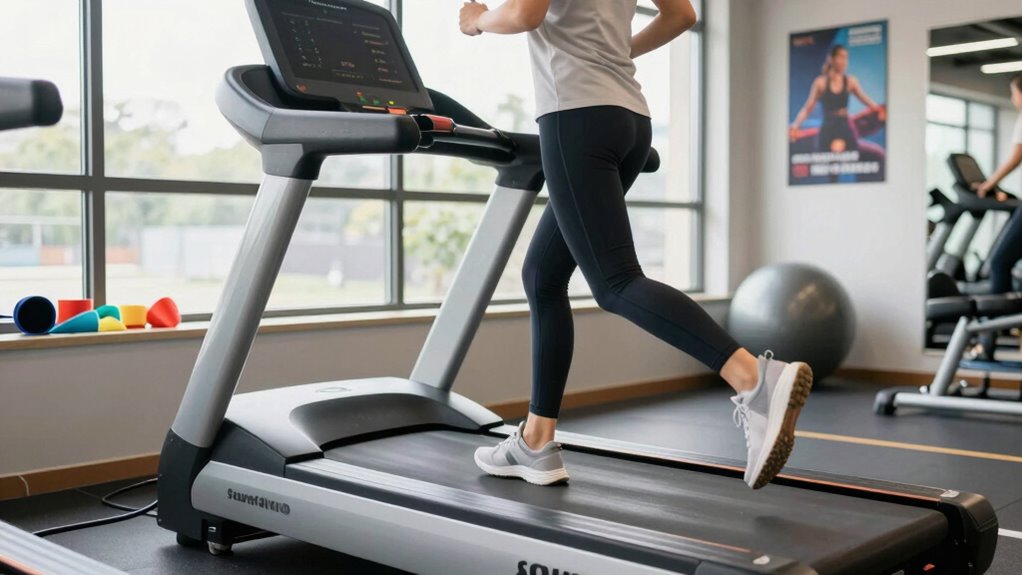

To start cardio without stressing your knees, opt for low-impact activities like swimming, cycling, or elliptical workouts that cushion your joints and reduce shock. Brisk walking and water aerobics are also great options. Always listen to your body’s signals and adjust intensity as needed. Wearing supportive shoes and incorporating strength exercises for your thigh muscles help protect your knees long-term. Keep going, and you’ll discover more tips to protect your joints and stay active.
Key Takeaways
- Choose low-impact cardio activities like cycling, swimming, or elliptical to protect knees from joint shock.
- Modify workout intensity and movements to stay within comfortable pain-free ranges.
- Use supportive footwear and proper technique to cushion knees and reduce impact risks.
- Incorporate strength training for leg muscles to support joint stability and prevent future issues.
- Listen to your body, avoid pushing through pain, and seek professional advice for personalized routines.

As the new year begins, it’s the perfect time to prioritize your mobility and health with the “New Year New Knees Plan.” If knee pain has been holding you back, taking proactive steps now can lead to significant improvements. One key aspect is starting cardio exercises that protect your joints while still helping you stay active. You don’t have to give up on cardio altogether—in fact, you can adapt your routines to minimize joint shock and maintain your fitness goals.
To do this effectively, focus on exercise modifications that support joint health. High-impact activities like running and jumping can put unnecessary stress on your knees, especially if you already experience discomfort. Instead, opt for low-impact options such as cycling, swimming, or using an elliptical machine. These activities provide cardiovascular benefits without pounding your joints. When you choose your workouts, pay attention to how your knees feel. If certain movements cause pain or discomfort, modify your technique or reduce the intensity. For example, if running causes knee pain, consider brisk walking or water aerobics, which cushion your joints and reduce impact.
Choose low-impact exercises like cycling and swimming to protect your knees and stay active safely.
Incorporating exercise modifications not only helps protect your knees but also encourages consistency. It’s tempting to push through discomfort, but that can lead to further joint issues. Instead, listen to your body and adjust your routines accordingly. Using supportive footwear can also make a big difference, absorbing shock and providing stability during your workouts. Additionally, consider adding strength training exercises focused on your leg muscles—especially your quadriceps and hamstrings—which support your knees and improve joint stability.
Maintaining joint health is vital, and the right modifications can make cardio a safe, enjoyable part of your routine. Remember, the goal isn’t just to get your heart rate up but to do so in a way that preserves your knee health over the long term. If you’re unsure about which modifications suit your needs, consult with a physical therapist or fitness professional. They can guide you through safe, effective exercises tailored to your condition.
Starting your cardio journey with mindful exercise modifications ensures you protect your joints while still reaching your fitness goals. The “New Year New Knees Plan” isn’t about avoiding activity—it’s about smart, joint-friendly movement that keeps you active and healthy in the year ahead. Your knees will thank you for prioritizing their health now, setting the stage for a more mobile, pain-free future.
Top picks for "year plan start"
Open Amazon search results for this keyword.
As an affiliate, we earn on qualifying purchases.
Frequently Asked Questions
Can I Do Cardio if I Have Existing Knee Pain?
Yes, you can do cardio with existing knee pain if you choose joint-friendly activities. Focus on low-impact options like swimming, cycling, or elliptical workouts, which help with pain management and reduce joint stress. Always listen to your body, start slow, and consult a healthcare professional to develop a safe, effective plan tailored to your needs. Consistency and proper technique are key to staying active while protecting your knees.
What Are the Best Low-Impact Cardio Options?
You should try joint-friendly workouts like swimming, cycling, or using an elliptical machine, as they’re gentle aerobic options that minimize joint stress. These low-impact cardio choices help you stay active without aggravating knee pain. Incorporate these gentle aerobic options into your routine to boost your fitness while protecting your joints. Remember, consistency is key, and always listen to your body to prevent discomfort or injury.
How Long Should I Start With Each Workout?
Your joint health deserves gentle attention, so start with 10 to 15 minutes per workout. This duration is enough to spark progress without overwhelming your knees. Gradually increase your workout duration by 5-minute increments each week as your body adapts. Listen to your joints and never push through pain. Over time, you’ll build stamina and protect your knees, making your cardio routine more effective and injury-free.
Are There Specific Warm-Up Exercises for Sensitive Knees?
Yes, you should do gentle warm-up exercises that focus on knee mobility, like slow leg swings and gentle knee circles. These movements help stimulate joint lubrication and reduce stiffness. Start with low-impact activities such as mini squats or straight-leg raises, gradually increasing intensity. Always listen to your body, and if any exercise causes pain, stop immediately. Proper warm-up prepares your knees for exercise and minimizes joint shock.
How Can I Tell if My Knees Are Improving?
Did you know that 60% of people notice improved joint flexibility after just four weeks of consistent knee-strengthening exercises? To tell if your knees are improving, pay attention to reduced pain, increased stability, and easier movement. You might also notice better endurance during activity. Keep track of these signs, and if you see steady progress in knee strength and flexibility, you’re on the right path.
Conclusion
Starting a cardio routine can be exciting, especially with the ‘New Year, New Knees’ plan. Did you know that low-impact exercises like swimming can burn up to 500 calories per hour? By choosing gentle activities, you protect your joints while staying active. Remember, consistency is key. So, embrace this fresh start, keep moving safely, and watch your health improve—one step at a time. Here’s to a healthier, happier you this year!