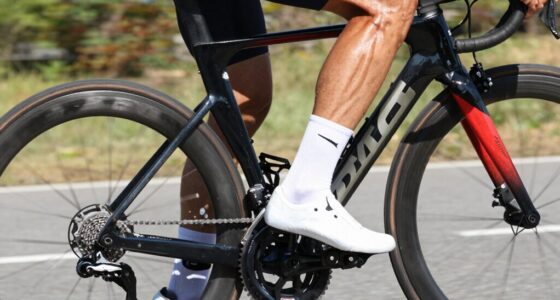

To train smoothness without suffering, focus on steady, controlled cadence drills that emphasize relaxed pedaling and proper gear selection. Incorporate intervals with moderate to high RPMs, ensuring your movements stay fluid and effortless rather than tense. Keep your upper body relaxed and breathe deeply to maintain endurance. By practicing these techniques consistently, you’ll improve efficiency and resilience. Keep exploring ways to refine your form—more tips await to help you elevate your indoor cycling performance.
Key Takeaways
- Focus on controlled, deliberate movements and proper gear selection to develop smooth pedal strokes without overexertion.
- Incorporate interval training with moderate cadence bursts and recovery to build efficiency and reduce fatigue.
- Maintain relaxed upper body and steady breathing to promote fluidity and prevent unnecessary tension during drills.
- Prioritize consistency in cadence and gear control to enhance pedal stroke smoothness over simply pushing harder.
- Gradually increase interval duration and intensity to improve endurance while maintaining smooth, efficient pedaling.

Indoor cycling cadence drills are a highly effective way to improve your pedaling efficiency and overall performance. When you focus on maintaining a steady, smooth cadence, you’re training your muscles and nervous system to deliver power more consistently. One of the key elements in these drills is proper gear selection. By choosing the right gear, you can control your resistance and keep your cadence within a targeted range without unnecessary strain. For example, starting with a moderate gear allows you to focus on cadence without overloading your legs. As you become more comfortable, you can shift gears to simulate different terrain or intensities, ensuring your muscles adapt to varying demands. This deliberate gear control helps you develop a more fluid pedaling style, making transitions between gears seamless and natural.
Interval training is an essential component of cadence drills that boosts your endurance and muscular resilience. Incorporating short bursts of high cadence with recovery periods trains your body to sustain higher RPMs over time. For instance, you might push for 30 seconds at a cadence of 100-110 RPM, then recover at 70-80 RPM for a minute. Repeating these intervals trains your muscles to produce power efficiently and improves your ability to recover quickly. The focus is on maintaining smooth, controlled movements during each interval rather than just grinding through the effort. This approach not only enhances your cadence but also makes your pedaling more economical, reducing fatigue during longer rides or races.
To maximize your cadence drills, pay attention to your form and breathing. Keep your upper body relaxed, shoulders steady, and core engaged to avoid unnecessary tension. Breathing should be deep and controlled, supporting sustained effort without gasping or holding your breath. As you progress, experiment with different gear setups and interval durations to discover what best challenges your current fitness level while still allowing you to maintain smoothness. Remember, the goal isn’t to push through suffering but to develop consistency and efficiency in your pedal stroke.
Top picks for "indoor cycl cadence"
Open Amazon search results for this keyword.
As an affiliate, we earn on qualifying purchases.
Frequently Asked Questions
How Do Cadence Drills Improve Overall Cycling Efficiency?
Cadence drills improve your cycling efficiency by helping you develop a smooth pedal stroke and better muscle engagement. When you focus on maintaining a consistent cadence, you learn to distribute effort more evenly across your muscles, reducing fatigue. This increased efficiency means you can ride longer and faster with less energy waste, ultimately making your cycling smoother and more effective. Consistent cadence training translates to improved performance on every ride.
Can Cadence Drills Help Prevent Cycling Injuries?
Yes, cadence drills can help prevent cycling injuries by promoting cadence consistency, which reduces strain on your muscles and joints. When you maintain a steady cadence, you avoid sudden increases in effort that could cause overuse injuries. Practicing these drills trains you to cycle smoothly and efficiently, lowering your injury risk over time. Incorporate cadence drills regularly to build better biomechanics and protect your body during rides.
What Is the Ideal Cadence for Different Cycling Terrains?
Think of your cadence as a chameleon adapting to its environment. For climbs, aim for a slower cadence with higher gear selection to maintain power without overexertion. On flat terrain, increase your cadence for efficiency, switching gears smoothly to match speed. Descents call for a faster cadence with lower gear selection, letting gravity do the work. Adjust your cadence thoughtfully to match terrain and optimize performance.
How Often Should I Incorporate Cadence Drills Into My Training?
You should incorporate cadence drills into your training 1-2 times a week, focusing on interval training to boost power development. These drills help you develop smooth pedaling and improve efficiency, making your overall cycling more effective. By regularly practicing controlled cadence intervals, you train your muscles to maintain a steady rhythm, which translates into better performance on varied terrains and during long rides.
Are There Specific Gear Settings Recommended for Cadence Drills?
Think of your gear settings as the gears on a bike, guiding your cadence like a steady heartbeat. For cadence drills, start with a moderate gear—around 50-70% of your max effort—and focus on smooth, controlled pedaling. Use cadence monitoring tools to keep track of your revolutions per minute, ensuring you stay consistent. Adjust gears as needed to maintain fluidity, building harmony between effort and rhythm.
Conclusion
Remember, mastering your cadence isn’t about pushing through discomfort but finding a rhythm that feels natural and sustainable. With consistent drills, you’ll gently refine your smoothness, making every ride more enjoyable and efficient. Think of it as tuning a musical instrument—you don’t need to force the notes, just let them flow. Over time, your effortless cadence will become your secret weapon, turning tough rides into pleasant journeys. Keep pedaling, and trust the process to bring out your best.