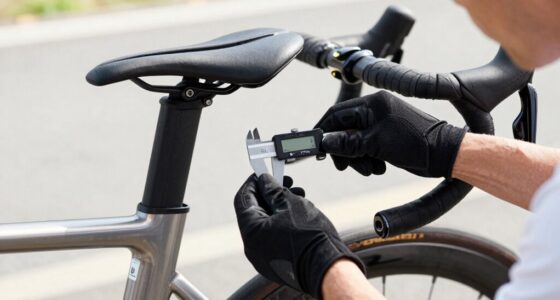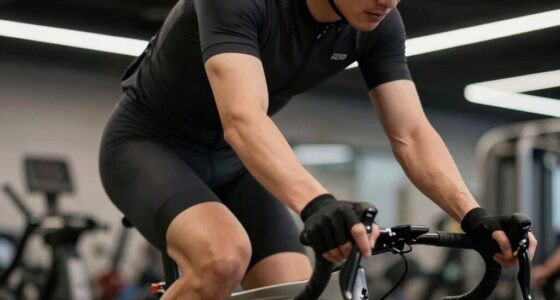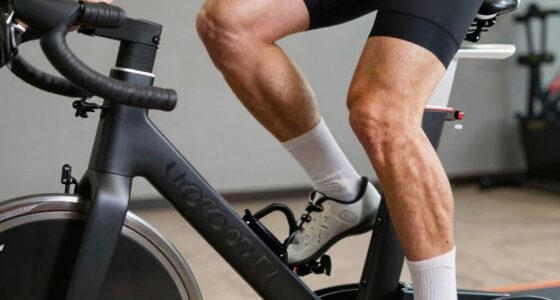

To manage sweat during indoor rides, choose fans with adjustable speeds and position them to blow air directly at your face and torso for effective cooling. Keep a damp towel nearby to wipe sweat and cool your skin, soaking it in cold water for extra relief. Stay mindful of sodium and electrolyte balance—consider salty snacks or electrolyte drinks to prevent cramps and dehydration. If you want to optimize your comfort and performance further, there’s plenty more to explore.
Key Takeaways
- Position fans strategically in front or to the side of the rider to ensure steady airflow and effective cooling.
- Use absorbent towels to wipe sweat frequently, blotting rather than rubbing to maintain skin health and hygiene.
- Soak towels in cold water or drape damp towels around the neck to enhance cooling during indoor cycling.
- Replenish electrolytes, especially sodium, through salty foods, drinks, or electrolyte supplements to prevent cramps and dehydration.
- Proper fan placement, towel technique, and electrolyte balance work together to keep you comfortable and safe during indoor rides.

Vornado FLY MAX High Velocity Floor Fan, 4 Speed Settings, 180° Adjustable Tilt, Remote Control, 2300 FPM, Powerful Airflow, Fitness Cooling for Gym, Workout, and Training, Black
POWERFUL PERFORMANCE — This high velocity floor fan delivers impressive 2300 FPM airflow with 4 adjustable speed settings,…
As an affiliate, we earn on qualifying purchases.
As an affiliate, we earn on qualifying purchases.
Choosing the Right Fan for Your Indoor Cycling Space
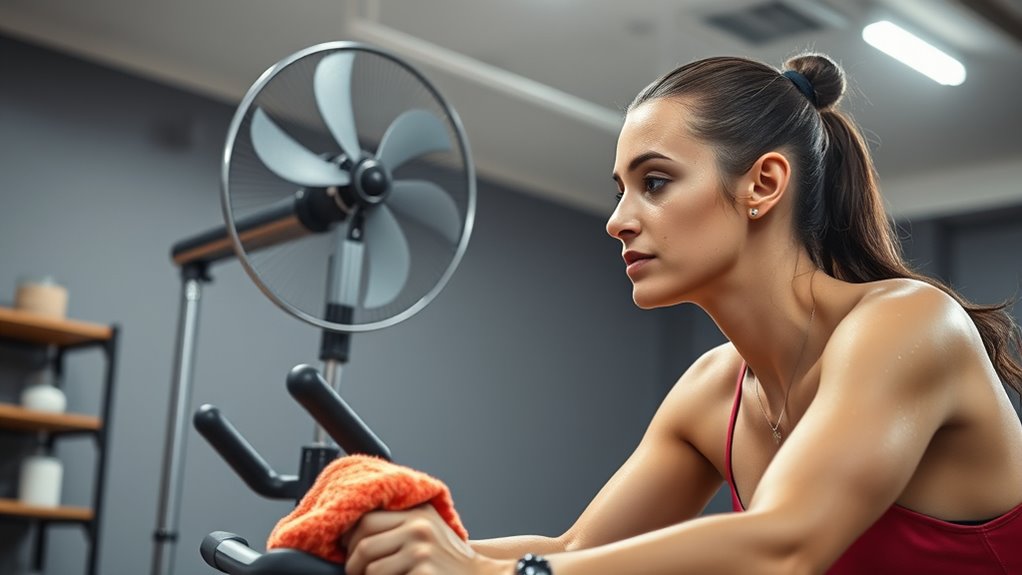
When selecting a fan for your indoor cycling space, it’s important to take into account the size of the room and the intensity of your workouts. Larger rooms require more powerful fans to circulate air effectively, preventing stuffiness and keeping you comfortable. For high-intensity sessions, opt for fans with adjustable speed settings so you can increase airflow as needed. Consider oscillating fans if you want to distribute air evenly across the space, especially in bigger rooms. Compact fans work well for smaller areas or for targeted cooling. Also, look for fans that are quiet but efficient, so they don’t distract you during your ride. Proper fan choice guarantees you stay cool and focused, making your indoor cycling experience more enjoyable and effective. Additionally, choosing a fan with appropriate airflow capacity ensures optimal ventilation tailored to your space size. To further enhance your comfort, selecting a fan with a durable motor can help ensure reliable performance during regular use. Incorporating smart automation features, such as remote control or integration with voice assistants, can also help you adjust airflow conveniently during your workout. Using a fan with adjustable speed settings allows for better control over airflow and comfort levels throughout your session. Selecting a fan with energy-efficient operation can also help reduce electricity consumption during prolonged use.

CADONO 4 Pack Cooling Towel (40"x12"), Soft Breathable Chilly Towel, Ice Towel, Microfiber Towel for Yoga, Sport, Running, Workout,Gym, Camping, Fitness, Workout & More Activities(Multicolor)
INSTANT COOL AND REUSABLE: Our cooling towel features a mesh that wicks sweat away for a cool and…
As an affiliate, we earn on qualifying purchases.
As an affiliate, we earn on qualifying purchases.
Effective Towel Techniques to Keep You Dry
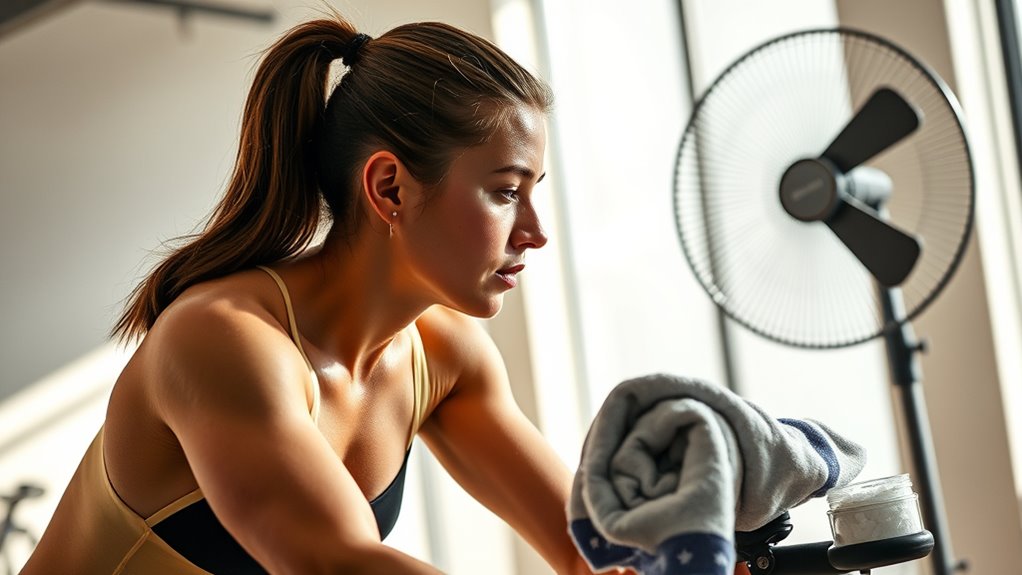
To stay dry and comfortable during your indoor ride, mastering effective towel techniques is essential. Keep a clean towel within reach, and use it frequently to wipe sweat from your face, arms, and chest. Fold the towel to create a thick barrier that absorbs more moisture, or switch to a fresh section when it becomes saturated. Blot rather than rub to avoid skin irritation and distribute sweat evenly. Use different towel sections for different areas to prevent spreading germs. Incorporating proper towel handling techniques can also help you recognize when to use your towel effectively and ensure optimal hygiene practices during your workout. Being mindful of artistic influences can inspire creative approaches to managing your gear and maintaining comfort. Paying attention to sweat management strategies can enhance your overall workout experience and help you stay motivated.

Amazon Basic Care Electrolyte Solution, Mixed Fruit, Designed to Prevent Dehydration, Replaces Electrolytes, Fluid and Zinc, 33.8 fl oz (Pack of 1)
ELECTROLYTES: Feel your best. Amazon Basic Care Mixed Fruit Electrolyte Solution is an electrolyte drink designed to help…
As an affiliate, we earn on qualifying purchases.
As an affiliate, we earn on qualifying purchases.
Understanding Electrolytes and Their Role in Sweating
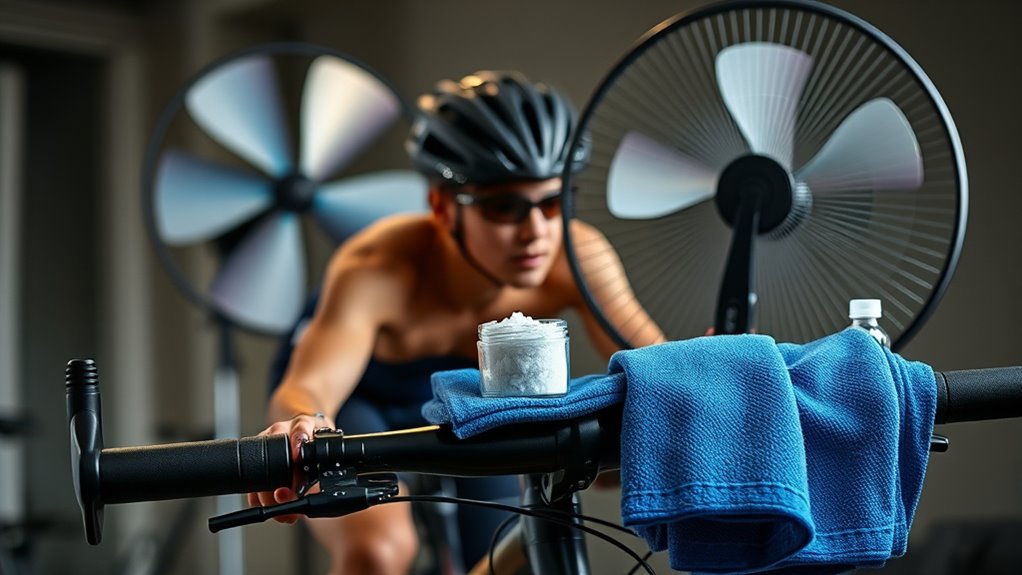
While keeping a towel handy helps manage sweat on the surface, understanding what’s happening inside your body explains why you sweat and how to stay balanced. Electrolytes are minerals like sodium, potassium, calcium, and magnesium that carry an electric charge and regulate essential functions. When you sweat, you lose these minerals along with water, which can upset your body’s balance. Maintaining proper electrolyte levels helps your body efficiently replace what’s lost during intense indoor rides. Without enough electrolytes, you might experience cramping, fatigue, or dizziness. Electrolyte balance is crucial for preventing dehydration and supporting overall performance. Proper hydration strategies often include understanding the importance of electrolyte replenishment, which plays a key role in maintaining your body’s homeostasis. Recognizing the significance of Salts and Minerals can provide insights into how individuals manage their health and fitness routines. Understanding this process helps you optimize hydration and performance, and staying aware of potential dehydration symptoms can help you respond promptly during your rides.

OLIXIS Tower Fan for Bedroom, 28dB Quiet Floor Standing Fan with Remote, 12H Timer, 5 Speeds, 4 Modes, LED Display, Portable Bladeless Oscillating Cooling Fan for Indoor, Home, Office – Grey
【12H Timer & Effortless Control】Set the bladeless tower fan for 1-12 hours to turn off automatically, providing peace…
As an affiliate, we earn on qualifying purchases.
As an affiliate, we earn on qualifying purchases.
The Importance of Salt for Hydration and Performance
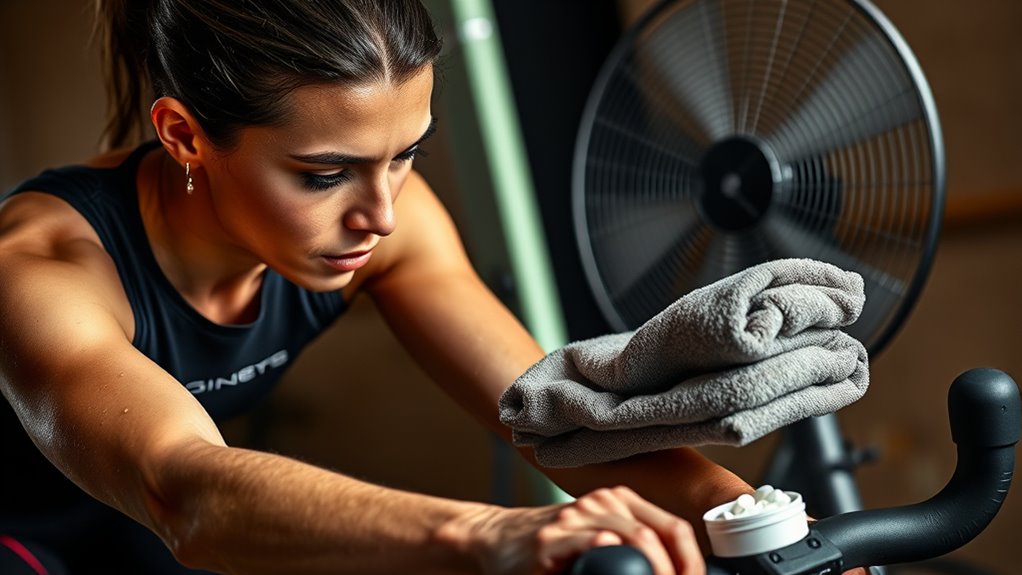
Salt plays a vital role in keeping you hydrated during indoor rides by maintaining your electrolyte balance. It helps prevent cramping naturally and boosts your performance by supporting proper muscle function. Understanding how to manage your salt intake can make a significant difference in your ride experience. Incorporating proper electrolyte management ensures you stay energized and avoid dehydration issues. Additionally, using water-resistant gear like waterproof watches can help monitor your hydration levels in challenging conditions. Considering wave and wind factors can further influence your hydration needs based on environmental conditions. Moreover, mammography guidelines and the importance of personalized health assessments can further contribute to optimal performance and safety. Staying informed about industry trends can also help you adapt your hydration strategies for different indoor riding environments.
Salt’s Role in Hydration
When you sweat during indoor rides, your body loses more than just water—it also depletes essential electrolytes like sodium. Sodium helps your body retain water and maintain fluid balance, which is vital for staying hydrated and preventing cramps. Without enough sodium, your blood volume drops, making it harder for your heart to pump blood efficiently. This can lead to feelings of fatigue, dizziness, and decreased performance. Including salt in your hydration strategy helps replace lost sodium, ensuring your body stays balanced and can absorb fluids more effectively. Proper salt intake supports sustained endurance and keeps your muscles functioning smoothly. Additionally, understanding dog breeds and their specific needs can help tailor your hydration and nutrition strategies for optimal performance. Remember, maintaining the right salt levels isn’t just about replacing what you lose—it’s about optimizing your hydration and performance during indoor rides. Incorporating electrolyte balance into your routine can further enhance your recovery and overall comfort. Being aware of the scientific basis behind electrolyte use can help you make informed choices for your hydration plan. Recognizing the importance of yarn for scarves can also inspire creative ways to incorporate warm accessories into your outdoor gear, especially in colder weather.
Electrolyte Balance Benefits
Maintaining the right balance of electrolytes, especially sodium, directly impacts your hydration and overall performance during indoor rides. When you sweat, you lose electrolytes that help your body retain fluids and transmit nerve signals. If these levels drop too low, you’ll experience fatigue, decreased strength, and slower recovery. Proper salt intake helps your body absorb water more efficiently, keeping you hydrated longer. It also supports muscle function, ensuring your muscles don’t weaken prematurely. Balancing electrolytes optimizes your endurance and helps prevent dehydration-related issues. Incorporating the right amount of salt into your hydration routine ensures your body maintains stability, especially during intense or prolonged indoor sessions. Staying mindful of your electrolyte levels keeps you performing at your best without risking imbalances that could hinder your ride.
Preventing Cramping Naturally
Cramping during indoor rides often happens when your muscles don’t get enough electrolytes, especially sodium, to function properly. Sodium helps your muscles contract smoothly and prevents sudden spasms. To prevent cramps naturally, ensure your diet includes salty foods or drinks before and during your ride. You can also use electrolyte tablets or salt sticks to maintain proper sodium levels. Drinking water alone isn’t enough, as it can dilute electrolytes in your body, making cramps more likely. Listen to your body—if you start feeling tightness or twitching, boost your salt intake. Staying consistent with your salt intake helps your muscles stay balanced and reduces the risk of cramping, allowing you to ride longer and more comfortably without interruption.
Tips for Staying Cool and Comfortable During Rides

To stay cool and comfortable during indoor rides, proper fan placement is key—you want airflow directed where you need it most. Using effective towel techniques can help wick away sweat and keep your skin dry. Small adjustments in both areas can make a big difference in how you feel throughout your workout.
Proper Fan Placement
Proper fan placement can make a significant difference in staying cool during indoor rides. To maximize airflow and avoid hot spots, position fans directly in front of you or slightly to the side, ensuring a steady breeze over your upper body. Aim the fan so the airflow hits your torso and face, enhancing evaporation and cooling. Keep fans at a height that directs air toward your chest and forehead without causing discomfort. Adjust angles as needed to prevent stagnant air pockets and hot zones. Remember, consistent airflow helps regulate body temperature and reduces sweat buildup.
- Place fans facing directly at your upper body for maximum cooling
- Adjust angles to target specific hot spots or areas of sweat
- Use multiple fans if possible for even airflow coverage
Effective Towel Techniques
Using towels effectively can considerably boost your cooling efforts during indoor rides. Start by keeping a small, absorbent towel within reach. Use it to wipe away sweat from your face, neck, and arms frequently; this prevents sweat from dripping into your eyes and helps regulate your body temperature. Drape a damp towel around your neck or shoulders to provide ongoing cooling. For a quick refresh, soak the towel in cold water before the ride and wring out excess moisture. Avoid rubbing your skin aggressively, which can cause irritation. Instead, pat gently. Remember to wash your towel regularly to prevent bacteria buildup. Proper towel techniques keep you comfortable, help manage sweat, and support your overall ride performance.
Maintaining Balance: Combining Fans, Towels, and Salt for Optimal Results
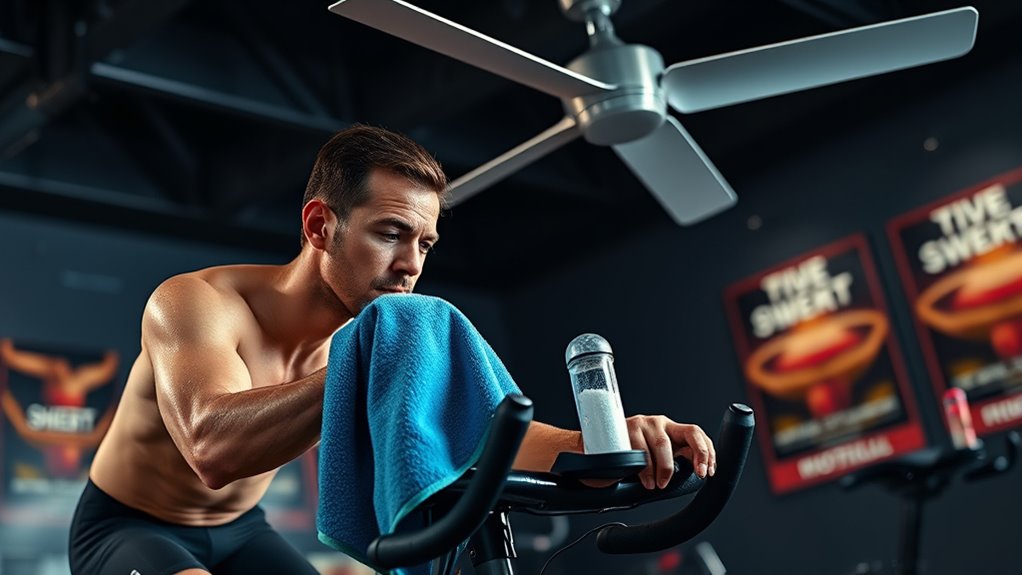
Balancing fans, towels, and salt is essential for effective sweat management during indoor rides. You want to keep yourself cool, dry, and replenished without overdoing any one method. Use fans to maintain airflow and reduce overall sweat buildup, but don’t rely solely on them. Towels help wipe away excess moisture and prevent chafing; keep them accessible and use them frequently. Salt intake is vital to replace electrolytes lost through sweating—adding a pinch to your water or snacks can do the trick.
- Adjust fan speed based on your sweat level to avoid chills or overheating
- Use towels strategically to target hotspots and avoid skin irritation
- Incorporate small amounts of salt in your hydration to sustain energy and prevent cramps
Frequently Asked Questions
How Often Should I Replace My Indoor Cycling Fan?
You should replace your indoor cycling fan every 1 to 2 years, depending on usage and wear. If you notice it’s making strange noises, isn’t cooling effectively, or showing signs of damage, it’s time for a new one. Regularly clean the blades and vents to prolong its life, but don’t hesitate to upgrade when performance declines. Keeping your fan in good shape guarantees a comfortable, sweat-free workout every time.
Can Using a Towel During Rides Cause Skin Irritation?
Using a towel during rides can cause skin irritation if it’s rough, dirty, or used improperly. To avoid this, choose a soft, clean towel and don’t rub too harshly. Make sure to wash your skin afterward and keep the towel dry and fresh. If you notice redness or discomfort, switch to a gentler cloth or reduce towel use. Always listen to your skin’s signals to prevent irritation.
Are Electrolyte Supplements Necessary for Short Indoor Rides?
Electrolyte supplements aren’t usually necessary for short indoor rides if you stay hydrated. For example, if you’re riding for 30 minutes and drink water regularly, your body typically maintains the right electrolyte balance. However, if you sweat heavily or feel symptoms like cramps or dizziness, a small electrolyte boost can help. Listen to your body; most short sessions don’t require supplements unless you notice signs of imbalance.
How Much Salt Should I Consume Before a Workout?
You should consume about 300-600 mg of sodium, roughly 1/4 to 1/2 teaspoon of salt, about an hour before your workout. This helps maintain electrolyte balance and prevents dehydration. If you’re sweating heavily or exercising for over an hour, consider increasing your intake or adding electrolyte-rich snacks. Always listen to your body and adjust based on your sweat rate and personal needs.
What Are Signs of Electrolyte Imbalance During Indoor Cycling?
You might notice muscle cramps, dizziness, or weakness during indoor cycling, which are signs of electrolyte imbalance. You could also feel nausea, confusion, or excessive sweating that doesn’t stop. If your heart races or you feel unusually tired despite a good warm-up, these are warning signs. Pay attention to these symptoms, stay hydrated, and consider replenishing electrolytes with drinks or snacks to prevent further issues.
Conclusion
Staying comfortable during indoor rides is key—you’re about 80% more likely to push through with the right fans, towels, and salt intake. Did you know that proper electrolyte balance can boost your performance by up to 25%? By combining these strategies, you’ll stay cool, dry, and energized, making every ride more enjoyable. Keep experimenting to find what works best, and you’ll crush your indoor cycling goals with ease.