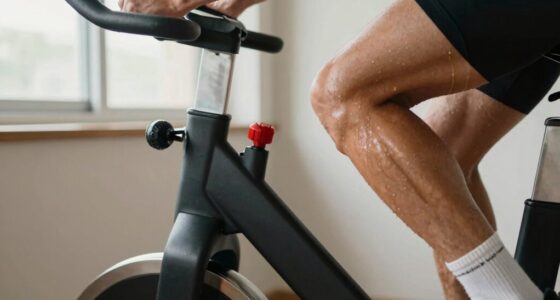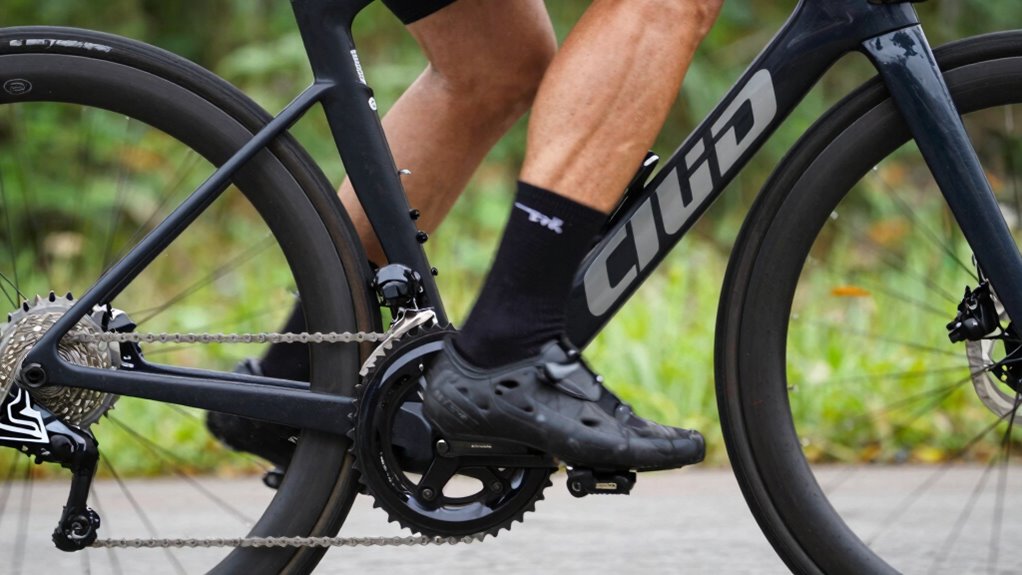

To make your pedaling feel smoother, focus on a cadence drill maintaining 80-100 rpm while shifting to a gear that supports consistent, relaxed pedaling. Emphasize a circular pedal motion, engaging your entire leg, and keep your pedal stroke level at the top and bottom. Relax your ankles and hips to promote natural movement. With regular practice, you’ll develop muscle memory and improve efficiency—stay tuned for more tips on perfecting your cycling technique.

Get workout gear delivered free with Prime
- Fast, free delivery on millions of items
- Prime Video, Amazon Music and more included
- Member-only deals all year
Key Takeaways
- Focus on maintaining a steady cadence between 80-100 rpm during drills to promote smooth pedal movement.
- Use a gear that allows comfortable, consistent pedaling without excessive effort or sluggishness.
- Emphasize a circular pedal motion, engaging your entire leg for fluid, continuous movement.
- Shift gears gradually to keep cadence steady and prevent abrupt changes that disrupt smoothness.
- Practice regularly to develop muscle memory and reinforce natural, efficient pedaling patterns.
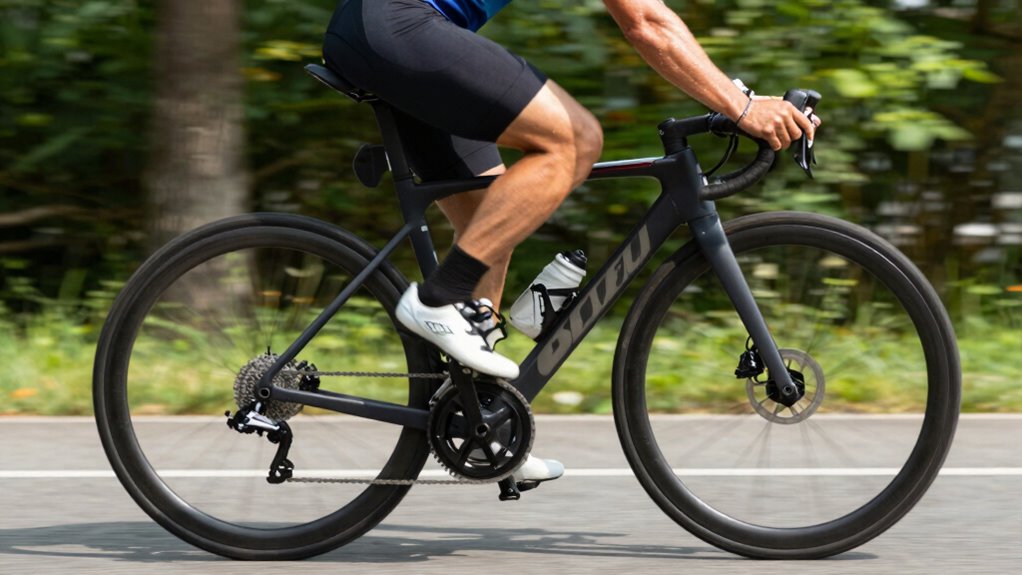
If you want to pedal more smoothly and efficiently, incorporating cadence drills into your training can make a significant difference. One of the most effective ways to improve your pedaling is by focusing on your cadence, which is the rate at which you turn the pedals. When you regularly practice cadence drills, you train your muscles and nervous system to maintain a consistent, ideal pedaling speed, leading to a more fluid riding experience. To get the most out of these drills, pay close attention to your gear adjustment and pedal technique, as both play essential roles in achieving smoother pedaling.
Start by selecting a gear that allows you to sustain a comfortable cadence without straining. Too high a gear can cause you to push hard and unevenly, while too low can make your pedaling feel sluggish. Aim for a moderate gear that supports a steady cadence—typically between 80 and 100 revolutions per minute (rpm). As you perform cadence drills, focus on gear adjustment to keep your pedaling smooth and consistent. Shift gears gradually and avoid abrupt changes that can disrupt your rhythm. Proper gear management helps you maintain control and prevents unnecessary fatigue.
Choose a moderate gear to maintain a smooth, steady cadence and avoid abrupt shifts during drills.
Your pedal technique is equally important. Concentrate on a smooth, circular motion rather than just pushing down on the pedals. Engage your entire leg in a fluid, continuous circle, which encourages better muscle engagement and reduces dead spots. During cadence drills, pay attention to your pedal stroke, ensuring your foot remains level at the top and bottom of each revolution. This helps distribute effort evenly and promotes a more efficient transfer of power. Keep your ankles relaxed and allow your hips to move naturally with each pedal stroke, avoiding excessive tension or bouncing. This relaxed, efficient pedal technique minimizes energy waste and leads to smoother pedaling. Incorporating proper biomechanics can further enhance your pedaling efficiency and overall performance. Additionally, focusing on muscle memory during these drills can help reinforce consistent movement patterns, making your pedaling more natural over time. Developing an awareness of your biodiversity and sustainable practices can also foster a more holistic and environmentally conscious approach to your cycling routine and lifestyle. Remember, the key is consistency—regular practice will improve your gear adjustment and pedal technique, resulting in a more fluid, enjoyable cycling experience.
As an affiliate, we earn on qualifying purchases.
Frequently Asked Questions
How Often Should I Perform This Cadence Drill?
You should perform this cadence drill 2-3 times a week, adjusting training intensity to match your fitness level. Focus on maintaining smooth pedal strokes without overexerting yourself. Use appropriate equipment adjustments, like saddle height and gear settings, to guarantee proper form. Consistent practice helps you develop muscle memory, making your pedaling feel more natural and efficient. Remember to listen to your body and avoid pushing too hard too quickly.
Can Beginners Benefit From This Drill Immediately?
Did you know that beginners improve their pedaling efficiency by up to 20% with proper drills? Yes, beginners can benefit from this cadence drill immediately, but it’s essential to start with basic techniques. Incorporate advanced techniques gradually, and don’t overdo it—training frequency should be balanced to avoid fatigue. Consistent, mindful practice helps you develop smoother pedaling, making your ride more efficient and enjoyable right from the start.
What Gear Should I Use During the Drill?
You should choose a moderate gear during the drill to focus on smooth pedal technique without overexerting yourself. A gear that allows you to maintain a steady cadence without strain works best. This helps you develop better gear selection skills and pedal control. Keep your cadence consistent, and avoid shifting gears mid-drill, as it can disrupt your rhythm and hinder progress in refining your pedaling feel.
How Long Should Each Cadence Drill Session Last?
Think of your cadence drill as tuning a musical instrument; too long or too short, and the melody falters. Aim for 10 to 15 minutes per session, focusing on smooth, consistent pedal strokes. Keep your bike ergonomics in mind, ensuring comfort and proper posture. This helps improve pedal efficiency, making every turn of the cranks feel seamless. Regular, focused practice will transform rough pedaling into a fluid, harmonious rhythm.
Are There Any Common Mistakes to Avoid?
To avoid common mistakes, focus on maintaining proper pedal technique and avoid rushing through the drill. Don’t shift gears excessively; select a gear that allows steady cadence without overexertion. Keep your pedaling smooth and consistent, rather than bouncing or jerking. Pay attention to your form, and don’t forget to stay relaxed. These habits will help you get the most benefit from the drill and improve your overall cycling efficiency.
As an affiliate, we earn on qualifying purchases.
Conclusion
By incorporating cadence drills into your routine, you’ll notice smoother, more efficient pedaling. For example, imagine Sarah, a casual cyclist who struggled with uneven pedaling. After just a few weeks of focused cadence drills, she found her pedal stroke became more fluid, reducing fatigue on longer rides. Consistently practicing these drills helps you develop better muscle memory and coordination, making every pedal stroke feel natural and effortless. Keep at it, and you’ll see your cycling performance improve remarkably.
As an affiliate, we earn on qualifying purchases.
As an affiliate, we earn on qualifying purchases.
Halloween Picks
halloween
As an affiliate, we earn on qualifying purchases.