Between cardio days, focus on active recovery to help your muscles repair and stay flexible. Incorporate gentle stretching targeting muscles used during cardio, like hamstrings, calves, and lower back, holding each stretch for about 20-30 seconds. Add foam rolling to release muscle tightness and improve blood flow, especially in quads, calves, and glutes. Spending just 10-15 minutes on these routines can reduce soreness and prevent injuries — if you stick with these tips, you’ll discover more ways to optimize your recovery.
Key Takeaways
- Incorporate 10-15 minutes of gentle stretching targeting muscles used during cardio, such as hamstrings, calves, and lower back.
- Use foam rolling on quads, calves, glutes, and IT band to release tightness and improve blood flow.
- Engage in light activities like walking or yoga to promote active recovery and flexibility.
- Focus on mindful breathing and body awareness to reduce tension and prevent injuries.
- Ensure proper hydration and nutrition to support muscle repair and overall recovery between cardio sessions.

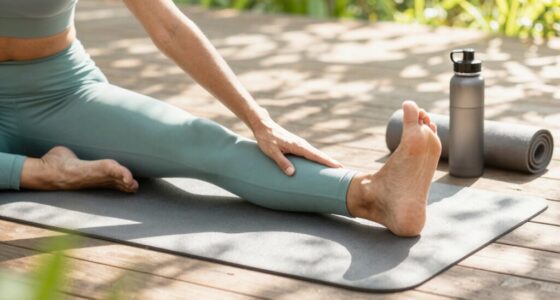
Ever wondered how to stay active without overtraining on your cardio days? The key lies in incorporating active recovery strategies that promote muscle repair and flexibility without putting excessive strain on your body. One effective way to do this is by focusing on stretching routines designed to enhance your flexibility and reduce muscle tension. These routines should be gentle, targeting the muscles you’ve used during your cardio sessions, such as your hamstrings, calves, and lower back. Hold each stretch for at least 20-30 seconds to allow your muscles to relax and lengthen gradually. Incorporate movements like hamstring stretches, hip flexor stretches, and gentle spinal twists. Not only do these stretches improve your range of motion, but they also help prevent injuries and soreness from building up.
Alongside stretching routines, foam rolling techniques are essential tools in your active recovery arsenal. Foam rolling helps release muscle tightness, break down adhesions, and improve blood flow to your muscles. Spend a few minutes rolling over key areas such as your quads, IT band, calves, and glutes. Use slow, controlled movements and apply enough pressure to feel a gentle discomfort—this indicates you’re releasing tension effectively. Foam rolling is particularly beneficial after cardio because it targets areas that tend to become tight and overused, helping you recover faster and prepare for your next workout session.
Integrating these recovery methods into your routine doesn’t require hours or complex equipment. Dedicate 10-15 minutes after your cardio sessions to perform a series of stretching routines and foam rolling techniques. This small investment in your recovery can greatly reduce muscle soreness, improve flexibility, and prevent injuries. furthermore, it encourages mindfulness of your body’s signals, helping you recognize areas that need extra attention before they turn into more serious issues.
Top picks for "between cardio days"
Open Amazon search results for this keyword.
As an affiliate, we earn on qualifying purchases.
Frequently Asked Questions
How Can I Tell if I Need Active Recovery?
You can tell if you need active recovery by paying attention to muscle soreness and energy levels. If your muscles feel especially sore or stiff, and your energy dips or feels low, it’s a sign you should incorporate active recovery. Gentle activities like walking or stretching help reduce soreness and boost circulation, helping you bounce back faster. Trust your body’s signals to avoid overtraining and promote better long-term progress.
Is Stretching Enough for Active Recovery?
Stretching alone isn’t usually enough for active recovery. While stretching benefits include improved flexibility and reduced muscle tension, combining it with light activity, like walking or swimming, helps your muscles recover faster. Recovery supplements, such as protein or amino acids, can also support muscle repair. By integrating stretching with gentle movement and proper nutrition, you optimize your recovery process and prepare your body for your next workout.
Can Active Recovery Help Prevent Injuries?
Yes, active recovery can help prevent injuries by reducing muscle soreness and promoting better blood flow, which speeds up healing. It also supports your immune system, keeping you healthier and less prone to illness that could sideline your workouts. Light activities like walking or gentle cycling keep muscles moving without overexertion, helping you recover faster and stay injury-free between intense cardio sessions.
How Long Should Active Recovery Sessions Last?
On average, active recovery sessions last about 20 to 30 minutes, helping you balance rest and activity effectively. Studies show that maintaining this rest duration allows your muscles to recover without overexertion. During this session length, you keep blood flowing, reduce soreness, and prevent injury. Keep your pace light and steady, focusing on gentle movements that promote recovery while avoiding fatigue. This approach optimizes your overall fitness journey.
Are There Specific Foods Recommended for Active Recovery Days?
On active recovery days, focus on nutrition tips like consuming lean proteins, complex carbs, and plenty of fruits and vegetables to fuel your muscles. Don’t forget hydration strategies—drink water regularly to stay hydrated and aid recovery. Incorporate foods rich in antioxidants to reduce inflammation, and avoid processed foods. These choices help your body repair and recharge, ensuring you’re ready for your next cardio session.
Conclusion
Think of active recovery days as the gentle breeze that keeps your fitness journey sailing smoothly. By staying lightly active, you help your body heal and grow stronger without burning out. These days are your secret weapon, turning rest into progress and making sure you’re always ready for the next adventure. Embrace the balance—you’re the captain steering your ship, with active recovery as your steady wind guiding you forward.