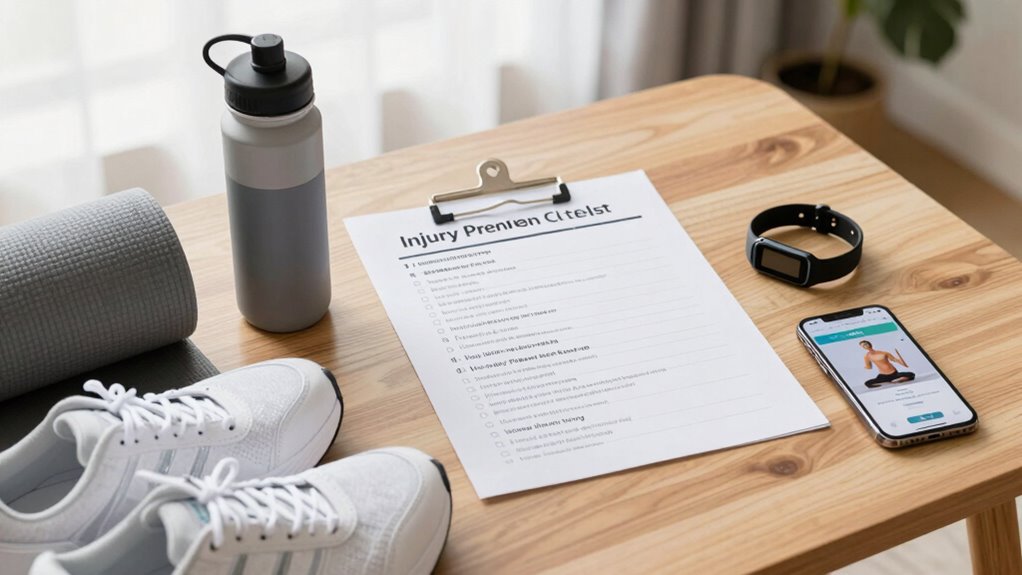

In your first two weeks of starting a new exercise routine, focus on warming up properly with light cardio and dynamic stretches to prepare your muscles and prevent injury. Stay consistently hydrated by sipping water before, during, and after workouts, and listen to your body’s signals. Gradually increase intensity and give yourself enough rest to recover. Building these safe habits from the start helps protect you long-term—keep going to discover more essential tips.
Key Takeaways
- Prioritize a proper warm-up with light cardio and dynamic stretches to prepare muscles and reduce injury risk.
- Stay well-hydrated before, during, and after exercise to prevent cramps and maintain performance.
- Monitor your body’s responses, resting and adjusting workouts to avoid persistent pain or discomfort.
- Focus on consistency and gradually increase exercise intensity to build safe, sustainable habits.
- Incorporate injury prevention routines early, emphasizing proper warm-up and hydration for long-term safety.

Getting injured can put a damper on your fitness journey, but with a simple prevention plan, you can stay safe and keep moving. The first weeks of starting a new exercise routine are essential for building a solid foundation and avoiding setbacks. One of the most effective ways to do this is by establishing good habits early on, especially focusing on warm-up routines and hydration tips. These small steps can markedly reduce your risk of injury and help you develop a sustainable practice.
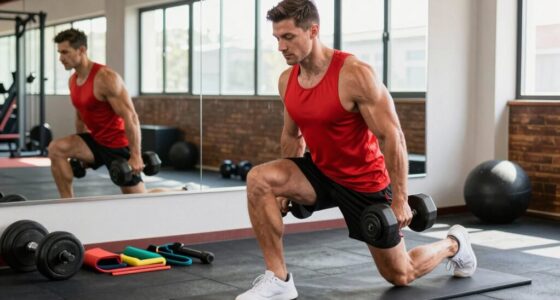
Your warm-up routines are critical to prepare your body for the physical activity ahead. Instead of rushing into intense workouts, take time to gradually increase your heart rate and loosen your muscles. A good warm-up might include light cardio, such as brisk walking or cycling, for five to ten minutes. Follow this with dynamic stretches—leg swings, arm circles, or gentle lunges—to activate the muscles you’ll be using. This process improves blood flow, enhances flexibility, and reduces muscle stiffness, making injuries less likely. Remember, a proper warm-up isn’t just about preventing injuries; it also boosts your performance during the workout. Incorporating proper warm-up techniques can further enhance your readiness and safety.
Hydration tips are equally important, especially when you’re just starting out. Staying well-hydrated keeps your muscles functioning smoothly and prevents cramps and fatigue. Make it a habit to drink water before, during, and after your exercise sessions. A good rule of thumb is to sip small amounts regularly rather than gulping large quantities at once. If you’re engaging in longer or more intense workouts, consider electrolyte drinks to replenish minerals lost through sweat. Proper hydration supports joint lubrication, helps regulate body temperature, and accelerates recovery. Don’t wait until you’re thirsty to drink water—preemptive hydration is key, especially in warmer environments or if you tend to sweat heavily.
In addition to warm-up routines and hydration tips, listen to your body during these initial weeks. Pay attention to how you feel during and after workouts. If you experience persistent pain or discomfort, don’t ignore it. Rest and seek professional advice if needed. Gradually increase the intensity and duration of your workouts to allow your muscles and joints to adapt safely. Remember, consistency is more important than intensity at this stage. Building good habits early will set the stage for a safer, more enjoyable fitness journey. With careful attention to warming up properly and staying hydrated, you’ll be less prone to injuries and more likely to stick with your new routine long-term.

Trideer Stretching Strap Yoga Strap Physical Therapy for Home Workout, Exercise, Pilates and Gymnastics, 10 Loops Non-Elastic Stretch Bands with Aesthetic Packaging for Women & Men (Black)
Long Lasting Premium Quality: Made of sturdy polypropylene, this tough yoga strap stands out in a crowd by…
As an affiliate, we earn on qualifying purchases.
As an affiliate, we earn on qualifying purchases.
Frequently Asked Questions
How Often Should I Update My Injury Prevention Checklist?
You should update your injury prevention checklist every 4 to 6 weeks, or whenever you change your training schedule or equipment. Regular updates guarantee you address new risks and maintain safety standards. Check your equipment for safety issues, and adjust your training to prevent overuse injuries. Staying proactive keeps you injury-free and helps you progress safely. Make updates a routine part of your training to stay protected and prepared.
What Are Common Mistakes Beginners Make When Following the Checklist?
Don’t let overtraining mistakes or neglecting warm-ups trip you up. Many beginners rush into exercises without proper preparation, risking injury. You might think more is better, but pushing too hard too soon leads to setbacks. Remember, consistency beats intensity. Always warm up properly and listen to your body. Avoid rushing your progress; patience and careful adherence to the checklist keep you safe and motivated on your fitness journey.
Can the Checklist Be Adapted for Specific Sports or Activities?
Yes, you can adapt the checklist for specific sports or activities. Incorporate sport-specific modifications by emphasizing key movements and injury risks unique to your activity. Make activity tailored adjustments by adjusting warm-ups, stretches, and strength exercises to match your sport’s demands. This approach guarantees you address particular injury prevention needs, making the checklist more effective and relevant for your training, whether you’re running, cycling, or playing team sports.
How Do I Track Progress With the Injury Prevention Measures?
Did you know that athletes who track their injury prevention progress are 30% less likely to get injured? To monitor your progress, focus on tracking metrics like flexibility, strength, and pain levels regularly. Keep a dedicated journal or app for progress documentation, noting improvements and setbacks. This way, you stay aware of your recovery, adjust your routines accordingly, and stay motivated to maintain injury prevention measures.
What Should I Do if I Experience Pain Despite Following the Checklist?
If you experience pain despite following the checklist, stop the activity immediately to prevent further injury. Focus on pain management by rest, ice, compression, and elevation if needed. It’s essential to seek medical advice promptly to get an accurate diagnosis and appropriate treatment. Don’t ignore persistent pain, and always listen to your body to guarantee proper recovery and avoid long-term issues.

Sahara Sailor Water Bottle 32oz, Durable and Leakproof Water Bottles Motivational with Time Marker, Tritan, BPA Free, Wide Mouth with Easy Clean Brush for Gym, Travel, Home, School, Office (1 Bottle)
Stay Hydrated Throughout the Day: staying hydrated is often easier said than done. With the Sahara Sailor clear…
As an affiliate, we earn on qualifying purchases.
As an affiliate, we earn on qualifying purchases.
Conclusion
Stick to this injury prevention checklist during your first two weeks, and you’ll set a strong foundation for your fitness journey. Remember, slow and steady wins the race—don’t rush into everything at once. Prioritize proper form, listen to your body, and stay consistent. If you stay vigilant now, you’ll avoid setbacks and keep your momentum going. Keep your eyes on the prize, and enjoy every step of your progress!
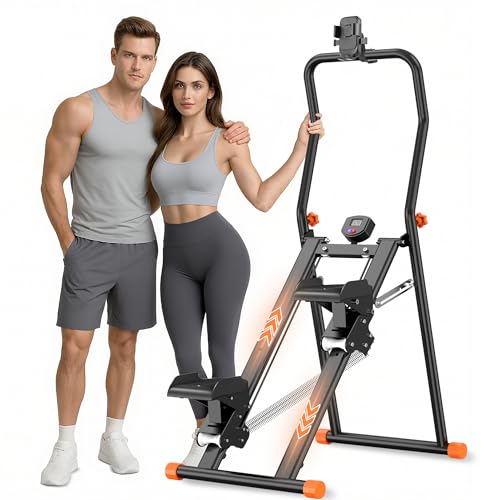
EPHESPORT Stair Stepper for Home Gym, 2.0 Stair Climber Machine with 3-Level Adjustable Resistance, Non-Slip Pedals, Digital Monitor & Phone Holder, Full-Body Cardio Workout Equipment for Women & Men
【Adjustable 3-Level Resistance】:Easily switch between light, medium, and heavy resistance levels to match your fitness goals—whether it's weight…
As an affiliate, we earn on qualifying purchases.
As an affiliate, we earn on qualifying purchases.

Physix Gear Workout Elbow Sleeves – Elbow Sleeves Compression for Weightlifting, Tendonitis, Bursitis, Compression Sleeves Elbow Support for Men & Women – Elbow Sleeve for Lifting, Grey/Black, XL
Achieve More During Workouts: Physix Gear workout elbow sleeves provide superior support, minimizing discomfort & enhancing performance; elbow…
As an affiliate, we earn on qualifying purchases.
As an affiliate, we earn on qualifying purchases.