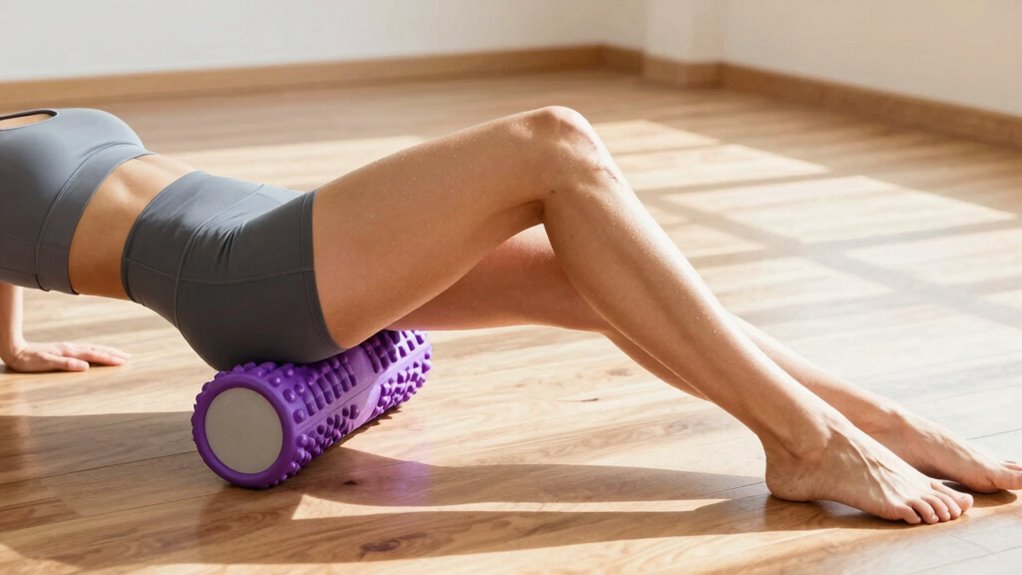

After cardio, spend about six minutes foam rolling your legs to reduce soreness and boost flexibility. Target your quadriceps, hamstrings, calves, and glutes by slowly rolling back and forth, pausing on tight spots. This simple routine helps release fascia, improve blood flow, and prevent tightness that could lead to injuries. Staying consistent keeps your legs fresh, flexible, and ready for your next workout. Keep going to discover even more tips to optimize recovery and boost performance.

Get workout gear delivered free — and shop member deals
- Fast, free delivery on millions of items
- Access to Prime Big Deal Days deals on October 6–7
- Prime Video, Amazon Music and more included
Key Takeaways
- Foam rolling post-cardio accelerates muscle recovery and reduces soreness in legs.
- It targets quadriceps, hamstrings, calves, and glutes to release tension and prevent tightness.
- Using a slow, controlled technique breaks up fascial adhesions for improved muscle function.
- A 6-minute routine enhances blood flow and waste filtration, supporting quicker recovery.
- Consistent foam rolling maintains leg flexibility, prevents injuries, and keeps legs ready for future workouts.

After a cardio workout, foam rolling can be a game-changer for your recovery. It helps you bounce back faster, reduces muscle soreness, and keeps your legs feeling fresh. When you focus on foam rolling after cardio, you’re not just easing discomfort—you’re actively supporting muscle recovery and injury prevention. By targeting tight or sore muscles, foam rolling encourages blood flow and helps flush out metabolic waste, making it easier for your muscles to repair and rebuild. This process minimizes the risk of developing strains or overuse injuries that can sideline you from your routine.
When you incorporate foam rolling into your post-cardio routine, you’re giving your muscles the attention they need to recover properly. Instead of waiting for soreness to set in, rolling helps release tension in your quadriceps, hamstrings, calves, and glutes. This immediate attention prevents muscles from becoming overly tight, which can lead to imbalances and increase injury risk. Regularly using a foam roller after cardio sessions enhances flexibility and joint mobility, making your legs more resilient to future workouts and daily activities. It’s an essential step in maintaining a balanced, injury-free training cycle.
Using a foam roller isn’t complicated. You start by gently placing the roller under a specific muscle group, then slowly rolling back and forth. If you find a particularly tender spot, pause and hold the position for a few seconds to release tightness. This technique, known as myofascial release, helps break up adhesions within the fascia—the connective tissue surrounding muscles—allowing for better muscle function. As you become more familiar with your body’s response, you can adjust the pressure and duration to optimize your recovery.
Consistent use of foam rolling can also improve your filtration of waste products from muscles, aiding in quicker recovery. Consistency is key. Spending just six minutes on targeted foam rolling after each cardio session can make a significant difference. Over time, you’ll notice less soreness, greater range of motion, and a stronger, more resilient set of leg muscles. This proactive approach not only accelerates muscle recovery but also plays a crucial role in injury prevention. It helps you stay on track with your fitness goals by reducing downtime caused by muscle strains or overuse injuries. Plus, it’s a simple, cost-effective way to enhance your overall workout routine, ensuring your legs stay tight, healthy, and ready for whatever challenge lies ahead.
As an affiliate, we earn on qualifying purchases.
Frequently Asked Questions
Can Foam Rolling Prevent Muscle Soreness After Cardio?
Yes, foam rolling can help prevent muscle soreness after cardio by improving muscle flexibility and reducing tightness. When you roll, you increase blood flow and loosen up tight muscles, which aids in quicker recovery. Regular foam rolling also supports injury prevention by maintaining healthy muscle tissue. Incorporate it into your post-cardio routine to stay limber, decrease soreness, and keep your muscles ready for your next workout.
Is Foam Rolling Suitable for Beginners?
Ever wondered if foam rolling is suitable for beginners? Absolutely, it is! Start with basic techniques and gentle pressure to avoid discomfort. Beginner tips include focusing on major muscle groups and using slow, controlled movements. Foam rolling basics are simple: target areas that feel tight, and don’t forget to breathe. By easing into it, you’ll build confidence and enjoy the benefits without risking injury.
How Often Should I Foam Roll After Cardio?
You should foam roll after cardio 3 to 4 times a week, especially if you’re engaging in intense sessions. Incorporate dynamic stretching beforehand to prepare your muscles, and stay hydrated with proper hydration strategies to aid recovery. Foam rolling daily can help maintain flexibility, but listen to your body—if you feel soreness, give yourself extra rest. Consistency is key to seeing improved leg tightness and overall muscle health.
Are There Any Risks of Over-Rolling?
Over-rolling risks causing unnecessary injury, so you should be cautious. If you press too hard or roll too often, you might worsen soreness or trigger tissue damage. To prevent injury, stick to gentle, targeted rolling and avoid overdoing it. Balance is key for injury prevention, so listen to your body and stop if you experience pain. Moderation minimizes risks and maximizes benefits for healthier, happier legs.
What if I Feel Pain While Foam Rolling?
If you feel pain while foam rolling, stop immediately. Pain could indicate muscle damage or injury, so pushing through might worsen the problem. Instead, adjust your pressure and focus on gentle, tolerable discomfort to promote muscle recovery and prevent injury. Always listen to your body, and if pain persists, consult a healthcare professional to guarantee you’re not risking further damage or compromising injury prevention efforts.
muscle fascia release foam roller
As an affiliate, we earn on qualifying purchases.
As an affiliate, we earn on qualifying purchases.
Conclusion
So, are you ready to give this 6-minute foam rolling plan a try after your cardio? It’s quick, effective, and can leave your legs feeling tighter and more refreshed. Why not make it a daily habit and see the difference for yourself? Remember, taking those few extra minutes to care for your muscles can boost your recovery and improve your performance. Isn’t your body worth the effort? Start rolling and feel the benefits today!
As an affiliate, we earn on qualifying purchases.
trigger point foam roller for thighs
As an affiliate, we earn on qualifying purchases.
As an affiliate, we earn on qualifying purchases.
Fall Picks
fall essentials
As an affiliate, we earn on qualifying purchases.