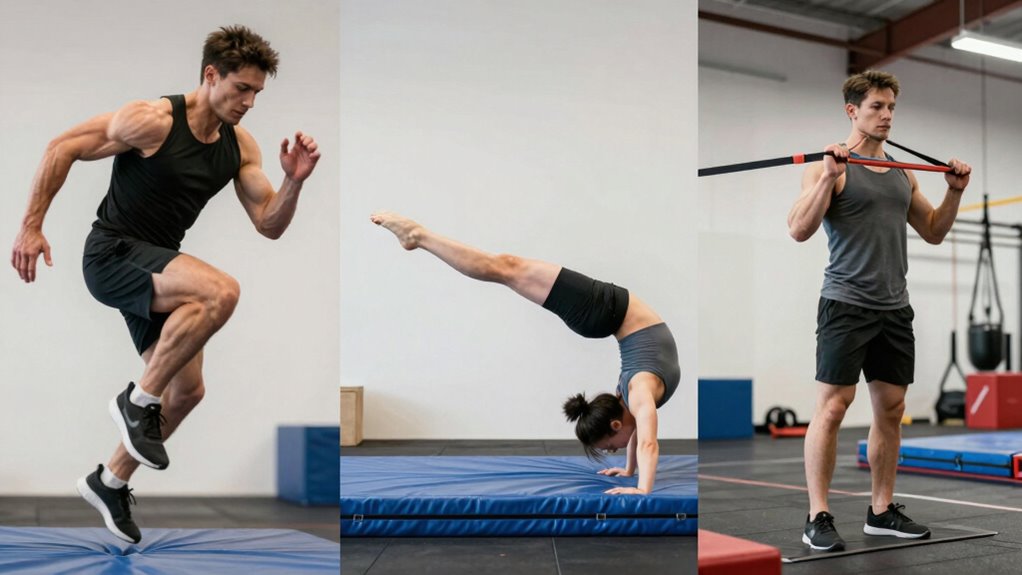

Understanding the differences between warm-up, mobility, and activation helps you prepare effectively for workouts. A warm-up gets your body ready by increasing heart rate and blood flow, while mobility focuses on improving joint flexibility and range of motion. Activation specifically targets firing up key muscles to ensure proper movement. If you want to maximize your workout and minimize injuries, knowing how each part functions is essential—stick around to learn how to incorporate these properly.
Key Takeaways
- Warm-up increases overall body temperature and prepares muscles for activity, while mobility improves joint range of motion and flexibility.
- Activation specifically targets engaging and “waking up” key muscles to ensure proper muscle firing during exercises.
- Warm-up involves light cardio and dynamic stretching; mobility focuses on joint mobility; activation emphasizes muscle activation.
- Each component serves a distinct purpose: warm-up prepares the body, mobility enhances movement quality, activation primes muscles.
- Properly combining all three optimizes performance and reduces injury risk, preventing confusion between their roles.

Understanding the differences between warm-up, mobility, and activation is essential for optimizing your workout routine. These terms often get tangled, but each serves a distinct purpose. When you focus on the right prep, you improve your performance and reduce injury risk.
Warm-up is your initial step, designed to gradually increase your heart rate and core temperature. It prepares your body for more intense activity. During a warm-up, you typically perform light cardio—like jogging or cycling—combined with dynamic stretching. Dynamic stretching is crucial here because it actively moves your muscles through their full range of motion, helping to enhance muscle readiness. Think of it as loosening up your muscles so they’re primed for action. This process also boosts blood flow, delivering oxygen and nutrients to your muscles, which makes them more efficient and less prone to strains. A proper warm-up lasts about 5-10 minutes, depending on your workout intensity, and should make you feel warm, slightly sweaty, and ready to push harder.
Mobility work, on the other hand, zeroes in on improving your joint range of motion and flexibility. It’s not just about loosening muscles but about making your joints more adaptable and efficient during movement. Mobility exercises involve controlled, deliberate movements that increase your joint’s capacity to move freely without pain or restriction. Unlike warm-up, which is more about raising general body temperature, mobility targets specific areas—like hips, shoulders, or ankles—helping you perform better during your workout. It’s especially useful if you feel stiff or have limited movement in certain joints. Incorporating mobility drills before your main workout can enhance your overall movement quality and reduce the risk of compensatory injuries. Additionally, improving muscle readiness with targeted mobility can lead to better exercise execution and fewer strains.
Activation is the final piece, focusing on engaging specific muscles that might not be fully activated during warm-up or mobility work. It’s about “waking up” key muscle groups so they’re ready to perform at their best. For example, doing glute bridges or band exercises activates your glutes, ensuring they don’t lag behind during squats or deadlifts. Activation drills are usually brief but targeted, often performed immediately before your main lift or activity. They help improve neuromuscular control, so your muscles respond more efficiently during the workout. This step is particularly important if you notice certain muscles aren’t firing correctly or if you’re recovering from an injury.
In essence, each component plays a vital role in prepping your body. Warm-up raises your overall readiness, mobility improves joint function, and activation ensures your muscles are firing correctly. When you understand and implement these strategies properly, you maximize your workout’s effectiveness and stay safer during training.

Web Slide Professional System – Perfect for Dynamic Warm-ups, Crossfit, Stretching, and Strength Building – Physical Rehab Equipment for Clinic, Home, or Gym
The Web Slide Difference. The Web Slide Professional System organizes your clinic and streamlines patient training sessions. Any…
As an affiliate, we earn on qualifying purchases.
As an affiliate, we earn on qualifying purchases.
Frequently Asked Questions
Can Warm-Up Routines Replace Mobility Exercises?
Warm-up routines can’t fully replace mobility exercises. While warm-ups often include dynamic stretching and light cardio, mobility work like foam rolling improves joint flexibility and muscle function. You need mobility exercises to prepare your joints for movement, reducing injury risk. Incorporate both into your routine for peak performance. Foam rolling helps release muscle tension, but it’s not a substitute for targeted mobility work that enhances your range of motion.
How Often Should I Perform Activation Drills?
You should incorporate activation drills into your routine about 2-3 times a week, especially before intense workouts. Think of it as a gentle whisper to your muscles through dynamic stretching and neuromuscular training, awakening them for action. Regular activation enhances muscle engagement, improves performance, and helps prevent injuries. So, make time for these drills consistently, ensuring your body’s readiness is always in sync with your training goals.
Are There Specific Warm-Up Methods for Different Sports?
Yes, there are sport-specific warm-up methods you should follow. For example, a football player might focus on dynamic drills that enhance athletic mobility and replicate game movements, while a swimmer emphasizes shoulder mobility and water-specific warm-ups. Tailoring your warm-up to your sport helps activate the right muscles, improve flexibility, and boost performance. Incorporate sport-specific movements and mobility drills to prepare your body effectively for the demands ahead.
What Are the Signs of Inadequate Mobility Before Exercise?
If you notice joint stiffness, limited movement, or discomfort during basic stretches, your mobility might be inadequate. These signs suggest your joint flexibility isn’t ideal, which can hinder muscle readiness before exercise. You may feel tightness or resistance, especially in hips, shoulders, or hamstrings. Addressing these issues with targeted mobility exercises can improve flexibility, ensuring your muscles are prepared and reducing injury risk during physical activity.
How Do I Choose the Right Activation Exercises for Me?
To choose the right activation exercises, start with pre-exercise assessments to identify your specific needs and weaknesses. Focus on exercises that target muscles you’re lacking in activation, which can improve performance and help prevent injuries. Incorporate injury prevention strategies by selecting movements that activate key muscle groups before your workout. Listen to your body, and adjust your exercises based on how you feel, ensuring you’re primed and ready without overexerting.

JFMkaer Knee Replacement Recovery Aids, Hip/Knee Rehabilitation Equipment After Knee Surgery – Leg Stretcher Exercise Improve Mobility and Flexibility for Knee Pain
【Gradually Increase Activity】After knee replacement surgery, exercise and stretching play a crucial role in the recovery process. Begin…
As an affiliate, we earn on qualifying purchases.
As an affiliate, we earn on qualifying purchases.
Conclusion
Now that you know the difference, don’t delay—dedicate your drills wisely. Warm-ups wake up your muscles, mobility moves melt away stiffness, and activation amps your muscles for action. Keep these concepts clear, and your workouts will be more effective and energizing. Don’t muddle your movement methods; master them. Make your mobility, warm-up, and activation routines a powerful part of your preparation. Perfect practice produces peak performance—so prioritize, personalize, and propel yourself forward!

Lifepro Waver Vibration Plate Exercise Machine – High-Intensity Vibration for Muscle Activation, Full-Body Workout Vibrating Platform with Loop Bands, Fitness Equipment for Strength Toning & Fat Loss
Build Your Dream Body – Transform your physique with our vibrating exercise equipment! The Waver whole body vibration…
As an affiliate, we earn on qualifying purchases.
As an affiliate, we earn on qualifying purchases.

Multifunctional Rotator Machine with12lbs Resistance for Upper Body Strength Training, Warm-up, Rehabilitation, Cardio Boxing Endurance Training – Forearm Trainer, Arm Workout Equipment for Home Gym.
【Get Ripped Quick】The rotary burner is simple, versatile, and effective, designed to engage and strengthen various muscles throughout…
As an affiliate, we earn on qualifying purchases.
As an affiliate, we earn on qualifying purchases.