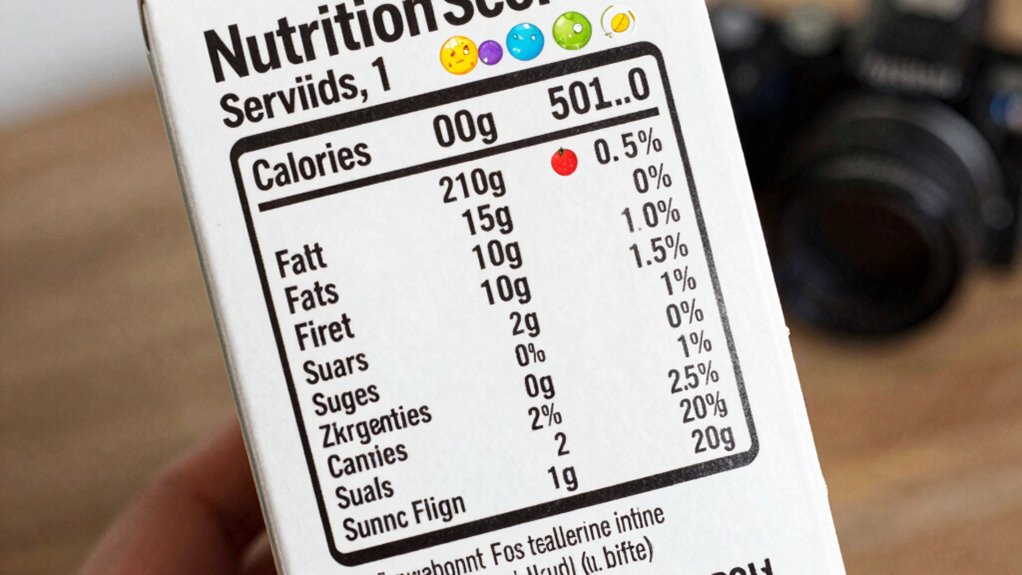

To quickly understand a nutrition label, start by checking the serving size to know how much you’re eating. Scan the calories first to assess energy content. Focus on nutrients to limit, like saturated fat, trans fat, sodium, and added sugars, and compare them to the beneficial ones like fiber and protein. Glance at the ingredient list for familiar, natural components. If you keep these tips in mind, you’ll make smarter choices effortlessly—you’ll see more details below to sharpen your skills.
Key Takeaways
- Check the serving size first to understand the nutrient amounts for that portion.
- Focus on calories and nutrients to limit (saturated fat, sodium, added sugars, cholesterol).
- Scan the ingredient list for familiar, whole foods and to avoid unwanted additives.
- Compare key nutrients per serving quickly to make healthier choices.
- Use the nutrition facts panel to assess if the food aligns with your dietary goals.
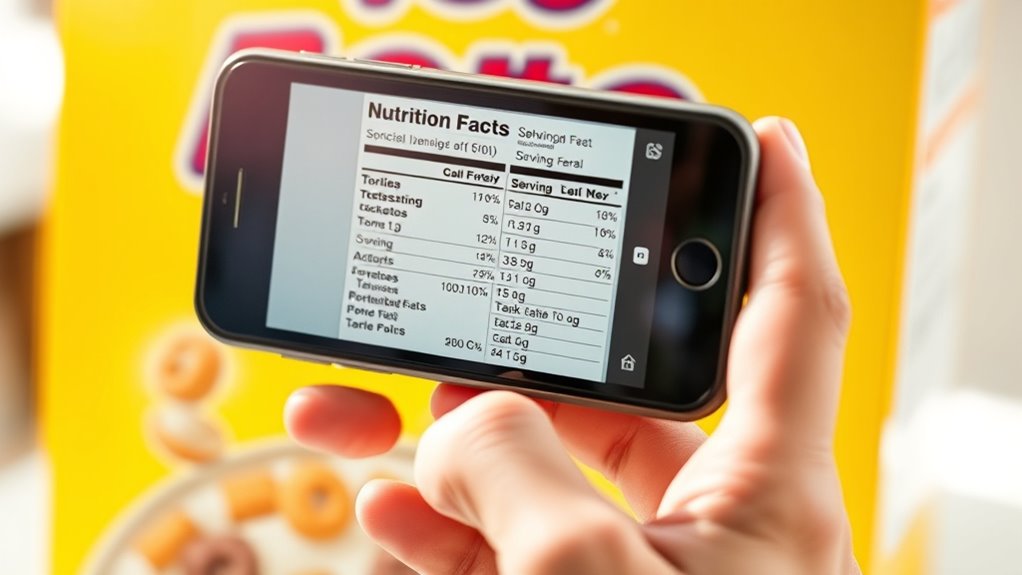
Have you ever wondered what those numbers and terms on a nutrition label really mean? It can feel overwhelming at first, but understanding the key parts can make choosing healthier foods much simpler. One of the most important sections to start with is the ingredient list. This list tells you exactly what’s inside the product, from the main ingredients to any additives or preservatives. If you’re trying to avoid certain foods—like gluten, nuts, or artificial sweeteners—reading the ingredient list carefully is your best bet. Look for familiar ingredients and avoid items with long, complicated chemical names if you’re aiming for whole, natural foods. The ingredient list is usually ordered from the most to the least abundant ingredient, so the first few items give you a quick snapshot of what you’re really eating.
Another essential aspect is understanding the serving size. This tells you how much of the product the nutrition facts are based on. It’s common for the serving size to be smaller than what you typically eat, so pay attention to this number. For example, if the serving size is one cup but you usually eat two cups, you need to double the calories, sugars, and other nutrients listed to get an accurate picture of your intake. Sometimes, the serving size might be listed as a piece, slice, or packet, which can be confusing if you don’t measure your food. Always check the serving size first, so you can interpret the rest of the numbers correctly. Additionally, understanding the role of affiliates in providing product recommendations can help you make more informed shopping choices without unnecessary bias.
Once you’ve got the ingredient list and serving size in mind, scan the nutrition facts panel. Focus on the calories per serving to gauge how energy-dense the food is. Then, look at the amounts of saturated fat, trans fat, sodium, added sugars, and cholesterol—these are nutrients you generally want to limit. Conversely, check for fiber, protein, vitamins, and minerals, which are beneficial. Remember, the numbers on the label are based on one serving, so adjust if you’re eating more or less. By keeping these points in mind—reading the ingredient list carefully, noting the serving size, and interpreting the nutrition facts—you stop guessing and start making informed choices quickly. This approach helps you navigate labels efficiently, making healthier decisions without wasting time or second-guessing what’s in your food.
Top picks for "read nutrition label"
Open Amazon search results for this keyword.
As an affiliate, we earn on qualifying purchases.
Frequently Asked Questions
How Often Should I Check Nutrition Labels When Shopping?
You should check nutrition labels every time you shop for a new product. Look at the ingredient list to guarantee it meets your dietary needs and avoid unwanted additives. Also, always verify the expiration date to assure freshness and safety. This habit helps you make informed choices quickly, preventing surprises at home. Regularly reviewing labels keeps you aware of what you’re consuming and supports healthier eating habits.
What Are Hidden Sugars on Nutrition Labels?
Imagine spotting tiny labels hiding in plain sight; that’s how hidden sugars appear on nutrition labels. They often include added sugar and sugar alcohols, which can sneak into foods unexpectedly. These hidden sugars boost sweetness without obvious names, making it tricky to spot them. Always check the ingredients for terms like corn syrup, high-fructose corn syrup, or maltose, so you know exactly what you’re consuming and can make healthier choices.
Do Organic or Natural Labels Affect Nutritional Information?
Organic or natural labels don’t usually change the actual nutritional information on packaging. Organic claims and natural labeling focus more on how the food is produced, like avoiding pesticides or preservatives, rather than its nutrient content. When reading labels, don’t assume organic or natural means healthier or lower in calories; always check the nutrition facts to understand the real nutritional value.
How Can I Compare Two Different Products Quickly?
Imagine your choices are a race—who wins? To compare products quickly, focus on ingredient comparison and brand differences. Check the serving size first, then scan the calories, sugars, and key nutrients. Look for minimal ingredients and familiar brands. This way, you spot healthier options without drowning in details, saving time and making smarter choices. It’s like a speed date—quick, clear, and to the point!
Are Serving Sizes Consistent Across Brands?
Serving size consistency varies across brands, so don’t assume they’re the same. Always check the serving size on each product’s label to compare accurately. Brands follow different standards for serving sizes, which can make quick comparisons tricky. To make informed choices, focus on the nutritional values per serving, not just the serving size. This way, you get a clear picture of how the products truly compare.
Conclusion
Now that you know how to quickly read a nutrition label, you’ll avoid the guesswork and make smarter choices at the grocery store. Just like a trusty compass guides a sailor through uncharted waters, your newfound skills will steer you toward healthier options with confidence. So, next time you’re shopping, channel your inner Sherlock Holmes—detective of your own health—and unravel those labels with ease. Happy reading, and may your pantry always be well-stocked!