
The Plate Method is a simple visual way to balance your meals without tracking apps. It encourages filling half your plate with vegetables and fruits, while splitting the remaining space between lean proteins and whole grains. This approach helps you control portions naturally and promotes mindful eating. It’s flexible to fit your dietary needs and supports long-term healthy habits. Keep exploring to discover how this easy method can transform your eating routine effectively.

Get workout gear delivered free with Prime
- Fast, free delivery on millions of items
- Prime Video, Amazon Music and more included
- Member-only deals all year
Key Takeaways
- The Plate Method visually guides portion sizes by dividing the plate into sections for vegetables, lean proteins, and whole grains.
- It eliminates the need for calorie counting, focusing instead on balanced food group proportions.
- Filling half the plate with vegetables naturally controls portions and promotes nutrient intake.
- The method is adaptable to individual dietary needs and encourages sustainable, mindful eating habits.
- It supports long-term nutritional understanding and healthier food choices without relying on tracking apps.

The Plate Method is a simple, visual way to help you make healthier meal choices without counting calories or tracking every nutrient. It relies on portion control and visual guidance, making it easier to manage your meals effortlessly. Instead of obsessing over exact measurements or complex food labels, you use your plate as a visual tool to balance your intake. This approach emphasizes dividing your plate into specific sections for different food groups, giving you a clear, straightforward plan that’s easy to follow.
The Plate Method simplifies healthy eating by visualizing balanced portions without calorie counting.
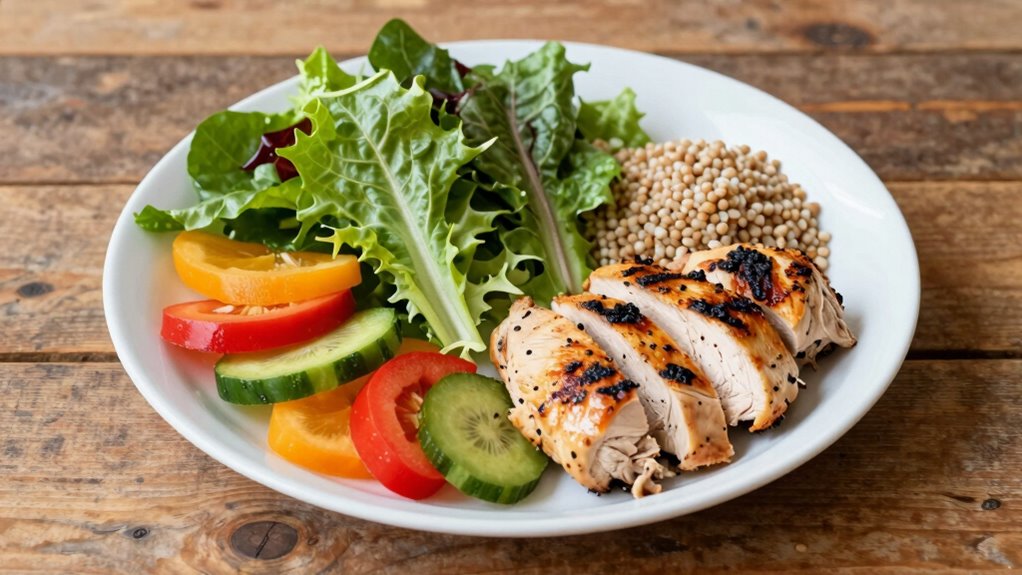
When you use the Plate Method, you start by imagining your plate divided into sections. Half of your plate should be filled with vegetables and fruits, which are rich in fiber, vitamins, and minerals. These foods provide volume and nutrients without adding many calories, helping you stay full and satisfied. The other half should be split between lean proteins—like chicken, fish, beans, or tofu—and whole grains such as brown rice, quinoa, or whole wheat bread. This division ensures you’re getting a balanced mix of macronutrients, supporting energy levels and overall health.
This visual guidance makes portion control simple. Instead of measuring each serving, you just focus on filling your plate according to these proportions. For example, filling half your plate with leafy greens and colorful vegetables, a quarter with a lean protein, and a quarter with a whole grain. This method naturally limits overeating because you’re controlling portions without having to count every calorie or track every gram. It also encourages mindful eating, since you’re more aware of what’s on your plate and how much you’re consuming.
The beauty of the Plate Method is that it’s flexible and adaptable to your preferences. You can modify the sections depending on your dietary needs or personal tastes, but the core principle remains the same: use visual guidance to maintain balanced portions. Over time, this habit becomes second nature, helping you develop a healthier relationship with food. It’s particularly helpful if you find calorie counting tedious or if you want a sustainable way to improve your diet. With consistent use, you’ll start to see better portion control, better nutrition, and fewer feelings of guilt or deprivation. Additionally, understanding nutritional balance can further enhance your ability to make informed choices that support overall well-being.
As an affiliate, we earn on qualifying purchases.
Frequently Asked Questions
Can the Plate Method Be Used for Weight Loss?
Yes, you can use the plate method for weight loss by practicing portion control and mindful eating. Filling half your plate with vegetables, a quarter with lean proteins, and a quarter with carbs helps you manage calorie intake naturally. This approach encourages you to slow down, savor your food, and recognize true hunger cues, making it easier to avoid overeating and support your weight loss goals effectively.
Is the Plate Method Suitable for Children?
You bet the plate method is suitable for children, because it promotes healthy child nutrition and teaches portion control early on. Remember, “you are what you eat,” so shaping good habits now sets them up for a healthier future. Use colorful, balanced plates to make meals appealing, and involve kids in choosing and preparing food. This way, they learn to enjoy nutritious foods and develop lifelong healthy eating habits.
How Does the Plate Method Compare to Calorie Counting?
The plate method offers a simple, visual way to manage portion control compared to calorie counting, which can be tedious and restrictive. With the plate method, you focus on intuitive eating, listening to your hunger cues and choosing balanced portions. It promotes mindful eating habits, making it easier to maintain a healthy diet without obsessing over calorie numbers. This approach encourages a sustainable, stress-free way to nourish your body.
Can Vegetarians Effectively Use the Plate Method?
Yes, vegetarians can effectively use the plate method by filling half their plate with vegetables, a quarter with healthy grains, and the remaining quarter with vegetarian protein sources like beans, tofu, or lentils. You can customize your vegetarian options to guarantee you’re getting balanced nutrients and enough protein. This simple visual guide helps you make smarter choices without counting calories, making it easier to maintain a healthy diet.
Are There Any Health Conditions That Restrict Using This Method?
Around 1 in 3 adults worldwide has a health condition that can limit their dietary choices, so yes, some medical restrictions might make the Plate Method challenging. Conditions like diabetes or kidney disease require tailored portioning and nutrient control. You should always consult your healthcare provider to adapt the Plate Method to fit your specific medical restrictions and dietary limitations, ensuring safety while maintaining balanced nutrition.
As an affiliate, we earn on qualifying purchases.
Conclusion
Think of your plate as a balanced canvas, where each section paints a picture of nourishment. By using the plate method, you’re not just portioning food—you’re creating harmony on your plate, like a well-composed masterpiece. It’s a simple symbol of control and balance, guiding you toward healthier choices without the need for apps. Embrace this visual harmony, and let your plate become a symbol of mindful eating and lasting well-being.
As an affiliate, we earn on qualifying purchases.
As an affiliate, we earn on qualifying purchases.
Fall Picks
fall essentials
As an affiliate, we earn on qualifying purchases.