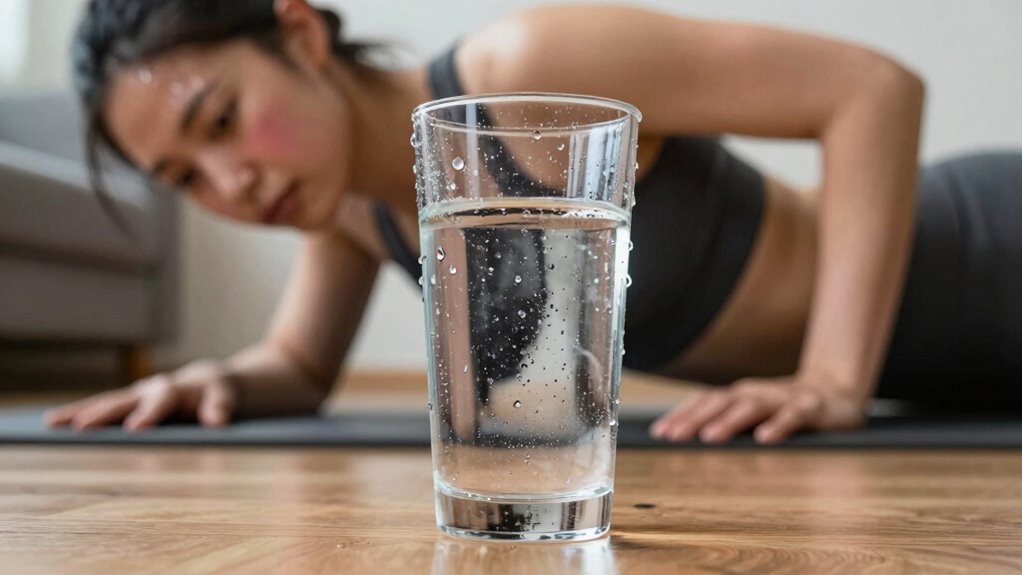

During your home workouts, signs you’re under-drinking include feeling thirsty, having a dry mouth, feeling dizzy or lightheaded, experiencing fatigue despite warming up well, noticing dark urine or infrequent urination, and getting muscle cramps or spasms. These symptoms show your body isn’t getting enough fluids to stay properly hydrated. Recognizing these early signals can help you avoid performance drops or health issues. Keep exploring to learn more ways to stay hydrated and get the most out of your workouts.
Key Takeaways
- Thirst and dry mouth are early indicators you need more fluids during your workout.
- Dizziness or lightheadedness can signal dehydration and insufficient hydration.
- Dark urine color and infrequent urination suggest dehydration and the need for increased fluid intake.
- Muscle cramps or spasms may point to electrolyte imbalances caused by under-hydration.
- Feeling unusually fatigued despite a warm-up can be a sign you’re not drinking enough fluids.

Sahara Sailor Water Bottle 32oz, Durable and Leakproof Water Bottles Motivational with Time Marker, Tritan, BPA Free, Wide Mouth with Easy Clean Brush for Gym, Travel, Home, School, Office (1 Bottle)
Stay Hydrated Throughout the Day: staying hydrated is often easier said than done. With the Sahara Sailor clear…
As an affiliate, we earn on qualifying purchases.
As an affiliate, we earn on qualifying purchases.
Recognizing Thirst and Dry Mouth During Exercise
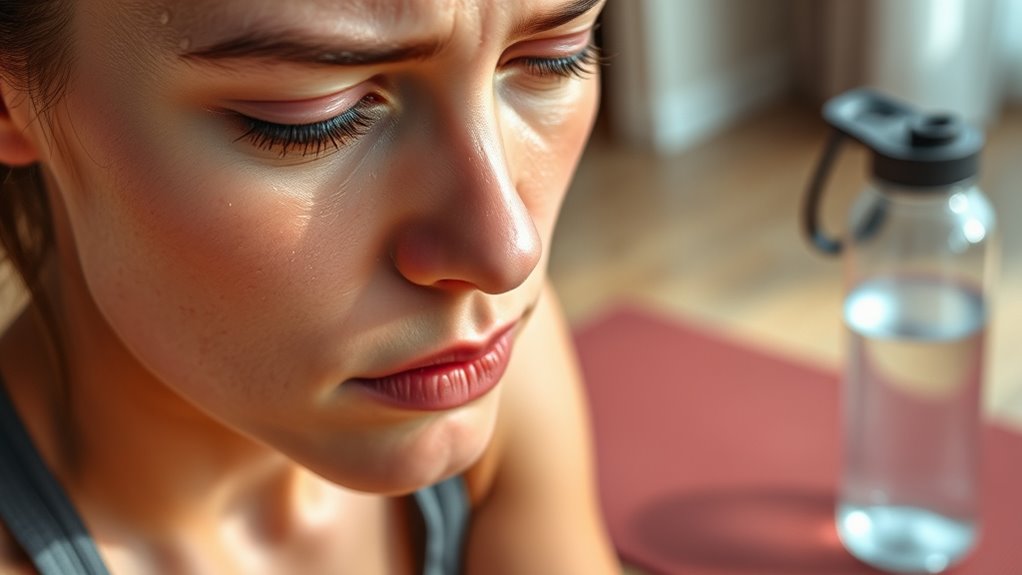
During exercise, your body signals that it needs hydration through sensations like thirst and dry mouth. These are your early warnings that your fluid levels are dropping. When you feel thirsty, it’s a clear sign to sip water before dehydration gets worse. Dry mouth occurs because your saliva production decreases as you lose fluids, making your mouth feel parched. Paying attention to these signals helps you stay ahead of dehydration, which can impair performance and recovery. Recognizing these signs early allows you to maintain ideal hydration, keeping your energy levels steady and your workout effective. Additionally, understanding the importance of proper hydration can help prevent issues like dehydration symptoms and maintain optimal physical performance. Responding promptly to thirst and dry mouth keeps you safe and improves your overall exercise experience. Being aware of indoor air quality can also influence your hydration needs, as dry indoor environments may exacerbate dehydration during workouts. Proper hydration is especially crucial in environments with low humidity, which can further accelerate fluid loss. Moreover, maintaining good hydration can help safeguard against exercise-related fatigue, ensuring you stay energized throughout your workout. Maintaining awareness of hydration status is essential to optimize your performance and recovery.
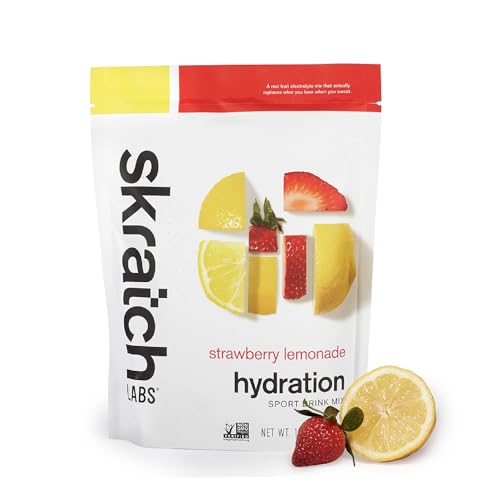
Skratch Labs Hydration Sports Drink Mix – Real‑Fruit Electrolyte Powder for Fast Hydration & Endurance | Strawberry Lemonade | 20 Servings | Vegan, Non‑GMO, Clean Ingredients
ELECTROLYTE REPLACEMENT – Replaces the electrolytes lost in sweat with a balanced profile of sodium, potassium, and glucose…
As an affiliate, we earn on qualifying purchases.
As an affiliate, we earn on qualifying purchases.
Feeling Fatigued or Weak Despite a Good Warm-Up
Even if you’ve paid attention to your hydration and warmed up properly, you might still feel fatigued or weak during your workout. This often signals that your body isn’t getting enough fluids before exercise, leading to decreased energy levels. Dehydration reduces blood volume, making it harder for your muscles to receive oxygen and nutrients efficiently. As a result, you may feel sluggish or unable to maintain your usual strength, even with a good warm-up. Keep in mind that hydration starts well before you begin exercising; drinking water consistently throughout the day is essential. If you notice persistent fatigue despite proper hydration, consider increasing your daily fluid intake and paying closer attention to your body’s signals. Proper hydration can notably improve your overall workout performance and energy levels. Recognizing the early signs of dehydration can help you prevent performance declines and stay energized throughout your workout. Additionally, understanding the signs of under-drinking can help you identify when your hydration habits need adjustment before your performance suffers. Monitoring your urine color is another simple way to assess your hydration status and make necessary adjustments. Being aware of your body’s hydration cues can also help you avoid performance declines and maintain your workout intensity.

QLUR Water Bottle with Straw, 32oz Motivational Water Bottles with Time Marker to Drink, Tritan BPA Free, 1L Sports Water Bottle with Carry Strap LeakProof for Women Gym Fitness Outdoor (1 Pack)
Motivational Time Marker: QLUR 32 oz Water Bottles as your daily partner is designed with motivational quotes by…
As an affiliate, we earn on qualifying purchases.
As an affiliate, we earn on qualifying purchases.
Experiencing Dizziness or Lightheadedness
Have you ever felt dizzy or lightheaded during your workout? These sensations often signal dehydration, meaning your body isn’t getting enough fluids. When you’re under-hydrated, blood volume decreases, reducing blood flow to your brain and causing you to feel faint. You might also notice your vision blurring or feeling unsteady on your feet. It’s important to listen to your body—stop exercising immediately if you experience dizziness. Drink small sips of water to rehydrate gradually. Consistent hydration helps maintain your blood pressure and keeps your brain supplied with oxygen and nutrients. Ignoring these signs can lead to more serious issues, so stay attentive to how your body responds during your workouts and drink enough water before, during, and after exercise. Paying attention to hydration also supports air purifier maintenance, ensuring your environment stays healthy and clean. Proper hydration also influences overall wellness, which is vital for effective workouts.

Liquid I.V.® Hydration Multiplier – Variety Pack – Lemon Lime, Passion Fruit, Strawberry, Tropical Punch | Electrolyte Powder Drink Mix | 1 Pack (16 Servings)
HYDRATION MIX: A great-tasting, non-GMO electrolyte drink mix that delivers hydration faster than water alone.
As an affiliate, we earn on qualifying purchases.
As an affiliate, we earn on qualifying purchases.
Noticing Changes in Urine Color and Frequency

Paying attention to changes in your urine color and how often you urinate can reveal a lot about your hydration status. If your urine is dark yellow or amber, it signals you might be under-hydrated and need to drink more water. Conversely, clear or light-colored urine usually indicates proper hydration. Additionally, the frequency of urination matters—if you’re urinating less than usual, it could mean dehydration, while frequent urination might suggest overhydration or excessive water intake. During your workouts, tracking these signs helps you stay on top of your hydration needs. Remember, consistent hydration supports your performance and recovery, so pay close attention to these subtle changes and adjust your water intake accordingly. Monitoring urine color and frequency can also help prevent health issues such as urinary tract infections or kidney problems. Being aware of your hydration levels allows you to make timely adjustments and maintain overall wellness. Recognizing the importance of body hydration signals empowers you to optimize your health and exercise outcomes. Understanding your body’s hydration status through these indicators enables more precise and effective hydration management. Incorporating proper hydration strategies can also prevent dehydration-related fatigue, ensuring you stay energized throughout your workouts.
Experiencing Muscle Cramps or Spasms During Your Routine
Muscle cramps or spasms during your workout can be a sign that your body isn’t adequately hydrated or has an electrolyte imbalance. When you’re not drinking enough water, your muscles can become deprived of essential minerals like potassium, calcium, and magnesium, which are crucial for normal muscle function. This imbalance can lead to sudden, painful cramps, often in your legs or feet. If you notice these spasms, it’s a clear indicator to hydrate more consistently, especially before, during, and after your workout. Proper hydration helps maintain electrolyte levels, reducing the risk of cramps and spasms. Keep a water bottle nearby and sip regularly. Paying attention to these signals can help you stay comfortable and prevent interruptions in your exercise routine. Additionally, electrolyte balance is vital for optimal muscle performance, and incorporating electrolyte-rich drinks can support this process. Maintaining proper hydration habits is essential for preventing cramps and ensuring your muscles function smoothly. AI-powered tools can assist in tracking your hydration habits and reminding you to drink enough fluids throughout the day. Recognizing the signs of dehydration early can also help you avoid more serious issues related to electrolyte deficiency.
Frequently Asked Questions
Can Dehydration Affect My Workout Performance Over Time?
Yes, dehydration can negatively impact your workout performance over time. When you’re under-hydrated, you may experience fatigue, muscle cramps, and decreased strength, making it harder to complete your exercises effectively. It also impairs your endurance and increases recovery time. To stay at your best, drink water consistently before, during, and after your workouts. Proper hydration keeps your energy levels high and helps you perform consistently over the long term.
How Much Water Should I Drink Before Starting Exercise?
Water wise? You should drink about 16 to 20 ounces of water 2-3 hours before your workout, and another 8 ounces about 20-30 minutes before starting. Staying sufficiently hydrated fuels your fitness, fuels your focus, and fights fatigue. Listen to your body’s signals, and don’t forget to sip steadily during exercise. Proper hydration keeps your performance powerful and your progress persistent.
Are There Signs of Dehydration That Appear After Exercise Ends?
After exercise, you might notice signs of dehydration like persistent thirst, dry mouth, or dark-colored urine. You could also feel tired, dizzy, or have a headache. If your muscles cramp or your skin feels less elastic, those are signs you need to hydrate more. Pay attention to these signals and drink fluids promptly to help your body recover and stay healthy.
Does Caffeine Intake Impact Hydration Levels During Workouts?
They say, “Too much of a good thing can be bad,” and caffeine’s impact on hydration is no exception. During workouts, caffeine can act as a diuretic, making you urinate more and risking dehydration. However, moderate intake usually doesn’t cause significant issues if you’re also drinking enough water. Stay mindful of your caffeine consumption and balance it with proper hydration to keep your workout performance ideal.
What’s the Best Way to Rehydrate After a Long Session?
After a long session, you should rehydrate with a mix of water and electrolytes, like a sports drink or coconut water. Drink small amounts frequently to replenish lost fluids and minerals. If you’re feeling particularly dehydrated, consider an oral rehydration solution. Avoid alcohol and caffeine immediately afterward, as they can dehydrate you further. Prioritize hydration to help your body recover and reduce soreness.
Conclusion
If you notice symptoms like dizziness or muscle cramps during your workout, you might not be drinking enough water. For example, Sarah, a regular runner, started experiencing cramps despite her training. After increasing her hydration, she felt more energized and cramps disappeared. Paying attention to your body’s signals and staying properly hydrated can make a huge difference in your performance and safety. Don’t ignore these signs—your body needs water to keep you moving strong and injury-free.