The idea that you need to consume protein immediately after your workout isn’t actually true. Your body can utilize protein for muscle repair for several hours post-exercise, so rushing to eat right away isn’t necessary. Instead, focus on your overall daily protein intake and maintaining consistent, balanced meals. Prioritizing long-term habits and total nutrition is more effective for muscle growth and recovery. If you keep going, you’ll discover how timing really fits into a smarter approach.
Key Takeaways
- Immediate post-workout protein intake isn’t essential; your body can utilize protein for hours afterward.
- Overall daily protein consumption matters more than specific timing after exercise.
- Consistent, balanced nutrition throughout the day supports muscle repair better than focusing solely on post-workout intake.
- Hydration, sleep, and active recovery are more impactful on muscle recovery than exact protein timing.
- Prioritize sustainable habits and overall nutrition over stressing about consuming protein immediately after training.
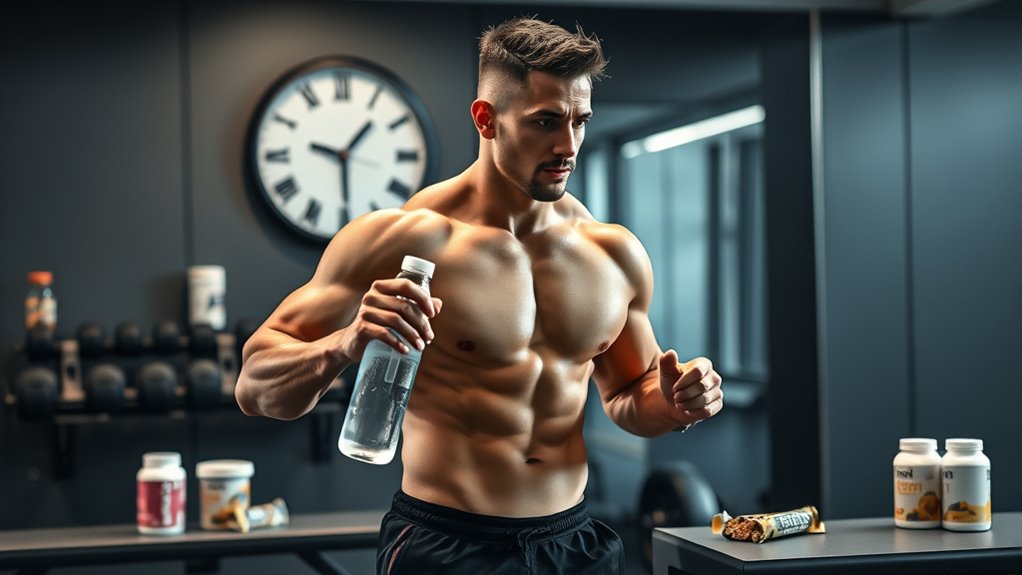
Many fitness enthusiasts believe that timing your protein intake is fundamental for muscle growth, but science suggests otherwise. The idea that you need to consume protein immediately after your workout to maximize muscle gains is widespread, yet research shows that the window of opportunity isn’t as narrow as many think. Instead, your focus should be on overall daily protein intake and consistent nutrition, rather than obsessing over the exact moment you consume it. When it comes to post workout nutrition, the key is guaranteeing your body has enough amino acids to support muscle recovery and growth, but the timing isn’t as critical as once believed. You don’t need to rush to ingest a protein shake within 30 minutes of finishing your session. The body’s ability to utilize protein for muscle repair extends over several hours, so spreading your intake evenly throughout the day is more effective than fixating on immediate post-exercise consumption.
Muscle recovery strategies emphasize the importance of a balanced approach. Instead of stressing over the precise timing, prioritize consuming a good source of protein in your meals throughout the day. This steady supply ensures that your muscles always have the nutrients they need for repair and growth. Adequate protein intake, combined with sufficient calories, enhances recovery and helps prevent injuries. The myth that you must consume protein immediately after training can lead to unnecessary stress and a rigid eating schedule, which might even hinder your overall progress. Instead, consider your overall nutritional pattern and aim for regular, well-rounded meals that include lean proteins, healthy fats, and complex carbs. Additionally, maintaining supportive habits like proper hydration and sleep can significantly improve muscle recovery and overall fitness progress.
Many people also overlook hydration and other recovery strategies that play an essential role in muscle repair. Proper hydration, sleep, and active recovery all contribute to effective muscle recovery, often more than the timing of your protein intake. The focus should be on creating sustainable habits that support your fitness goals in the long run. Remember, consistency beats timing when it comes to muscle growth. As long as you’re meeting your daily protein needs, the specific moment you consume it isn’t as crucial. So, rather than stressing over the clock, aim to distribute your protein intake evenly, stay hydrated, and follow a well-rounded nutrition plan to optimize your muscle recovery strategies.

Premier Protein Shake, Chocolate, 30g Protein, No Added Sugar, 24 Vitamins & Minerals to Support Immune Health, 11.5 fl oz, 12 Pack (Packaging May Vary)
HIGH PROTEIN & NO ADDED SUGAR: 30g of protein and no added sugar per shake fuels your body…
As an affiliate, we earn on qualifying purchases.
As an affiliate, we earn on qualifying purchases.
Frequently Asked Questions
Does Protein Timing Affect Muscle Growth in Older Adults?
Protein timing does influence muscle preservation in older adults, helping counteract the aging process. While immediate post-workout intake isn’t essential, consuming protein within a couple of hours supports muscle growth and recovery. You should focus on spreading your protein intake throughout the day to optimize muscle maintenance, especially as you age. This approach ensures you provide your body with the nutrients needed to combat muscle loss and promote healthier aging.
Can Plant-Based Proteins Be as Effective as Animal Proteins for Timing?
Plant-based proteins can be just as effective as animal proteins for timing, especially when you choose diverse sources like beans, lentils, and soy. Their benefits include fiber and antioxidants, which support overall health. When compared to animal protein, plant options may be lower in certain amino acids, but combining different plant sources or supplementing can guarantee you get the necessary amino acids for muscle repair and growth, making timing equally effective.
How Does Meal Frequency Influence Protein Absorption?
You can’t have your cake and eat it too; meal frequency does influence protein absorption. Eating at regular meal intervals helps optimize absorption rates, ensuring your body gets a steady supply of amino acids. Spreading your protein intake throughout the day allows for better muscle repair and growth, rather than overwhelming your system all at once. So, aim for consistent intervals to maximize benefits without putting your digestion on overload.
Is There a Difference in Recovery if I Skip Post-Workout Protein?
Skipping post-workout protein doesn’t drastically affect your recovery because your body continues to absorb nutrients over time. While immediate protein intake can optimize protein absorption and nutrient synergy, it’s not essential. Focus on overall daily protein intake, spread evenly, to support muscle repair. Prioritize consistent nutrition and proper recovery techniques, and you’ll still see progress even if you delay or skip that immediate post-training protein shot.
What Role Does Total Daily Protein Intake Play Compared to Timing?
Total daily protein intake plays a bigger role than timing alone. Prioritize your overall meal spacing to evenly distribute protein throughout the day, which supports better muscle recovery and growth. Remember, protein bioavailability varies between sources, so choose high-quality options. Focusing on consistent intake guarantees your body has what it needs, regardless of whether you consume protein immediately post-workout or later, making overall intake more important than precise timing.

Optimum Nutrition Gold Standard 100% Whey Protein Powder, Double Rich Chocolate 1.98 Pound (Packaging May Vary)
24 g High-Quality Whey Protein per Scoop – 100% of the protein from whey for a fast-absorbing, complete…
As an affiliate, we earn on qualifying purchases.
As an affiliate, we earn on qualifying purchases.
Conclusion
Don’t let the myth of a strict “right after” window trap you. Your body’s like a skilled gardener—it appreciates consistency over fleeting moments. Focus on meeting your daily protein needs, and your muscles will flourish just fine without stressing over a clock. Flexibility and overall nutrition matter more than timing. So relax, enjoy your workouts, and trust that steady, balanced nourishment is the true key to growth—no ticking clock required.

JYM Supplement Science Post JYM Active Matrix Rainbow Sherbet Amino Recovery Powder Pure Creatine HCL, BCAA’s, Glutamine, Carnitine, Betaine, Taurine for Strength, Repair, Performance 30 Servings
QUALITY INGREDIENTS – The BCAAs (Branched chain amino acids), beta-alanine, creatine HCl and betaine found in Post JYM…
As an affiliate, we earn on qualifying purchases.
As an affiliate, we earn on qualifying purchases.

5% Nutrition Rich Piana BiggerByTheDay | Anabolic Muscle Builder, Hardcore Mass Gainer | Turkesterone, HICA, Epicatechin, Leucine | 120 Capsules (30 Servings)
BIGGERBYTHEDAY is the most potent muscle building supplement on the market! We took the most powerful all-natural muscle…
As an affiliate, we earn on qualifying purchases.
As an affiliate, we earn on qualifying purchases.