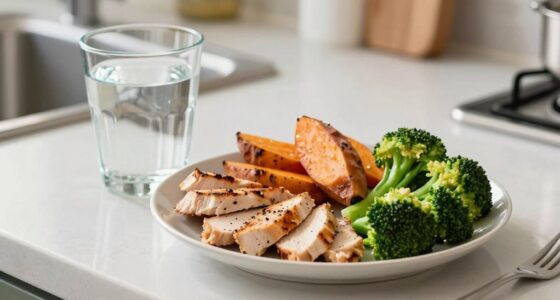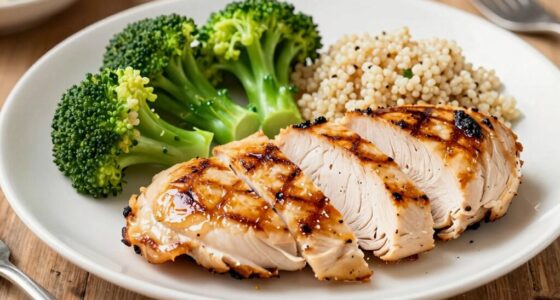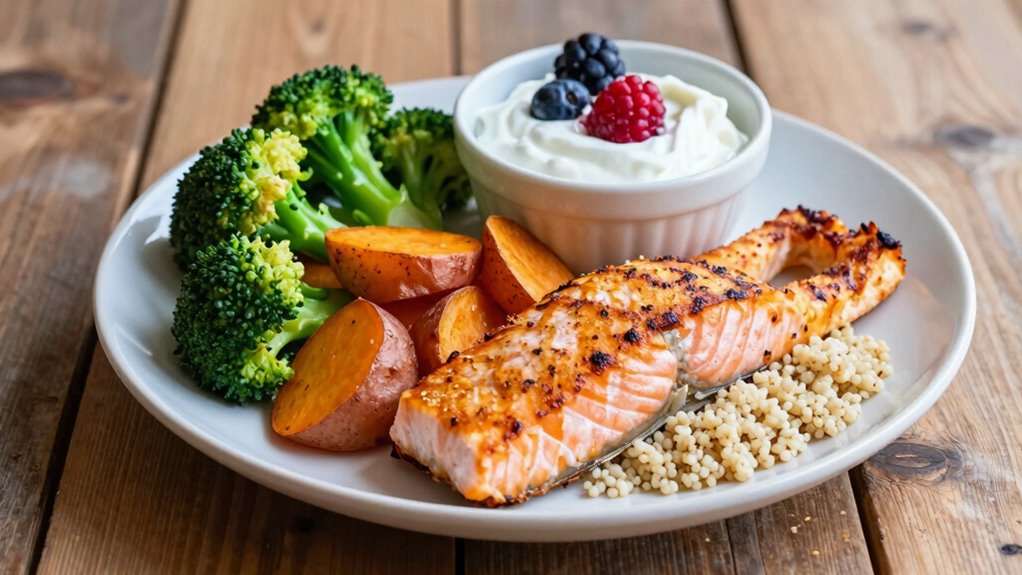

After your workout, fueling your body with a simple plate that includes carbs, protein, and electrolytes is key to recovery. Opt for quick, nutrient-dense options like a banana with peanut butter, Greek yogurt with berries, or a balanced smoothie. Hydrate with water or electrolyte drinks to replenish lost minerals. Controlling timing and using modern kitchen tools makes preparation easier, helping you recover faster and get back to training stronger—that’s just the start of what you can learn.
Key Takeaways
- Combine carbohydrates and protein, like a banana with peanut butter or yogurt with berries, for effective muscle recovery.
- Consume recovery foods within 30-60 minutes post-workout to maximize nutrient uptake and repair.
- Prepare simple, nutrient-dense plates using smart appliances for quick post-exercise nourishment.
- Include hydrating fluids with electrolytes, such as coconut water or electrolyte drinks, to replenish lost minerals.
- Incorporate whole, minimally processed foods to support energy restoration and reduce soreness efficiently.
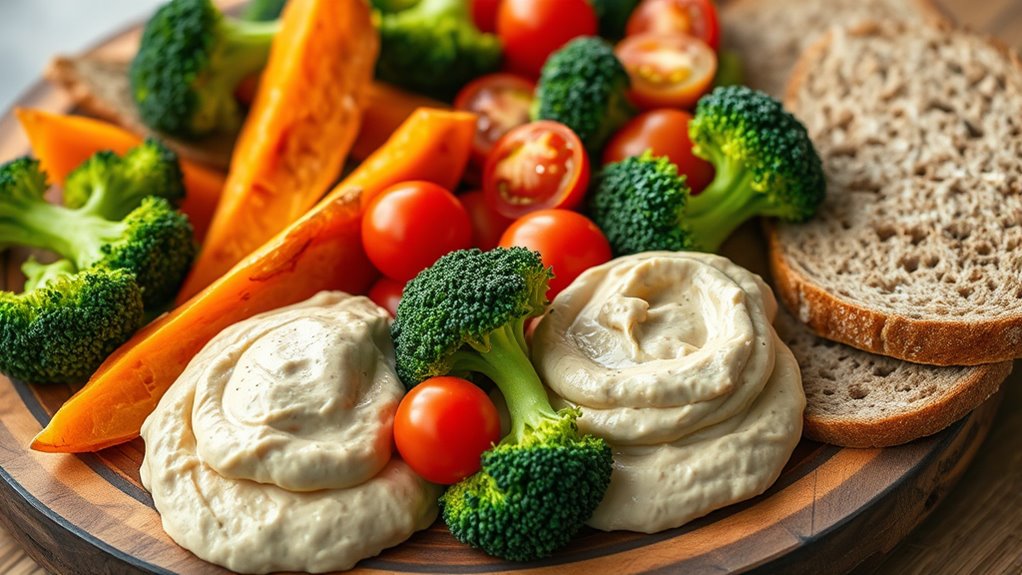
After an intense workout, fueling your body with the right recovery foods is essential to restore energy, repair muscles, and reduce soreness. The key is choosing the right post workout snacks that replenish glycogen stores and provide the nutrients your muscles need to recover efficiently. Think about snacks that combine carbohydrates and protein, like a banana with peanut butter or Greek yogurt with berries. These options are quick to prepare, easy to digest, and packed with nutrients that kickstart your recovery process. Consuming these snacks within 30 to 60 minutes after training ensures your muscles get the fuel they need when they are most receptive to nutrient uptake. Incorporating modern kitchen technology such as smart appliances can make preparing these nutritious snacks even more convenient. Hydration strategies play a pivotal role in recovery as well. During exercise, you lose fluids and electrolytes through sweat, which can impair muscle function and delay recovery if not replaced. Drinking water is essential, but consider adding electrolyte-rich drinks if your workout was particularly intense or long-lasting. Coconut water, sports drinks, or even a homemade electrolyte solution can help replenish lost minerals like sodium, potassium, and magnesium. Staying well-hydrated speeds up the removal of metabolic waste products from your muscles and supports overall recovery. Remember, hydration isn’t just about drinking water; it’s about maintaining a balance that supports muscle repair and keeps your energy levels steady. Incorporating hydration strategies into your post workout routine ensures you’re not only replacing fluids but also optimizing nutrient delivery to your muscles. Drinking a glass of water alongside your post workout snack makes it easier for your body to absorb nutrients and start the repair process. If you’re sweating heavily, adding a pinch of salt to your water or choosing a beverage with electrolytes can help restore the balance of minerals in your body. Listening to your thirst cues is important, but proactively hydrating can prevent dehydration from setting in, especially on hot days or after intense sessions. Ultimately, pairing smart post workout snacks with effective hydration strategies can transform your recovery. It’s about creating a simple yet effective plate that delivers the right nutrients at the right time, helping you bounce back faster and prepare for your next workout. Focus on balanced, nutrient-dense foods and hydration that supports your body’s natural repair processes. With consistency, these habits will become integral to your fitness routine, making recovery less of a chore and more of a fundamental step toward achieving your goals.

Pure Protein Fruity PEBBLES™ Protein Bars – 20g Protein, 3g Sugar, 190 Calories (4 count) Low Sugar* High Protein Snack – Gluten Free – Perfect for a Healthy Snack.
Protein Bars Low Sugar* High Protein – this bar contains just 3g of sugar and balanced macros, offering…
As an affiliate, we earn on qualifying purchases.
As an affiliate, we earn on qualifying purchases.
Frequently Asked Questions
Can I Eat Recovery Foods if I Have Food Allergies?
Yes, you can still enjoy recovery foods despite food allergies. Look for allergy-friendly options like fruits, vegetables, and grains that suit your needs. You can also make ingredient substitutions, such as using dairy-free yogurt or nut-free protein powders. Always read labels carefully and choose whole, natural foods whenever possible to guarantee your recovery meal is safe, nutritious, and tailored to your allergy restrictions.
How Soon Should I Eat After My Workout?
You should aim to eat within the ideal window, ideally 30 to 60 minutes after your workout. This timing of intake helps replenish glycogen stores, repair muscles, and reduce soreness. Don’t delay too long, as your body benefits most from nutrients soon after training. Keep your recovery meal balanced with carbs and protein to maximize your recovery and get back to training stronger.
Are Plant-Based Recovery Foods as Effective as Animal-Based?
Plant-based recovery foods can be just as effective as animal-based options. You benefit from plant-based advantages like high fiber, antioxidants, and plant proteins that help reduce inflammation and restore energy. Compared to animal-based foods, they often contain less saturated fat and are easier to digest. By choosing a variety of plant foods, you guarantee your body gets essential nutrients for ideal recovery after training.
Should I Hydrate Before or After Eating Recovery Foods?
You should prioritize post-workout hydration immediately after training. Proper hydration timing helps replenish fluids lost during exercise, ensuring your body recovers effectively. Drinking water or electrolyte drinks right after your workout supports muscle repair and prevents dehydration. While eating recovery foods is essential, don’t forget that post-workout hydration is your first step to ideal recovery. So, hydrate first, then enjoy your nutritious recovery meal.
Can Recovery Foods Help With Muscle Soreness?
Yes, recovery foods can help reduce muscle soreness by supporting nutrient timing and proper meal composition. When you eat the right mix of carbs and protein soon after exercising, you promote muscle repair and replenish glycogen stores. This targeted approach speeds up recovery, decreases soreness, and gets you back to training faster. Focus on balanced, nutrient-dense meals that optimize your recovery process and minimize muscle discomfort.

RECOVER 180 Organic Sports Hydration Drink, No Sugar Added, 20 Calorie Sports Beverage, Organic Flavors With Vitamins, Potassium-Packed Electrolytes (16.9 Fl Oz (Pack of 12), Variety Pack)
USDA Organic
As an affiliate, we earn on qualifying purchases.
As an affiliate, we earn on qualifying purchases.
Conclusion
Remember, choosing the right recovery foods is like fueling your car for the next trip—you need the right ingredients to keep going strong. By filling your plate with proteins, carbs, and healthy fats, you give your body exactly what it needs to repair and recharge. Keep it simple and balanced, and you’ll bounce back faster than you think. Think of your post-workout meal as the fuel that keeps your momentum going—essential for your fitness journey.

Magic Bullet Blender, Small, Silver, 11 Piece Set
Included: (1) 250W motor base, (1) cross-blade, (1) tall cup, (1) short cup, (1) party mug, (2) lip…
As an affiliate, we earn on qualifying purchases.
As an affiliate, we earn on qualifying purchases.
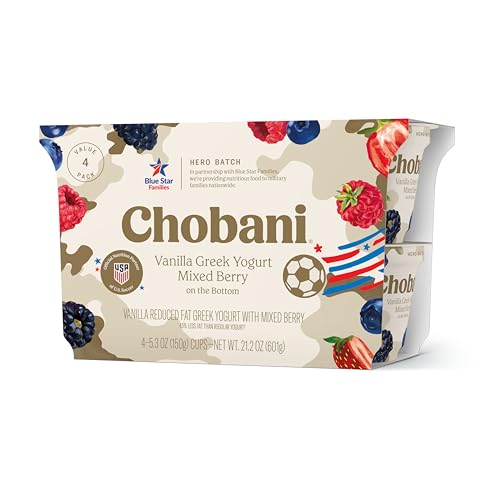
Chobani® Low-Fat Vanilla Greek Yogurt, Mixed Berry on the Bottom 5.3oz 4-pack
Delicious Chobani Greek Yogurt
As an affiliate, we earn on qualifying purchases.
As an affiliate, we earn on qualifying purchases.