The legs-back-arms drill on the rower quickly corrects common technique issues by teaching you to engage the right muscles in proper sequence. Focus on pushing through your heels, keeping your back straight, and initiating the drive with your legs first. Avoid rushing or using your arms too early. Practicing this drill regularly helps improve posture, reduce injury risk, and build better rowing habits. Keep going, and you’ll discover how to maximize your form even further.
Key Takeaways
- Proper execution starts with driving through the heels, initiating movement with the legs first.
- Maintain a straight back and avoid leaning back prematurely to ensure correct posture.
- Sequentially engage legs, then lean back slightly from hips, followed by pulling with the arms.
- Avoid common mistakes like using arms first, excessive backward lean, or rushing the movement.
- Consistent practice with focus on technique quickly corrects form and improves rowing efficiency.

Have you ever wondered if there’s a quick way to improve your posture or alleviate discomfort? The answer might be simpler than you think, especially when it comes to using the rowing machine. The key is mastering the legs-back-arms drill, which targets your entire movement pattern and guarantees you’re engaging the right muscles with proper technique. When you focus on this, you’ll see improvements in your posture and reduce the risk of common mistakes that can lead to strain or injury.
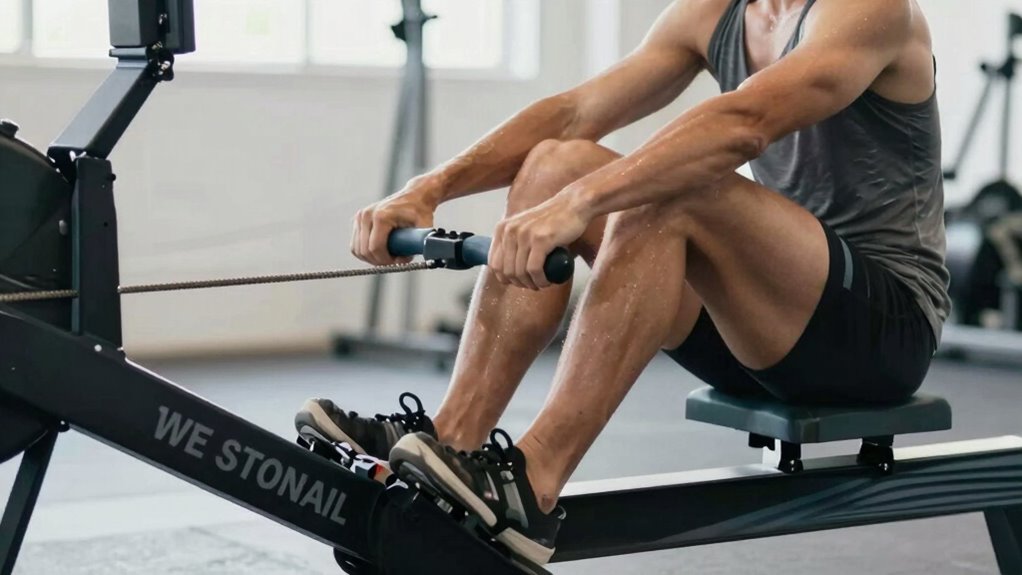
The first step is understanding how to perform the drill correctly. Start with your legs—push through your heels to extend your knees, powering the drive with your legs. It’s essential to keep your back straight and avoid leaning back too early or hunching forward. Many people make the common mistake of initiating the drive with their arms or bending their back excessively. Instead, focus on a smooth, sequential movement: legs first, then lean back slightly from the hips, and finally, pull with your arms. This proper technique ensures that each part of your body works in harmony, reducing stress on your joints and muscles.
Start with your legs, keep your back straight, and move smoothly through each phase for proper rowing technique.
As you pull the handle towards your lower chest, keep your shoulders relaxed and avoid shrugging or overusing your arms. Many beginners rush this phase or pull with their arms first, which diminishes the effectiveness of the workout and can cause shoulder tension. Instead, think of the motion as a chain—your legs power the movement, your back follows, and your arms finish the job. This sequence is essential for developing strength and maintaining good posture during the exercise.
When you reset at the front of the machine, remember to maintain a slight bend in your knees and keep your core engaged. This helps stabilize your spine and prevents you from overextending or slouching. A common mistake here is letting your shoulders slump forward or your back round out, which can cause discomfort over time. Focus on keeping your posture tall and your movements controlled, not rushed. Incorporating proper technique into your routine not only maximizes the benefits but also minimizes the risk of injury.
Practicing this drill regularly will help ingrain the proper technique, making your workouts more efficient and safer. It’s about quality over quantity—doing the movement correctly is far more beneficial than simply completing repetitions. As you become more accustomed to the proper leg, back, and arm sequence, you’ll notice improvements in your posture, increased strength, and less discomfort during and after workouts. Remember, the secret to quick progress lies in paying attention to form, avoiding common mistakes, and consistently practicing the correct technique.

Rowing Machines for Home, MOSUNY Magnetic Rowing Machine, 16-Level Adjustable Resistance, 350 lb Weight Capacity, Upgraded Dual Slide Rails with Data Display Screen
16-Level Powerful Magnetic:MOSUNY rowing machine is equipped with a high-quality magnetic control system and an upgraded 16-level adjustable…
As an affiliate, we earn on qualifying purchases.
As an affiliate, we earn on qualifying purchases.
Frequently Asked Questions
How Often Should I Perform This Drill Weekly?
You should perform this drill 2 to 3 times a week to optimize training frequency and prevent injury. Consistency helps build strength and technique, but giving your muscles time to recover is crucial for injury prevention. Listen to your body and avoid overdoing it, especially if you’re new to rowing or strength training. Incorporating rest days ensures your muscles repair properly, reducing the risk of strain or overuse injuries.
Can Beginners Safely Do This Rowing Workout?
Think of proper form as your rowing compass—guiding you safely through the waters. Yes, beginners can do this workout, but focus on perfecting your rowing technique first. Start slow, emphasizing smooth, controlled movements, and avoid rushing. Keep your back straight, engage your legs, and pull with your arms. By mastering proper form, you’ll build strength safely and enjoy the benefits without risking injury.
What Are Common Mistakes to Avoid During the Drill?
To avoid technique errors, focus on maintaining proper form throughout the drill. Keep your back straight, engage your legs first, then your arms, and avoid rushing the movement. Make sure to adapt the equipment properly so the foot straps fit snugly and the seat is at the right height. Stay mindful of your posture, and don’t hesitate to slow down if you notice any form breakdowns. Proper technique and equipment adjustments ensure safety and effectiveness.
How Long Should Each Session Last for Optimal Results?
Imagine the rhythmic splash of water as you row, feeling your muscles engage smoothly. For ideal results, keep your session duration between 20 to 30 minutes, focusing on consistent effort. This workout length balances intensity and endurance, preventing fatigue while maximizing benefits. Stick to this timeframe, and you’ll build strength and stamina efficiently without overtraining, making each session both effective and enjoyable.
Are There Any Specific Warm-Up Routines Recommended Before Starting?
Before starting your rowing session, do a warm-up focused on muscle activation to prepare your muscles and joints. You can do light cardio, followed by dynamic stretches targeting your legs, back, and arms. This routine helps prevent injuries and guarantees your muscles are ready for the workout. Spend about 5-10 minutes warming up, gradually increasing intensity, so your body is primed and you perform at your best.

J Bryant Ergonomic Steel Rowing Handles – Non-Slip TPE Coating, 440LB Max Load, Comfortable Grip for Wrist Support – Triangle V Bar for LAT Pulldown & Cable Machines – Home Gym Essential
Built to Last: Made from tough steel, these rowing handles can handle up to 440lbs (200kg), making them…
As an affiliate, we earn on qualifying purchases.
As an affiliate, we earn on qualifying purchases.
Conclusion
Remember, Rome wasn’t built in a day, and neither is perfect rowing form. Keep practicing the legs-back-arms drill consistently, and you’ll notice quick improvements. Focus on proper technique, stay patient, and trust the process. The more you refine your form, the faster you’ll see results. Stay committed, and soon, you’ll be rowing with confidence and efficiency. Don’t forget—slow and steady wins the race. Keep at it, and watch your progress soar.

Aviron Lumbar Support Kit: Enhanced Comfort & Posture for Strong Series Rower | Prevents Overextension, Ideal for Active Aging, Compatible with Strong Series & StrongGo Models
Experience enhanced comfort and support with the Aviron Lumbar Support Kit, designed specifically for the Strong Series model….
As an affiliate, we earn on qualifying purchases.
As an affiliate, we earn on qualifying purchases.

Indoor Rowing: Your Complete Guide to Training, Programming, and Workouts
As an affiliate, we earn on qualifying purchases.
As an affiliate, we earn on qualifying purchases.