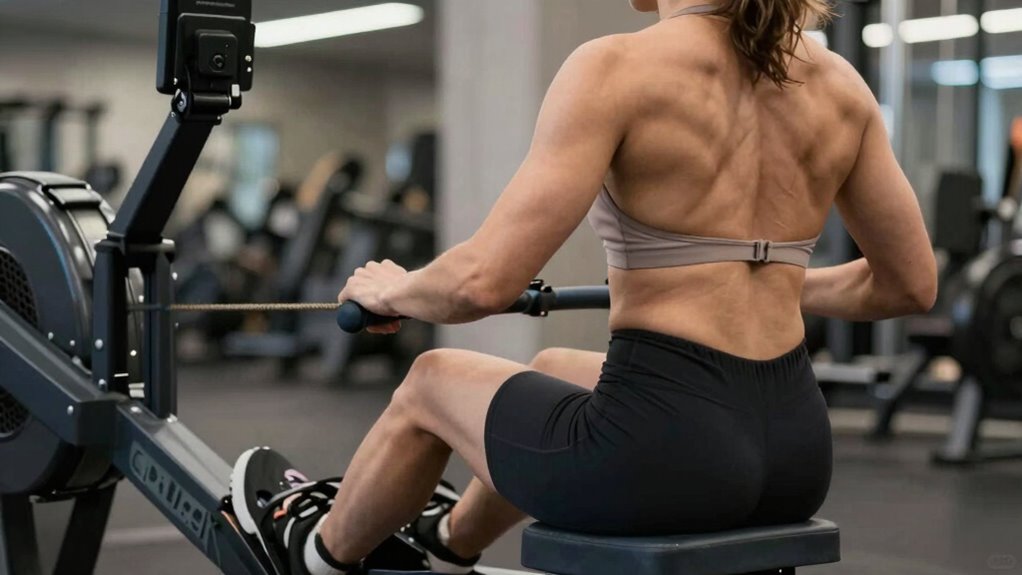

The main mistake causing back pain on a rowing machine is overextending or arching your lower back during the stroke, often caused by poor posture or relying too much on your arms. To fix this, focus on keeping a neutral spine, engaging your core, and pushing through your legs first. Proper foot placement and avoiding overexertion are also key. Keep going to discover how mastering these tips can protect your back and improve your technique.
Key Takeaways
- Avoid overextending or arching the lower back during the finish, which can cause strain and pain.
- Maintain a neutral spine and engage core muscles throughout the stroke to support proper back alignment.
- Rely on leg drive and core engagement rather than pulling with your back or arms to prevent overuse injuries.
- Ensure correct foot placement and posture to promote balanced movement and reduce undue back stress.
- Incorporate flexibility and mobility exercises to improve spinal health and prevent back pain during rowing.
Top picks for "machine back pain"
Open Amazon search results for this keyword.
As an affiliate, we earn on qualifying purchases.
Understanding Proper Rowing Technique
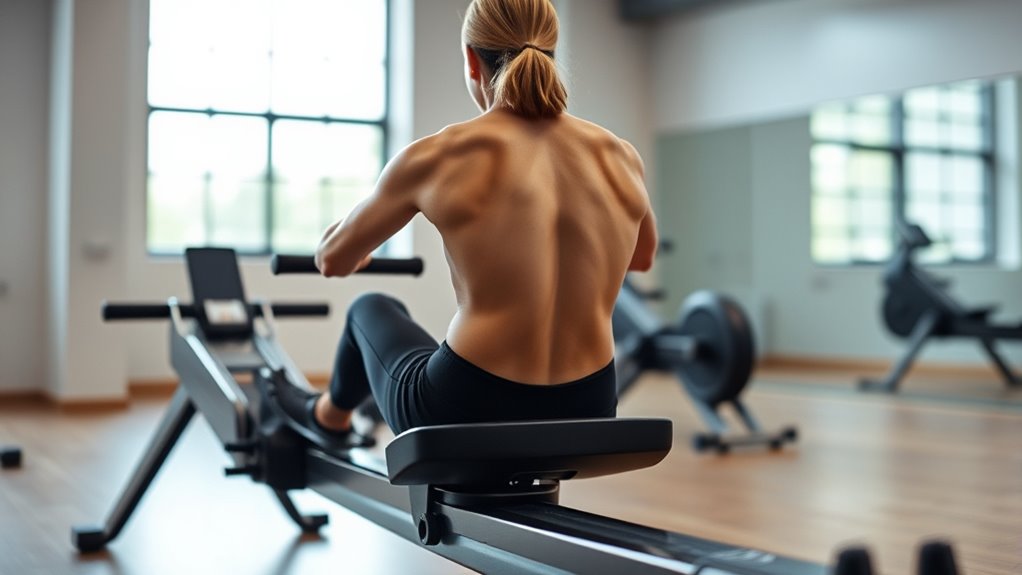
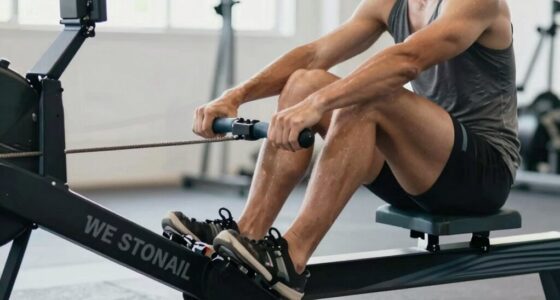
To prevent back pain while using a rowing machine, it’s essential to understand and practice proper technique from the start. Focus on maintaining a straight back throughout the entire stroke. Start by sitting tall with your shoulders relaxed and your core engaged. As you push off with your legs, keep your arms straight and hinge slightly at the hips without leaning back excessively. During the drive phase, use your legs first, then your core, and finally your arms to pull the handle toward your chest. At the finish, avoid leaning back or twisting your torso. Smooth, controlled movements are key. Consistently practicing good form helps distribute effort evenly, reducing strain on your back and making your workout safer and more effective. Paying attention to proper rowing form can significantly reduce the risk of injury and improve your overall workout efficiency. Incorporating technique awareness into your routine can further enhance your movement efficiency and safety.
Common Posture Errors That Lead to Back Pain

Slouching during your rowing sessions can put unnecessary strain on your back and cause pain. Overextending your back at the finish of each stroke can also lead to discomfort and injury. Paying attention to your posture helps prevent these common mistakes and keeps your back safe. Maintaining proper body mechanics during rowing ensures optimal movement and reduces the risk of injury. Additionally, understanding how assessment tools like the 16PF can provide insights into personal traits may help you tailor your workout routines to better suit your physical and mental needs. Incorporating proper technique and posture awareness into your training can significantly improve your comfort and safety during rowing.
Slouching During Rows
When you perform rows on a rowing machine with poor posture, slouching can quickly become a problem. Slouching causes your shoulders to round forward and your spine to lose its natural alignment. This puts unnecessary strain on your lower back and reduces the effectiveness of your workout. Instead of engaging your core and back muscles properly, you rely on your arms and shoulders, increasing the risk of pain and injury. To avoid slouching, focus on keeping your chest up and shoulders back throughout the row. Maintain a strong, straight back and engage your core muscles. This posture helps distribute the workload evenly, prevents strain on your back, and ensures you get the most out of every stroke.
Overextending the Back
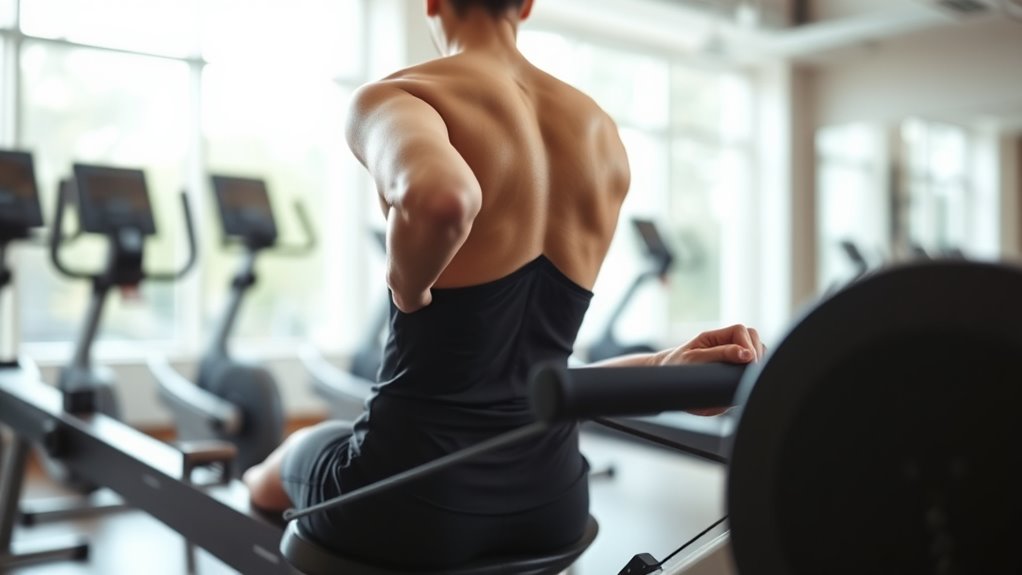
Overextending your back during rowing can seem like a minor mistake, but it often leads to significant strain and pain. When you lean too far back, you put unnecessary pressure on your lumbar spine, increasing injury risk. The key is maintaining a neutral spine throughout the stroke. To help you stay on track, consider this comparison:
| Proper Technique | Overextending the Back |
|---|---|
| Slight backward lean | Excessive backward lean |
| Engage core muscles | Rely on lower back |
| Maintain a straight spine | Arch excessively |
| Focus on leg drive | Overuse back muscles |
The Importance of a Neutral Spine During Rows
Maintaining a neutral spine during rowing is crucial to prevent back pain and guarantee proper form. When your spine stays aligned, it reduces unnecessary stress on your lower back and improves efficiency. To achieve this, focus on these key points:
Keep your spine aligned during rowing to prevent pain and improve form.
- Imagine a straight line running from your head through your tailbone, keeping your back flat and elongated. This spinal alignment helps distribute forces evenly and minimizes strain. Additionally, paying attention to core engagement can provide extra support for maintaining proper posture throughout your workout. Building muscle stability around your core can further enhance your ability to keep a neutral spine during movements. Incorporating proper posture techniques into your routine can also prevent long-term injuries.
- Picture your shoulders pulling back slightly, avoiding rounded or hunched positions.
- Envision your chest open and lifted, preventing any slouching or leaning forward.
- Incorporate proper air quality awareness to ensure your environment supports healthy breathing during workouts. Good airflow can enhance your endurance and overall comfort during exercise.
How to Engage Your Core for Better Support
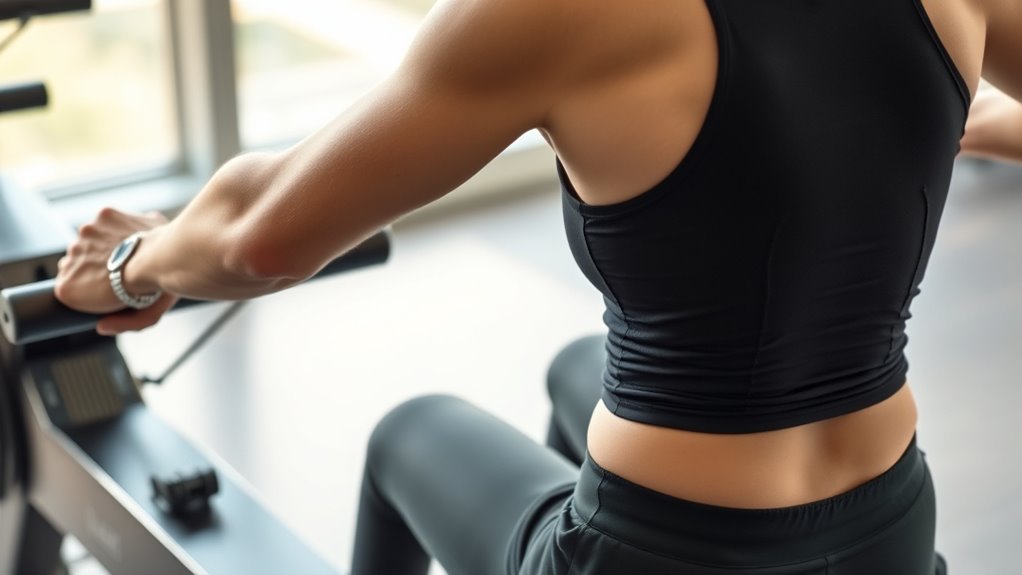
Engaging your core muscles is essential for supporting your back and maintaining proper form during rowing. A strong core stabilizes your spine, reducing strain and preventing injury. To activate your core, tighten your abdominal muscles as if preparing for a gentle punch. Focus on pulling your belly button toward your spine without holding your breath. This engages deep core muscles that support your lumbar region. Using proper engagement techniques ensures you maximize core stability and protect your back during exercise. Incorporating core stabilization exercises can further enhance your ability to maintain proper form. Remember that consistent practice of core engagement helps build muscle memory, making proper support automatic during your workouts. Developing an awareness of core activation during workouts can significantly improve your overall stability and reduce the risk of back pain. Recognizing the importance of muscle activation can help you fine-tune your technique for better results. Use the table below to understand key muscles involved:
| Muscle Group | Function |
|---|---|
| Transverse Abdominis | Deep core stability |
| Rectus Abdominis | Flexion and support of spine |
| Obliques | Rotational stability |
Correct Foot Placement and Leg Drive
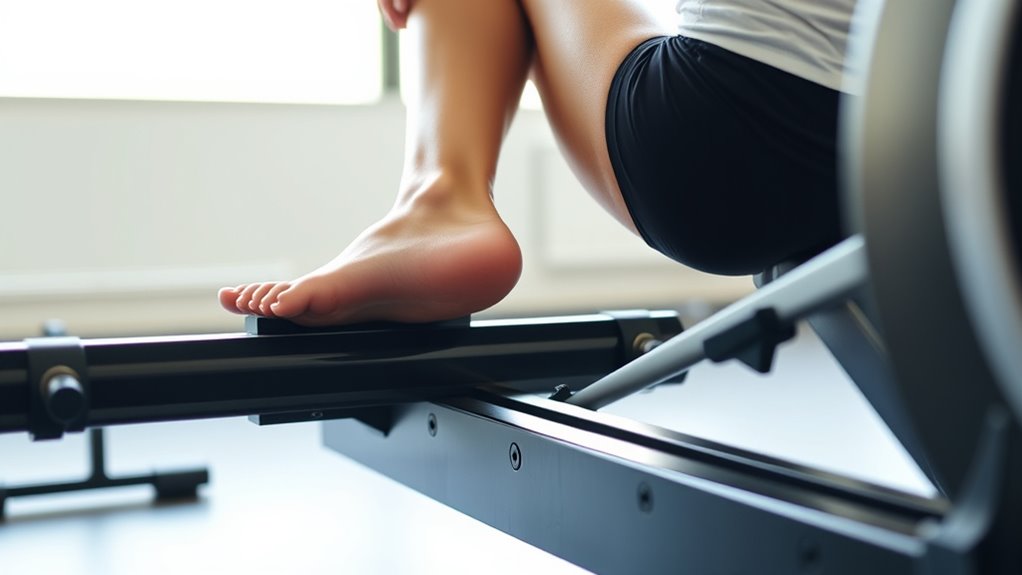
Your foot placement sets the foundation for a smooth, effective row. When your feet are positioned correctly, you can engage your legs fully and drive through with power. Keeping your balance guarantees you avoid unnecessary strain and protect your back from injury. Proper foot positioning also ensures optimal movement efficiency, reducing the risk of overuse injuries. Additionally, aligning your feet correctly helps maintain proper posture throughout the workout, which is crucial for preventing back pain. Correct foot placement also promotes consistent cable tension, helping to prevent sudden pulls or jerks that could compromise your form. Understanding the importance of muscle engagement can further improve your technique and reduce discomfort. Paying attention to your technique can make a significant difference in preventing injury and enhancing overall performance.
Proper Foot Positioning
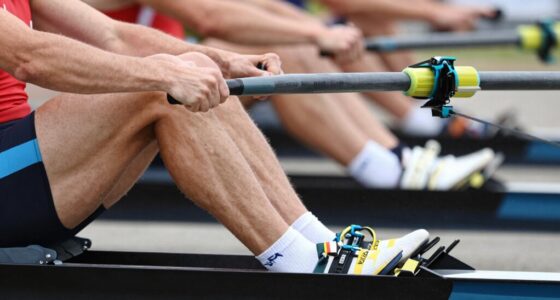
To prevent back pain while using a rowing machine, proper foot positioning is essential. Your feet should sit firmly on the footplates, with the balls of your feet aligned over the pivot point. This ensures maximum power transfer and stability. Focus on these key points:
- Keep your feet parallel, shoulder-width apart, to maintain balance.
- Secure your feet with straps, but avoid overly tight pressure that can restrict movement.
- Push off with the balls of your feet during the drive phase, engaging your legs fully without overextending your ankles.
Proper foot placement helps you generate leg drive efficiently and keeps your back supported. Maintaining this setup minimizes strain and reduces the risk of back pain during your rowing sessions.
Engaging Leg Drive
Proper foot placement lays the foundation for effective leg drive during rowing. When your feet are correctly positioned, you can generate maximum power from your legs, which is essential for a smooth, efficient stroke. Focus on keeping your feet flat and secure on the footplates, aligning your knees with your toes. As you begin each stroke, push through your heels, driving your legs straight and extending your hips forward. Avoid relying solely on your upper body; your legs should do most of the work. Engaging your leg muscles early in the drive ensures you use your core properly and reduce back strain. Maintain a steady, controlled push, and don’t forget to follow through with a complete extension before returning to the starting position.
Maintaining Balance
Maintaining balance during your rowing stroke hinges on correct foot placement and consistent leg drive. Proper foot positioning ensures your weight is evenly distributed, preventing wobbling or leaning. As you push back, focus on these key points:
- Keep your feet firmly planted, with toes slightly pointed outward.
- Push through your heels, engaging your legs fully.
- Maintain a steady, controlled leg drive without rushing.
- Remember that correct foot placement is crucial for avoiding strain and ensuring a smooth stroke.
Imagine your feet as the foundation of a building, supporting every movement. When your foot placement is stable, your core stays aligned, reducing strain on your back. Consistent leg drive creates a smooth, balanced rhythm, helping you avoid imbalance and potential pain. Proper technique guarantees efficiency and protects your back during every stroke.
Recognizing Signs of Overexertion and Fatigue

While rowing can be an effective workout, it’s important to listen to your body and recognize early signs of overexertion. You might notice your muscles feeling unusually tight or sore, even after a light session. If your breathing becomes labored or irregular, it’s a sign to slow down. Pay attention to fatigue in your lower back or shoulders, which can indicate you’re pushing too hard. Dizziness, nausea, or a pounding heartbeat are serious signals that you need to stop immediately. Ignoring these signs can lead to improper form, increased risk of injury, or burnout. By tuning into how your body responds during each session, you can adjust your pace or take breaks before fatigue worsens, ensuring a safer, more effective workout. Recognizing energetic signals from your body can also help prevent overtraining and promote better recovery. Additionally, understanding body awareness can help you develop a more sustainable rowing routine that minimizes injury risk.
Tips for Incorporating Flexibility and Strengthening Exercises
Focusing on flexibility and strengthening exercises can help prevent back pain and improve your rowing performance. To do this effectively, incorporate specific movements into your routine. First, stretch your hamstrings and hip flexors daily to keep your hips mobile and reduce strain. Second, include core exercises like planks and bridges to build a solid foundation that supports your back. Third, practice spinal mobility drills, such as gentle twists and cat-cow stretches, to maintain flexibility in your spine. These steps help you develop a balanced musculature, decrease tension, and promote better posture during rowing. Consistency is key—integrate these exercises into your schedule to see lasting improvements and avoid the back pain that often accompanies improper rowing form.
Frequently Asked Questions
How Can I Tell if My Rowing Back Pain Is Serious?
If your back pain worsens with rowing, persists for more than a few days, or is accompanied by numbness, tingling, or weakness, it’s serious. You should stop rowing immediately and seek medical attention. Don’t ignore severe pain or if it radiates down your leg. Trust your body—if something feels off or doesn’t improve, consult a healthcare professional to prevent further injury.
Are There Specific Stretches to Prevent Rowing-Related Back Injuries?
Yes, you can do specific stretches to prevent rowing-related back injuries. Focus on hip flexor stretches like lunges, hamstring stretches, and lower back mobility exercises such as cat-cow stretches. Incorporate these into your routine before and after rowing sessions to improve flexibility and reduce strain. Remember to maintain proper form during rowing, engage your core, and listen to your body to avoid overexertion.
What Equipment Adjustments Can Reduce Back Strain During Rowing?
Did you know that improper equipment adjustments can cause up to 60% of rowing-related back injuries? To reduce back strain, make sure your foot straps are snug, enabling you to push through your heels rather than pulling with your arms. Adjust the footplate so your knees are slightly bent at the catch, and set the damper to a moderate level. Proper setup guarantees efficient movement and minimizes unnecessary stress on your back.
How Often Should I Rest Between Rowing Sessions to Avoid Back Pain?
You should rest at least 24 to 48 hours between rowing sessions to prevent back pain. Listen to your body, and if you feel any discomfort or fatigue, give yourself extra time to recover. Incorporate active recovery like stretching or light activity on rest days. This approach helps your muscles repair and reduces the risk of overuse injuries, keeping your back healthy and your rowing performance ideal.
Can Different Rowing Machine Types Affect Back Safety?
Yes, different rowing machine types can affect your back safety. For example, hydraulic rowers often have less stability, increasing strain if you don’t maintain proper form. Air and water rowers typically offer smoother, more natural motion that reduces back stress. Always choose a machine that suits your fitness level, and focus on proper technique to prevent back pain. If you experience discomfort, try adjusting your form or switching to a different type.
Conclusion
Did you know that many back pain issues on the rowing machine stem from a common myth—that just leaning back harder creates a better workout? In reality, maintaining proper technique and a neutral spine is key. When you engage your core and avoid overexertion, you’ll not only protect your back but also improve your rowing efficiency. So, before pushing harder, focus on form—your back will thank you for it.