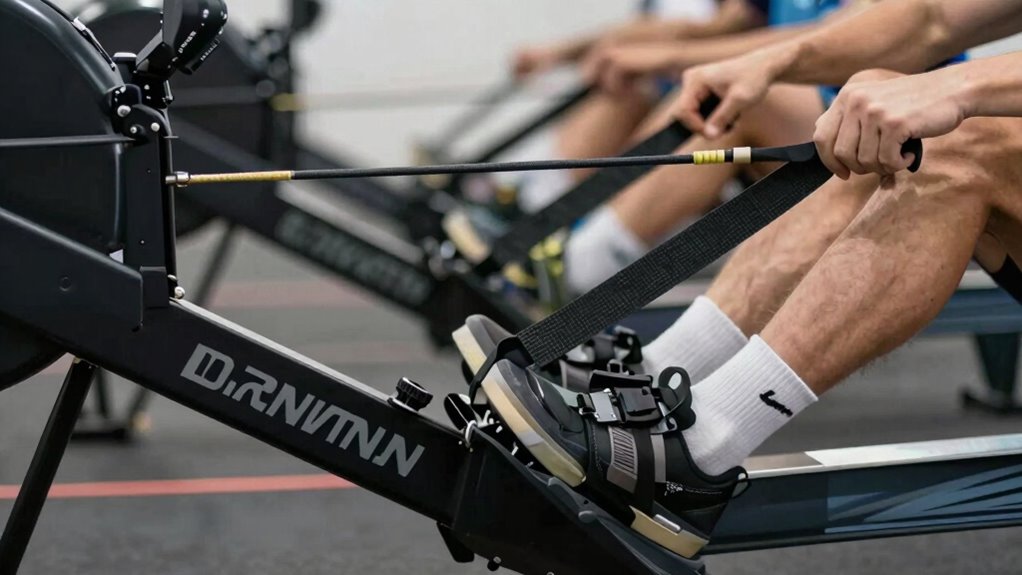

To improve power, focus on fine-tuning your rowing foot straps. Make sure they’re snug enough to hold your feet securely without causing discomfort or restricting ankle movement. Slightly adjusting the strap tension so your feet feel secured in but still natural can make a big difference in force transfer. Proper foot placement also supports better posture and longer efficiency. Keep experimenting with small tweaks—you’ll discover how subtle changes open better performance if you continue exploring all the tips.
Key Takeaways
- Adjust strap tension to lock feet securely without pinching, ensuring stable contact during each stroke.
- Fine-tune strap tightness gradually to optimize power transfer and prevent slippage.
- Regularly check and readjust straps before workouts for consistent fit and performance.
- Ensure foot placement allows knees to bend comfortably and heels to stay slightly elevated on the footplate.
- Small, personalized tweaks in strap tightness and foot positioning can significantly enhance rowing power.
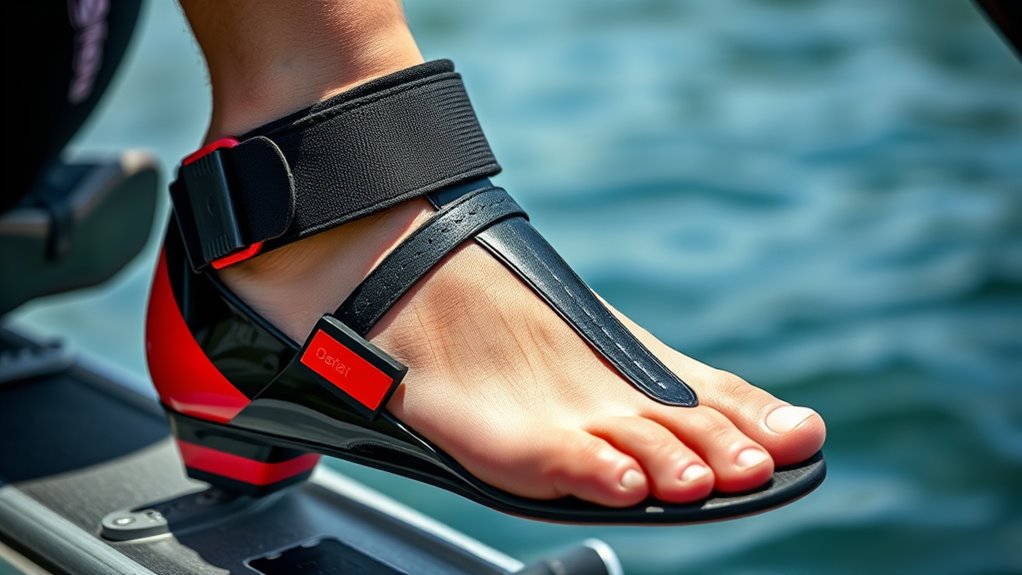
Are you unsure how to set up your rowing foot straps for ideal performance? It’s a common question among rowers looking to maximize power and efficiency on the water or at the gym. The key lies in fine-tuning two critical elements: strap tension and foot placement. Small adjustments here can make a significant difference in how effectively you transfer energy from your legs through your core and arms.
First, focus on strap tension. Your straps shouldn’t be so tight that they restrict ankle movement or cause discomfort, nor so loose that your feet slide around during each stroke. You want a snug fit that secures your feet firmly but still allows natural ankle flexion. To achieve this, tighten the straps just enough so that your feet feel locked in without pinching or cutting off circulation. When you push off at the catch, you should feel stable and connected to the foot stretcher, but not constrained. As you row, check that your straps maintain this tension and don’t loosen or tighten as your workout progresses. Proper strap tension helps you generate more power with each stroke because it ensures your feet stay in consistent contact with the footplate, allowing for efficient force transfer.
Foot placement is equally important. Your feet should be positioned so that your knees are comfortably bent when you’re at the catch position, with your heels slightly elevated on the footplate. Place your feet so that your toes point straight ahead or slightly outward, aligning naturally with your hips and knees. This position provides a balanced foundation, enabling you to engage your legs fully without strain. Adjust the footplate height if needed, ensuring your knees aren’t overly bent or extended at the start. When your feet are correctly placed, you’ll find it easier to drive through your legs and maintain good posture throughout the stroke. Proper foot placement also minimizes fatigue and helps you avoid injury, especially during longer sessions.
It’s worth experimenting with small tweaks to both strap tension and foot position until you find what feels most natural and powerful for you. Remember, every rower’s body is different, so what works for someone else might not be ideal for you. Regularly check your setup before each session, making sure your feet are secure and your straps are snug but comfortable. Paying attention to body alignment and other key factors can further enhance your rowing efficiency. By paying close attention to these details, you’ll optimize your connection to the boat or machine, allowing you to generate maximum power with less effort and greater consistency. Ultimately, these tiny adjustments will lead to more efficient strokes, better performance, and a more enjoyable rowing experience.
Top picks for "foot strap setup"
Open Amazon search results for this keyword.
As an affiliate, we earn on qualifying purchases.
Frequently Asked Questions
How Often Should I Adjust My Rowing Foot Straps?
You should adjust your rowing foot straps whenever you notice your rowing technique slipping or feeling uncomfortable. It’s best to check and fine-tune the strap adjustment regularly, especially if your performance or comfort changes during your workout. Proper strap adjustment guarantees ideal power transfer and stability, helping you maintain the right posture. Keep an eye on your technique and make small tweaks as needed to maximize efficiency and prevent injury.
Can Improper Strap Setup Cause Injuries?
Improper strap setup can lead to discomfort or even strain, subtly affecting your rowing form. If your strap material isn’t secure enough or your foot positioning isn’t right, you might unknowingly put extra stress on your ankles or knees. Ensuring a snug, comfortable fit with the correct foot placement helps prevent injuries, allowing you to focus on your workout’s power and efficiency without risking unnecessary strain.
What’s the Ideal Strap Tension for Beginners?
For beginners, you want your strap tension to be snug enough for proper fit without cutting off circulation or causing discomfort. Aim for a secure fit that keeps your foot firmly in place without overly tight pressure. Adjust the straps so your feet stay stable during rowing, allowing efficient power transfer while maintaining comfort. Remember, a proper fit promotes better form and reduces injury risk.
How Do I Know if My Foot Straps Are Too Tight?
If your foot straps are too tight, you’ll notice discomfort and restricted movement, making it hard to release your heels smoothly. Check for tension signs like pinching or numbness, and make sure your straps provide enough support without squeezing too tightly. For maximum strap comfort, adjust until you feel secure but still able to move your feet freely. Remember, the right tension enhances power without sacrificing comfort.
Does Foot Strap Setup Vary Between Rowing Machines?
Yes, foot strap setup can vary between rowing machines because of differences in machine calibration and design. You should adjust the straps to match your rowing technique, ensuring your feet are secure without being too tight. Proper setup allows for ideal power transfer and comfort. Always check the machine’s calibration settings and adapt the straps accordingly to improve your rowing efficiency and prevent injury.
Conclusion
Now that you know how to fine-tune your rowing foot straps, you’re ready to unlock better power and efficiency. Remember, sometimes the smallest adjustments can make the biggest difference—don’t be afraid to experiment until everything feels just right. When your foot straps are set perfectly, you’ll be rowing like a well-oiled machine. Keep tweaking, stay committed, and watch your performance reach new heights. It’s all about getting the most out of every stroke!