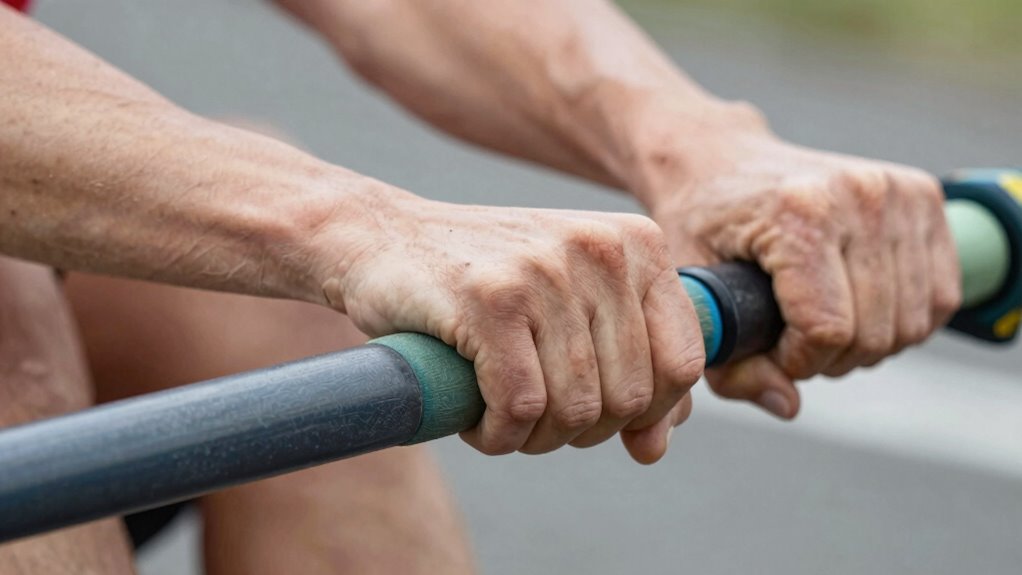

To prevent blisters and save energy on the rower, focus on maintaining a relaxed grip that feels secure without excess pressure. Keep your wrists straight, engage your core, and hold the handle lightly using your fingers rather than your palms. Wiping your hands dry, wearing gloves, and regularly inspecting your grip can help avoid skin issues. Proper hand placement and grip maintenance are key, and adding grip-strengthening exercises can improve endurance. Keep going to discover more tips for ideal performance.
Key Takeaways
- Maintain a relaxed grip, holding the handle lightly to reduce fatigue and prevent blisters.
- Keep hands dry and use gloves or grip pads to minimize chafing and skin irritation.
- Ensure proper hand and wrist position with straight wrists and fingers wrapping comfortably around the handle.
- Regularly inspect and moisturize hands to prevent calluses, cracks, and skin tears.
- Strengthen grip muscles with exercises like squeezing balls or wrist curls to reduce fatigue during rowing.
Top picks for "hand grip rower"
Open Amazon search results for this keyword.
As an affiliate, we earn on qualifying purchases.
Choosing the Right Grip for Comfort and Efficiency
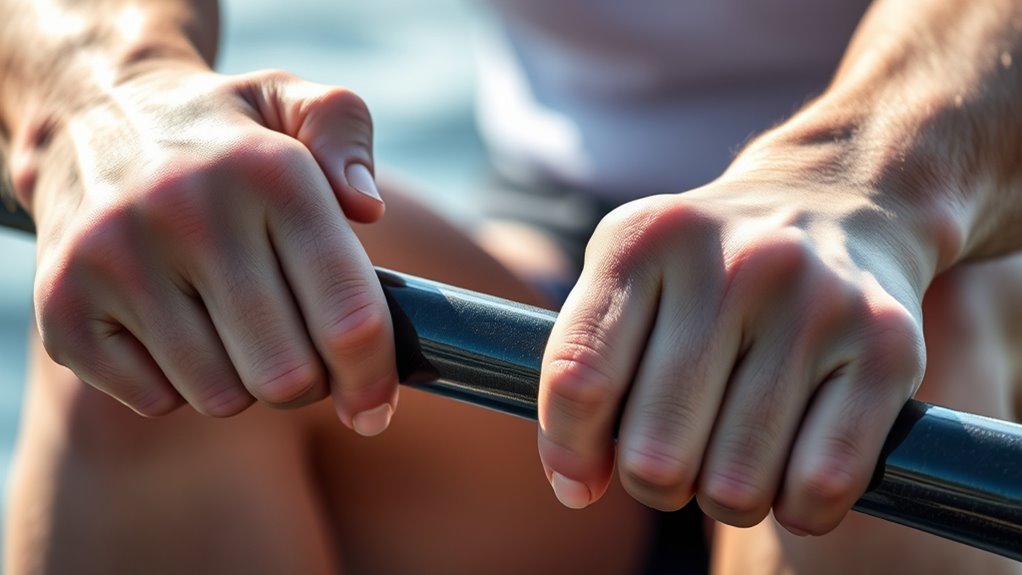
Selecting the right grip on the rower is essential for both comfort and efficiency. Your grip should feel secure without causing strain or discomfort. Start by holding the handle lightly, avoiding a death grip that wastes energy and tires your hands. Use a relaxed, natural hold that allows your fingers to wrap comfortably around the handle. Different grips, like overhand or mixed, can impact how you engage your muscles, so choose one that suits your hand size and comfort level. Keep your wrists straight, avoiding unnecessary bending, which can lead to fatigue or injury. A proper grip ensures you maintain good form and maximize power transfer with each stroke. Remember, a comfortable grip helps prevent blisters and allows you to row longer without fatigue. Additionally, paying attention to your grip can support proper muscle engagement and reduce the risk of injury over time. Using the correct grip also promotes technique consistency, which is key for effective rowing.
Techniques for Proper Hand Placement on the Rower
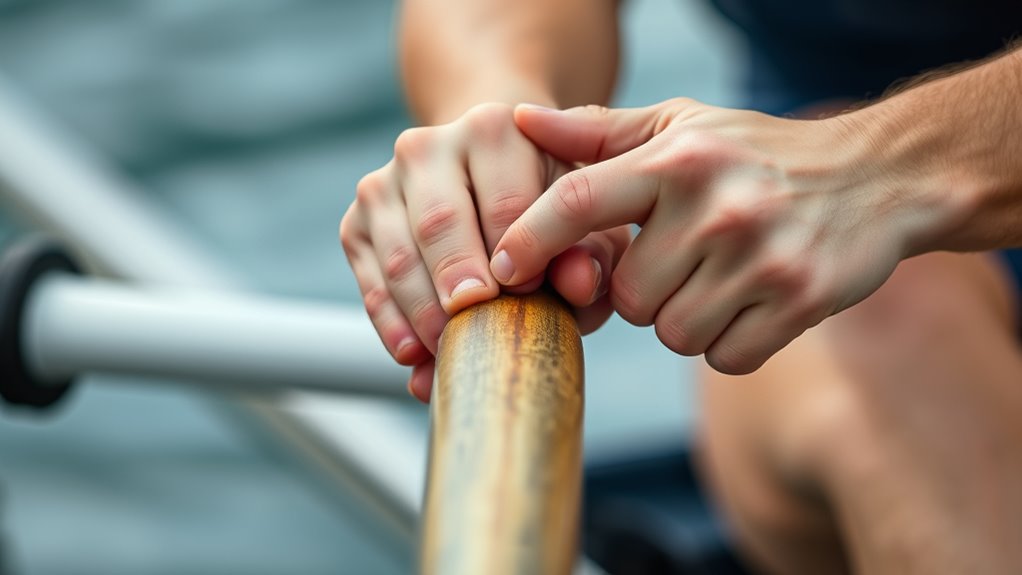
Proper hand placement on the rower is key to maintaining control and maximizing your power with each stroke. You should grip the handle with your fingers, not your palms, guaranteeing a relaxed but firm hold. Keep your wrists straight and avoid curling your hands too tightly, which can cause unnecessary fatigue. Position your hands so they rest naturally on the handle, aligned with your forearms. As you prepare to pull, engage your core and keep your shoulders down and relaxed. During the drive, push with your legs while maintaining a steady, controlled grip. At the finish, release with a smooth motion, avoiding sudden movements. Consistent, correct hand placement helps you stay efficient, prevents strain, and ensures a smooth, powerful rowing technique. Incorporating ergonomic design principles into your grip can further enhance comfort and reduce fatigue during your workout. Paying attention to hand positioning helps prevent blisters and improves overall technique, making your rowing sessions more effective and comfortable. Additionally, using proper grip techniques can distribute force evenly across your hand, reducing the risk of injury and increasing your endurance. Being mindful of technique consistency can also contribute significantly to preventing discomfort over time. Focusing on proper hand alignment can help you develop muscle memory and promote better technique during each session.
Tips to Prevent Blisters and Calluses During Rowing
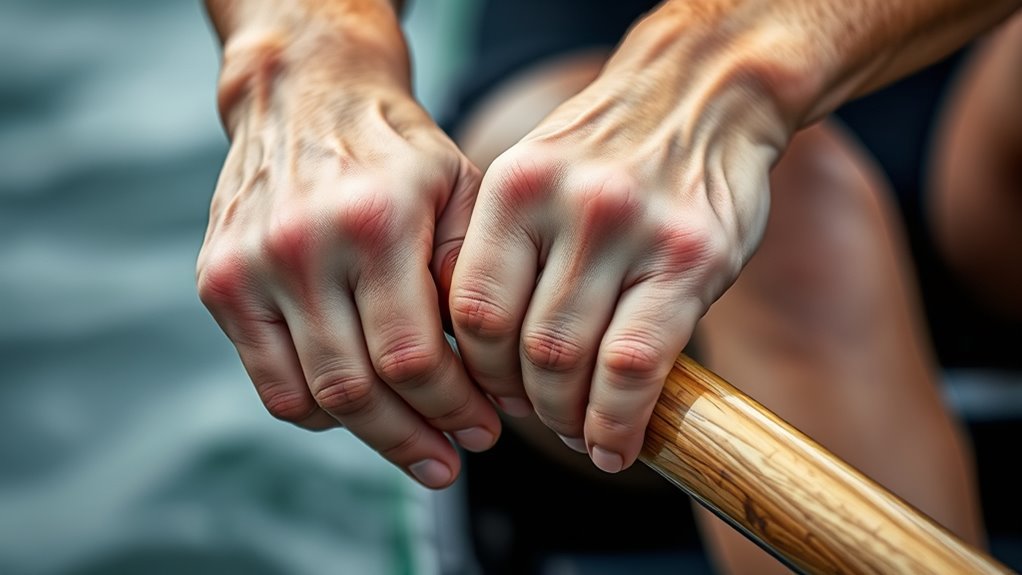
To prevent blisters and calluses during rowing, it’s essential to focus on your grip and hand care. Always keep your hands dry by wiping them before and during your workout, as moisture increases friction and blister risk. Use a light grip—firm enough to control the handle but not so tight that it causes unnecessary pressure. Consider wearing rowing gloves or grip pads to reduce chafing and distribute pressure evenly across your palms. Regularly inspect your hands for early signs of blisters or rough skin, and gently file calluses to prevent tears. Keep your hands moisturized after rowing sessions to maintain skin flexibility and prevent cracking. Additionally, choosing a proper grip technique can significantly reduce stress on your hands and improve overall comfort. By staying attentive to these habits, you’ll protect your skin and maintain comfortable, effective rowing sessions.
The Importance of Hand and Grip Maintenance
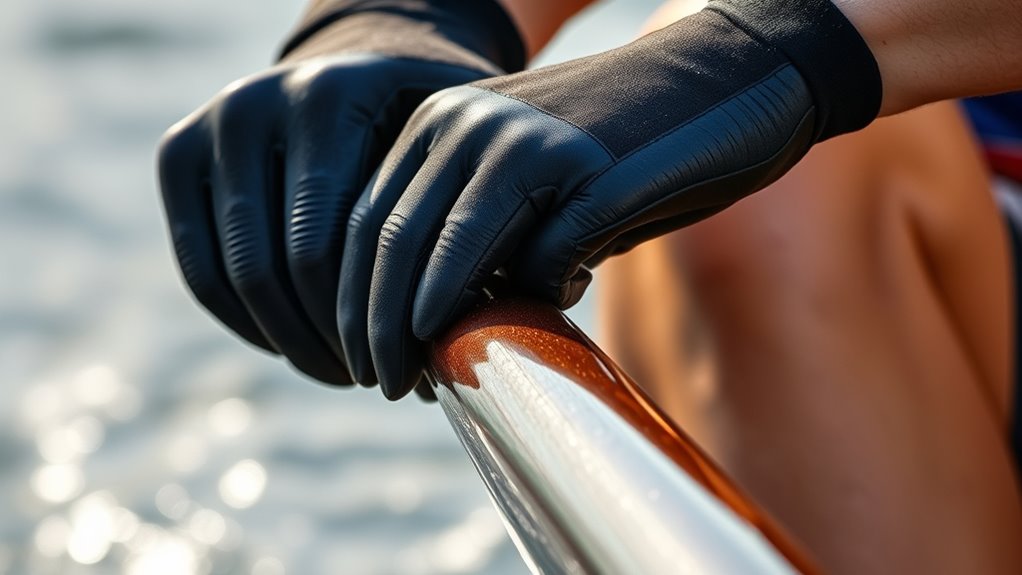
Maintaining your hands and grip is essential for safe and effective rowing, as neglecting them can lead to injuries and hinder your performance. Regularly checking your grip ensures you maintain control and prevent issues like blisters or calluses from worsening. Proper maintenance involves keeping your hands clean, moisturized, and free of debris, which improves grip and reduces skin irritation. Use the table below to understand key maintenance tasks:
| Task | Frequency | Benefits |
|---|---|---|
| Inspect grip | Before every row | Detect damage early |
| Moisturize hands | After each session | Prevent skin cracking |
| Clean handles | After each session | Remove dirt and bacteria |
| Replace worn grips | As needed | Maintain optimal grip |
Consistent maintenance helps you row efficiently and stay injury-free. Proper hand and grip care is vital for preventing injuries and ensuring longevity in your rowing practice. Additionally, paying attention to proper grip technique can significantly reduce strain and improve performance during each session. Incorporating regular grip assessments into your routine can further enhance your rowing efficiency and safety. Developing a consistent maintenance routine based on your rowing frequency can help sustain optimal grip and prevent common issues.
Exercises to Strengthen Your Grip and Reduce Fatigue
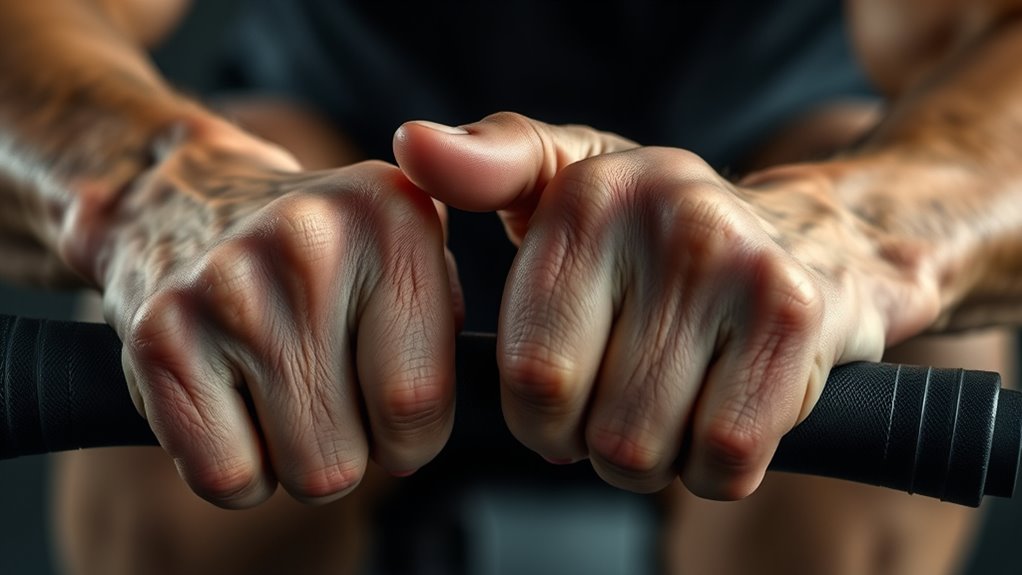
Building grip strength and reducing fatigue are essential for maintaining control during long sessions and preventing injuries. To do this, incorporate grip exercises like squeezing a tennis ball or using grip strengtheners regularly. Forearm rolls with a lightweight bar or resistance band can also boost endurance. Incorporating proper technique during your workouts can further prevent strain and enhance effectiveness. Incorporate static holds by gripping a bar or dumbbell firmly and holding for 20-30 seconds, then releasing. Wrist curls and reverse curls target the muscles involved in grip stability. Additionally, practicing finger extensions with rubber bands helps balance muscle groups and reduce fatigue. Consistent training improves muscle endurance, making your grip more resilient during rowing. Using ergonomically designed tools and equipment can also help prevent unnecessary strain and support proper form. Remember, gradual progression is key—avoid overexertion to prevent strain or injury. Modern kitchen appliances and techniques can also support a more efficient workout environment, ensuring your training sessions are both effective and safe. These exercises will help you stay strong and energized throughout your rowing sessions.
Recognizing When to Adjust Your Grip for Better Performance
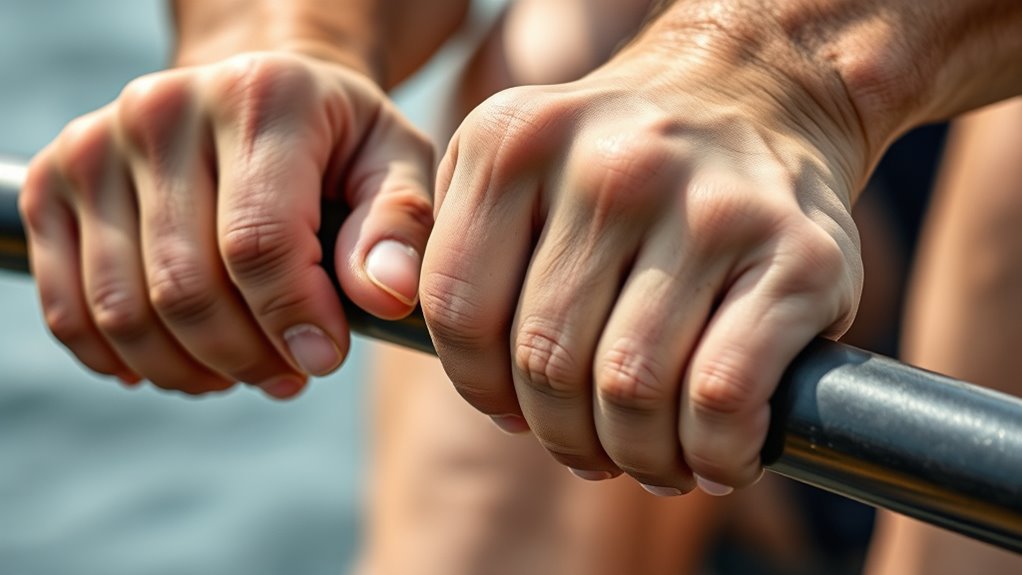
Recognizing when to adjust your grip during rowing is essential for optimizing performance and preventing injury. If you feel excessive strain in your hands, forearms, or shoulders, it’s a sign your grip may be too tight. Slipping or losing control during strokes indicates your grip might be too loose. Pay attention to your hand position; if your knuckles turn white or you notice blisters forming, loosen up. Conversely, if you’re gripping too tightly, you waste energy and tire quickly. Smooth, controlled strokes with a relaxed grip promote better efficiency and reduce fatigue. Regularly check your grip throughout your session, and make small adjustments as needed. Fine-tuning your grip ensures you maximize power without risking injury or discomfort.
Frequently Asked Questions
How Can I Tell if My Grip Is Too Tight?
If your grip is too tight, you’ll notice your hands feeling sore or numb after rowing. You might also see white or blistered spots on your palms. Additionally, your forearms could become overly tense, and your rowing motion may feel stiff or less smooth. To avoid this, loosen your grip slightly, focusing on a firm but relaxed hold that allows your hands to stay comfortable and your energy to flow efficiently.
What Type of Gloves Are Best for Rowing?
You should choose lightweight, breathable gloves with a snug fit for rowing. Look for gloves with a thin padding or grip-enhancing material on the palms to prevent blisters and improve your hold. Avoid bulky gloves that can reduce dexterity and cause fatigue. Opt for ones made of moisture-wicking fabric to keep your hands dry, ensuring comfort and a secure grip throughout your workout.
How Often Should I Replace My Rowing Gloves or Grips?
You should replace your rowing gloves or grips every few months, or sooner if you notice significant wear or tears. Regularly check for thinning material, loose stitching, or loss of cushioning, and don’t wait until they’re completely worn out. Proper maintenance guarantees your hands stay protected, and your energy isn’t wasted. If you feel discomfort or slipping, it’s time for a new pair to keep your rowing efficient and safe.
Can Grip Techniques Affect My Overall Rowing Posture?
Yes, your grip technique directly impacts your rowing posture. If you grip too tightly, you may hunch your shoulders or lean forward, causing strain and reducing efficiency. A relaxed, proper grip helps you maintain a tall, aligned posture, engaging your core and back muscles effectively. Focus on a gentle but firm hold, keeping your wrists neutral, to improve your form and prevent fatigue during rowing sessions.
Are There Specific Hand Exercises for Preventing Injuries?
Yes, there are specific hand exercises you can do to prevent injuries. You should strengthen your grip with stress ball squeezes, stretch your hands and wrists regularly, and improve finger flexibility through gentle finger extensions. Additionally, practicing wrist rolls and hand rotations helps maintain joint mobility. Incorporate these exercises into your routine to build resilience, reduce strain, and keep your hands healthy during rowing sessions.
Conclusion
By paying attention to your grip and hand care, you’ll enjoy smoother, more efficient rowing sessions without blisters or fatigue. Remember, your hands are the key to accessing better performance — so why not give them the attention they deserve? With the right technique and maintenance, you’ll boost your endurance and comfort on every row. Isn’t it worth making small adjustments to see big improvements? Keep these tips in mind and stay on top of your game!