
A 2:00/500m split means you cover each 500-meter segment in exactly two minutes, serving as a clear measure of your pace and effort during rowing. It helps you gauge whether you’re maintaining a steady rhythm or need to speed up or slow down. Tracking these splits allows you to assess progress and improve your performance. Keep exploring, and you’ll discover how understanding these numbers can help you optimize every stroke.
Key Takeaways
- A 2:00/500m split indicates rowing 500 meters in two minutes, reflecting your pace and effort level.
- Split times help monitor consistency and pacing strategy during workouts or races.
- Achieving a 2:00 split suggests a moderate, steady speed suitable for endurance training or beginner levels.
- Lower splits (e.g., 1:55/500m) mean faster speeds, indicating increased effort and improved performance.
- Tracking your split times allows you to set goals and measure progress toward faster paces over time.
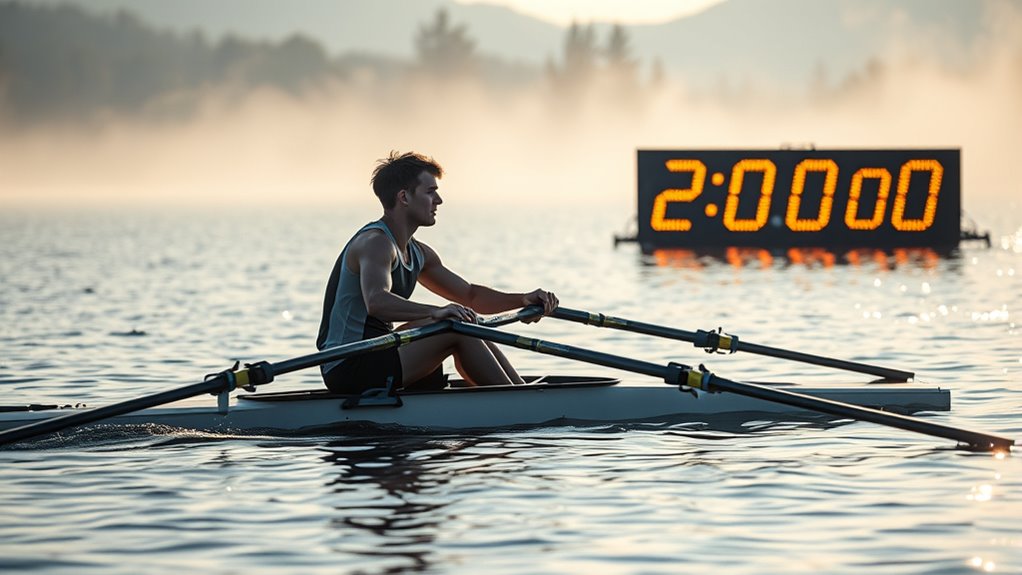
Have you ever wondered how rowers measure their speed and progress during a race or training session? It all comes down to split times—those vital numbers that tell you how fast you’re moving over a set distance, typically 500 meters. Understanding what a 2:00/500m split really means can transform your approach to rowing. It’s not just a number; it’s a window into your pacing strategies and a tool for training improvements. When you see a split like 2:00 per 500 meters, it indicates you’re covering that segment in two minutes. This figure helps you gauge your effort level, plan your strokes, and set realistic goals for each session or race.
Knowing your split times allows you to develop effective pacing strategies. If your goal is to maintain a steady effort, you’ll want to keep your splits consistent throughout your row. For example, if you start with a 2:00 split, aim to stay close to that pace, adjusting as needed based on how you feel. If your split drops below 2:00, you’re going faster; if it rises above, you’re slowing down. Over time, training becomes more targeted because you understand your pacing thresholds and can work on strategies to push your limits without burning out early. This consistent monitoring helps you avoid starting too fast and fading, or going too slow and leaving time on the table.
Tracking your split times also feeds directly into training improvements. When you know exactly how long it takes to cover 500 meters, you can set specific, measurable goals. If you’re aiming to lower your split from 2:00 to 1:55, you have a clear target to work toward. This focus helps you design workouts that target your weaknesses—whether that’s increasing your stamina, improving your technique, or building power. By regularly reviewing your split times, you’ll notice patterns and identify what works best for you. For instance, you might discover that your splits tend to slow down during the last 200 meters, indicating a need to enhance endurance or pacing in the final stretch. Additionally, understanding your power output and technique can help you make more precise adjustments for efficiency.
In essence, understanding and utilizing split times like 2:00/500m empowers you to optimize your training and racing strategies. It transforms raw effort into actionable insights, allowing you to make precise adjustments. Whether you’re aiming to beat personal records or simply improve your overall efficiency, recognizing the importance of these numbers keeps you focused and motivated. As you become more familiar with your split times, you’ll develop a more intuitive sense of pacing, ensuring every stroke counts and every session brings you closer to your goals.
Top picks for "split explain 500m"
Open Amazon search results for this keyword.
As an affiliate, we earn on qualifying purchases.
Frequently Asked Questions
How Do Weather Conditions Affect Rowing Split Times?
Weather conditions can substantially impact your rowing split times. When water temperature drops, your boat may become less responsive, slowing you down. Wind resistance also plays a role; a strong headwind increases drag, making it harder to maintain your pace and potentially raising your split times. Conversely, calm conditions and warmer water help you glide more smoothly, helping you achieve faster splits. Always consider these factors before your row.
Can Split Times Vary Between Different Rowing Machines?
Yes, split times can vary between different rowing machines. Machine calibration plays a key role; if one machine isn’t calibrated correctly, it might give faster or slower split times. Your user experience, including how comfortable you feel on each machine, also affects your pace. Always guarantee proper calibration and get familiar with each machine to get consistent, accurate split times and track your progress effectively.
What Is Considered a Competitive Split Time for Amateur Rowers?
A competitive split time for amateur rowers typically falls between 1:40 and 1:50 per 500 meters, depending on your training benchmarks and endurance thresholds. If you’re hitting these times, you’re pushing your fitness levels and setting solid performance goals. Keep focusing on consistent training, gradually increasing intensity, and tracking your split times to improve your speed and stamina. Remember, steady progress is key to reaching competitive levels.
How Should I Adjust My Pace During a Race Based on Split Times?
Think of your race as a dance; you need to match your steps to the rhythm. To adjust your pace, monitor your split times closely—if they’re slower than your target, pick up the stroke rate; if faster, ease up slightly. Use your split times as a compass for your race strategy, ensuring you conserve energy for the final push or accelerate when the finish line nears.
Do Split Times Differ Between Men and Women?
Yes, split times can differ between men and women due to physiological factors like muscle mass and cardiovascular capacity. Typically, men tend to have faster split times because of these differences, but it’s important to focus on your personal progress rather than direct comparisons. Adjust your pace based on your goals and strengths, and remember that individual variation matters more than gender averages in rowing performance.
Conclusion
Think of your rowing split time like a heartbeat—steady and reliable, guiding your performance. When I first started tracking my 2:00/500m splits, I felt like I was running on a treadmill that kept pushing me forward. Just like a swimmer’s stroke or a cyclist’s cadence, those numbers become your rhythm, pushing you to improve. Keep monitoring your splits, and you’ll find your pace smoother—like a well-oiled machine moving effortlessly across the water.