To structure your rowing workouts, alternate easy, moderate, and hard days to optimize gains and prevent burnout. On easy days, focus on controlled strokes, technique refinement, and recovery activities like stretching and hydration. Moderate days should challenge your endurance with steady efforts and varied techniques, supporting muscle repair and energy replenishment. Hard days involve high-intensity sprints or intervals to boost power. Balancing these approaches helps improve performance while keeping you injury-free; explore below for detailed guidance.
Listen free for 30 days with Audible
Thousands of audiobooks and originals — cancel anytime.
As an affiliate, we earn on qualifying purchases.
Key Takeaways
- Schedule easy days with technical drills and recovery focus to build efficiency and prevent overtraining.
- Incorporate moderate days with steady-state rows lasting 20-40 minutes, emphasizing endurance and technique variations.
- Design hard days with high-intensity intervals, sprints, or pyramid workouts to maximize effort and performance gains.
- Vary techniques and intensity within each workout to prevent monotony and promote balanced development.
- Prioritize proper recovery strategies—stretching, hydration, and rest—especially after hard sessions.
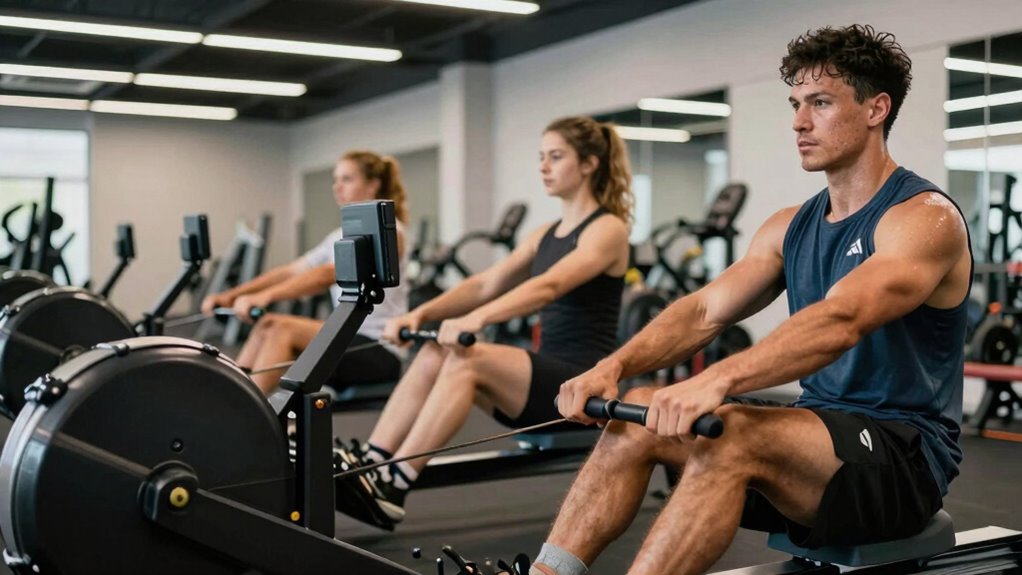
Creating an effective rowing machine workout plan starts with understanding how to structure your workout days for ideal results. One key to success is balancing easy, moderate, and hard days, so your body can adapt, improve, and recover efficiently. On easy days, focus on technique variations that emphasize smooth, controlled strokes. These sessions shouldn’t push you to exhaustion but instead help you refine your form. Use these days to practice different rowing techniques, such as pausing at the catch or extending your legs fully during the drive. Incorporating technique variations keeps your workouts engaging while building your efficiency. During easy days, it’s also essential to prioritize recovery strategies. This means taking time to stretch after your session, hydrating well, and ensuring you get enough sleep. Recovery strategies are indispensable because they allow your muscles to repair and your energy stores to replenish, setting you up for more intense workouts later in the week. Additionally, paying attention to training load management helps prevent overtraining and promotes consistent progress. Understanding how to manage training stress can further optimize your recovery and performance. Recognizing signs of fatigue and adjusting your schedule accordingly can help you avoid burnout and injury, especially when you listen to your body’s feedback.
When you move to moderate days, your focus shifts toward building endurance and strength. These sessions should be challenging but sustainable, where you maintain a steady pace for a longer duration—say, 20 to 40 minutes. Here, technique remains important, but you can start to push the intensity slightly. Use technique variations to target different muscle groups or to introduce slight changes in your rhythm, preventing your workout from becoming monotonous. For example, alternating between power strokes and focus on steady, consistent effort helps develop both muscular endurance and cardiovascular capacity. Recovery strategies on moderate days involve active recovery—like light stretching or easy-paced rowing afterward—to help your muscles recover without losing momentum. Proper nutrition and hydration are also essential, ensuring your body has the resources to handle increased workload and to recover efficiently. Incorporating progressive overload into your routine can help you steadily improve your performance over time. Listening to your body’s fatigue signals can guide you in adjusting your effort to prevent overtraining.
Hard days are where you test your limits and push your anaerobic capacity. These sessions might include high-intensity intervals, sprints, or pyramid workouts, where you alternate between maximum effort and recovery periods. Technique variations here are indispensable to avoid injury and to maximize output. Focus on maintaining proper form even at high speeds to prevent strain. Recovery strategies after hard days must be aggressive—think stretching, foam rolling, and rest. Giving your body adequate time to recover prevents overtraining and reduces injury risk. Incorporating active recovery or low-intensity rowing on the following day can help your muscles relax and rebuild, ensuring you’re ready for the next intense session. By thoughtfully alternating easy, moderate, and hard days, and emphasizing technique variations and recovery strategies, you’ll develop a balanced, effective rowing routine that boosts performance and minimizes injury.
As an affiliate, we earn on qualifying purchases.
Frequently Asked Questions
What Equipment Should I Use Alongside My Rowing Machine?
You should consider using rowing accessories like a cushioned seat pad, grip gloves, or a heart rate monitor to enhance your workout. Ergonomic adjustments, such as seat height and foot stretcher position, help improve comfort and form. These accessories and adjustments support peak performance, reduce strain, and prevent injury, making your rowing sessions more effective and enjoyable. Investing in these tools ensures you get the most out of your rowing machine workouts.
How Can I Prevent Rowing Injuries During Intense Workouts?
To prevent rowing injuries during intense workouts, focus on proper rowing technique, especially maintaining good form and avoiding overreaching. Use injury prevention strategies like warming up thoroughly, listening to your body, and not pushing through pain. Strengthen supporting muscles through cross-training, and make certain your equipment is well-maintained. Staying mindful of technique and pacing helps you stay safe and avoid strain or injury during tough sessions.
What’s the Best Way to Track Progress Over Time?
Think of your progress as a garden that needs consistent care. To track it effectively, focus on performance metrics like split time, distance, and stroke rate, recording these regularly. Use a journal or an app to log your workouts, and review trends over time. This approach helps you see improvements, identify plateaus, and adjust your training, ensuring your fitness garden continues to flourish.
How Do I Modify Workouts for Different Fitness Levels?
To modify workouts for different fitness levels, use progression strategies like gradually increasing intensity or duration. Incorporate workout variation to challenge yourself safely, adjusting resistance, stroke rate, or time based on your ability. Beginners should start with easier sessions, gradually ramping up, while advanced users can push harder with interval training or longer rows. Listen to your body, and adapt your plan as you improve to stay motivated and prevent injury.
Should I Include Rest Days Between Rowing Sessions?
Think of your muscles as a delicate garden—rest days are the rain that helps it thrive. Yes, you should include rest days between rowing sessions to allow recovery, especially if your workout frequency is high or if you’re doing intense sessions. Incorporating rest days prevents overtraining, reduces injury risk, and boosts overall performance. Schedule your rest days wisely, listening to your body’s signals, so you can row stronger and longer each time.
best rowing machine for interval training
As an affiliate, we earn on qualifying purchases.
As an affiliate, we earn on qualifying purchases.
Conclusion
Balancing your rowing days keeps things fresh and helps you progress smoothly. By gentle nudges on easy days, challenging pushes on moderate days, and stepping into the deep end on hard days, you create a rhythm that’s both sustainable and rewarding. Think of it as a dance—finding your flow while avoiding overstretching your limits. Stick with this approach, and you’ll enjoy the journey as much as the destination, gradually revealing your true rowing potential.
rowing machine recovery accessories
As an affiliate, we earn on qualifying purchases.
As an affiliate, we earn on qualifying purchases.
As an affiliate, we earn on qualifying purchases.
Flea & tick season Picks
flea and tick prevention
As an affiliate, we earn on qualifying purchases.