To make long rows more comfortable, focus on adopting a relaxed yet firm grip, avoiding holding the handle too tightly. Keep your wrists straight and aligned with your forearms to prevent strain and maintain control. Regularly adjust your grip pressure to prevent fatigue and soreness, and shift your hold as needed during your session. If you want to learn how proper grip technique can boost comfort and performance, keep exploring these essential tips.

Get workout gear delivered free with Prime
- Fast, free delivery on millions of items
- Prime Video, Amazon Music and more included
- Member-only deals all year
Key Takeaways
- Maintain a relaxed but firm grip to prevent fatigue and discomfort during extended rowing sessions.
- Keep wrists straight and aligned with forearms to reduce strain and joint stress.
- Regularly adjust grip pressure to avoid numbness and promote comfort.
- Use a gentle hold as if gripping a fragile object, avoiding excessive squeezing.
- Shift grip pressure periodically to distribute force evenly and prevent muscle fatigue.
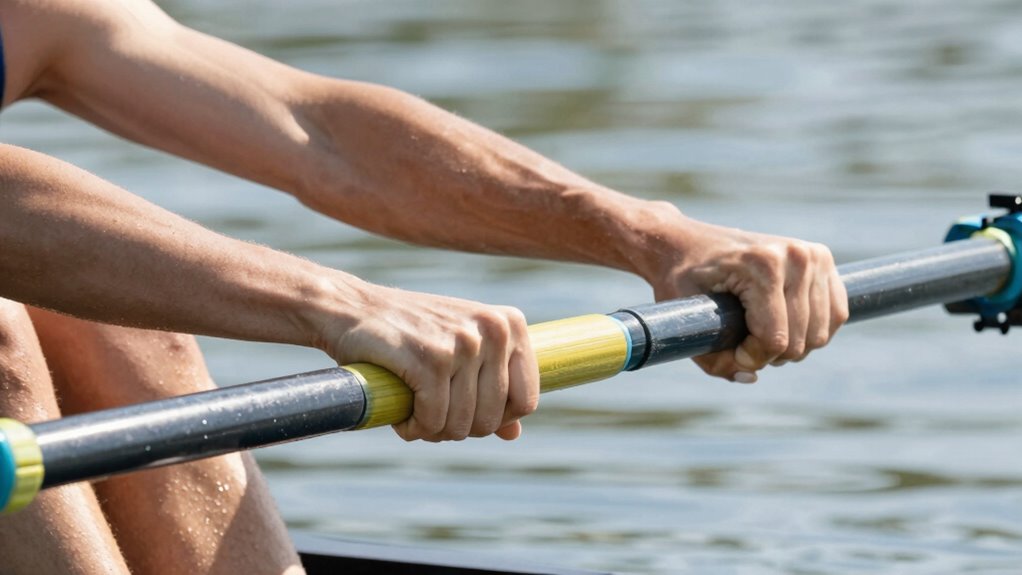
Maintaining a proper grip is vital for staying comfortable during long rowing sessions, preventing fatigue, and avoiding injury. When you focus on ergonomic hand positioning, you guarantee that your wrists and hands stay aligned, reducing strain and discomfort over extended periods. Instead of gripping the handle too tightly, aim for a relaxed but firm hold that allows your fingers and palms to distribute pressure evenly. This balance helps maintain control without overexerting your muscles, which is essential during those longer rows when fatigue can set in quickly.
To develop and maintain this ergonomic hand positioning, incorporating grip strength exercises into your routine can make a significant difference. Strengthening the muscles in your hands and forearms helps you sustain a proper grip with less effort, decreasing the likelihood of cramping or soreness. Exercises like squeezing a tennis ball, using grip trainers, or performing wrist curls target the muscles responsible for grip stability. Over time, these strengthen your grip, making it easier to maintain proper form during long sessions and reducing the risk of developing repetitive strain injuries.
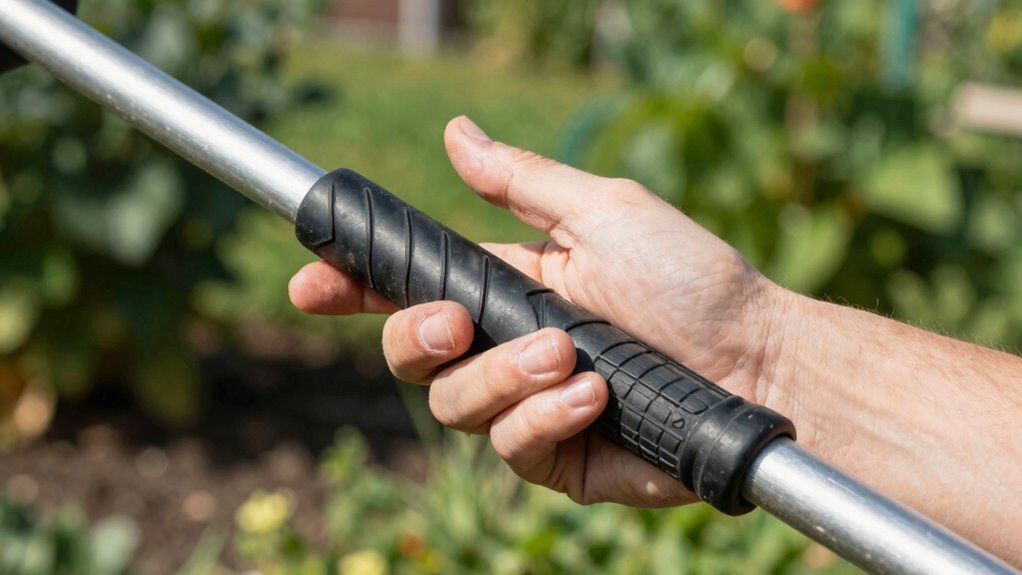
You should also pay attention to how you grip the handle. Avoid gripping too tightly—think of your hands as gently holding a fragile object. This mindset encourages a natural, ergonomic hand position that minimizes unnecessary tension. As you row, keep your wrists straight and in line with your forearms, avoiding any bending or twisting that could cause discomfort or injury. Maintaining this alignment helps distribute the force evenly across your hand and arm muscles, reducing fatigue and improving overall efficiency. Proper hand positioning can also help prevent long-term joint issues. Incorporating techniques for proper grip can further optimize your rowing form and comfort.
Another tip is to adjust your grip pressure periodically during your session. Small shifts can prevent your hands from becoming numb or sore, especially during long rows. If you find yourself gripping too tightly, take a moment to loosen your hold, then re-establish a comfortable, ergonomic grip. This practice ensures your muscles don’t get overstressed and helps sustain your performance over time. Additionally, paying attention to your grip technique can further enhance your comfort and efficiency. Incorporating these mindful adjustments can significantly improve your rowing endurance and comfort.
As an affiliate, we earn on qualifying purchases.
Frequently Asked Questions
How Often Should I Adjust My Grip During Long Rowing Sessions?
You should adjust your grip and hand positioning every 10 to 15 minutes during long rowing sessions. This helps prevent strain and maintains comfort. Pay attention to your grip pressure—don’t hold too tight or too loose. Regularly changing your hand positioning and easing grip pressure reduces fatigue and injury risk. Stay mindful of how your hands feel and make small adjustments to keep rowing smooth and comfortable throughout your workout.
What Are Signs of Improper Grip Causing Discomfort?
Ever feel like your hands are waving a white flag? That’s a sign of improper grip causing discomfort. You might notice hand fatigue, where your muscles tire quickly, or grip slippage, making your hold less secure. These symptoms indicate your grip isn’t right, risking blisters or injuries. Pay attention to these signals, adjust your grip, and keep your hands comfortable and secure during long rows.
Can Grip Technique Affect Rowing Injury Risk?
Yes, your grip technique can impact injury risk during rowing. Using a proper grip helps maintain grip strength and reduces hand fatigue, preventing overexertion and strain. An improper grip may cause you to squeeze too tightly, increasing the chance of blisters, tendinitis, or other injuries. Focusing on a relaxed, controlled grip guarantees better performance, minimizes discomfort, and decreases injury risk, especially during long rows.
Is There a Recommended Grip Width for Beginners?
For beginners, a shoulder-width grip is generally recommended, as it offers a balance of stability and comfort. Focus on grip variations and proper hand positioning to prevent strain and improve performance. Keep your hands evenly spaced on the bar, and avoid gripping too tightly, which can cause fatigue. Experiment with slight adjustments to find what feels most natural, ensuring you maintain control and reduce injury risk during long rows.
How Does Grip Endurance Improve Over Time?
Your grip endurance improves over time as you regularly perform rowing exercises, strengthening your grip strength and reducing hand fatigue. As you practice consistently, your muscles adapt, allowing you to hold the bar longer without discomfort. Focus on proper grip technique and gradually increase your workout intensity. Over weeks, you’ll notice less hand fatigue and increased stamina, making long rows more comfortable and effective.
hand grip strengthener for rowing
As an affiliate, we earn on qualifying purchases.
As an affiliate, we earn on qualifying purchases.
Conclusion
By adopting the right grip habit, you can considerably reduce strain and enjoy longer rowing sessions. Remember, over 60% of rowers experience discomfort without proper technique, leading to potential injuries. Making this small adjustment not only boosts your comfort but also keeps you motivated to stay consistent. So, next time you’re on the water, focus on your grip—your body will thank you, and you’ll enjoy smoother, more enjoyable rows every time.
As an affiliate, we earn on qualifying purchases.
As an affiliate, we earn on qualifying purchases.
Columbus Day / Indigenous Peoples' Day Picks
long weekend sales
As an affiliate, we earn on qualifying purchases.