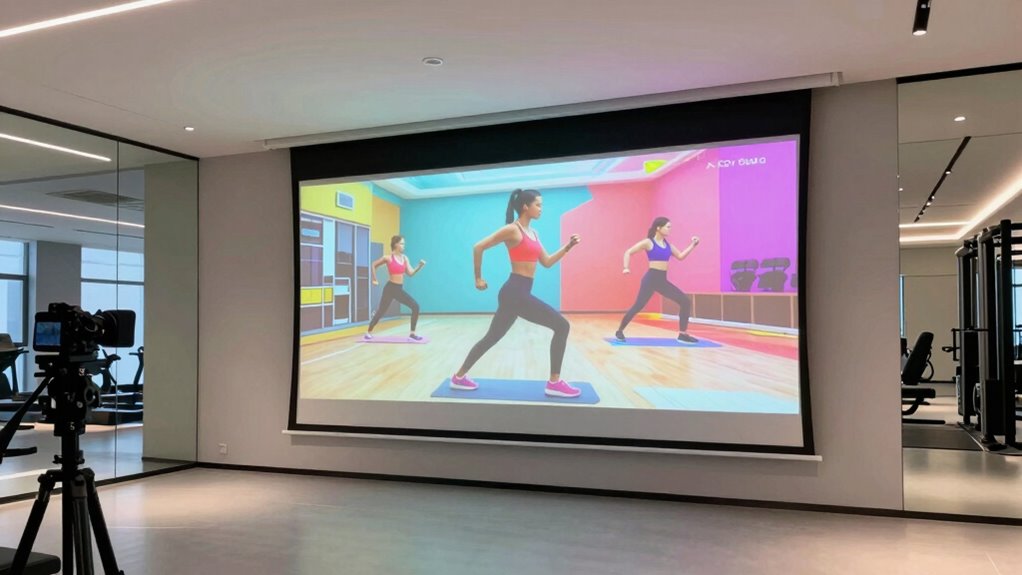

Finding the right large screen TV for a home gym wall involves more than just size. The best options offer vivid picture quality, durability, and smart features that seamlessly integrate into your workout environment. The Samsung 85-Inch Class M70H Series stands out for its impressive brightness and sharp contrast, making it perfect for well-lit gyms. The Hisense 100-Inch Class E6 Series offers an incredible size at an accessible price, ideal for those who want a true cinematic experience. However, tradeoffs include installation complexity and energy consumption. Keep reading to explore the full lineup and find the best fit for your space and needs.

Get workout gear delivered free with Prime
- Fast, free delivery on millions of items
- Prime Video, Amazon Music and more included
- Member-only deals all year
Complete the kit

Key Takeaways
- Size and viewing distance are critical — larger screens provide immersive visuals but require more space and proper mounting.
- Picture quality, including brightness and contrast, significantly impacts visibility in well-lit gym environments.
- Smart features vary widely; the most versatile models include integrated streaming apps and voice control for easy workout routines.
- Durability and mounting options are essential for safety and convenience, especially for larger TVs.
- Price ranges reflect differences in size, technology, and brand, so prioritize features that match your fitness and entertainment needs.
| Samsung 55-Inch Class The Frame LS03F 4K QLED Smart TV (2025 Model) |  | Best Overall for Stylish, Dual-Purpose Wall Display | Size: 55 inches | Resolution: 4K | Display Technology: QLED | VIEW ON AMAZON | See Our Full Breakdown |
| Samsung 85-Inch Class M70H Series Mini LED 4K Smart TV (2026 Model) |  | Best for Large, Bright, and Brightly Colored Displays | Screen Size: 85 inches | Display Technology: Mini LED | Resolution: 4K | VIEW ON AMAZON | See Our Full Breakdown |
| Samsung 85-Inch Class U8000H Series Crystal UHD 4K Smart TV (2026 Model) |  | Best for Vibrant, Sharp Visuals with Smart Streaming | Size: 85 inches | Resolution: 4K UHD | Features: Crystal Processor, Motion Xcelerator, Samsung TV Plus | VIEW ON AMAZON | See Our Full Breakdown |
| Hisense 85″ Hi-QLED 4K S7 Canvas TV Series Google Smart Art TV (85S7SG, 2026 Model) |  | Best for Artistic Integration and Custom Display | Size: 85 inches | Display Technology: Hi-QLED | Resolution: 4K | VIEW ON AMAZON | See Our Full Breakdown |
| Hisense 100″ Class E6 Series QLED 4K UHD Smart Fire TV (2025 Model) |  | Best for Immersive, Large-Scale Home Gym Viewing | Display Size: 100 inches | Resolution: 4K UHD | Panel Type: QLED | VIEW ON AMAZON | See Our Full Breakdown |
| TCL 98 Inch Class QM7L Series SQD-Mini-LED QLED Smart TV 2026 Model |  | Best for Immersive Home Gym Viewing with Premium Features | Screen Size: 98 inches | Display Technology: Mini LED QLED | Refresh Rate: 144Hz | VIEW ON AMAZON | See Our Full Breakdown |
| Insignia 70-inch Class F50 Series LED 4K UHD Smart Fire TV with Alexa Voice Remote |  | Best Budget-Friendly Large Screen for Home Gyms | Screen Size: 70 inches | Resolution: 4K UHD | HDR: HDR10 | VIEW ON AMAZON | See Our Full Breakdown |
| Samsung 98-Inch Class 4K Crystal UHD DU9000 Series HDR Smart TV (2024 Model) |  | Best for Large Screen 4K with Smart Features | Screen Size: 98 inches | Resolution: 4K UHD | HDR: Yes | VIEW ON AMAZON | See Our Full Breakdown |
| LG 85-Inch Class Nano AI 4K NU85 Series Smart TV (2026 Model) |  | Best for Advanced Picture Quality and Streaming in a Slightly Smaller Size | Screen Size: 85 inches | Resolution: 4K UHD | HDR: HDR10 PRO | VIEW ON AMAZON | See Our Full Breakdown |
| Insignia 75″ Class F50 Series LED 4K UHD Smart Fire TV with Voice Remote and Alexa |  | Best for Versatile and Family-Friendly Large Screen | Screen Size: 75 inches | Resolution: 4K UHD | HDR: HDR10 | VIEW ON AMAZON | See Our Full Breakdown |
| large screen tvs for home gym wall | Resolution | Screen Size | Refresh Rate | HDR |
|---|---|---|---|---|
| Samsung 55-Inch Class The Fram | 4K | — | — | — |
| Samsung 85-Inch Class M70H Ser | 4K | 85 inches | 120Hz | Mini LED HDR |
| Samsung 85-Inch Class U8000H S | 4K UHD | — | — | — |
| Hisense 85" Hi-QLED 4K S7 Canv | 4K | — | 144Hz | — |
| Hisense 100" Class E6 Series Q | 4K UHD | — | 144Hz | — |
| TCL 98 Inch Class QM7L Series | — | 98 inches | 144Hz | — |
| Insignia 70-inch Class F50 Ser | 4K UHD | 70 inches | — | HDR10 |
| Samsung 98-Inch Class 4K Cryst | 4K UHD | 98 inches | 120Hz | Yes |
| LG 85-Inch Class Nano AI 4K NU | 4K UHD | 85 inches | 120Hz | HDR10 PRO |
| Insignia 75" Class F50 Series | 4K UHD | 75 inches | — | HDR10 |
More Details on Our Top Picks
Samsung 55-Inch Class The Frame LS03F 4K QLED Smart TV (2025 Model)
The Samsung The Frame LS03F stands out for combining a sleek, picture frame aesthetic with high-quality 4K QLED visuals, making it ideal for those who want their TV to blend seamlessly into their home gym wall. Its customizable bezels and Art Mode allow it to double as a piece of art when not in use, which adds a sophisticated touch to workout spaces. Compared to larger, more dedicated gaming or streaming TVs, this model prioritizes style and visual versatility over raw size or brightness. The matte textured screen reduces glare, but its need for an external hub for power and connections can complicate installation and clutter the wall. This pick makes the most sense for gym owners who value aesthetics and want a multifunctional wall feature that doubles as decor.
Pros:- Elegant picture frame design that mounts flush to the wall
- Transforms into an art gallery with customizable options
- High-quality 4K QLED display with AI-enhanced picture and sound
Cons:- Requires external hub for power and connections, adding complexity
- Limited details on price and availability, making purchasing uncertain
Best for: Home gym owners who want a stylish, art-like display that also offers quality 4K visuals
Not ideal for: Hardcore gamers or users needing ultra-bright screens for glare-heavy environments, as the matte finish and design focus may limit brightness and gaming performance
- Size:55 inches
- Resolution:4K
- Display Technology:QLED
- Model Year:2025
- Features:Art Mode, customizable bezels, matte textured screen, VRR gaming up to 4K 144Hz, Alexa built-in
Our verdict“This is best for those who want a stylish, multifunctional wall display that blends into a home gym aesthetic.”
Samsung 85-Inch Class M70H Series Mini LED 4K Smart TV (2026 Model)
The Samsung M70H Series offers an expansive 85-inch screen with Mini LED technology, making it well-suited for a home gym where size and brightness are priorities. Its vivid colors and deep contrast surpass smaller, standard LED models, delivering an immersive viewing experience especially for sports and gaming. While the 85-inch size can be a challenge to install and may demand significant wall space, its 120Hz refresh rate and advanced HDR provide smooth, vibrant visuals that outshine similar large models like the U8000H series. The high price and large footprint mean it’s best for those with ample space who want a premium, cinema-like experience during workouts.
Pros:- Vivid colors with one billion true-to-life hues
- Excellent contrast via Mini LED HDR and supreme dimming
- Wide selection of free streaming channels and content
Cons:- Large size may be difficult to install and position
- Potentially high cost due to advanced Mini LED technology
Best for: Users seeking a large, bright, and colorful display for immersive workout viewing and gaming
Not ideal for: Limited space environments or those who prefer more modestly sized TVs, as this model requires significant wall space and setup effort
- Screen Size:85 inches
- Display Technology:Mini LED
- Resolution:4K
- HDR:Mini LED HDR
- Refresh Rate:120Hz
- Smart TV:Yes
Our verdict“This TV is perfect for those with ample space who want a massive, vibrant display for gym entertainment and gaming.”
Samsung 85-Inch Class U8000H Series Crystal UHD 4K Smart TV (2026 Model)
The Samsung U8000H Series delivers vibrant 4K visuals with its Crystal Processor, making it suitable for gym walls where image clarity and streaming variety matter. Its access to over 2,700 free channels via Samsung TV Plus provides a broad entertainment selection, and motion technology ensures smooth sports and gaming visuals. Compared with the Mini LED models, it offers a more affordable size for large wall setups but may lack the contrast and brightness punch for highly glare-prone environments. Its absence of HDR details and sound quality specs suggests it’s better suited for casual viewing rather than cinematic or high-end gaming setups.
Pros:- Vibrant 4K picture quality with advanced upscaling
- Access to over 2,700 free streaming channels
- Smooth motion technology suited for sports and gaming
Cons:- Lacks HDR or Dolby Vision support, limiting contrast
- Potentially high price for an 85-inch size with limited premium features
Best for: Workout spaces that prioritize vibrant visuals and wide streaming options without the need for ultra-high contrast or HDR
Not ideal for: Environments with high ambient light or users seeking premium contrast and HDR performance, as these features are not emphasized
- Size:85 inches
- Resolution:4K UHD
- Features:Crystal Processor, Motion Xcelerator, Samsung TV Plus
Our verdict“Ideal for users wanting large, colorful visuals with broad content access, but not for those craving HDR excellence.”
Hisense 85″ Hi-QLED 4K S7 Canvas TV Series Google Smart Art TV (85S7SG, 2026 Model)
The Hisense Hi-QLED Canvas TV combines high-level picture quality with art display capabilities, making it a compelling choice for gym walls that double as art galleries. Its 4K Hi-QLED panel delivers vibrant, accurate colors, while the anti-glare, high-matte screen minimizes reflections in bright workout spaces. The native 144Hz refresh rate and AI-enhanced motion make it suitable for fast-paced sports and gaming. Its sleek, ultra-slim design with a included Teak Frame and Art Gallery Mode allows it to blend seamlessly into decor while showcasing curated artwork. However, its larger size and premium features come with a higher price tag and installation considerations, which may not appeal to budget-conscious buyers or those with limited wall space.
Pros:- Transforms into a digital art gallery with customizable artwork display
- Vivid 4K resolution with high color accuracy and anti-glare screen
- Smooth motion with native 144Hz refresh rate and AI enhancement
Cons:- Large size requires significant wall space and careful installation
- Premium price may be prohibitive for some
Best for: Home gym owners who want a stylish, art-like display with high performance and customization options
Not ideal for: Those with limited wall space or seeking a budget-friendly large TV, as its premium features and size demand extensive setup and investment
- Size:85 inches
- Display Technology:Hi-QLED
- Resolution:4K
- Refresh Rate:144Hz
- Smart Platform:Google TV
Our verdict“Best suited for those who want a large, elegant art display with high-quality visuals and smart customization in their gym wall.”
Hisense 100″ Class E6 Series QLED 4K UHD Smart Fire TV (2025 Model)
The Hisense E6 Series offers an enormous 100-inch QLED display, ideal for creating a true home cinema experience in a gym setting. Its vibrant colors and Dolby Vision, HDR 10+ support ensure vivid visuals, and the 144Hz panel with AMD FreeSync Premium makes it suitable for fast-paced gaming and sports. The built-in Fire TV platform provides quick access to streaming apps, simplifying user experience. Its size, however, demands a spacious wall and careful installation, and the glossy screen could pose glare issues in bright gym environments. This model is best suited for those who have the room to accommodate such a large display and want maximum immersion during workouts.
Pros:- Vivid, lifelike colors with QLED technology
- Large 100-inch display for immersive viewing
- Smooth gaming with 144Hz and FreeSync
Cons:- Requires significant wall space and installation effort
- Potential glare or reflections on glossy surface
Best for: Large home gym spaces where immersive viewing and gaming are a priority
Not ideal for: Smaller rooms or spaces with limited wall area, as the 100-inch size can be overwhelming and difficult to install
- Display Size:100 inches
- Resolution:4K UHD
- Panel Type:QLED
- HDR Formats:Dolby Vision, HDR 10+, HLG
- Refresh Rate:144Hz
- Smart Platform:Fire TV
Our verdict“This TV is ideal for those with ample space seeking a giant, vivid display for truly immersive gym entertainment.”
TCL 98 Inch Class QM7L Series SQD-Mini-LED QLED Smart TV 2026 Model
The TCL 98 Inch Class QM7L Series stands out for its enormous 98-inch screen, making it ideal for creating a true cinematic experience in a home gym wall setup. Its Mini LED QLED technology delivers vivid colors and exceptional contrast, surpassing the more modest display of the Samsung 98-Inch Crystal UHD DU9000 Series, which offers slightly less peak brightness and fewer local dimming zones. The high 144Hz refresh rate ensures smooth motion, great for fast-paced workouts or gaming. However, the large size demands significant space and installation effort, and its premium price tags it as a choice for dedicated fitness rooms rather than casual setups. The audio system from Bang & Olufsen enhances sound quality, but the complexity of features might require a learning curve. This option is perfect for those wanting a truly immersive, premium display for intense workout sessions or entertainment.
Pros:- Enormous 98-inch screen creates immersive viewing experiences
- Exceptional contrast and color accuracy with Mini LED QLED technology
- High 144Hz refresh rate ensures smooth motion for gaming and fast workouts
- Premium Bang & Olufsen audio enhances sound clarity
Cons:- Requires substantial space and mounting effort
- Premium price may be prohibitive for casual users
- Complex feature set could involve a learning curve
Best for: Home gym owners seeking a massive, high-contrast display with premium features for movies, sports, and gaming
Not ideal for: Small or multipurpose rooms where space is limited, or users uncomfortable with complex setup processes
- Screen Size:98 inches
- Display Technology:Mini LED QLED
- Refresh Rate:144Hz
- Peak Nits:3000 nits
- HDR Format:Complete HDR
- Audio:Bang & Olufsen, Dolby Atmos
Our verdict“This TV is best suited for dedicated home gyms where space, budget, and a desire for premium quality are priorities.”
Insignia 70-inch Class F50 Series LED 4K UHD Smart Fire TV with Alexa Voice Remote
The Insignia 70-inch F50 Series offers a sizable 4K UHD display with HDR10, making it a practical choice for those wanting a large screen without the premium price tag. Compared to the Samsung 98-Inch Crystal UHD DU9000, it provides a more affordable option, though with a smaller screen and slightly lower peak brightness. Its built-in Fire TV platform grants access to a vast range of streaming services, and the Alexa voice remote simplifies navigation during workouts or relaxation. The multiple connection ports support various devices, but the sound quality may benefit from external speakers, and the wall mounting requires additional hardware. This model is ideal for users who want a large, smart TV at a reasonable price for a dedicated gym area or multi-purpose room.
Pros:- Large 70-inch screen with 4K resolution and HDR for vibrant visuals
- Built-in Fire TV provides extensive streaming options
- Alexa voice remote offers convenient hands-free control
- Multiple connection ports support diverse devices
Cons:- Sound quality may require external speakers
- Requires subscriptions for some streaming content
- Wall mounting needs additional hardware
Best for: Budget-conscious home gym owners seeking a large, smart 4K TV with easy streaming and control features
Not ideal for: Users looking for premium audio or advanced picture processing, or those with limited wall space
- Screen Size:70 inches
- Resolution:4K UHD
- HDR:HDR10
- Connectivity:3 HDMI, USB, Ethernet
- Smart Platform:Fire TV
- VESA Mount:300×300
Our verdict“This TV is well-suited for those needing a large, affordable, and smart display for a home gym or casual viewing area.”
Samsung 98-Inch Class 4K Crystal UHD DU9000 Series HDR Smart TV (2024 Model)
The Samsung 98-Inch Crystal UHD DU9000 Series offers a massive 4K display with AI-enhanced picture quality, vibrant colors, and smooth motion at 120Hz. It surpasses smaller 98-inch models by integrating Tizen OS for a broad app ecosystem, making it ideal for streaming, gaming, or workout videos. While its size is impressive, the model’s peak brightness and local dimming capabilities are slightly less refined than the TCL QM7L, and a compatible soundbar enhances the audio experience. The large footprint demands significant space and sturdy mounting. Compared to other large TVs like the LG Nano AI 85-inch, it offers a more straightforward smart interface but at a similar size and price point. This TV suits those wanting a large, feature-rich 4K experience in their home gym.
Pros:- Enormous 98-inch screen creates a truly immersive workout space
- AI picture enhancement for vibrant, sharp visuals
- Smart Tizen OS with extensive app support
- 120Hz refresh rate for smooth action
Cons:- High price may limit availability for some budgets
- Requires a compatible sound system for full audio experience
- Size may be challenging to install in smaller rooms
Best for: Home gym owners who want a large, smart 4K TV with excellent app support and smooth motion
Not ideal for: Users with limited space or seeking the highest peak brightness for very bright rooms
- Screen Size:98 inches
- Resolution:4K UHD
- HDR:Yes
- Refresh Rate:120Hz
- Processor:Crystal Processor 4K
- Operating System:Tizen OS
Our verdict“Ideal for those who want a large, smart, and versatile 4K display for active and entertainment use in a spacious home gym.”
LG 85-Inch Class Nano AI 4K NU85 Series Smart TV (2026 Model)
The LG 85-Inch Nano AI 4K NU85 Series balances size and feature set with its advanced AI processing, upscale capabilities, and HDR10 PRO, providing excellent picture quality for a home gym wall. It offers a sleek design, and its webOS platform grants access to over 400 free channels, making it a versatile entertainment hub. While not as large as the 98-inch models, it still delivers an immersive experience, especially with its AI Super Upscaling that enhances lower-resolution content. Its gaming features, including AMD FreeSync Premium, make it suitable for active users. However, its slightly smaller size and the need for consistent internet connections may limit its appeal to those seeking the biggest possible display or uninterruptible smart features. It’s an excellent choice for users who prioritize picture quality and smart features in a more manageable size.
Pros:- Exceptional 4K picture quality with AI enhancement
- Access to over 400 free channels and streaming apps
- Gaming optimized with AMD FreeSync Premium
- Sleek, modern design fits well in contemporary spaces
Cons:- Requires reliable internet connection for full features
- Less screen size than 98-inch options, may feel less immersive for some
- Some features depend on software updates
Best for: Home gym users wanting a large, feature-rich 85-inch display with excellent picture quality and smart capabilities
Not ideal for: Those requiring the absolute largest screen or with limited space for mounting
- Screen Size:85 inches
- Resolution:4K UHD
- HDR:HDR10 PRO
- Refresh Rate:120Hz
- Processor:Alpha 7 AI Processor 4K
- Smart Platform:webOS
Our verdict“Best suited for users who want a large, high-quality display with smart features in a slightly smaller size than the biggest models.”
Insignia 75″ Class F50 Series LED 4K UHD Smart Fire TV with Voice Remote and Alexa
The Insignia 75″ F50 Series provides a sizeable 4K UHD screen with HDR10 support, making it a practical choice for a home gym wall with family use. Its built-in Fire TV platform offers access to a wide variety of streaming apps and Alexa voice control, simplifying control during workouts or leisure time. While not as bright or contrast-rich as the TCL QM7L, it offers ample size and features at a more accessible price point. Its multiple connection ports support various devices, but the sound quality may not match premium audio systems, and the large size requires careful mounting planning. Compared to the Samsung DU9000, it offers a more budget-friendly smart experience but with slightly less high-end display performance. This TV is ideal for users who want a large, smart, family-friendly TV without breaking the bank.
Pros:- Vivid 4K UHD picture with HDR10 support
- Built-in Alexa and extensive streaming options
- Multiple ports for versatile device connectivity
- VESA compatible for easy wall mounting
Cons:- Sound quality may need external speakers
- Limited brightness and contrast compared to premium models
- Smart features depend on internet connection
Best for: Families or casual gym users seeking a large, affordable smart TV with good streaming options
Not ideal for: Users seeking top-tier picture quality or advanced gaming features
- Screen Size:75 inches
- Resolution:4K UHD
- HDR:HDR10
- Connectivity:3 HDMI, USB, Ethernet
- Smart Platform:Fire TV
- Wall Mount:VESA 400×300
Our verdict“This TV is best for those wanting a large, family-friendly smart display at an accessible price point for a home gym or living space.”

How We Picked
The evaluation process focused on performance, build quality, ease of installation, and smart features. I prioritized models with high brightness levels and contrast to ensure clear visibility in bright gym settings, as well as robust mounting options for safety. Cost-effectiveness was considered alongside size and feature set, giving weight to models that deliver value without unnecessary extras. The ranking reflects a balance between size, picture quality, smart capabilities, and overall usability in a home gym environment, making sure each pick caters to different user priorities.| large screen tvs for home gym wall | HDR | Smart Platform |
|---|---|---|
| Samsung 55-Inch Class The Fram | — | — |
| Samsung 85-Inch Class M70H Ser | Mini LED HDR | — |
| Samsung 85-Inch Class U8000H S | — | — |
| Hisense 85" Hi-QLED 4K S7 Canv | — | Google TV |
| Hisense 100" Class E6 Series Q | — | Fire TV |
| TCL 98 Inch Class QM7L Series | — | — |
| Insignia 70-inch Class F50 Ser | HDR10 | Fire TV |
| Samsung 98-Inch Class 4K Cryst | Yes | — |
| LG 85-Inch Class Nano AI 4K NU | HDR10 PRO | webOS |
| Insignia 75" Class F50 Series | HDR10 | Fire TV |
Factors to Consider When Choosing Large Screen Tvs For Home Gym Walls
Choosing a large screen TV for a home gym wall involves multiple considerations beyond just size and price. The right model should provide clear visuals even in bright lighting, be easy to mount securely, and include smart features for varied workouts. Understanding these factors helps avoid common pitfalls like underestimating space needs or selecting models that lack durability. Here are key aspects to keep in mind during your decision.Size and Viewing Distance
Size is the most obvious factor, but it must be balanced with your available space. A screen that’s too large for your wall may be difficult to mount safely or could overwhelm your workout area. Typically, a screen between 75 to 100 inches works well for dedicated gym walls, allowing for immersive viewing without requiring excessive viewing distances. Consider your room dimensions and how close you’ll be to the screen during workouts to determine the ideal size. Keep in mind that larger screens may also demand stronger mounting solutions and could increase energy consumption.
Brightness and Contrast
In a gym setting, lighting conditions are often bright, either from sunlight or strong artificial lights. A TV with high brightness (measured in nits) and strong contrast capabilities ensures your visuals remain clear and vibrant. Look for models with anti-reflective screens and wide viewing angles to prevent glare. Skimping on picture quality can lead to dull images that diminish the visual experience during workouts, especially if the space isn’t easily darkened. Prioritize models with at least 700 nits of brightness for well-lit environments.
Mounting and Durability
Secure mounting is essential for safety, especially with large, heavy TVs. Fixed or tilting mounts need to support the weight and size of your chosen model while allowing for easy adjustments. Consider wall material and whether the mount includes features like cable management for a clean setup. Durability also means choosing a model with sturdy build quality and resistance to vibrations or impacts that could occur during vigorous activity. Some models include protective screens or coatings that add to longevity in a gym environment.
Smart Features and Connectivity
Smart TV capabilities enhance your workout experience by enabling access to streaming services, fitness apps, and voice control. Look for models with intuitive interfaces, built-in Wi-Fi, and compatibility with your preferred voice assistants. Connectivity options like HDMI, USB, and Bluetooth expand your options for connecting soundbars, gaming consoles, or fitness devices. However, be wary of overly complex setups that can become a hassle to use or maintain during regular use. Prioritize models with user-friendly navigation and reliable performance.
Price and Energy Consumption
Large screens and advanced features can significantly impact your energy bills and budget. While higher-priced models often offer superior picture quality and smarter features, there are cost-effective options that deliver excellent value for large sizes. Consider the energy efficiency of your chosen TV, especially if you plan to keep it on for long workouts. Also, assess whether the extra features justify the price increase or if a simpler, more affordable model will meet your needs without unnecessary expense.
Frequently Asked Questions
Can I mount a large TV on a brick or concrete wall in my home gym?
Yes, mounting a large TV on a brick or concrete wall is possible, but it requires specialized anchors and a heavy-duty mount designed for solid surfaces. You’ll need to use masonry anchors or bolts that can support the weight of the TV securely. Professional installation is often recommended to ensure safety and proper placement. Additionally, consider running cables through conduit or behind the wall to keep a clean look and prevent accidental disconnection during vigorous workouts.
How bright should a TV be for a well-lit home gym?
For a gym with ample lighting, look for a TV with a brightness of at least 700 nits. This level ensures the screen remains visible and vibrant despite ambient light from windows or overhead fixtures. Higher brightness levels help mitigate glare and reflections, which can be distracting during exercise. Keep in mind that larger screens often require higher brightness to maintain clarity across the entire display.
Is it worth paying extra for a 4K TV in my home gym?
Investing in a 4K TV improves picture clarity and detail, which enhances the viewing experience during workouts or entertainment breaks. For larger screens, 4K resolution prevents pixelation and ensures sharp images at close viewing distances typical in gyms. While 4K models tend to be pricier, the visual clarity they provide can justify the cost, especially if you use the TV for fitness classes, streaming, or gaming. Consider your budget and how much you value high-definition visuals in your workout space.
Are smart features necessary for a gym TV?
Smart features are highly beneficial for a gym TV, as they allow quick access to workout videos, streaming services, and fitness apps without additional devices. Voice control and integrated remotes streamline operation, making it easier to switch content while exercising. However, if you prefer a simple setup or already have connected devices, a non-smart TV with good picture quality and connectivity options may suffice. Ultimately, smart features add convenience and versatility but are not strictly essential for functionality.
What is the best way to ensure my large TV stays secure during vigorous workouts?
To keep your large TV secure during workouts, choose a sturdy, high-quality wall mount rated for your TV’s size and weight. Use anchors suitable for your wall type—whether drywall, brick, or concrete—and consider additional safety straps or braces for extra security. Proper installation by a professional can prevent accidents, especially in active environments. Also, ensure the mount allows for slight adjustments to avoid strain on the wall or mount over time, maintaining safety and stability during vigorous activity.
Conclusion
For most users, the Samsung 85-Inch Class M70H Series offers a balanced combination of size, brightness, and smart features, making it the best overall choice for a home gym wall. Those seeking maximum value should consider the Hisense 85″ Hi-QLED S7 Canvas, which delivers impressive picture quality at a more accessible price. If budget is less of a concern and you want the ultimate large-screen experience, the TCL 98 Inch QM7L Series provides exceptional size and clarity, perfect for dedicated home gym setups. Beginners or those with limited space should look at smaller or more straightforward models that still offer good visibility and smart capabilities. Match your choice to your space, usage needs, and budget for the best results.
Halloween Picks
halloween
As an affiliate, we earn on qualifying purchases.