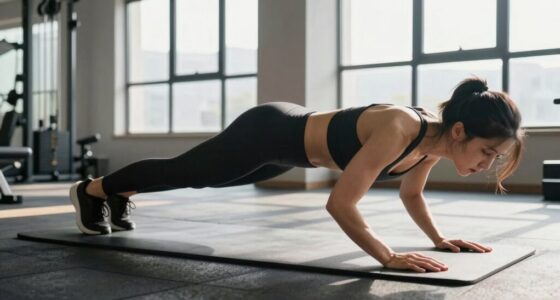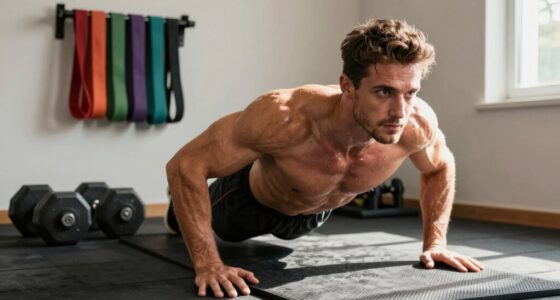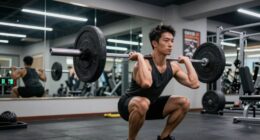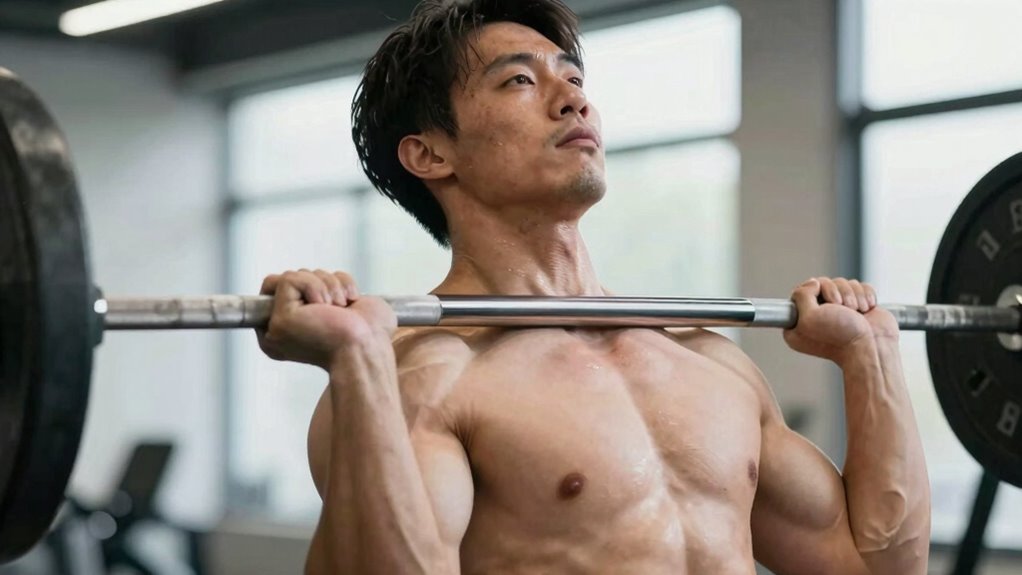
To breathe safely while lifting, inhale deeply before starting each movement to brace your core with intra-abdominal pressure. Exhale steadily during the exertion phase, like when pushing or lifting, to maintain stability and control. Focus on controlled, deep breaths tailored to each exercise, which activates your diaphragm and supports muscle engagement. Mastering this simple breathing rhythm keeps you safer, enhances performance, and minimizes injury risk—keep going to discover more breathing tips for ideal lifting safety.
Key Takeaways
- Inhale deeply before starting the lift to fill your lungs and brace your core.
- Exhale steadily during the exertion or lifting phase to maintain intra-abdominal pressure.
- Synchronize your breathing pattern with each movement, inhaling beforehand and exhaling during effort.
- Practice controlled, deep breaths to ensure consistent muscle engagement and core stability.
- Develop a routine of rhythmic breathing to enhance safety, performance, and injury prevention during lifts.
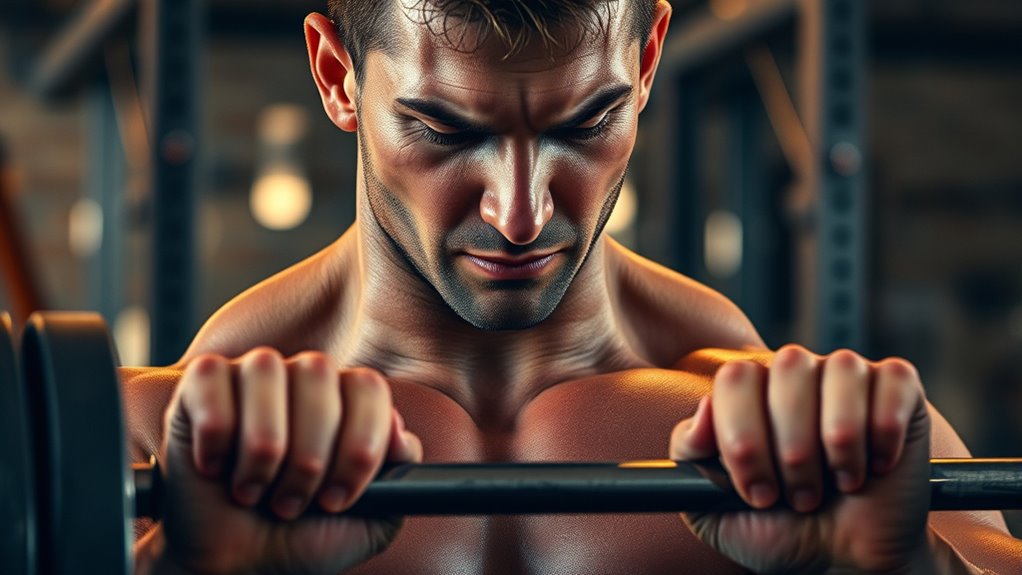
Have you ever wondered if you’re breathing correctly during your lifts? Many lifters overlook this simple but essential aspect of training. Proper breathing techniques aren’t just about oxygen intake; they also play a critical role in muscle engagement and overall safety. When you focus on how you breathe, you help stabilize your core, improve performance, and reduce the risk of injury.
Proper breathing during lifts stabilizes your core, enhances performance, and reduces injury risk.
The key to effective breathing during lifts is to synchronize your breath with your movement. Typically, you want to inhale before you start the lift, filling your lungs fully to create intra-abdominal pressure. This pressure acts like a natural brace, supporting your spine and engaging your core muscles. As you lift or exert force, you then exhale steadily, maintaining that core stability. This pattern of inhaling before the effort and exhaling during the exertion is a fundamental breathing technique that helps maximize muscle engagement and power output.
Breathing techniques that emphasize controlled, deep breaths are more effective than shallow, rapid inhalations. When you take a deep breath, you activate your diaphragm and engage your core muscles more fully. This muscle engagement is essential because it creates a solid foundation for your lifts, allowing you to generate more force and control your movements better. If you hold your breath or breathe irregularly, you risk losing core stability, which can lead to poor form and potential injury.
It’s also important to remember that different lifts may require slight adjustments in your breathing pattern. For example, during a deadlift or squat, a well-timed inhale before lifting and a controlled exhale during the lift helps maintain stability. During a bench press, you should breathe in deeply to brace your core before lowering the bar, then exhale as you press up. Developing awareness of your breathing cycle during each movement ensures consistent muscle engagement and safer lifts.
Practicing these breathing techniques consistently can transform your training. It might feel unnatural at first, but with time, it becomes second nature. Focus on inhaling deeply into your belly, filling your lungs fully, and then exhaling smoothly during exertion. This rhythm keeps your core engaged, stabilizes your spine, and optimizes muscle activation. Even the choice of projector technology can influence your focus and clarity during training sessions. Whether you’re a beginner or experienced lifter, mastering proper breathing techniques is a simple step that makes a significant difference in your safety and performance.
![Sparthos Workout Mask High Altitude Mask - Face Mask for Gym Training, Work Out, Running, Cycling, Elevation, Cardio, Fitness - Resistance o2 2 3 - Lung Breathing Exercise Mask Men Women [Black +Case]](https://m.media-amazon.com/images/I/41xrgJRetmL._SL500_.jpg)
Sparthos Workout Mask High Altitude Mask – Face Mask for Gym Training, Work Out, Running, Cycling, Elevation, Cardio, Fitness – Resistance o2 2 3 – Lung Breathing Exercise Mask Men Women [Black +Case]
✅ CUT YOUR WORKOUT TIME IN HALF! – Training Mask by SPARTHOS makes workouts more effective by simulating…
As an affiliate, we earn on qualifying purchases.
As an affiliate, we earn on qualifying purchases.
Frequently Asked Questions
How Does Breathing Affect Core Stability During Lifts?
Your breathing directly impacts core stability during lifts by engaging the diaphragm activation, which helps increase intra abdominal pressure. When you breathe properly, you stabilize your spine and reduce injury risk. Focus on controlled inhalation before lifting, holding your breath briefly to build intra abdominal pressure, then exhale slowly. This technique enhances core strength, providing better support and allowing you to lift heavier safely and effectively.
Should I Hold My Breath During the Entire Lift?
You shouldn’t hold your breath during the entire lift. Instead, use proper breathing techniques by inhaling before you lift and exhaling as you exert force. This helps with weight distribution and maintains core stability. Hold your breath briefly during the most challenging part of the lift (the Valsalva maneuver), then breathe out to stay safe and optimize your strength. Controlled breathing guarantees stability and reduces injury risk.
What’s the Best Breathing Pattern for High-Rep Sets?
Imagine your breath as the rhythm of a song—steady and controlled. For high-rep sets, breathe in during the eccentric phase (lowering) and exhale during the concentric phase (lifting). Maintain a consistent breathing rhythm, inhaling at the start of each rep, and exhaling smoothly as you push upward. Proper inhalation timing keeps your core stable, prevents dizziness, and helps you sustain effort through those challenging repetitions.
How Can I Prevent Dizziness When Holding My Breath?
To prevent dizziness when holding your breath, focus on breath control and proper inhalation techniques. Take slow, deep breaths before your lift to guarantee your brain gets enough oxygen. During the lift, brace your core with controlled breath-holding, but don’t hold your breath too long—exhale slightly if you feel lightheaded. Practice these techniques regularly to build your confidence and maintain steady oxygen flow, reducing dizziness risk.
Does Breathing Technique Vary for Different Types of Lifts?
Ever wonder if your breathing technique should change like a chameleon? Yes, it does. For heavy lifts like squats or deadlifts, you’ll need to brace your core and hold your breath briefly, using breathing equipment if necessary to maximize lung capacity. For lighter or more dynamic exercises, steady, controlled breathing keeps you balanced and safe. Adjust your technique based on the lift’s intensity and your lung capacity to optimize safety and performance.

Self-Locking Weight Lifting Belt – Premium Weightlifting Belt for Serious Functional Fitness, Power Lifting, and Olympic Lifting Athletes – Training Belts for Men and Women (Medium, Black)
SELF-LOCKING SECURITY: Unlike other lifting belts that only rely on cheap straps to support your lifts, our weight…
As an affiliate, we earn on qualifying purchases.
As an affiliate, we earn on qualifying purchases.
Conclusion
Remember, your breath is your quiet companion during lifts. By simply aligning your inhale and exhale with your movements, you create a gentle rhythm that keeps you steady and secure. Think of breathing as a subtle dance—never forcing, always flowing. When you trust this simple rhythm, you’ll find lifting becomes a smoother, safer experience. So take a deep breath, stay present, and let your breath guide you to lift with confidence and grace.

Breathing for Warriors: Master Your Breath to Unlock More Strength, Greater Endurance, Sharper Precision, Faster Recovery, and an Unshakable Inner Game
As an affiliate, we earn on qualifying purchases.
As an affiliate, we earn on qualifying purchases.
intra-abdominal pressure trainer
As an affiliate, we earn on qualifying purchases.
As an affiliate, we earn on qualifying purchases.