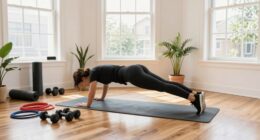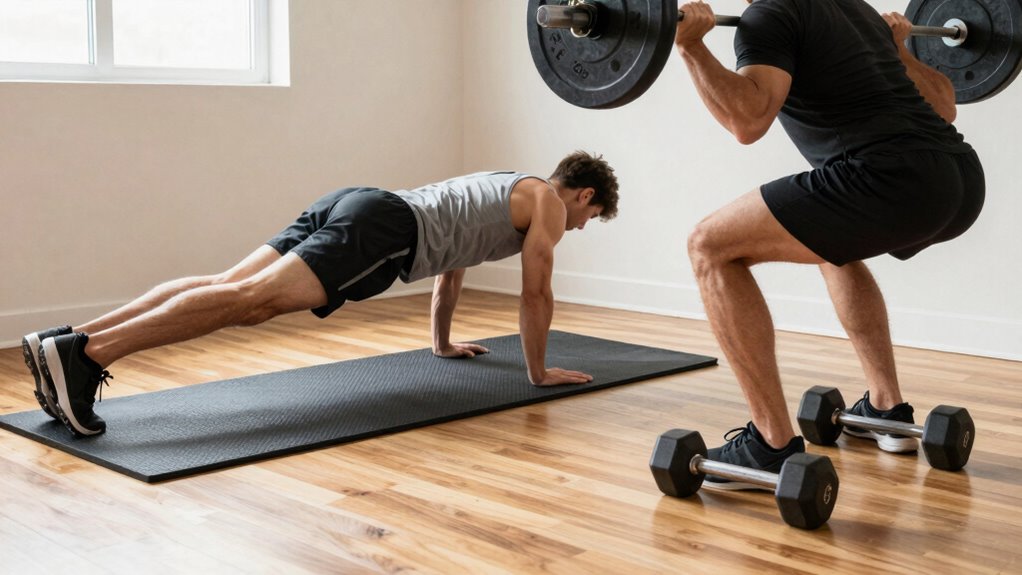

To build a strong, functional body at home, focus on mastering three key moves: the push-up, which develops upper body strength and targets your chest, shoulders, and triceps; the bodyweight squat, essential for lower body power and stability; and the plank, which builds a solid core that supports all movement. Perfecting these exercises with proper form and variations will elevate your fitness—keep going to discover how to maximize your results even further.
Key Takeaways
- Push-ups develop upper body strength, targeting chest, shoulders, triceps, and core for comprehensive power.
- Bodyweight squats build lower body strength, engaging thighs, hips, and glutes with proper form.
- Planks enhance core stability, supporting overall strength, posture, and athletic performance.
- Proper technique and muscle engagement maximize effectiveness and reduce injury risk across all movements.
- Incorporating variations and progressive overload keeps workouts challenging, ensuring continuous strength development.

Push Up Bars Strength Training – Workout Stands With Ergonomic Push-up Bracket Board with Anti-Slip Sturdy Structure Portable for Home Fitness Training, Push Up Stands Handle for Floor Workouts
【Powerful Upper Body】 — They are ideal for upper body muscle training, especially the chest muscles, triceps, abdominal…
As an affiliate, we earn on qualifying purchases.
As an affiliate, we earn on qualifying purchases.
Master the Push-Up for Upper Body Power

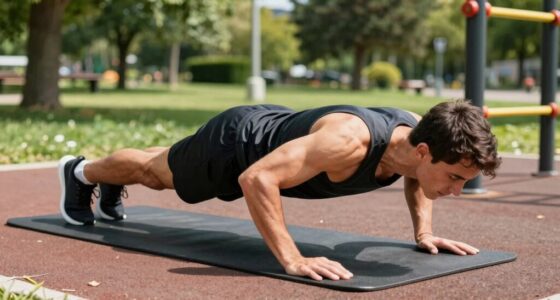
To build upper body strength, mastering the push-up is essential. This move targets your chest, shoulders, triceps, and core, making it a thorough exercise. Start in a plank position with your hands slightly wider than shoulder-width apart. Keep your body straight from head to heels, engaging your core. Lower yourself by bending your elbows, keeping them close to your sides, until your chest nearly touches the ground. Push back up through your palms, fully extending your arms. Focus on controlled movement and proper form to maximize benefits and prevent injury. As you progress, vary your push-up style—try incline, decline, or diamond push-ups—to challenge different muscles. Incorporating at-home fitness tech can help track your progress and optimize your workouts. Regularly assessing your form and strength gains using proper technique ensures consistent improvement. Additionally, understanding the importance of muscle engagement can help you perform each rep more effectively. Practicing progressive overload by gradually increasing repetitions or intensity will help you continue building strength and endurance. Incorporating diverse push-up variations can also stimulate different muscle groups and prevent workout plateaus. Consistent practice will build strength, stability, and endurance in your upper body.
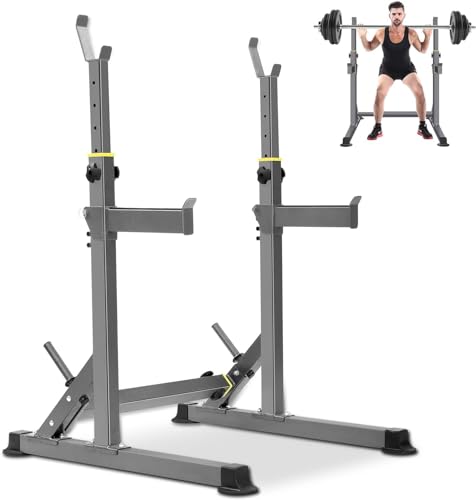
Adjustable Squat Rack,Multi-Function Barbell Rack for Weight Lifting and Home Gym Fitness Workout Portable Squat Bench Press
Adjustable Squat Rack,Multi-Function Barbell Rack for Weight Lifting and Home Gym Fitness Workout Portable Squat Bench Press,Load 690LBS
As an affiliate, we earn on qualifying purchases.
As an affiliate, we earn on qualifying purchases.
Perfect the Bodyweight Squat for Lower Body Strength

Mastering the bodyweight squat is a fundamental step toward building lower body strength. To get it right, stand with your feet shoulder-width apart, toes slightly pointed out. Keep your chest up and core engaged as you bend your knees and hips, lowering your body as if sitting in a chair. Guarantee your knees track over your toes and don’t extend past them. Go down until your thighs are parallel to the floor or slightly below, then push through your heels to stand back up. Focus on controlled movement, avoiding rushing or bouncing at the bottom. Perfecting your form increases strength safely and efficiently, reduces injury risk, and sets a strong foundation for more advanced moves. Consistent practice will improve stability, balance, and leg power over time. Utilizing proper safety & setup procedures ensures you maintain control and avoid injury during your workouts. Paying attention to proper technique is essential for maximizing effectiveness and preventing strain. Incorporating muscle engagement techniques can further enhance your strength gains and overall performance. Additionally, maintaining awareness of your body positioning helps ensure proper form throughout each repetition, which can also contribute to better glycolic acid benefits by promoting healthier skin through proper exfoliation and skin health practices.

Pure Plank Core Trainer Balance Board – Enhanced Stability, Full-Body Workout, Dynamic App Integration, Sleek Design, and Durable Material, Pure Fitness Boost Your Core Strength
A PERFECT PLANK, EVERY TIME – Pure Plank's ergonomic handles take your planking to the next level. Designed…
As an affiliate, we earn on qualifying purchases.
As an affiliate, we earn on qualifying purchases.
Incorporate the Plank to Build Core Stability
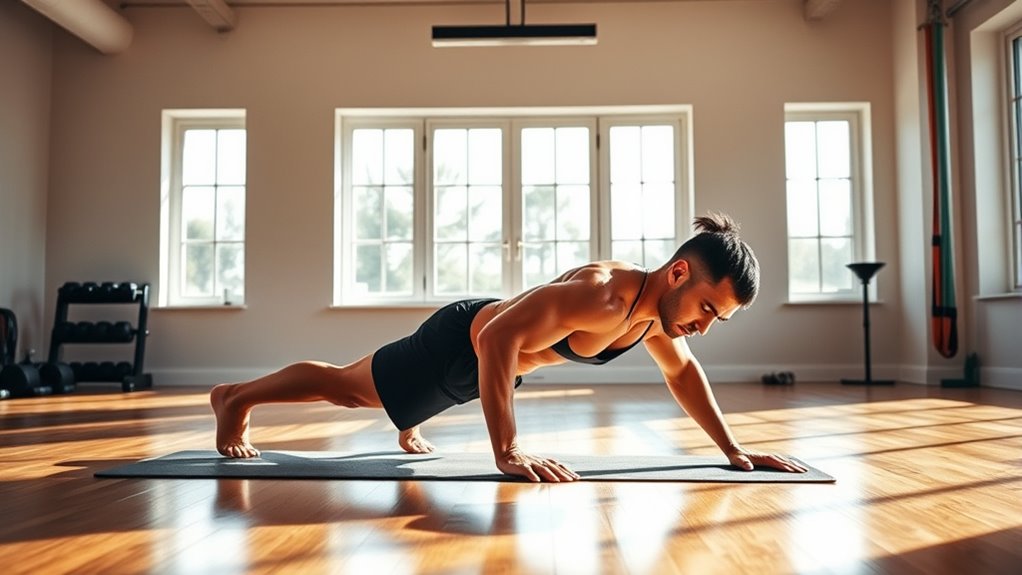
Incorporating the plank into your routine is an effective way to build core stability, which is essential for overall strength and proper movement. When you hold a plank, you engage multiple muscles simultaneously, including your abs, back, shoulders, and hips. This engagement helps improve posture, balance, and functional strength, making daily activities easier and reducing injury risk. To maximize benefits, focus on maintaining a straight line from your head to your heels, avoiding sagging or piking. Start with shorter holds, around 20 to 30 seconds, and gradually increase as your strength improves. Incorporate variations like side planks or forearm planks to target different core muscles. Consistently practicing planks enhances your core foundation, supporting all other strength movements and overall athletic performance. A strong core serves as the foundation for building everything else around your physical fitness. Developing a solid core also contributes to better stability during outdoor activities like hiking, biking, or camping, where core strength can help prevent injuries and improve endurance. Incorporating core stability exercises like planks helps develop this crucial foundation, leading to improved performance across various physical activities. Additionally, engaging in consistent core training can accelerate your progress and further enhance your overall strength. Remember that a strong core is vital for maintaining proper alignment and preventing imbalances that could lead to injury.

Smart Watch for Men Women (Answer/Make Call), 1.96" HD Fitness Tracker Running Watch, IP68 Waterproof,Pedometer, Sleep/Step/Activity/Heart Rate Monitor,110+ Sport Mode Smartwatch for iOS Android Phone
⌚ 1.96'' HD Touch Screen & 200+ DIY Watch Faces – The smart watch for men women is…
As an affiliate, we earn on qualifying purchases.
As an affiliate, we earn on qualifying purchases.
Frequently Asked Questions
How Can I Progress These Exercises for Increased Difficulty?
To progress these exercises, you can increase the reps or sets gradually, add resistance like weights or bands, or slow down your movements to increase time under tension. You might also make exercises more challenging by reducing rest time, trying advanced variations, or incorporating unstable surfaces for added balance work. Keep challenging yourself consistently, and you’ll see strength gains and improved endurance over time.
What Are Common Mistakes to Avoid During These Moves?
Imagine your muscles as a fortress—mistakes can be its downfall. Avoid common pitfalls like poor form, rushing reps, or neglecting proper warm-up. Keep your core engaged, move slowly for control, and listen to your body’s signals. Don’t sacrifice technique for reps; quality over quantity guarantees progress. By staying mindful, you strengthen your fortress without risking injury, making every move count toward your fitness goals.
Can Beginners Perform These Exercises Safely?
Yes, beginners can perform these exercises safely if they start slowly and focus on proper form. It’s important to pay attention to your body, avoid pushing through pain, and use modifications if needed. Begin with lighter weights or simpler versions of each move, gradually increasing intensity as you gain strength and confidence. Consider consulting a fitness professional for guidance to guarantee you’re executing the exercises correctly and safely.
How Often Should I Do These Workouts for Optimal Results?
Rome wasn’t built in a day, and neither are your strength gains. To see the best results, aim to do these workouts 3 to 4 times a week, allowing your muscles time to recover. Consistency is key, so stick to your schedule and listen to your body. As you progress, gradually increase intensity, but don’t overdo it—rest is just as important as activity.
Are There Any Specific Warm-Up Routines Recommended Before Starting?
Yes, you should warm up before starting your workout. A good warm-up includes 5-10 minutes of light cardio like jogging in place or jumping jacks to get your blood flowing. Follow that with dynamic stretches such as leg swings, arm circles, and torso twists to loosen up your muscles. This helps prevent injuries and makes certain your body is ready for the strength moves, making your workout more effective.
Conclusion
Now that you know these three powerhouse moves—push-ups, squats, and planks—you’ve got everything you need to build strength at home. Stick with these basics, and you’ll see progress before you know it. Remember, Rome wasn’t built in a day, so be patient and stay consistent. Keep pushing your limits, and soon enough, you’ll be stronger than ever. The key is to stay committed and enjoy the journey!