TL;DR
Listen free for 30 days with Audible
Thousands of audiobooks and originals — cancel anytime.
Start your free trialAs an affiliate, we earn on qualifying purchases.
This article outlines a simple, proven 3-week plan to help individuals restart their workout routines with minimal equipment and time. It emphasizes consistency, flexibility, and realistic goals, making exercise accessible for those returning after a break.
A 3-week workout restart plan has been introduced, designed for individuals looking to re-engage with physical activity after a break. The plan emphasizes minimal equipment, short sessions, and flexibility, making it accessible for busy schedules or setbacks. This approach aims to help people rebuild strength and aerobic capacity steadily, with clear guidance on progression and modifications.
The plan involves two sessions a week for the first two weeks, increasing to three in week three. Each session features four core movements: squats, hinges, push-ups, and carries, combined with a walk. The sessions last approximately 20 to 30 minutes, depending on the week and modifications. The structure includes a floor version for weeks when life or health issues interfere, ensuring consistency without overexertion.
The movements are selected to target major muscle groups: squats for legs, hinges for hips and back, push-ups for chest and shoulders, and carries for grip and trunk stability. The plan encourages starting lighter than expected, focusing on proper form, and stopping when fatigue or form decline. It also emphasizes progressive difficulty over the three weeks, with slight increases in repetitions and duration, while keeping the floor version static to prevent overexertion during setbacks.
Additional guidance includes a rule to resume the floor version within 48 hours if a session is missed, preventing missed weeks from compounding. The plan aligns with public health guidelines, advocating for strength training twice weekly and walking as aerobic activity, totaling 150-300 minutes weekly by week three.
Revamp Your Lifestyle: A 3-Week Guide to Getting Back into Working Out
Rebuild momentum with short sessions, four foundational movements, and a flexible fallback for difficult weeks. The goal is not heroic intensity—it is a routine you can repeat.
Four patterns. Most major muscles.
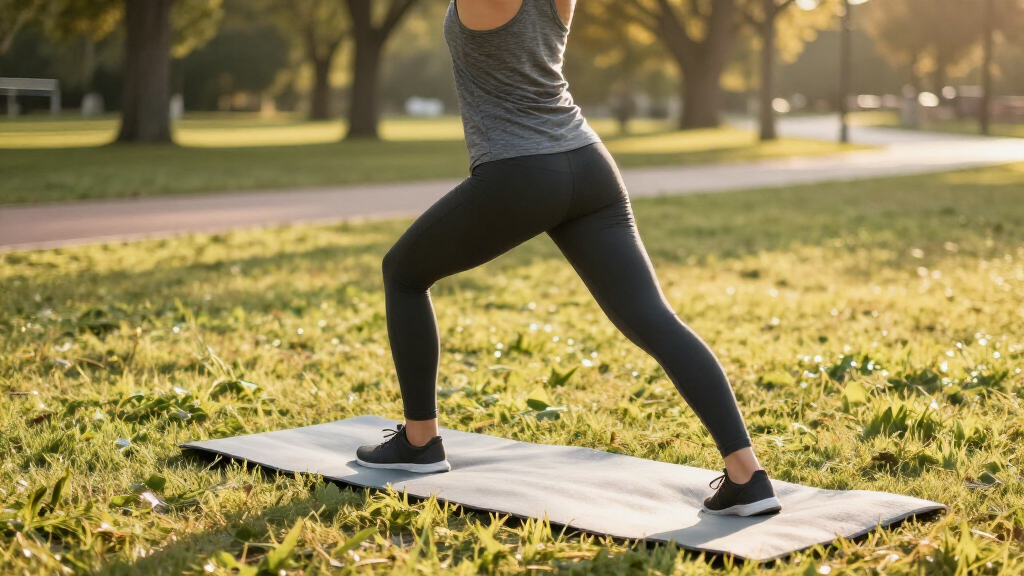
Keep the exercise menu deliberately small. Use body weight, a sturdy chair, and a safely held household object. Begin lighter than expected and make clean technique the standard.
Squat
Build leg strength with chair-assisted or body-weight squats. Keep the movement controlled and comfortable.
Hinge
Train the hips and back with a hip hinge. Move from the hips while maintaining a stable trunk.
Push-up
Use a wall, counter, bench, or floor to match your current capacity while training chest and shoulders.
Carry
Walk while holding a manageable object. Stay tall, move slowly, and switch sides when appropriate.
Progress through repetition, not exhaustion.
Each session combines the four movements with walking. Add only a small amount of work each week, leaving enough energy to return for the next session.
Re-enter
Learn the rhythm and finish feeling capable of doing more.
- Frequency: 2 sessions
- Strength: 1–2 easy rounds
- Walking: short, comfortable bouts
- Target: technique and confidence
Reinforce
Keep the schedule stable and add a modest amount of work.
- Frequency: 2 sessions
- Strength: add a few reps or time
- Walking: extend selected walks
- Target: smooth, repeatable effort
Expand
Introduce a third session without turning the week into a test.
- Frequency: 3 sessions
- Strength: 2–3 controlled rounds
- Walking: build weekly volume
- Target: sustainable momentum
| Plan element | Week 1 | Week 2 | Week 3 | Floor version |
|---|---|---|---|---|
| Strength sessions | 2 | 2 | 3 | ✓ 1 short session |
| Movement effort | Very easy | Easy to moderate | Moderate | ✓ Easy only |
| Progression | Learn form | Add a little | Add frequency | ~ Keep static |
| Walking | Comfortable | Longer bouts | Build toward guideline range | ✓ Brief walk counts |
Use the floor version when life gets messy.
Illness, workload, travel, and low-energy days do not need to become abandoned weeks. Reduce the dose while preserving the habit.
If you miss a planned session, complete the floor version within the next 48 hours. Resume without punishment or extra catch-up work.
Increase the dose slowly. Protect the quality.
Progress can mean cleaner form, more comfortable repetitions, or longer walks. Intensity is only one signal—and rarely the most useful one during a restart.
Weekly training exposure
Effort control spectrum
Work inside the controllable middle: breathing may rise, but repetitions should remain steady and technique should stay recognizable.
A useful baseline—not a universal prescription.
The framework supports a gradual return, but individual needs vary. Its long-term adherence and effectiveness across ages, injuries, and health conditions have not been established within this specific three-week format.
Health conditions
Consult a healthcare professional before starting if you have an injury, chronic condition, concerning symptoms, or uncertainty about exercise safety.
Minimal equipment
A sturdy chair, comfortable clothing, walking shoes, and one safely held object are enough. Specialized gym equipment is not required.
After week three
Review what felt sustainable. Maintain the schedule before adding more repetitions, resistance, duration, or exercise complexity.
Why This Restart Plan Supports Long-Term Fitness
This plan offers a realistic, sustainable approach for people returning to exercise, emphasizing consistency over intensity. By focusing on manageable sessions and adaptable modifications, it reduces barriers like time constraints and injury fears. Its emphasis on partial credit and flexible execution helps prevent discouragement, promoting ongoing physical activity, which is vital for overall health and well-being. Additionally, it reinforces the importance of building habits gradually, making long-term fitness more attainable for beginners or those returning after a break.home workout equipment for beginners
As an affiliate, we earn on qualifying purchases.
As an affiliate, we earn on qualifying purchases.
Background on Exercise Restart Challenges
Many individuals restart their workouts multiple times without success, often due to overambitious plans or lack of flexibility. Research indicates that beginners tend to underestimate their fatigue and form deterioration, leading to early burnout or injury. The COVID-19 pandemic and busy work schedules have further disrupted routines, making accessible, adaptable plans more necessary. Existing advice often overlooks the need for simple modifications during setbacks, which this plan explicitly addresses by including floor versions and quick sessions designed to fit into unpredictable schedules.minimal equipment strength training set
As an affiliate, we earn on qualifying purchases.
As an affiliate, we earn on qualifying purchases.
Limitations and Unknowns of the 3-Week Restart Approach
While the plan is grounded in general health guidelines and practical experience, its effectiveness for diverse populations or those with specific health conditions remains unconfirmed. The optimal frequency and intensity for different age groups or individuals with injuries are also not yet established. Additionally, long-term adherence beyond three weeks has not been studied within this framework, leaving questions about sustained behavior change.As an affiliate, we earn on qualifying purchases.
Next Steps for Implementation and Evaluation
Participants are encouraged to follow the plan for three weeks, tracking their progress and adjusting as needed. Fitness professionals and health researchers may evaluate its effectiveness through user feedback and outcome measures. Future updates could include personalized modifications based on individual health status, age, or specific goals. Public health campaigns might also promote this approach as a baseline for community-level activity promotion, especially for beginners or those resuming exercise after a hiatus.resistance bands for full body workout
As an affiliate, we earn on qualifying purchases.
As an affiliate, we earn on qualifying purchases.
Key Questions
Can I do this plan if I have injuries or health conditions?
Consult with a healthcare provider before starting any new exercise routine. The plan’s modifications, like skipping certain movements, are designed to accommodate minor injuries or limitations, but individual advice is recommended.
What if I miss more than one session?
If you miss a session, do the floor version within 48 hours to prevent falling behind. If more sessions are missed, focus on resuming the plan as soon as possible without overexerting.
Do I need special equipment?
No, the plan requires only basic items like a sturdy chair, a heavy object for carries, and comfortable clothing. Walking is also a key component, requiring no equipment.
How do I know if I am progressing?
Focus on how you feel during exercises—improved form, increased reps, or longer walks indicate progress. Avoid measuring progress solely by intensity; consistency and comfort are key indicators.
Is this plan suitable for children or older adults?
The plan can be adapted for different age groups, but modifications may be necessary. Consult a healthcare professional or fitness expert for personalized adjustments.
Source: rss
Flea & tick season Picks
flea and tick prevention
As an affiliate, we earn on qualifying purchases.