
To tell if a set was hard enough to help you grow, pay attention to signs like heavy breathing, muscle fatigue, and burning sensations, which show you’re pushing close to your limits. If you feel drained afterward or recover quickly, you might not have challenged yourself enough. Maintaining good form during difficult reps is also key. Keep exploring to discover more tips on maximizing your workout effectiveness and growth potential.

Get workout gear delivered free — and shop member deals
- Fast, free delivery on millions of items
- Access to Prime Big Deal Days deals on October 6–7
- Prime Video, Amazon Music and more included
Key Takeaways
- Heavy breathing, muscle fatigue, or muscle burn indicate the set was sufficiently challenging.
- An inability to complete reps with proper form suggests the set pushed your limits.
- Feeling drained post-set and quick recovery signals effective intensity for growth.
- Tracking progress over time, like increased reps or weight, confirms adequate training stimulus.
- Quick recovery and feeling ready for more imply the set wasn’t challenging enough.
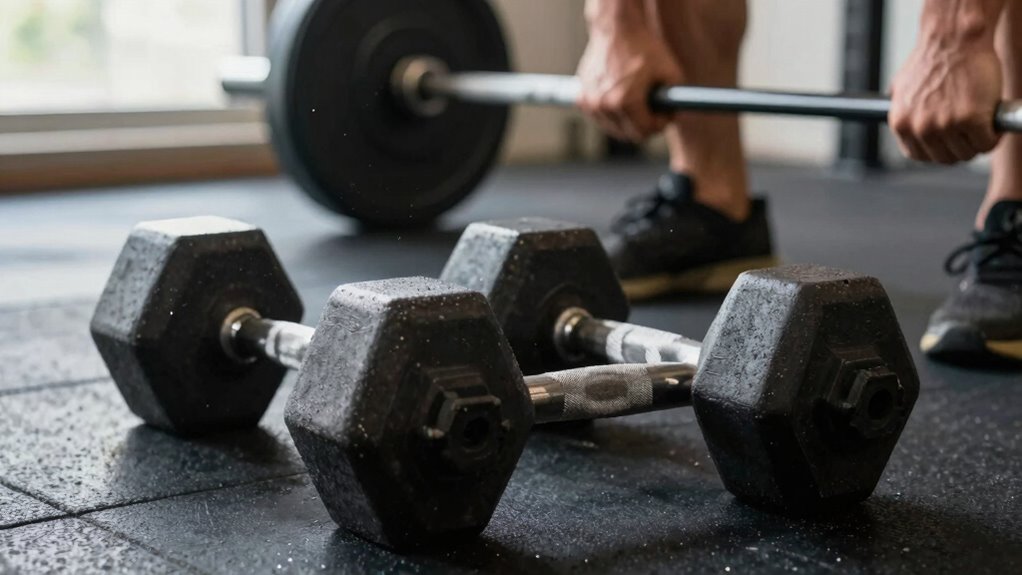
When you finish a workout or practice session, it’s natural to wonder whether the effort you put in was enough to push you forward. You want to know if that set you completed truly challenged your muscles or skills, and whether it was enough to promote growth. To figure this out, you need to pay attention to a few key indicators that relate to progress tracking and skill assessment. These tools help you measure whether your effort hit the mark or if you need to push a little harder next time.
First, consider how you feel during and immediately after the set. If you’re breathing heavily, feeling your muscles fatigue, or experiencing muscle burn, it’s a good sign that you’ve pushed close to your limits. However, if you finish with little effort and no signs of fatigue, it’s likely that the set wasn’t challenging enough to stimulate growth. Progress tracking becomes essential here — by keeping a workout journal or logging your sets, reps, and perceived exertion, you can see patterns over time. If your records show consistent increases in reps or weight, then your sets are probably providing enough intensity for growth. Conversely, if your numbers plateau, it may mean you need to increase the difficulty.
Feeling fatigued and breathless indicates a challenging, growth-promoting workout; steady effort suggests the need for increased difficulty.
Additionally, understanding training intensity can help you better gauge whether the set was sufficiently challenging, as this concept encompasses effort level, resistance, and overall difficulty. Skill assessment also plays a role. If you’re working on a technical skill, such as a lift or a movement pattern, ask yourself if you’re maintaining proper form throughout the set. When a set is hard enough to help you grow, your technique might start to break down toward the end because your muscles are struggling to keep up. This breakdown isn’t a flaw; it’s a sign that your muscles are being challenged, and it’s the point where growth is most likely to occur. If you find yourself completing sets with perfect form effortlessly, it’s a cue that you might need to add more resistance or volume. Moreover, listening to your body can help you identify whether you’re truly pushing yourself or just going through the motions. Incorporating feedback from your body actively into your routine allows you to adjust accordingly and optimize growth. Recognizing training signals such as discomfort or fatigue can further refine your understanding of whether you’re training effectively.
Furthermore, external factors like training environment can influence how challenging a set feels and how well you recover from it, impacting overall growth. Another way to gauge whether a set was sufficiently challenging is by your ability to recover. After the set, if you feel drained and need a decent rest before the next effort, your body is signaling that the workout was effective. If you bounce back quickly and feel ready to go again, then that set probably didn’t push you enough. Over time, tracking how your recovery time changes can also indicate progress. As you get stronger or more skilled, your body recovers faster from challenging sets — a sign that your training is effective.
Ultimately, the key is to combine these observations—how you feel, your progress logs, and your skill execution—to determine if a set was hard enough. When you’re honest with yourself about these factors, you’ll better understand whether your efforts are fostering growth or if it’s time to challenge yourself a bit more.
muscle fatigue measurement device
As an affiliate, we earn on qualifying purchases.
As an affiliate, we earn on qualifying purchases.
Frequently Asked Questions
How Do I Measure My Progress During a Challenging Set?
To measure your progress during a challenging set, focus on your ability to maintain proper form and complete reps despite fatigue. Use motivation techniques like visualizing success or setting small goals to push through tough moments. Incorporate recovery strategies after each set, such as stretching or hydration, to keep your energy levels high. Tracking how often you surpass previous limits helps you see growth and stay motivated.
Can a Set Be Too Hard and Hinder Growth?
Have you ever wondered if your training intensity is pushing you too far? Yes, a set can be too hard, which might hinder your growth instead of helping it. Overly intense sets can exhaust your muscles and delay recovery. To avoid this, incorporate proper recovery strategies and listen to your body. Balance challenging sets with adequate rest, ensuring you build strength without risking injury or burnout.
How Often Should I Increase Set Difficulty?
You should increase set difficulty gradually, typically every 1-2 weeks, to continually challenge your muscles. Use advanced techniques like supersets or drop sets to intensify workouts safely. Pay attention to your recovery strategies—if you’re sore or fatigued, give yourself extra rest before increasing difficulty. Listening to your body guarantees you avoid overtraining, allowing steady progress while minimizing injury risk. Adjust the challenge based on your progress and recovery feedback.
What Signs Indicate I Need a Lighter or Easier Set?
When your workout intensity feels more like a walk in the park, it’s time to dial back. Signs you need a lighter set include poor technique variation, fatigue that hampers form, or consistent inability to complete reps. Pushing through when form breaks down can do more harm than good. Listen to your body, and adjust accordingly, ensuring your technique remains sharp while still challenging yourself.
Does Mental Fatigue Affect Whether a Set Was Effective?
Mental fatigue can definitely impact whether a set was effective, as it weakens your mind-muscle connection and reduces workout intensity. When you’re mentally drained, you might not engage muscles properly or push yourself hard enough, limiting growth. To maximize results, make sure you’re mentally fresh before training. A clear mind helps maintain focus, improve effort, and sustain the workout intensity needed to challenge muscles and promote growth.
As an affiliate, we earn on qualifying purchases.
Conclusion
As you step back and reflect, imagine your muscles as a garden, stretching and straining against the soil. If your set felt like breaking ground, pushing you just beyond comfort, that’s your sign of growth. Sometimes, the hardest sets feel like a storm passing through—intense, fleeting, but essential. Trust that struggle; it’s the fertilizer for your strength. Keep planting those challenging moments, and watch yourself bloom into something stronger than before.
As an affiliate, we earn on qualifying purchases.
As an affiliate, we earn on qualifying purchases.
Fall Picks
fall essentials
As an affiliate, we earn on qualifying purchases.