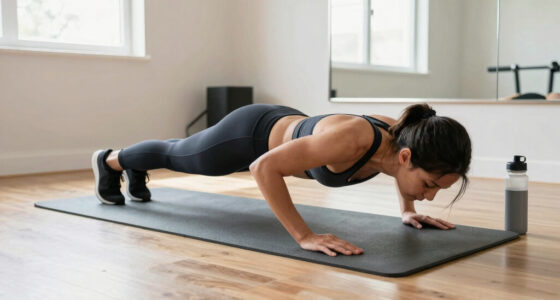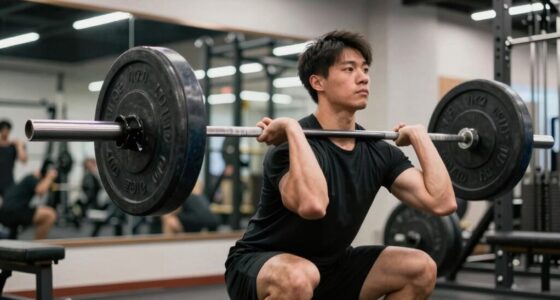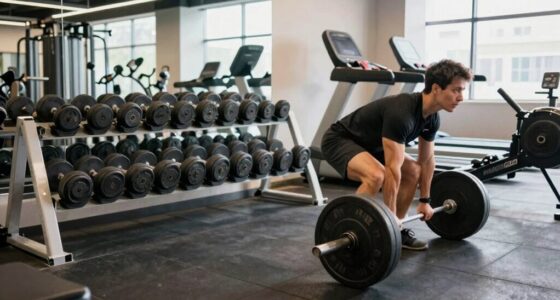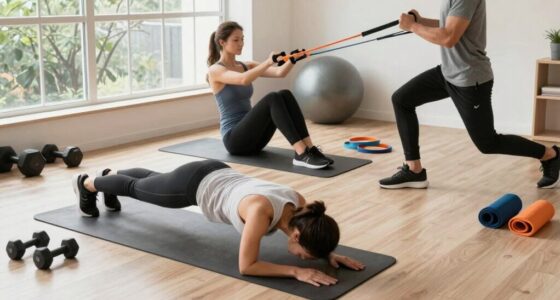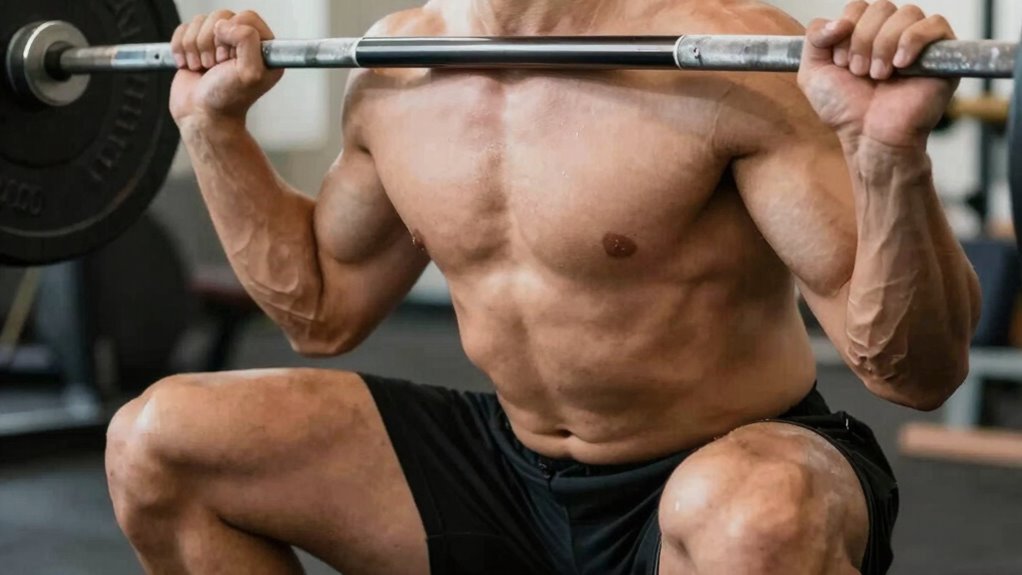

Mastering proper bracing is key to making nearly every strength exercise safer. When you engage your core correctly, you stabilize your spine, prevent injuries, and improve control during lifts. Proper bracing involves deep belly breathing and tightening your abdominal muscles to create a natural support system. It helps you lift heavier safely and maintain better posture. Keep practicing this skill, and you’ll discover how much more secure and confident your strength training can become.

Get workout gear delivered free — and shop member deals
- Fast, free delivery on millions of items
- Access to Prime Big Deal Days deals on October 6–7
- Prime Video, Amazon Music and more included
Key Takeaways
- Proper bracing activates core muscles, creating a stable, supportive cylinder around the spine during lifts.
- It involves deep diaphragmatic breathing combined with abdominal tightening to maintain tension.
- Consistent bracing prevents spinal collapse, twisting, and undue stress under heavy loads.
- Effective bracing enhances body awareness, improving technique and reducing injury risk.
- Mastering this skill allows for safer, more controlled lifting of heavier weights.
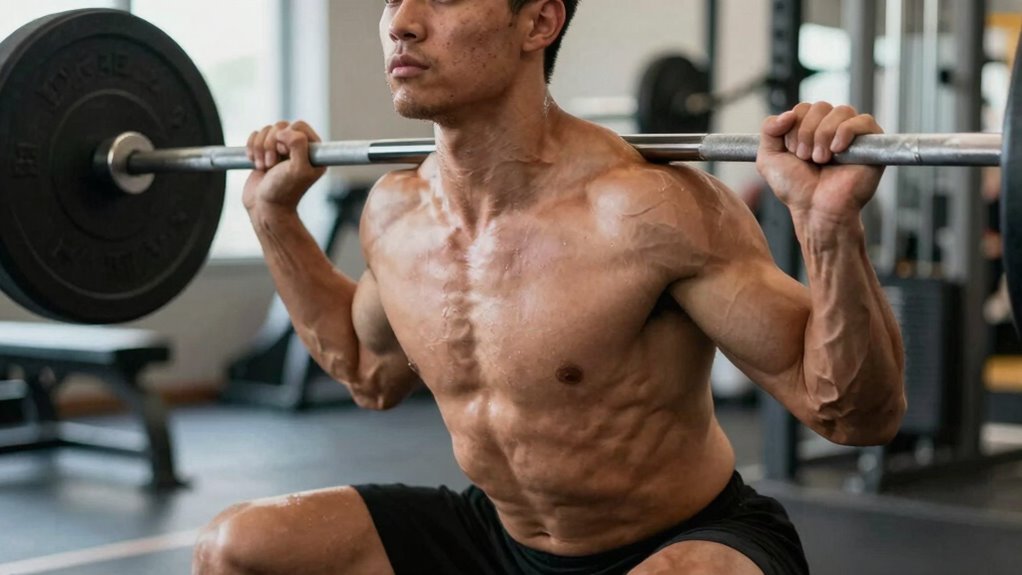
When performing strength exercises, mastering the bracing skill is essential to protect your spine and maximize your performance. Proper bracing helps you maintain core stabilization, which is the foundation for safe and effective lifting. When you brace correctly, you create a solid support system around your spine, reducing unnecessary strain and lowering your risk of injury. This technique isn’t just about exerting effort; it’s about engaging the right muscles at the right time to ensure your body functions as a unified, stable unit.
Mastering proper bracing stabilizes your core, protects your spine, and enhances safe, effective lifting during strength exercises.
Core stabilization plays a critical role in every strength move you do. When you brace, you activate deep abdominal muscles, your obliques, and your lower back muscles simultaneously. This creates a natural corset that supports your spine during heavy lifts, like squats and deadlifts. Without proper core stabilization, your spine becomes vulnerable to undue stress, which can lead to injuries over time. The more consistently you practice bracing, the more instinctive it becomes, and your entire body benefits from improved control and strength. Developing awareness of your body positioning is crucial to refining this skill effectively.
Injury prevention is one of the most significant advantages of mastering the bracing skill. When you properly engage your core, you prevent your spine from collapsing or twisting under load. This is especially important during high-intensity lifts, where even a small lapse in stability can result in acute injury or chronic issues. Bracing acts as a safety net, helping you maintain proper posture and alignment throughout each repetition. It also allows you to lift heavier weights with confidence, knowing your body is better protected against the forces involved. Developing this skill also enhances your muscle recruitment, making each movement more efficient and effective.
Getting into the habit of bracing takes conscious effort at first, but once you understand how it feels, it becomes second nature. To brace effectively, take a deep breath into your belly, expanding your diaphragm, and then tighten your abdominal muscles as if preparing to resist a punch. Keep that tension throughout the movement, maintaining steady breathing without letting your stomach relax. This controlled tension creates a firm core that supports your entire body during each set. Consistent practice not only improves your technique but also contributes to overall body awareness, which is vital for safe lifting. Remember that proper breathing techniques are integral to maintaining consistent tension and avoiding unnecessary fatigue.
Incorporating proper bracing into your routine transforms your approach to strength training. It isn’t just about lifting more weight; it’s about lifting smarter and safer. It enhances core stabilization, which directly correlates with injury prevention. When you prioritize this skill, you’re investing in a safer, more durable body capable of handling the demands of challenging exercises. Over time, mastering bracing becomes an automatic part of your lifting process, empowering you to train harder and stay healthier.
core stabilization weightlifting belt
As an affiliate, we earn on qualifying purchases.
As an affiliate, we earn on qualifying purchases.
Frequently Asked Questions
Can Bracing Be Applied During Cardio Workouts?
Yes, you can apply bracing during cardio workouts to improve cardio safety and enhance breathing coordination. When you brace, you engage your core muscles, providing stability and reducing injury risk. Focus on maintaining steady, controlled breathing while activating your core muscles. This technique helps you stay balanced during high-intensity moves, prevents strain, and promotes safer, more effective cardio sessions. Bracing can make your workouts more secure and efficient.
How Long Does It Take to Master Proper Bracing?
Mastering proper bracing takes time, typically a few weeks of consistent core engagement and abdominal activation practice. You’ll notice progress as you feel your strength and stability strengthen, and your form becomes more fluid. Focus on slow, deliberate breaths and maintaining tension throughout your core. With dedication and daily effort, you’ll develop confident control, making every movement safer, more stable, and more effective.
Is Bracing Beneficial for Beginners or Only Advanced Lifters?
Bracing is beneficial for both beginners and advanced lifters. For beginners, it helps with adaptation, building a strong core, and developing proper technique consistency early on. As you progress, maintaining solid bracing guarantees safety and performance. Starting with foundational bracing skills sets a good habit, preventing injuries and enhancing lifts. So, don’t wait — incorporate bracing now to support your overall strength journey and stay safe during every workout.
Are There Risks Associated With Improper Bracing Techniques?
Yes, improper bracing can pose risks. If you don’t focus on proper core stabilization, you might compromise your spine’s safety and increase injury chances. Poor technique can lead to muscle strains or even more serious issues like herniated discs. So, it’s essential to master correct bracing, ensuring you protect yourself during every lift and truly benefit from injury prevention. Don’t let a small mistake turn into a big problem.
How Does Breathing Affect the Bracing Process?
Breathing patterns directly influence your bracing process by helping you maintain core stability during lifts. When you breathe properly—inhaling before lifting and exhaling gradually—you create intra-abdominal pressure that supports your spine. This controlled breathing guarantees your core remains engaged and stable, reducing injury risk. Focus on coordinated breathing to enhance your bracing, making your strength exercises safer and more effective.
As an affiliate, we earn on qualifying purchases.
Conclusion
Mastering bracing is like wielding a shield in your fitness journey, much like Hercules relied on his strength and stability. When you engage your core properly, you not only protect yourself but release true power in every lift. Think of it as forging your own Excalibur—strength that’s safe, steady, and unstoppable. Embrace this skill, and you’ll turn every workout into a legendary feat, where safety and strength go hand in hand.
As an affiliate, we earn on qualifying purchases.
As an affiliate, we earn on qualifying purchases.
Evergreen bestsellers Picks
bestsellers
As an affiliate, we earn on qualifying purchases.