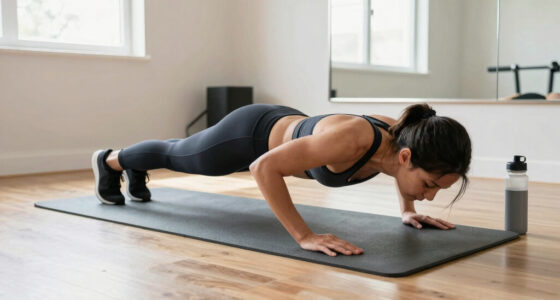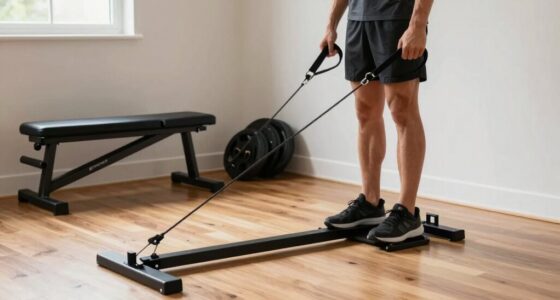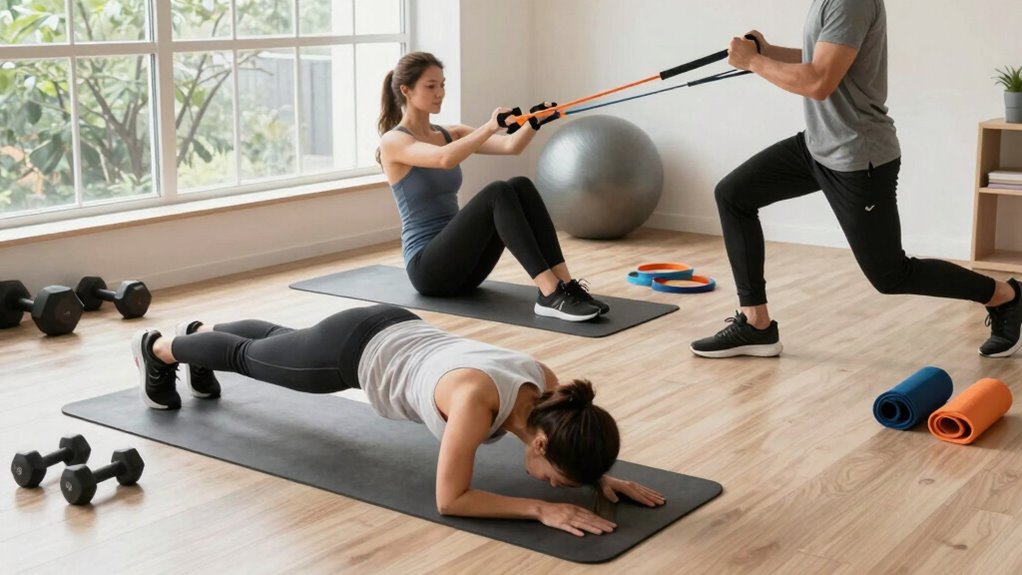

To build a push, pull, and lower-body routine at home, focus on alternating exercises that target major muscle groups for balanced strength. Incorporate compound movements like push-ups, dips, bodyweight rows, lunges, and squats to maximize effectiveness. Use different equipment like resistance bands or household objects to vary intensity and angles. Make sure to warm up, cool down, and gradually increase difficulty. Keep a consistent schedule, and you’ll discover how to optimize your workout for lasting progress.

Get workout gear delivered free — and shop member deals
- Fast, free delivery on millions of items
- Access to Prime Big Deal Days deals on October 6–7
- Prime Video, Amazon Music and more included
Key Takeaways
- Structure workouts into push, pull, and lower-body days to allow muscle recovery and targeted training.
- Incorporate compound exercises like push-ups, rows, and squats for efficiency and muscle engagement.
- Use resistance bands, household objects, or bodyweight for resistance and exercise variety at home.
- Gradually increase intensity through reps, resistance, or exercise variations to ensure progressive overload.
- Include warm-up, cool-down, and rest days to prevent injury and promote consistent progress.
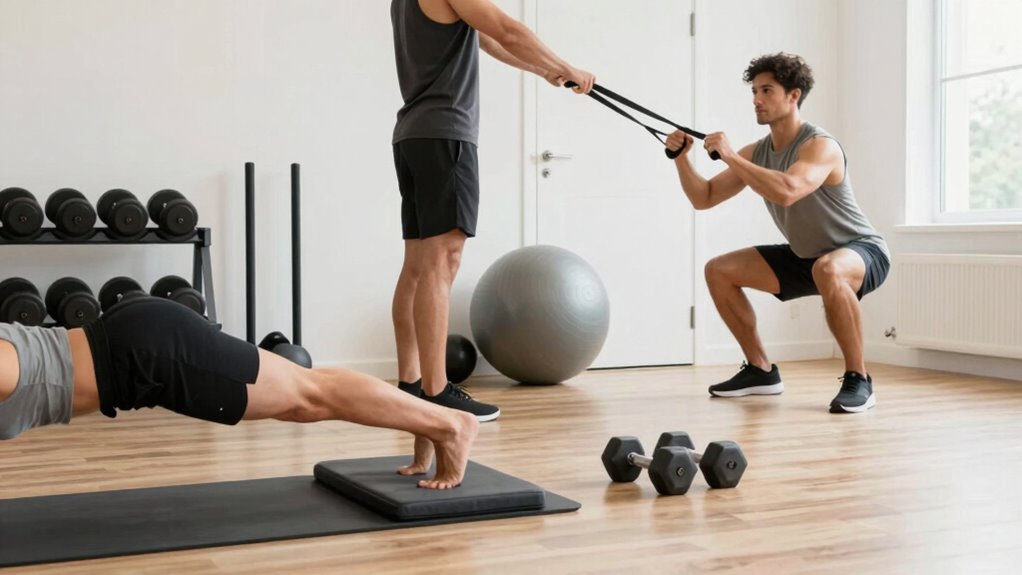
Creating an effective workout routine at home doesn’t have to be complicated. When you’re designing a push, pull, and lower-body plan, the key is balancing exercises that target different muscle groups while making the most of limited space and equipment. To start, think about how diet planning plays a role in your progress. Fueling your body properly supports muscle growth and recovery. Guarantee your meals include enough protein, healthy fats, and complex carbs to keep your energy levels high and aid in muscle repair after workouts. This foundation helps you stay consistent and motivated.
Next, consider equipment alternatives. You don’t need a fully equipped gym to get a solid routine. Bodyweight exercises can be incredibly effective, and items like resistance bands, dumbbells, or even household objects such as water bottles or backpacks filled with books can serve as weights. These options make it easy to vary intensity and target muscles from different angles. For push exercises, focus on variations like push-ups, incline push-ups, or dips using a sturdy chair or bench. Pull movements can include bodyweight rows under a sturdy table or resistance band exercises like seated rows. Incorporating proper exercise form ensures you maximize benefits while minimizing injury risk. For lower-body work, lunges, squats, glute bridges, and step-ups on a sturdy chair are excellent choices. The goal is to incorporate movement patterns that challenge your muscles and improve overall strength.
When building your routine, structure it so that you alternate push, pull, and lower-body days, giving each muscle group ample recovery time. For example, you might do push exercises on Monday, pull exercises on Wednesday, and lower-body workouts on Friday. Keep your workouts efficient by focusing on compound movements that work multiple muscles simultaneously. This approach maximizes your effort in less time, especially important when working out at home with limited equipment. Incorporating bodyweight exercises can further enhance the effectiveness of your routine without needing additional equipment. Additionally, understanding progressive overload ensures continuous muscle development as you gradually increase difficulty. Incorporating recovery strategies, such as proper sleep and rest days, also plays a vital role in your progress.
Remember to warm up before each session and cool down afterward. Stretching helps prevent injury and improves flexibility. As you progress, gradually increase reps or resistance to keep your muscles challenged. Consistency is vital, so set a schedule that fits your lifestyle and stick to it. With smart diet planning and creative equipment alternatives, you can build a balanced, effective push, pull, and lower-body routine that keeps you strong and healthy—all from the comfort of your home.
resistance bands for home workouts
As an affiliate, we earn on qualifying purchases.
As an affiliate, we earn on qualifying purchases.
Frequently Asked Questions
Can I Substitute Equipment With Household Items?
Yes, you can substitute equipment with household items. Household substitutions and equipment alternatives are great for maintaining your workout at home. For example, use water bottles or canned goods as weights, a sturdy chair for step-ups or dips, and a towel for resistance exercises. These alternatives help you stay consistent and effective, making your routine adaptable without needing specialized gym equipment. Just make certain items are safe and stable before use.
How Often Should I Change My Routine?
You should change your routine every 6 to 8 weeks to keep progressing effectively. Incorporate progression planning by gradually increasing intensity or reps, which helps avoid plateaus. Maintaining workout consistency is key; don’t change too often, but listen to your body and adapt when progress stalls or boredom sets in. This balance ensures continuous improvement and keeps your workouts challenging and engaging.
What Is the Ideal Number of Sets and Reps?
Think of your workout as a symphony, where balance is key. For progression strategies, aim for 3-4 sets of 8-12 reps for each exercise, adjusting as you grow stronger. Incorporate workout variety by gradually increasing reps or weights, preventing plateaus. This approach keeps your muscles challenged and engaged, ensuring steady gains without overtraining. Listen to your body and modify sets and reps to suit your progress.
How Do I Prevent Workout Boredom?
To prevent workout boredom, mix up your routine with cardio variety and try new exercises regularly. Keep your motivation high by setting small goals and rewarding yourself when you hit milestones. Incorporate different workout styles, like HIIT or strength training, to stay engaged. Changing your environment or workout time can also boost enthusiasm. Staying curious and challenging yourself keeps your workouts fresh and enjoyable.
When Should I Rest Between Exercises?
Imagine you’re doing push-ups and squats; after each set, you should rest for about 30 to 60 seconds, depending on your fitness level. This exercise timing allows your muscles to recover and maintain proper form. For higher-intensity workouts, rest duration might extend to 90 seconds, while lighter sessions need less. Adjust your rest based on how you feel, ensuring you’re ready for the next set without overexerting.
adjustable dumbbells for strength training
As an affiliate, we earn on qualifying purchases.
As an affiliate, we earn on qualifying purchases.
Conclusion
By combining push, pull, and lower-body exercises, you create a balanced routine that builds strength, enhances endurance, and promotes overall fitness. Focus on consistency, challenge yourself with new movements, and listen to your body’s signals. Embrace variety to keep your workouts engaging, progress gradually to avoid injuries, and stay motivated by tracking your improvements. Ultimately, a well-rounded routine isn’t just about exercise — it’s about cultivating resilience, fostering discipline, and celebrating your progress every step of the way.
home workout resistance equipment
As an affiliate, we earn on qualifying purchases.
As an affiliate, we earn on qualifying purchases.
As an affiliate, we earn on qualifying purchases.
Evergreen bestsellers Picks
bestsellers
As an affiliate, we earn on qualifying purchases.