TL;DR

Get workout gear delivered free with Prime
- Fast, free delivery on millions of items
- Prime Video, Amazon Music and more included
- Member-only deals all year
Personal trainer Jill Brown, 59, told Fit&Well she avoids heavy weights because of injuries and uses lighter resistance with higher repetitions. She recommends a six-move, 30-minute resistance-band workout for beginners, starting at six to eight repetitions per move and building gradually.
Personal trainer and Pilates instructor Jill Brown, 59, says injuries have led her to stop lifting heavy weights, and she shared a 30-minute resistance-band workout for beginners with Fit&Well. Brown recommends beginning with six to eight repetitions of each exercise, using good form, then adding repetitions over time.
Brown is a board-certified health and wellness coach as well as a personal trainer and Pilates instructor. In an interview with Fit&Well, she said heavy lifting is no longer part of her routine because of injuries. She described using lighter-to-moderate resistance and increasing repetitions to keep exercises challenging. Her account is personal guidance, not evidence that one training approach suits everyone.
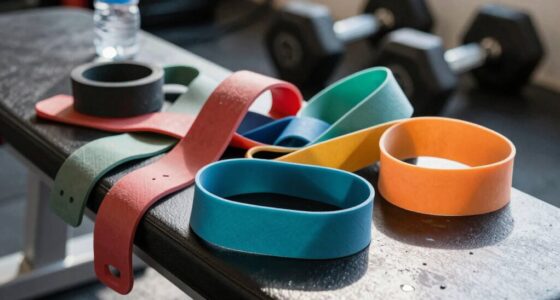
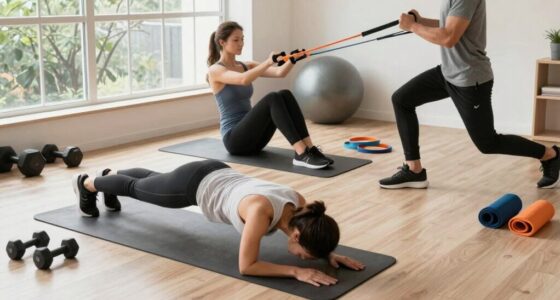
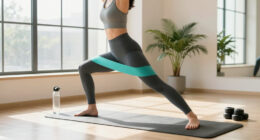
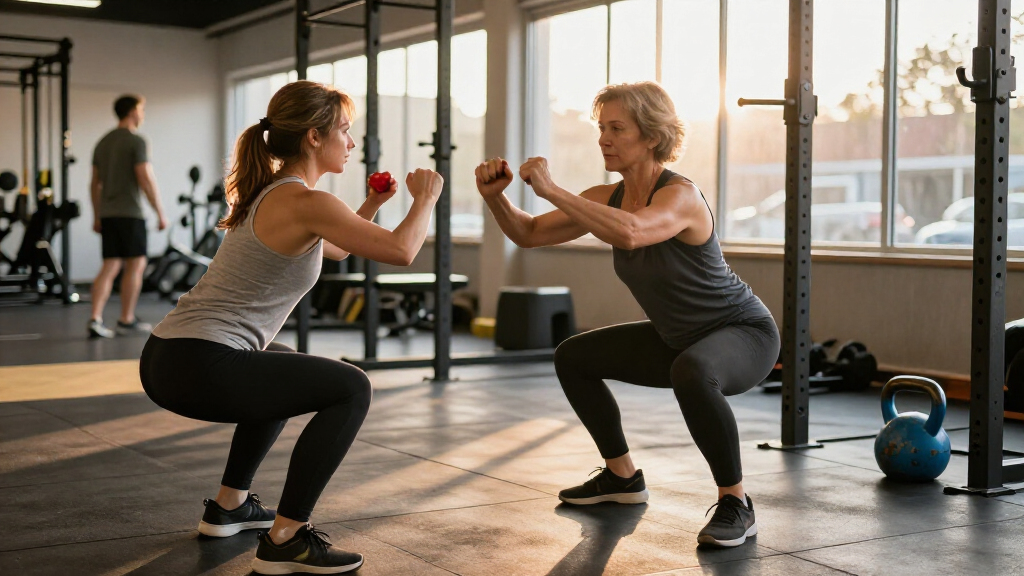
The routine includes squats, lunges, bent-over rows, lat pulls, a child’s-pose-to-kneeling push-up, and a banded floor press. Each exercise is listed for two to three sets of six to eight repetitions; the lunge is prescribed for six to eight repetitions on each side. The workout calls for a long-loop and a short-loop resistance band.
Brown advises beginners to do as many repetitions as they can manage with good form, record the number, and try to add some the following week. She gives a plank as an example of gradual progression: someone who can hold it for 20 seconds could start there, then aim for 25 seconds the next week and 30 seconds the week after. The plank is an example of her progression advice, not one of the six exercises in the listed workout.
A Lower-Equipment Starting Point
The routine offers a home-based alternative for people who do not have gym access, prefer not to buy bulky equipment, or are returning to exercise. Its use of resistance bands and a modest initial repetition range may make strength training feel more approachable to some beginners. Brown’s experience also shows that her own training has changed in response to injury, rather than relying on heavy lifting as a fixed requirement.
That should not be read as a broad conclusion that lighter resistance always produces the same results as heavy weights. Brown refers to research supporting muscle growth with lighter-to-moderate loads, but the supplied report does not identify the studies or describe their participants and methods. The practical takeaway from her recommendation is narrower: start at a manageable level, use controlled technique, and increase the challenge gradually.
As an affiliate, we earn on qualifying purchases.
How Brown Builds the Routine
The Fit&Well report places the workout against common reasons a person might avoid weights: recovering from an injury, having been inactive, or not wanting to pay for a gym membership or buy large equipment. It presents Brown’s program as a beginner-friendly suggestion, rather than as a prescribed rehabilitation plan or a program tailored to an individual’s health history.
Her approach relies on adjusting repetitions instead of beginning with heavy loads. Brown says she personally favors 20 repetitions, but explicitly advises beginners to start lower, at six to eight, and build up. The workout itself lists two to three sets for each of its six movements. The report does not state how many days per week participants should do it or specify rest periods between sets.
““I don’t lift heavy because of injuries.””
— Jill Brown, speaking to Fit&Well
As an affiliate, we earn on qualifying purchases.
Limits of the Published Advice
The report does not provide clinical details about Brown’s injuries, explain which movements she modified for them, or say whether a health professional reviewed the workout. It also does not give a weekly schedule, rest periods, band-resistance level, or modifications for people who cannot comfortably perform a particular exercise.
Brown’s statements about her strength and the effectiveness of lighter-to-moderate resistance are attributed to her; the supplied material does not independently verify her training results or cite the research she mentions. Readers with injuries, pain, or health conditions should not assume that this routine is appropriate for them without individual guidance.
As an affiliate, we earn on qualifying purchases.
Progress at a Manageable Pace
Brown’s stated next step for beginners is to record what they can do with good form and try a small increase the following week. The source does not announce a follow-up study, new program, or additional milestone. People trying the routine can adjust the pace to their abilities and stop if an exercise causes pain; anyone returning after injury or managing a health condition should seek advice from a qualified professional.
As an affiliate, we earn on qualifying purchases.
Key Questions
Who is Jill Brown?
Brown is a 59-year-old board-certified health and wellness coach, personal trainer, and Pilates instructor, according to Fit&Well.
What exercises are in the workout?
The six movements are squats, lunges, bent-over rows, banded lat pulls, child’s-pose-to-kneeling push-ups, and banded floor presses.
How many repetitions should a beginner start with?
Brown recommends six to eight repetitions for a beginner, with two to three sets listed for each movement. The lunges are prescribed for that number on each side.
What equipment is needed?
The routine uses a long-loop and a short-loop resistance band. The source does not specify a particular resistance level.
Is this workout suitable for someone recovering from injury?
The report does not establish that the routine is suitable for injury recovery. Brown says her own injuries affect her training, but people with an injury or health condition should ask a qualified professional for individual guidance before starting or changing exercise.
Source: rss
Columbus Day / Indigenous Peoples' Day Picks
long weekend sales
As an affiliate, we earn on qualifying purchases.