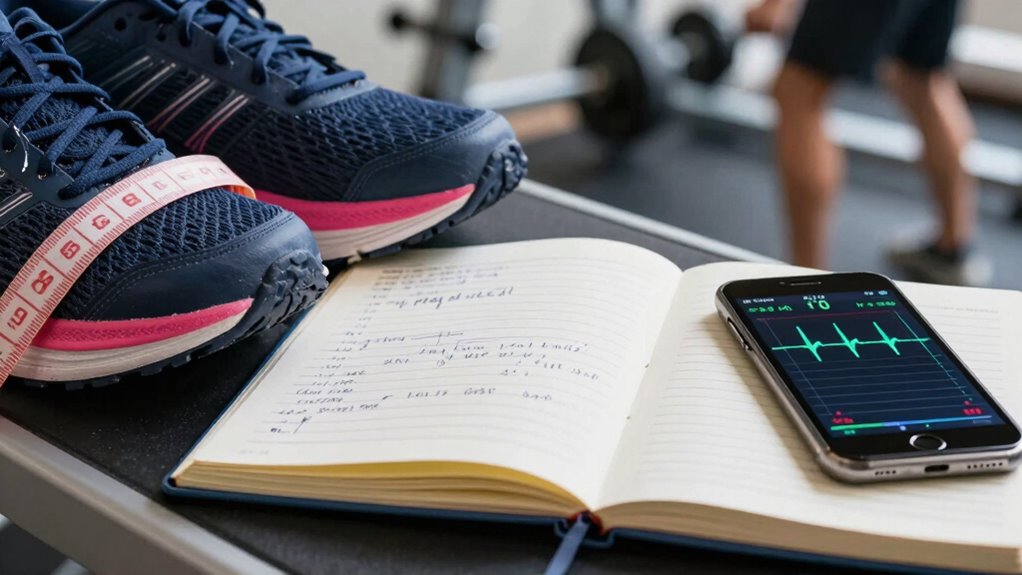

To track your fitness progress when the scale isn’t telling the full story, focus on multiple indicators like how your clothes fit, increased energy levels, and improved workout performance. Keep a food journal to monitor habits, take progress photos, and measure body parts regularly. Notice changes in strength and posture, and pay attention to your mental resilience. Combining these tools offers a clearer picture of your gains. Stay with us to discover more ways to measure your success.

Get workout gear delivered free with Prime
- Fast, free delivery on millions of items
- Prime Video, Amazon Music and more included
- Member-only deals all year
Key Takeaways
- Use progress photos and measurements to visually and physically assess changes over time.
- Track energy levels, endurance, and strength improvements during workouts for tangible signs of progress.
- Monitor how clothes fit and body composition to gauge physical transformation beyond weight.
- Keep a food journal to identify nutritional patterns influencing your fitness journey.
- Focus on mental resilience, consistency, and overall well-being as indicators of progress.
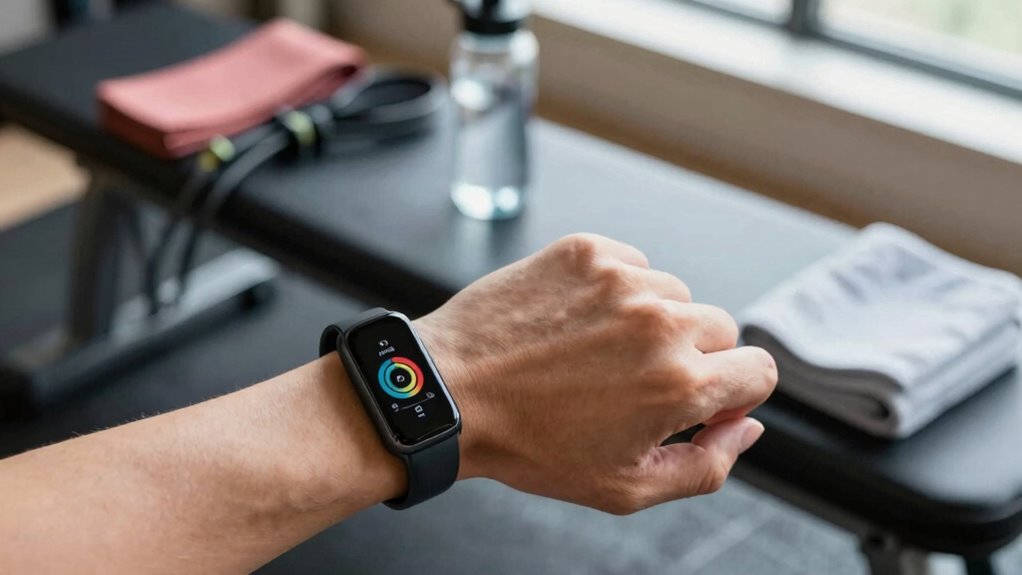
Tracking your fitness progress is essential to staying motivated and making informed adjustments to your workout routine. When the scale isn’t moving as quickly as you’d like, it’s easy to feel discouraged. However, progress isn’t just about the numbers on a scale; it’s about understanding your body’s changes in other ways. One effective method is paying attention to your nutritional habits. What you eat significantly impacts your results, and keeping a food journal helps you see patterns and identify areas for improvement. If you notice you’re consistently consuming enough protein, vegetables, and healthy fats, you’re supporting muscle growth and fat loss, even if the scale remains static. Tracking your meals also helps you stay accountable and ensures you’re fueling your body properly for your workouts and recovery.
Tracking your nutritional habits helps you stay accountable and supports your progress, even when the scale doesn’t reflect changes immediately.
In addition to monitoring your nutritional habits, you should also focus on your mental resilience. Staying consistent can be challenging, and setbacks are part of the journey. Recognizing improvements in your mental resilience—such as your ability to stay motivated during tough days or push through fatigue—can be a powerful indicator of progress. When you notice you’re able to stick with your routines longer or handle stressful situations more effectively without resorting to emotional eating, you’re strengthening your mental resilience. This mental toughness often translates into better workout adherence and healthier choices overall, which ultimately contributes to your fitness goals. Incorporating a variety of fitness tracking tools can help you get a clearer picture of your progress beyond the scale. Using progress tracking methods like these can give you a comprehensive view of your development. Additionally, understanding the importance of regional culture and local traditions can motivate you to find ways to enjoy your fitness journey within a supportive community. Moreover, recognizing the role of sleep health in recovery and overall wellness can enhance your progress and motivation.
Physical changes aren’t always immediately visible, but you can track progress through other measures. Take progress photos regularly, maybe once every few weeks, and compare them side by side. Sometimes, you’ll see subtle changes in muscle tone or posture that the scale doesn’t reveal. Additionally, notice how your clothes fit, your energy levels throughout the day, and your endurance during workouts. These tangible signs of progress can boost your motivation when the scale stalls. You might find that you’re lifting heavier weights, running longer distances, or simply feeling more energetic—a clear sign your efforts are paying off even if your weight remains the same. Recognizing body composition changes can give you a more accurate understanding of your physical progress.
Ultimately, the key to tracking your fitness progress when the scale isn’t telling the full story is to adopt a holistic approach. Focus on your nutritional habits, recognize the importance of mental resilience, and pay attention to non-scale indicators of progress. By doing so, you stay motivated, gain confidence, and keep moving forward, knowing that your journey is about more than just numbers—it’s about your overall health and well-being.
As an affiliate, we earn on qualifying purchases.
Frequently Asked Questions
How Often Should I Update My Fitness Progress Measurements?
You should update your fitness progress measurements every two to four weeks. This frequency allows you to track changes without fixating on minor fluctuations. Keep an eye on your diet habits and sleep quality, as both influence your progress. Regular updates help you see patterns, adjust your routines, and stay motivated, all while avoiding unnecessary stress over daily changes that don’t reflect your true progress.
What Are Some Signs My Fitness Is Improving Beyond the Scale?
You’ll notice your fitness improves through muscle gain, which makes your body look leaner and more toned, even if the scale stays the same. Additionally, postural improvements, like standing taller and feeling more confident, are clear signs of progress. You might also find easier endurance during workouts or quicker recovery times. These signs show your efforts are paying off beyond just weight numbers, highlighting real strength and body transformation.
Can Mood and Energy Levels Indicate Progress?
Think of your mood and energy levels as your body’s compass—if they point toward liveliness, you’re making progress. Emotional awareness helps you notice subtle shifts, while a boost in vitality signals improved fitness. When you wake up feeling more energized and emotionally balanced, it’s a sign that your efforts are paying off beyond the scale. Use these feelings as a personal vitality assessment to track your true progress.
How Do I Stay Motivated When Progress Stalls?
When progress stalls, stay motivated by revisiting your goals and setting new ones to spark enthusiasm. Use motivational quotes to inspire you and remind yourself of your ‘why.’ Celebrate small victories and track non-scale achievements like improved energy or strength. Remember, consistency matters more than immediate results, so keep pushing forward, and trust that steady effort will eventually lead to progress, even if the scale isn’t moving.
What Are the Best Non-Scale Metrics to Track?
Did you know that improvements in strength or endurance often happen before visible changes? To track your progress, focus on non-scale metrics like how well you stick to your diet adherence and workout consistency. Notice how your clothes fit better, your energy levels rise, or your stamina increases. These indicators give you a clearer picture of progress, even when the scale stays the same, keeping you motivated on your fitness journey.
As an affiliate, we earn on qualifying purchases.
Conclusion
Remember, progress isn’t always visible on the scale. I once knew someone who focused solely on weight, only to realize their energy and strength skyrocketed, even as the numbers stayed steady. Like planting a seed—you might not see the sprout right away, but with patience and the right tools, growth is happening beneath the surface. Keep tracking your habits, celebrate small wins, and trust that your efforts will reveal themselves in time.
As an affiliate, we earn on qualifying purchases.
As an affiliate, we earn on qualifying purchases.
Fall Picks
fall essentials
As an affiliate, we earn on qualifying purchases.