If your runs feel heavy with dead legs indoors, it’s likely due to poor running mechanics, like overstriding, or sticking to the same pace too long. Incorporate interval training to vary intensity and boost blood flow, and focus on shorter, quicker strides that keep muscles engaged. Using proper form and mixing things up can help reduce fatigue. Keep an eye on these tips, and you’ll discover how to keep your legs feeling fresh and energized.
Key Takeaways
- Incorporate interval training to prevent muscle fatigue and keep blood flow active.
- Adjust your stride length to avoid overstriding and reduce impact stress.
- Vary your pace and incorporate rest periods to break monotony and improve muscle engagement.
- Focus on maintaining proper running mechanics, including cadence and landing position.
- Use supportive footwear and listen to your body’s signals to prevent overexertion and heaviness.
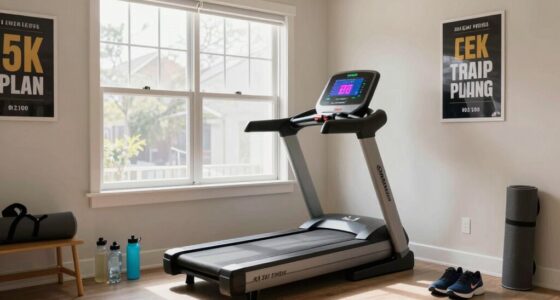
If you’ve ever experienced numbness or weakness in your legs while running on a treadmill, you’re not alone. Many runners face the frustrating sensation of heavy legs during indoor workouts, often wondering what’s going wrong. One common culprit is the way you approach your treadmill sessions. Simply running at the same pace for extended periods can lead to fatigue and a feeling of dead legs. To combat this, incorporating interval training into your routine can make a significant difference. Interval training involves alternating between high-intensity sprints and recovery jogs, which not only boosts cardiovascular fitness but also keeps your muscles engaged without overtaxing them. This variation prevents your muscles from settling into a monotonous rhythm that can cause fatigue and heaviness.
Interval training prevents dead legs by alternating sprints and jogs, keeping muscles engaged and reducing fatigue during treadmill runs.
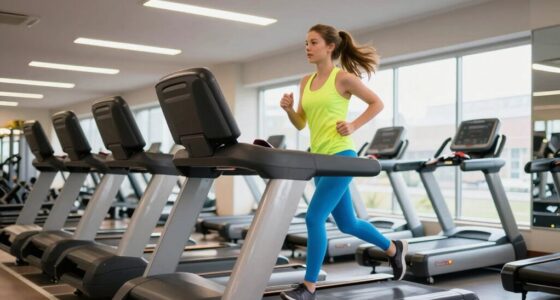
Another critical factor that influences how your legs feel is your stride length. When you run with an overly long stride, you tend to land harder and more forcefully, which can quickly fatigue your muscles and lead to that sluggish sensation. Conversely, shorter, quicker strides help maintain a more efficient and sustainable running form, reducing impact stress and conserving energy. Paying attention to your stride length allows you to maximize your running economy, especially on a treadmill where the belt’s consistent pace can tempt you to overstride. Focus on landing beneath your hips with a quick cadence—aim for around 170-180 steps per minute—to keep your legs fresher longer.
Adapting your stride length can also improve your overall running mechanics and help you avoid overexertion. During treadmill runs, it’s tempting to fall into a rhythm that’s neither natural nor efficient, which often contributes to the “dead legs” feeling. By consciously adjusting your stride and incorporating interval sessions, you give your muscles a varied workload. This prevents them from becoming overly fatigued and promotes better blood flow, reducing the numbness and weakness you experience. Additionally, some runners find that proper shoe support can help alleviate pressure points and improve overall comfort during runs. Remember, consistency in these small adjustments can lead to better endurance and a more comfortable indoor running experience.
Ultimately, the key is to listen to your body and vary your training. Mix up your treadmill sessions with interval training and focus on maintaining an ideal stride length. These tweaks can help you break free from the cycle of heavy, dead legs, making your indoor runs feel lighter, more energized, and more enjoyable. With patience and mindful adjustments, you’ll find that those sluggish feelings gradually fade, replaced by a more efficient, pain-free stride.

The Ultimate Treadmill Workout: Run Right, Hurt Less, and Burn More with Treadmill Interval Training
As an affiliate, we earn on qualifying purchases.
As an affiliate, we earn on qualifying purchases.
Frequently Asked Questions
How Can I Prevent Dead Legs During Treadmill Runs?
To prevent dead legs during treadmill runs, focus on maintaining good running posture and pacing yourself. Incorporate proper warm-up and cool-down routines to reduce muscle fatigue. Stay hydrated and ensure you’re getting enough electrolytes. Strengthen your leg muscles through cross-training exercises, and listen to your body—if you feel fatigue setting in, slow down or take short breaks. This approach helps keep your legs energized and ready to perform.
Are There Specific Stretches to Fix Dead Leg Fatigue?
Yes, doing specific stretching routines can help fix dead leg fatigue by improving muscle elasticity. Focus on dynamic stretches like leg swings, walking lunges, and hamstring stretches before your run to loosen up muscles. After running, incorporate static stretches such as quad stretches and calf stretches. These routines enhance flexibility, reduce tightness, and prevent fatigue, making your treadmill runs feel easier and more comfortable.
Does Diet Influence Treadmill Leg Fatigue?
Yes, your diet influences treadmill leg fatigue. Proper nutrition strategies fuel your muscles, enhance recovery, and prevent fatigue. Focus on consuming enough protein for muscle repair, carbohydrates for energy, and staying hydrated to support circulation. By prioritizing balanced nutrition, you optimize muscle recovery, reduce soreness, and boost endurance. Your diet isn’t just fuel; it’s a key player in keeping your legs strong and ready for every run.
How Does Hydration Affect Dead Leg Recovery?
Hydration considerably affects your dead leg recovery because proper hydration maintains your electrolyte balance, which is essential for muscle function. When you’re well-hydrated, your muscles recover faster, reducing fatigue and stiffness. Drinking enough water and replenishing electrolytes after runs helps prevent cramping and soreness. Keep your hydration levels steady, especially during intense workouts, so your muscles can recover efficiently and you can get back to running with less heaviness.
Can Shoes Impact the Likelihood of Dead Legs?
Imagine your feet as the foundation of your run, and footwear choice as the frame supporting it. Shoe impact can definitely influence your likelihood of dead legs; poor footwear may cause instability, fatigue, and reduced blood flow. Choose supportive, well-cushioned shoes designed for your gait to keep muscles engaged and prevent heaviness. Proper footwear helps maintain energy levels, reducing the chance of dead legs and making your runs feel lighter and more effortless.

ASICS Women's Gel-Venture 10 Running Shoes, 9, Rubble RED/Fawn
Mesh upper: Improves breathability
As an affiliate, we earn on qualifying purchases.
As an affiliate, we earn on qualifying purchases.
Conclusion
To fix your treadmill ‘dead legs,’ focus on proper warm-up, stay hydrated, and incorporate strength training. Adjust your pace gradually and listen to your body’s signals. Remember, consistency is key—overcoming this issue takes time. So, next time your runs feel heavy indoors, ask yourself: are you truly giving your muscles the attention they need? By making small changes, you’ll soon find your stride more energized and effortless. Are you ready to conquer those dead legs?

Wahoo RPM Cycling Cadence Sensor for Outdoor, Spin and Stationary Bikes, Blue
SPEED / CADENCE MEASUREMENT – Track and capture real-time cycling speed and cadence with compatible training apps, including…
As an affiliate, we earn on qualifying purchases.
As an affiliate, we earn on qualifying purchases.

BLITZU Calf Compression Sleeves for Men and Women. Footless Compression Socks Support for Varicose Vein, Nursing, Running. Leg Sleeve Brace for Shin Splints, Pain Relief & Reduces Swelling Black L-XL
Calf Compression Sleeve Sizing Information: For the best fit of your sizes, please refer to our sizing chart….
As an affiliate, we earn on qualifying purchases.
As an affiliate, we earn on qualifying purchases.