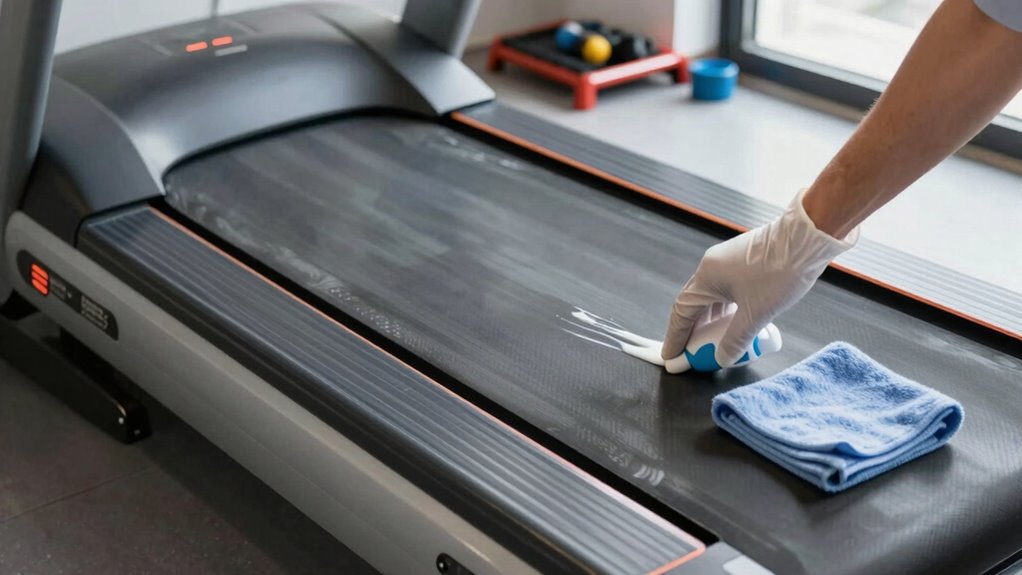

To keep your treadmill running smoothly, regularly check and adjust the belt to prevent drifting or uneven wear. Clean the deck and belt after every workout using soft, damp cloths, and avoid harsh chemicals. Apply a suitable treadmill lubricant every few months to reduce friction and extend your belt’s life. Avoid common mistakes like over-lubricating or neglecting safety checks. For detailed steps and tips on maintaining peak performance, continue exploring these essential maintenance practices.
Key Takeaways
- Regularly check and adjust belt alignment to prevent uneven wear, noise, and damage.
- Clean the treadmill deck and belt after each use with a soft, damp cloth to remove dirt and sweat.
- Use treadmill-specific lubricant sparingly along the center of the deck to ensure smooth belt operation.
- Perform routine inspections for loose bolts, fraying, and unusual noises to maintain safety and performance.
- Follow manufacturer guidelines for maintenance frequency, including lubrication, cleaning, and belt adjustments.

SEKODAY Silicone Treadnmill Belt Lubricants/Lubes | 4.2 Ounce, High Temperature Resistant and Stable Lubricant,with Hard Application Tubes and Precision Screw Caps for Easy Use
4.2 Ounce / 1 Bottle-Includes : 1 Bottle of Silicone treadmill belt lubricant (≥ 4.2oz) + 1 Hard…
As an affiliate, we earn on qualifying purchases.
As an affiliate, we earn on qualifying purchases.
Understanding the Importance of Proper Belt Alignment
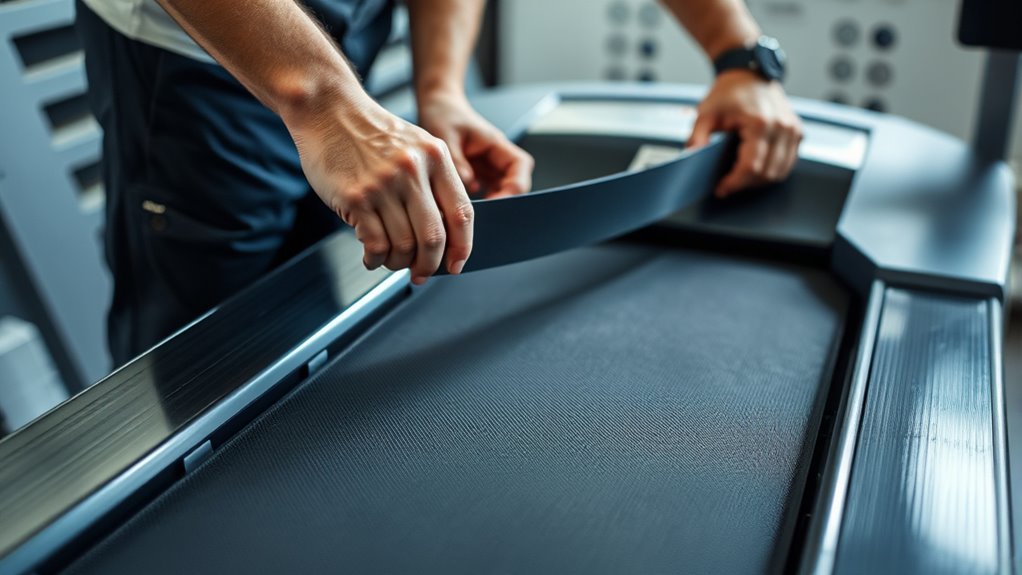
Proper belt alignment is essential for your treadmill’s smooth and safe operation. When the belt is properly aligned, it runs straight and centered on the deck, preventing uneven wear and reducing noise. Misaligned belts can cause excessive strain on the motor and rollers, leading to premature breakdowns. If the belt drifts to one side, it puts uneven pressure on parts, increasing the risk of damage and decreasing the lifespan of your equipment. Correct alignment ensures that your treadmill functions efficiently and quietly. It is also important to regularly check the alignment process to maintain optimal performance. Regularly checking and maintaining proper belt alignment keeps your treadmill in peak condition, saving you money and hassle in the long run. Additionally, understanding the contrast ratio of your treadmill’s display can help you better evaluate the clarity and visibility of the control panel during workouts. Incorporating proper maintenance routines into your schedule can further extend the life of your treadmill components.

Treadmill Adjustment Tool, Universal Hex Allen Wrench, Black and Blue
UNIVERSAL COMPATIBILITY: Specially designed hex wrench tool that fits 99% of iFit treadmills for easy adjustments and maintenance….
As an affiliate, we earn on qualifying purchases.
As an affiliate, we earn on qualifying purchases.
Signs That Your Treadmill Needs Realignment
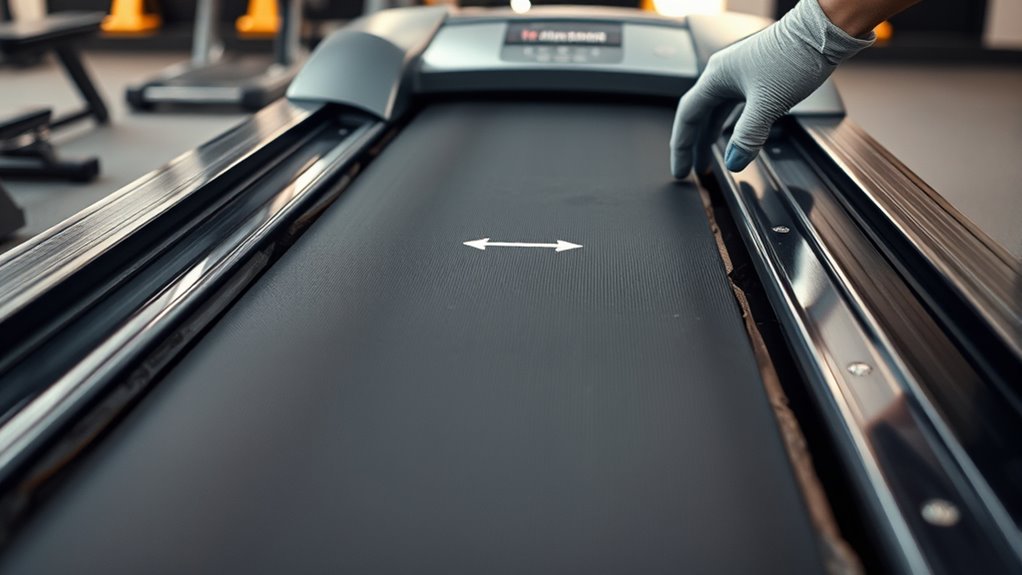
If your treadmill isn’t running as smoothly as it used to, it may be a sign that the belt needs realignment. You might notice the belt slipping or feeling uneven under your feet. If the belt drifts to one side during use, that’s a clear indicator it’s misaligned. Unusual noises, like squeaking or grinding, can also signal alignment issues. Additionally, if you see excessive wear or fraying on the edges of the belt, it’s time to check the alignment. Sometimes, you’ll feel a bump or resistance as you walk or run, which shouldn’t happen on a properly aligned belt. Proper wave and wind conditions can help prevent premature belt wear and ensure smooth operation. Addressing these signs early prevents further damage and keeps your treadmill running smoothly. Regularly inspecting your belt for these signs helps maintain ideal performance.

Vapor Fresh Sports Cleaner and Deodorizer – For Boxing Gloves, Sports Pads, Helmets, Gym Bags, Gym Equipment and More – Naturally Powered By Plants, 16 Fl Oz (1-Pack)
Clean And Deodorize Sports Equipment: Effective at eliminating odors from helmets, gloves, bags and other sports pads. Perfect…
As an affiliate, we earn on qualifying purchases.
As an affiliate, we earn on qualifying purchases.
How to Correctly Align Your Treadmill Belt
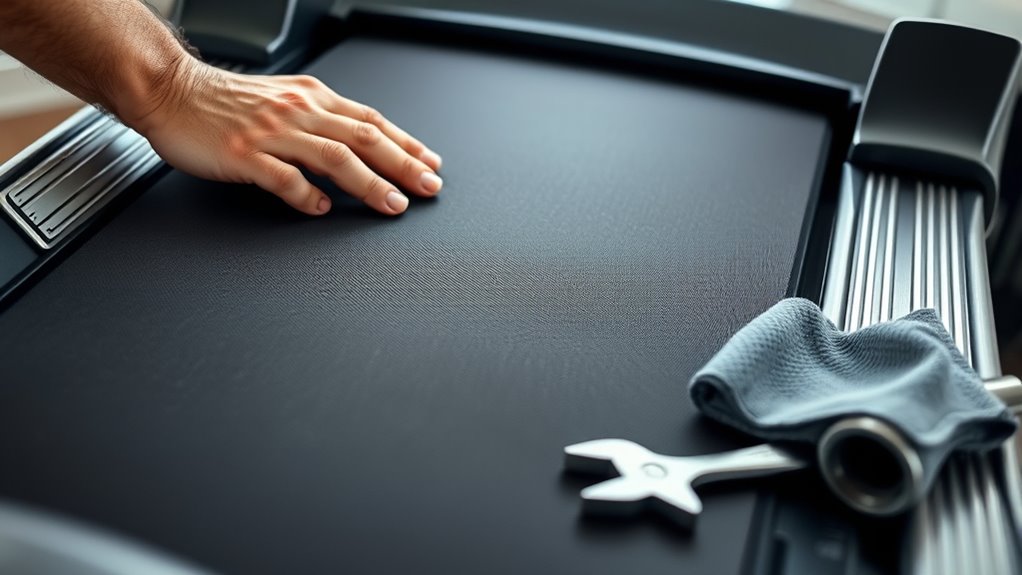
Wondering how to realign your treadmill belt? Start by turning off the treadmill and unplugging it. Use the adjustment screws located at the rear of the deck—usually on either side of the belt. If the belt drifts to the right, tighten the right screw or loosen the left screw slightly, and vice versa. Make small adjustments—about a quarter turn at a time—then plug in and turn on the treadmill to test the belt’s position. Walk slowly and observe if it stays centered. Repeat these steps until the belt runs straight without drifting. Always check the manufacturer’s instructions for specific adjustment points and torque recommendations. Proper alignment guarantees smooth operation and extends your treadmill’s lifespan.
SEKODAY Silicone Treadnmill Belt Lubricants/Lubes | 4.2 Ounce, High Temperature Resistant and Stable Lubricant,with Hard Application Tubes and Precision Screw Caps for Easy Use
4.2 Ounce / 1 Bottle-Includes : 1 Bottle of Silicone treadmill belt lubricant (≥ 4.2oz) + 1 Hard…
As an affiliate, we earn on qualifying purchases.
As an affiliate, we earn on qualifying purchases.
The Best Practices for Cleaning Your Treadmill Deck and Belt
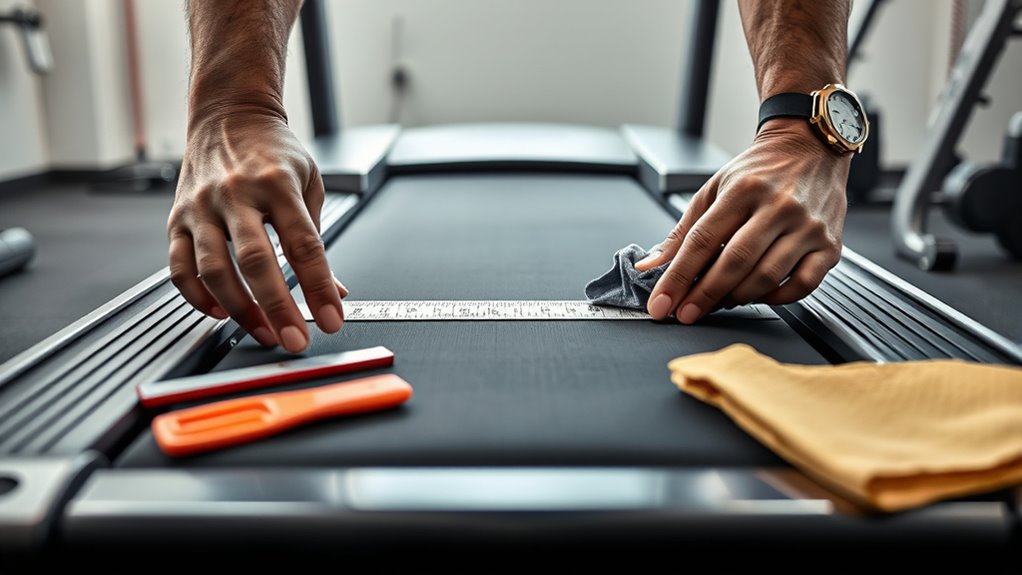
Keeping your treadmill clean is key to maintaining its performance and longevity. Regularly wipe down the deck and belt after each use to remove sweat, dust, and debris that can cause wear or slip. Use a soft, damp cloth to clean the surface gently, avoiding harsh chemicals that might damage the belt material. Pay special attention to the edges and corners where dirt tends to accumulate. For stubborn grime, a mild cleaning solution can be used, but ensure it’s fully wiped away afterward. Always turn off and unplug the treadmill before cleaning. Avoid spraying water directly onto the deck or belt; instead, apply cleaner to a cloth. Consistent cleaning prevents buildup, reduces noise, and helps your treadmill run smoothly for years. Regular maintenance also helps prevent mechanical issues, which can lead to costly repairs later. Incorporating preventive treadmill maintenance routines can extend the lifespan of your equipment and ensure safe, effective workouts. Additionally, following the manufacturer’s guidelines for belt alignment and lubrication can further optimize performance and reduce unnecessary wear. Proper belt tension adjustment is also crucial to prevent slipping and uneven wear, contributing to a longer-lasting belt. Performing routine inspections can help identify minor issues before they become major problems, saving you time and money.
Choosing the Right Cleaning Products and Tools
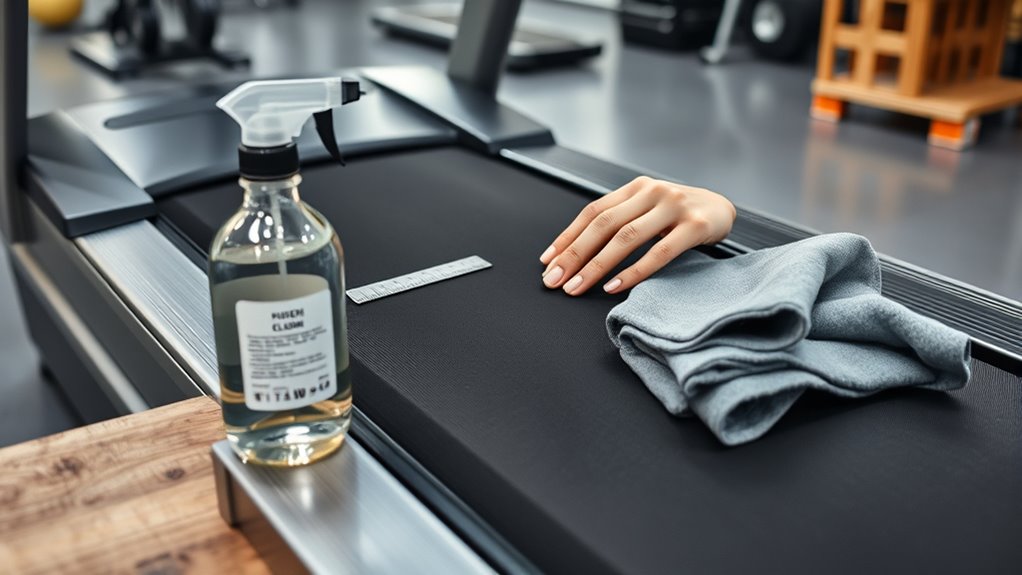
Choosing the right cleaning products and tools is essential to keep your treadmill in top condition without causing damage. Use a soft, lint-free cloth or microfiber towel to wipe down the belt and deck. Avoid harsh chemicals that can deteriorate the treadmill’s surface or internal parts. Instead, opt for a mild, non-abrasive cleaner or a mixture of water and a small amount of gentle detergent. For stubborn grime, a dedicated treadmill cleaner works best. Keep a spray bottle for easy application, and never spray directly onto the machine—spray onto the cloth instead. Use a soft-bristled brush or vacuum attachment to remove dust and debris from vents and crevices. Proper tools and gentle cleaning products help maintain your treadmill’s performance and longevity.
Step-by-Step Guide to Lubricating Your Treadmill
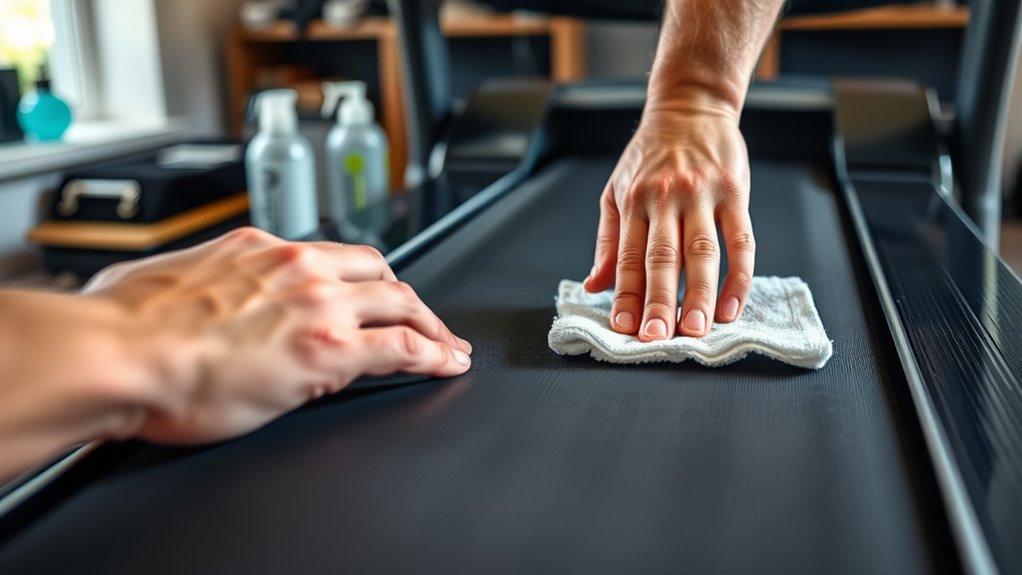
Regularly lubricating your treadmill is essential to guarantee smooth operation and prevent unnecessary wear. First, turn off and unplug your machine to ensure safety. Remove the running belt according to your manufacturer’s instructions. Apply a thin, even layer of treadmill lubricant specifically designed for your model along the center of the deck. Use a cloth or applicator to spread the lubricant evenly. Be careful not to over-lubricate, as excess can attract dust and debris. After applying, manually move the belt back and forth for a few minutes to distribute the lubricant fully. This process helps maintain proper belt alignment and overall performance. Incorporating regular maintenance routines can significantly extend the lifespan of your treadmill components. Additionally, consulting your treadmill’s user manual can provide specific safety installation practices tailored to your model. Proper lubrication techniques are key to avoiding damage and ensuring optimal operation. Finally, wipe away any excess lubricant and reassemble the treadmill. Regular lubrication helps reduce friction and prolongs the lifespan of your treadmill’s components. Understanding proper safe installation practices ensures your maintenance routine remains effective and secure.
Frequency of Maintenance Tasks for Optimal Performance
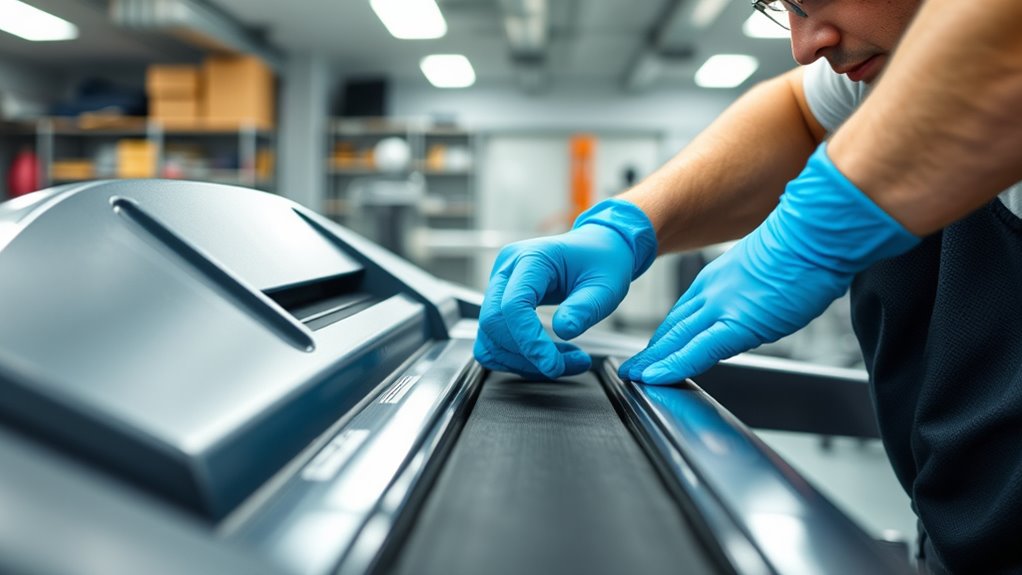
To guarantee your treadmill operates smoothly and lasts longer, scheduling maintenance tasks at appropriate intervals is essential. You should check the belt alignment and tension weekly to prevent uneven wear and slipping. Cleaning the deck and belt should be done every one to two months to remove dust and debris that can cause friction. Lubrication, if needed, should be performed every three to six months, depending on usage, to keep parts moving smoothly. Inspect the rollers and motor area monthly for dust buildup or loose screws. Regularly wiping down the surface after each workout helps maintain cleanliness and reduces the need for frequent deep cleaning. Incorporating proper maintenance routines can significantly improve your treadmill’s longevity and performance. Additionally, ensuring consistent checks helps identify potential issues early before they lead to costly repairs. Paying attention to wear and tear and replacing worn parts promptly can further extend the lifespan of your equipment. Adhering to these schedules ensures peak performance, reduces breakdowns, and extends the lifespan of your treadmill.
Common Mistakes to Avoid During Maintenance
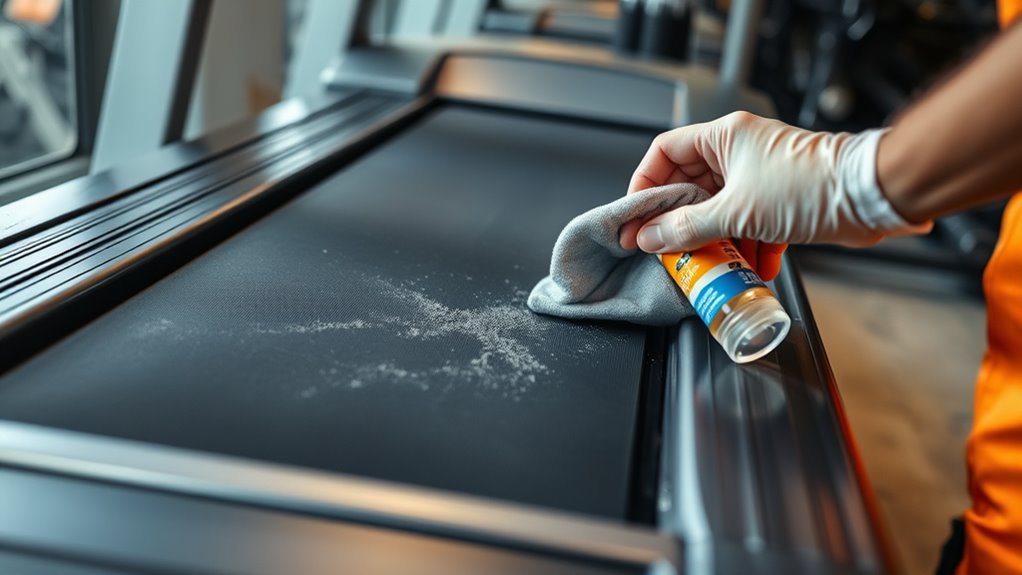
While sticking to maintenance schedules is important, it’s equally essential to avoid common mistakes that can compromise your treadmill’s performance. One mistake is over-lubricating the belt, which can cause excess buildup and damage. Another is neglecting to unplug the machine before maintenance, risking injury or electrical issues. Additionally, misaligning the belt can lead to uneven wear and noise.
| Mistake | Consequence | Prevention |
|---|---|---|
| Over-lubricating | Belt slipping, damage | Use recommended amount only |
| Ignoring safety precautions | Electrical shock or injury | Unplug before maintenance |
| Belt misalignment | Uneven wear, noise | Follow proper alignment steps |
| Skipping regular checks | Reduced lifespan, issues | Conduct routine inspections |
Tips for Maintaining a Safe and Efficient Workout Environment
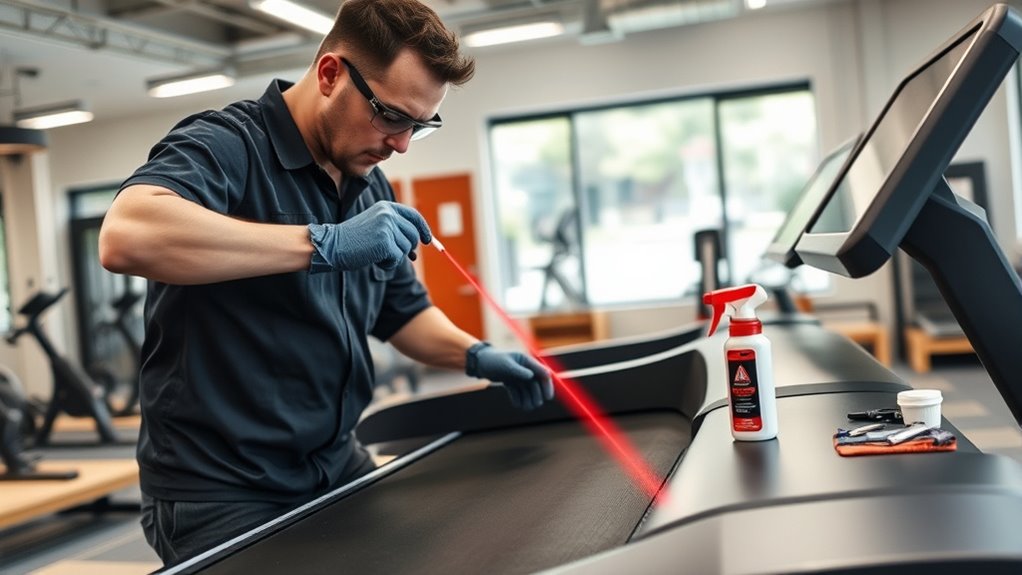
Keep your workout area clear of obstacles to prevent accidents and make certain easy access to your treadmill. Make a habit of regularly inspecting your equipment for any signs of wear or damage to maintain safety and performance. Staying vigilant with these simple steps helps create a safer and more efficient exercise space. Incorporating piercings-care practices can enhance your overall well-being and deepen your connection to your inner guidance.
Clear Workout Area
Maintaining a clear workout area is essential for both safety and efficiency when using a treadmill. Before starting your workout, clear the area of any clutter, including shoes, towels, and cords that could cause trips or falls. Ensure there’s enough space around the treadmill for easy access and emergency exits. Keep pets and children away from the equipment during use to prevent accidents. Regularly sweep or vacuum the floor to remove dust and debris that could interfere with the treadmill’s stability. Proper lighting is also important; a well-lit space helps you stay aware of your surroundings. A tidy, organized workout zone minimizes distractions and hazards, allowing you to focus on your exercise safely and effectively. Additionally, gelato flavors and other treats should be kept away from the workout area to avoid spills or distractions. Regularly inspecting your treadmill for proper belt alignment can help prevent accidents and ensure smooth operation. Being aware of electric motor maintenance needs can also extend the lifespan of your equipment and improve safety. Incorporating routine preventive maintenance is crucial for keeping the treadmill in optimal condition. Maintaining a clutter-free environment can also contribute to preventing injuries by reducing the risk of accidental bumps or trips.
Regular Equipment Checks
Regularly inspecting your treadmill guarantees it operates safely and smoothly. Check for loose bolts, worn cords, and unusual noises before each use. Confirm the deck is clean and the belt is centered to prevent uneven wear. Test the emergency stop and power switch to confirm they’re functioning properly. Regular checks help catch issues early, prolonging your equipment’s lifespan and reducing injury risk. Use the following table to guide your inspections:
| Inspection Area | What to Look For |
|---|---|
| Belt Alignment | Centered, no slipping or fraying |
| Mechanical Components | Loose bolts, worn parts, unusual sounds |
| Electrical System | Power, emergency stop, cords |
| Overall Condition | Cleanliness, stability, damage signs |
Frequently Asked Questions
How Often Should I Replace My Treadmill’s Belt Entirely?
You should replace your treadmill’s belt every 3 to 5 years, depending on usage and wear. If you notice fraying, cracking, or significant stretching, it’s time for a new belt sooner. Regularly inspect it for signs of damage, and don’t wait until it completely fails. Proper maintenance, including cleaning and lubrication, can extend the belt’s lifespan, but eventual replacement guarantees safe, smooth workouts.
Can I Use Household Cleaning Products on My Treadmill?
A stitch in time saves nine, so don’t risk using household cleaning products on your treadmill. You should avoid harsh chemicals, as they can damage the deck and motor. Instead, use a damp cloth with mild soap or specific treadmill cleaners recommended by the manufacturer. Regular, gentle cleaning keeps your treadmill in top shape and prolongs its lifespan, ensuring safe and effective workouts every time.
What Are Signs of Motor or Electronic Component Issues?
You’ll notice the motor or electronic components have issues if your treadmill suddenly starts making strange noises, slows down unexpectedly, or stops mid-workout. You might also see error messages on the display or experience inconsistent speed control. If the treadmill emits burning smells or the motor heats up excessively, those are warning signs. Regular maintenance helps prevent these problems, but if you see these signs, it’s time to get professional help.
Is It Necessary to Unplug the Treadmill Before Maintenance?
Yes, you should unplug the treadmill before performing maintenance. Doing so prevents accidental activation of the motor or electronic components, protecting you from shocks and injuries. Always disconnect the power supply before cleaning, inspecting, or lubricating any parts. This simple step guarantees safety and helps avoid damaging the treadmill’s electrical system. Remember, safety first—never work on your treadmill while it’s plugged in.
How Do I Troubleshoot Irregular Belt Slipping or Stopping?
If your treadmill belt slips or stops unexpectedly, start by checking the belt’s tension and alignment. Tighten the belt if it’s loose, and make sure it’s centered. Inspect for debris or wear that might cause slipping, and clean the belt and deck thoroughly. If that doesn’t work, check the motor and drive belt for damage. Adjustments or replacements might be necessary if problems persist.
Conclusion
Regular maintenance keeps your treadmill running smoothly and safely. For example, neglecting belt alignment caused a user’s machine to squeak and wear out faster, leading to costly repairs. By checking the belt, cleaning regularly, and lubricating as needed, you can avoid these issues. Stay proactive with your treadmill care, and enjoy a safer, more efficient workout every time. Proper upkeep extends your machine’s lifespan and keeps your fitness routine on track.