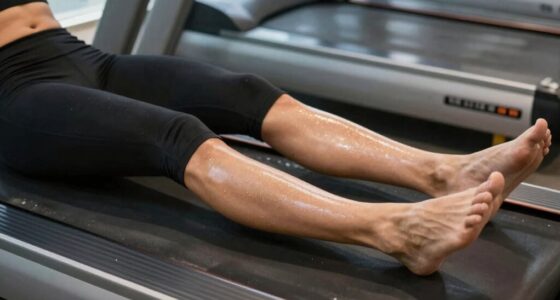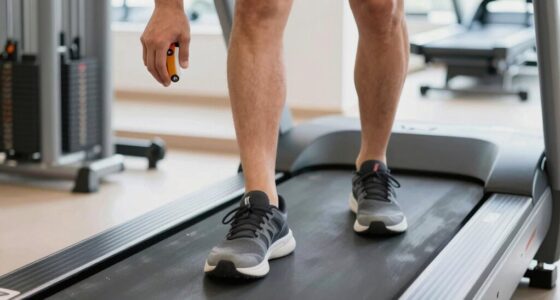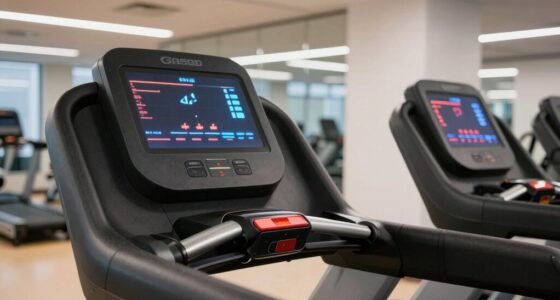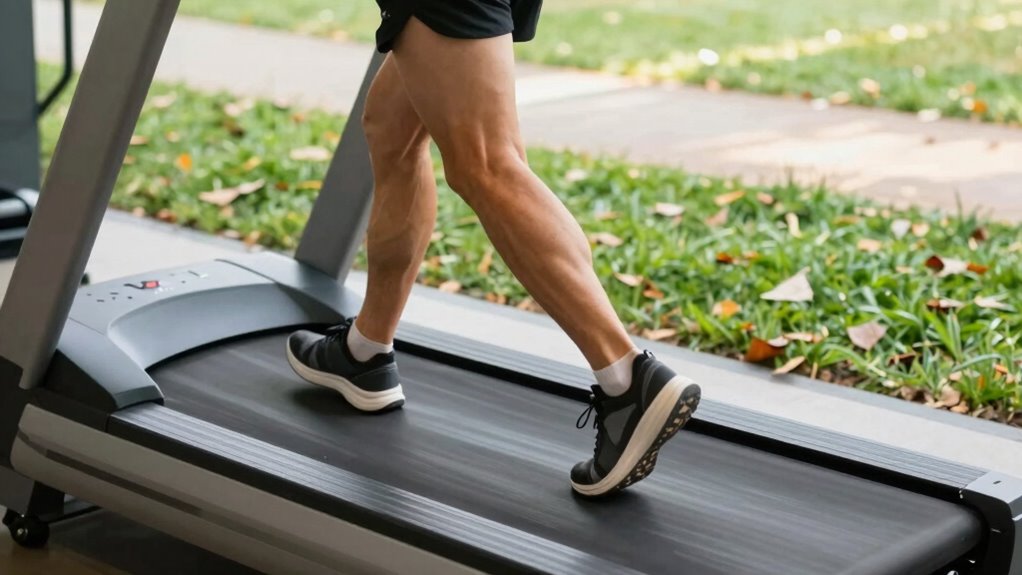

When you run on a treadmill, the controlled environment and flat surface mean your muscles mainly focus on forward movement and less on stability. Outdoors, factors like wind, uneven terrain, and weather conditions require more engagement from stabilizing and core muscles. Your clothing and external elements also influence effort levels. If you want to understand how these differences affect your muscles and why it feels distinct, stay with us as we explore the details.

Get workout gear delivered free with Prime
- Fast, free delivery on millions of items
- Prime Video, Amazon Music and more included
- Member-only deals all year
Key Takeaways
- Outdoor running involves uneven terrain and environmental factors that activate stabilizer and core muscles more than treadmill running.
- Wind resistance outdoors increases effort, engaging upper body and core muscles differently than the controlled environment of a treadmill.
- Clothing layers and weather conditions outdoors can restrict or aid movement, affecting muscle engagement and fatigue.
- Treadmill running’s flat, predictable surface reduces the need for stabilization, leading to different muscle activation patterns.
- Temperature and surface variability outdoors cause muscles to work harder and feel different compared to the consistent conditions indoors.
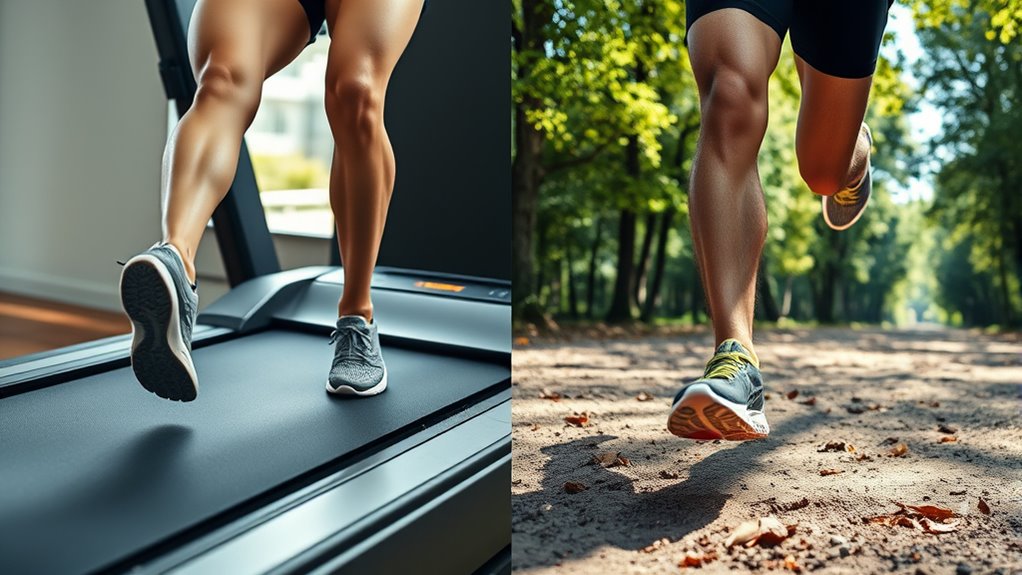
When deciding between treadmill and outdoor running, it’s important to understand how each affects your muscles. One of the first things you’ll notice is the difference in clothing differences. Running outdoors often means dressing for the weather—layers, jackets, hats, and gloves—because environmental factors like wind, rain, or cold can influence your comfort and performance. On a treadmill, your clothing needs are simpler; you can wear lightweight, breathable gear since the climate is controlled and consistent. This difference in attire can subtly impact how your muscles engage. For example, heavy or bulky clothing outdoors might restrict movement or cause you to exert more effort to maintain a steady pace, slightly changing muscle activation compared to the uniform, frictionless environment of a treadmill.
Environmental factors play a significant role in how your muscles respond to each running surface. When you run outside, you face varying terrain, wind resistance, and temperature, all of which demand more from your muscles. Wind can increase resistance, engaging your core and upper body muscles more to stabilize and propel you forward. Uneven surfaces, whether pavement, trails, or grass, require your stabilizing muscles—like those in your ankles, hips, and knees—to work harder to maintain balance. Temperature fluctuations can also influence muscle performance, as cold weather might cause muscles to stiffen, requiring more warm-up and increasing the risk of strains.
In contrast, treadmill running provides a predictable, flat surface with minimal environmental interference. The belt moves beneath you, reducing the need for stabilization and balance, which means your muscles don’t have to work as hard to adjust to uneven terrain. The controlled environment eliminates wind resistance and temperature extremes, allowing your muscles to focus solely on forward motion. This consistency can lead to a different muscle engagement pattern, often feeling less strenuous and more uniform. You might notice less muscle fatigue in stabilizing muscles but potentially miss out on the varied muscle activation you get outdoors.
As an affiliate, we earn on qualifying purchases.
Frequently Asked Questions
How Does Terrain Variability Affect Muscle Engagement?
Terrain variability considerably impacts muscle engagement by challenging your muscles differently. When terrain is inconsistent, your muscles recruit more stabilizers to maintain balance and adapt to changes, unlike on a treadmill with consistent terrain. This increased muscle recruitment helps improve strength and coordination. As you encounter hills, uneven surfaces, or sudden inclines, your muscles work harder to stabilize and propel you forward, making outdoor running more dynamic and engaging for your muscles.
Do Indoor Shoes Impact Muscle Activation Differently?
Indoor shoes can dramatically change how your muscles activate, almost like flipping a switch. Their footwear biomechanics and shoe cushioning influence how you absorb shock and propel forward, often leading to less muscle engagement compared to outdoor running. The softer cushioning may reduce impact but can also decrease muscle activation, making your muscles work differently. So, yes, indoor shoes impact muscle activation, and choosing the right pair can optimize your workout efficiency.
Can Treadmill Running Improve Outdoor Running Performance?
Yes, treadmill running can improve your outdoor running performance. By focusing on treadmill biomechanics, you can develop better stride efficiency and muscle activation patterns that transfer well outdoors. Treadmills allow you to target specific muscle groups and improve your cadence, which enhances outdoor muscle recruitment. Consistent treadmill training builds endurance and strength, helping you adapt more effectively when you hit outdoor surfaces. Just remember to vary your workouts for ideal results.
What Are Injury Risks Unique to Each Running Environment?
On a treadmill, you risk injuries from overuse and repetitive foot strikes, which can lead to stress fractures or shin splints. Outdoor running introduces uneven terrain, increasing the chance of ankle twists or falls. Changes in stride length on a treadmill may cause joint strain, while outdoor surfaces can impact your foot strike pattern. Being mindful of these risks helps prevent injury regardless of your running environment.
How Does Running Surface Density Influence Muscle Fatigue?
Think of running surface density as the terrain’s heartbeat, shaping your muscle adaptation and fatigue patterns. Softer surfaces absorb impact, reducing strain and allowing muscles to recover, while harder surfaces demand more effort, accelerating fatigue. This variability influences how your muscles respond over time, either strengthening resilience or prompting quicker exhaustion. You can harness this by switching terrains to optimize muscle adaptation and manage fatigue effectively.
As an affiliate, we earn on qualifying purchases.
Conclusion
Ultimately, whether you hit the treadmill or take your run outside, each path gently guides your muscles along different journeys. While the outdoor route may whisper more varied stories to your muscles, the treadmill offers a steady rhythm that keeps you moving smoothly. Embrace these subtle differences as part of your unique running experience. No matter the setting, every stride brings you closer to your goals, gently shaping strength and resilience with each step you take.
As an affiliate, we earn on qualifying purchases.
stabilizer muscle training equipment
As an affiliate, we earn on qualifying purchases.
As an affiliate, we earn on qualifying purchases.
Halloween Picks
halloween
As an affiliate, we earn on qualifying purchases.