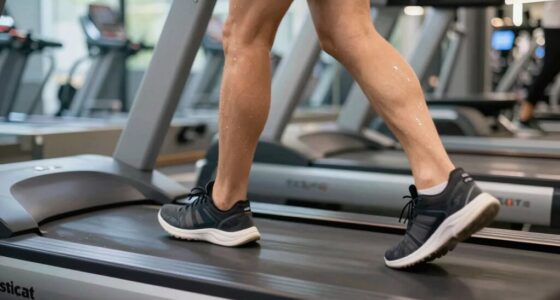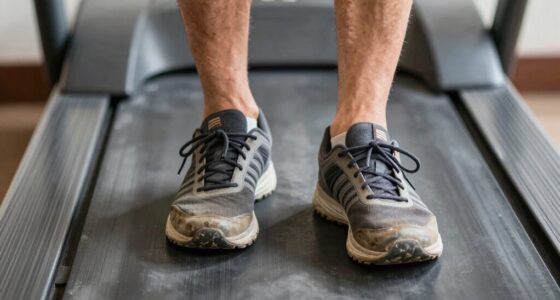

To recover from a heavy-leg treadmill week without losing momentum, focus on proper nutrition by eating carb- and protein-rich foods to replenish glycogen and repair muscles. Stay well-hydrated with water and electrolyte drinks, especially after intense sessions. Incorporate gentle active recovery like walking or yoga to keep muscles moving without overstressing them, and prioritize quality sleep to support natural healing. Maintaining this balance will help you bounce back stronger—keep going to explore more effective recovery tips.
Listen free for 30 days with Audible
Thousands of audiobooks and originals — cancel anytime.
As an affiliate, we earn on qualifying purchases.
Key Takeaways
- Prioritize active recovery with light walking or yoga to promote blood flow without overexertion.
- Focus on nutrient-dense, carbohydrate-rich foods and lean proteins to replenish glycogen and support muscle repair.
- Ensure adequate hydration and electrolyte intake to reduce soreness and maintain energy levels.
- Incorporate sufficient rest and quality sleep to facilitate muscle recovery and hormonal balance.
- Engage in mental relaxation techniques to reduce stress and stay motivated for continued training.

After a week of intense treadmill workouts that leave your legs aching and fatigued, it’s essential to give your body the time and care it needs to recover properly. Pushing through fatigue can lead to injury or burnout, so prioritizing recovery is crucial. One of the most effective ways to do this is by focusing on smart nutrition strategies. After heavy training, your muscles need replenishment of glycogen and repair nutrients. Incorporate carbohydrate-rich foods like fruits, whole grains, and sweet potatoes to restore energy stores. Protein is vital for muscle repair—lean options such as chicken, fish, eggs, or plant-based sources like beans and lentils can accelerate recovery. Don’t forget healthy fats found in nuts, seeds, and avocados, which support overall inflammation reduction and cell repair.
Hydration plays a key role too. After a tough week of running, your body depletes water and electrolytes through sweat. Rehydrate with water, and consider drinks with added electrolytes if you’ve sweated heavily. Proper hydration helps flush out toxins and reduces muscle soreness, speeding up your recovery process. Additionally, understanding the importance of muscle recovery mechanisms can help you optimize your rest periods and prevent setbacks. Recognizing how muscles repair and adapt can guide you in balancing activity and rest effectively.
Mental recovery is just as important as physical rest. After pushing your body so hard, you might feel mentally drained or frustrated. Take time to reset your mind by engaging in activities that promote relaxation and mindfulness. Meditation, gentle stretching, or even a walk in nature can help clear your head and reduce stress. Visualize your progress and set realistic goals for upcoming workouts; this mental clarity keeps you motivated without feeling overwhelmed. Avoid negative self-talk or overanalyzing missed milestones—focus on recovery as a necessary step toward your fitness goals.
Rest isn’t only about sleep but also about giving your mind and muscles a break from intense activity. Prioritize quality sleep, aiming for 7-9 hours per night, to enhance muscle repair and hormonal balance. During this period, avoid high-impact or strenuous exercises that could hinder your recovery. Instead, consider light activities like walking or gentle yoga to keep your muscles moving without overexertion. Incorporating active recovery techniques can further enhance your body’s healing process and prepare you for future training.
post-workout recovery foam roller
As an affiliate, we earn on qualifying purchases.
As an affiliate, we earn on qualifying purchases.
Frequently Asked Questions
How Long Should I Rest Before Returning to Running?
You should rest for at least 48 to 72 hours before returning to running, allowing your muscles to recover. During this time, focus on hydration strategies and sleep improvement to aid recovery. Drink plenty of water and electrolyte-rich beverages, and prioritize quality sleep to reduce fatigue. Listen to your body—if you still feel sore or tired, extend your rest period. Gradually ease back into running when you feel fully recovered.
Are Specific Stretches Better for Recovery?
Specific stretches can be more effective for recovery, especially when tailored to your sore muscles. Incorporate stretching routines that focus on hamstrings, calves, quads, and hip flexors to release tension and improve circulation. Recovery techniques like gentle yoga or foam rolling complement these stretches, promoting flexibility and reducing soreness. You’ll feel revitalized and ready to hit your next run, avoiding stiffness and keeping your momentum alive.
Can Nutrition Speed up Muscle Recovery?
Yes, nutrition can definitely speed up muscle recovery. Focus on diet planning that includes adequate protein intake, which helps repair muscle tissues. Incorporate lean meats, dairy, beans, and nuts into your meals to support recovery. Proper hydration and balanced carbs also replenish energy stores. By fueling your body with the right nutrients, you’ll recover faster and stay motivated to keep up your fitness routine.
When Is It Safe to Increase Treadmill Intensity Again?
You’re enthusiastic to jump back into intense treadmill sessions, but treadmill safety hinges on proper recovery timing. You should wait until soreness subsides, strength returns, and your energy feels steady—typically after 48-72 hours. Rushing increases injury risk and hampers progress. So, trust your body’s signals; only then can you safely increase treadmill intensity again, ensuring you build endurance without setbacks. Patience now pays off later.
Should I See a Doctor for Persistent Soreness?
Yes, you should see a doctor if soreness persists beyond a few days or worsens, especially if it’s severe. While waiting, try massage therapy and foam rolling to ease muscle tightness and improve circulation. These methods can help reduce soreness, but if pain continues or worsens, consulting a healthcare professional guarantees there’s no serious injury. Don’t ignore persistent soreness—it’s better to be cautious.
As an affiliate, we earn on qualifying purchases.
Conclusion
Remember, recovery isn’t just about resting; it’s about bouncing back like a spring, ready to propel forward stronger than before. Give your muscles time to heal, stay hydrated, and listen to your body’s signals. Incorporate gentle stretches and light activity to keep the momentum alive without overtaxing yourself. With patience and care, you’ll emerge from this setback with renewed energy, turning your heavy-leg week into a stepping stone rather than a stumbling block.
As an affiliate, we earn on qualifying purchases.
As an affiliate, we earn on qualifying purchases.
Flea & tick season Picks
flea and tick prevention
As an affiliate, we earn on qualifying purchases.