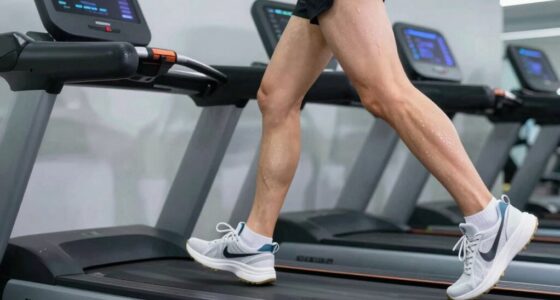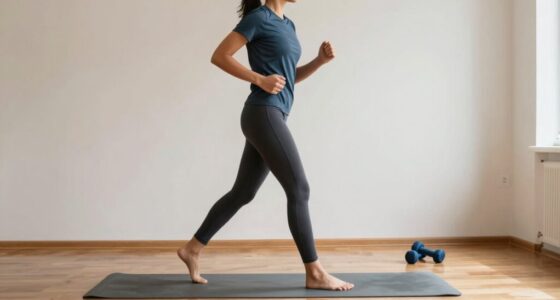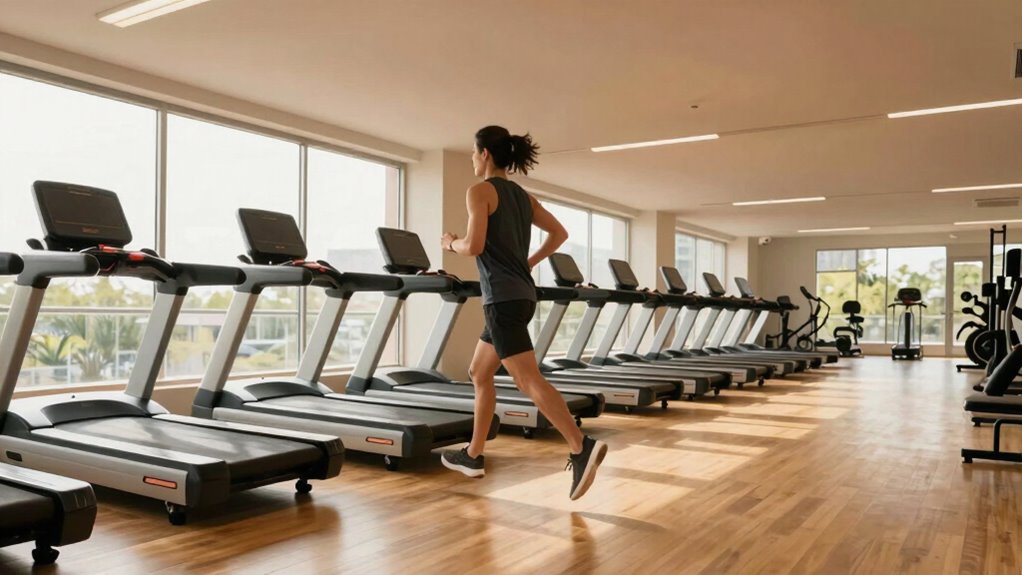

To make your indoor running feel more relaxed, focus on maintaining a proper posture and mindful breathing. Keep your head up, shoulders back, and chest open, allowing your arms to swing smoothly at your sides. Synchronize your breath with your stride—inhale deeply through your nose or mouth and exhale fully. Stay aware of your body mechanics and reset if tension creeps in. Mastering these habits will help you run effortlessly; discover more tips to improve your routine.
Key Takeaways
- Maintain an upright, aligned posture with relaxed shoulders and open chest to promote ease in your stride.
- Focus on a natural, relaxed arm swing that complements your stride and reduces tension.
- Synchronize your breathing with your steps to ensure a steady, oxygenated, and effortless movement.
- Practice mindfulness to stay aware of and correct any unnecessary tension or stiff movements.
- Reset your posture and breathing rhythm if you notice tension, fostering a smooth, relaxed running experience.

Have you ever wondered how to make indoor running feel more comfortable and less stressful? One of the most effective ways is by refining your stride habit. When your stride becomes more natural and relaxed, your entire running experience improves. It starts with paying close attention to your running posture. You want to keep your head up, shoulders back, and chest open, allowing your arms to swing smoothly at your sides. Avoid hunching forward or leaning too far back, as these positions can cause tension and fatigue. Instead, aim for a tall, aligned posture that supports your stride and keeps your muscles relaxed. A balanced running posture reduces unnecessary effort and helps distribute your energy evenly across your body. Maintaining proper alignment also minimizes the risk of injury, making your runs safer and more sustainable. Incorporating mindful awareness of your biomechanics can further enhance your running efficiency and comfort. Developing an awareness of your body mechanics helps you identify and correct inefficiencies during your run.
Equally important are your breathing techniques. Proper breathing keeps your muscles supplied with oxygen and prevents you from feeling winded too quickly. As you run, focus on deep, rhythmic breaths that fill your lungs completely. Inhale through your nose or mouth, whichever feels more natural, and exhale fully. Try to synchronize your breathing with your stride, such as taking a breath every two or three steps. This rhythm not only fosters better oxygen flow but also calms your mind, reducing feelings of stress and discomfort. When you breathe deeply and consistently, your body stays relaxed, and your stride naturally becomes more fluid. Developing correct breathing techniques can make a significant difference in how enjoyable and sustainable your indoor runs feel. Incorporating these practices into your routine can help create a more relaxed running experience overall.
The key to developing a relaxed stride habit is consistency. Pay attention to how your posture and breathing change during your run. If you notice your shoulders tightening or your breathing becoming shallow, take a moment to reset. Adjust your posture, realign your shoulders, and take a few deep breaths to regain calmness. Over time, these small adjustments become second nature, and running indoors feels less like a workout and more like a smooth, effortless movement. Remember, the goal isn’t just to run faster but to enjoy the process. By cultivating a relaxed stride habit rooted in good running posture and breathing techniques, you’ll notice your indoor runs becoming more enjoyable and sustainable over time.

Upgraded Posture Corrector Back Brace for Men and Women, New Version Lumbar Support for Posture Improving and Pain Relief, Full Back Support for Neck, Shoulder, Waist Pain
【Pain Relief】 Follow the scientific concepts of ergonomics, BraceTop posture corrector provides 3 in 1 support to straighten…
As an affiliate, we earn on qualifying purchases.
As an affiliate, we earn on qualifying purchases.
Frequently Asked Questions
How Does Stride Length Affect Indoor Running Comfort?
Stride length directly impacts your indoor running comfort by influencing stride efficiency and running biomechanics. When your stride is too long, it can cause overstriding, leading to discomfort and potential injury. Conversely, a shorter, more controlled stride promotes better biomechanics, reducing impact stress and fatigue. Focus on maintaining a suitable stride length to enhance comfort, improve efficiency, and support a smoother, more relaxed indoor running experience.
Can Stride Habits Prevent Indoor Running Injuries?
Yes, your stride habits can prevent indoor running injuries. Focus on proper running shoe technology to support your feet and reduce strain. Pay attention to treadmill incline settings, as they influence your stride and workload, helping you avoid overuse injuries. Maintain a relaxed, efficient stride, and avoid overstriding or excessive impact. Consistent, mindful adjustments to your stride help prevent injuries, making your indoor runs safer and more enjoyable.
What Is the Ideal Stride Cadence for Relaxing Indoor Runs?
For a relaxed indoor run, aim for a cadence around 170-180 steps per minute. Focus on breath control to keep your breathing steady and relaxed, which helps reduce tension. Your foot strike should be light and quick, preventing overstriding and unnecessary impact. This combination encourages a smoother, more comfortable stride, making indoor running feel less strenuous and more enjoyable, ultimately helping you maintain a relaxed pace effortlessly.
How Can I Improve My Stride Without Outdoor Running?
Did you know that 80% of runners can improve their stride with focused practice? To enhance your indoor stride, pay attention to foot placement—aim for a quick, light step to reduce impact. Sync your breathing rhythm with your stride to stay relaxed and steady. Incorporate drills like treadmill work or cadence-focused exercises to refine your technique without outdoor running, making your indoor runs smoother and more enjoyable.
Does Stride Technique Influence Indoor Treadmill Performance?
Yes, your stride technique greatly influences indoor treadmill performance by affecting your biomechanics. A proper treadmill stride ensures you run efficiently, reducing fatigue and injury risk. Focus on maintaining a relaxed, natural gait with slight forward lean and controlled arm movements. This approach optimizes indoor biomechanics, allowing you to run smoothly and comfortably. Adjusting your stride to suit treadmill conditions can boost performance and make indoor runs feel more effortless.
breath synchronization running accessories
As an affiliate, we earn on qualifying purchases.
As an affiliate, we earn on qualifying purchases.
Conclusion
Imagine your stride as a gentle river flowing smoothly, not a raging torrent. When you adopt a relaxed stride habit, indoor running becomes effortless, like gliding on glass. I once struggled with tension in every step, but once I focused on relaxed, controlled movements, running felt freeing—almost meditative. Just like a river finds its calm, your stride can become natural and relaxed, transforming indoor runs from a grind into a calming journey.

KLICKSPEED Running Workout Equipment – Arm Swing Training Aid with Clickers (Medium)
Proper Arm Mechanics: This easy to use patented aid provides an auditory cue (click), when your arm swing…
As an affiliate, we earn on qualifying purchases.
As an affiliate, we earn on qualifying purchases.

ALEADER Women's Energycloud Slip On Walking Shoes Pure Running Shoes for Gym Workout Treadmill Running Errands White Gray Size 9.5 US
Skin-Friendly Material: Stretchy, comfortable foot-hugging knit offer the breathability&flexibility no matter whether you wear the socks or not.
As an affiliate, we earn on qualifying purchases.
As an affiliate, we earn on qualifying purchases.