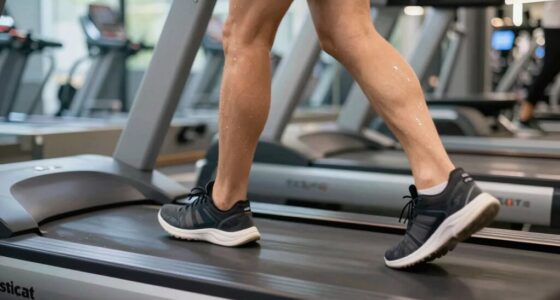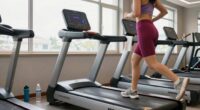
To make treadmill miles smoother, focus on proper running form by landing softly with your foot beneath your body, not reaching forward. Keep your core engaged, shoulders relaxed, and arms swinging naturally with slight bends. Avoid overstriding and aim for a cadence of about 170-180 steps per minute. Stay mindful of your posture and footwear, and use gentle hand support if needed. Keep these tips in mind, and you’ll discover more ways to optimize every stride.

Get workout gear delivered free with Prime
- Fast, free delivery on millions of items
- Prime Video, Amazon Music and more included
- Member-only deals all year
Key Takeaways
- Maintain proper running posture with a neutral spine, engaged core, and relaxed shoulders for smoother treadmill running.
- Focus on landing with a midfoot strike directly under your hips to reduce impact and improve comfort.
- Increase cadence to around 170-180 steps per minute to promote lighter, more efficient strides.
- Keep your stride length short and avoid overstriding to prevent harsh landings and joint strain.
- Use slight handrail contact only when necessary, avoiding tight grips to maintain natural arm swing and balance.

Running indoors can be a convenient way to stay active, but it often requires adjustments to your form to prevent injury and improve efficiency. When you’re running on a treadmill, your body’s biomechanics need to adapt to this controlled environment. One of the most impactful ways to enhance your treadmill experience is by understanding and optimizing your running form. Proper form not only minimizes strain but also makes each mile feel smoother and more natural. Paying attention to your foot strike is crucial—many runners tend to land heavily or strike the ground with their heels first, which can lead to joint pain or fatigue. Investing in running shoe technology can make a significant difference here. Modern running shoes are designed with cushioning and support tailored to different gait types, helping you land more softly and distribute impact evenly. When you choose the right shoes, you reduce the risk of injury and improve your overall comfort on the treadmill.
Next, focus on your posture. Keep your head aligned with your spine, looking straight ahead, not down at your feet. Engage your core muscles to stabilize your torso, preventing unnecessary sway or wobbling. Your shoulders should be relaxed, not tense, and your arms should swing naturally at your sides with a slight bend at the elbows. This balanced posture helps maintain momentum and reduces fatigue during longer runs. Another key aspect is your stride length and cadence. Many runners tend to overstride on a treadmill, which can cause a harsh landing and inefficient movement. Aim for a quicker cadence—around 170 to 180 steps per minute—and keep your steps under your hips. This promotes a more efficient, lightweight stride that feels smoother and more less jarring. Focus on landing with your foot underneath your body rather than reaching forward with each step. Additionally, proper footwear can significantly influence your running mechanics and overall comfort. Being mindful of your biomechanics and how they adapt to treadmill running can help you make more precise adjustments for better performance. Incorporating form awareness exercises outside of running can also enhance your natural mechanics and reduce the risk of injury. Furthermore, paying attention to your muscle engagement during runs can help improve efficiency and reduce fatigue. Maintaining consistency in your training routine can further reinforce proper form and help you adapt more quickly to the demands of treadmill running.
Treadmill safety tips are essential to keep in mind as you refine your form. Always start with a warm-up to prepare your muscles, and keep your hands lightly on the handrails if needed—avoid gripping tightly, which can influence your natural arm swing and posture. Pay attention to your surroundings, and don’t get distracted by devices; stay aware of your pace and form. If you notice discomfort or unnatural fatigue, don’t hesitate to slow down or stop and reassess your technique. In summary, incorporating these adjustments—leveraging running shoe technology, maintaining proper posture, optimizing your stride, and following treadmill safety tips—can make your indoor runs feel more effortless. With consistency, these form fixes will become second nature, transforming your treadmill miles into smoother, more enjoyable workouts.
running shoes with cushioning and support
As an affiliate, we earn on qualifying purchases.
As an affiliate, we earn on qualifying purchases.
Frequently Asked Questions
How Do I Prevent Treadmill Slippage During Runs?
To prevent treadmill slippage, focus on your treadmill grip and shoe traction. Make sure your shoes have good sole grip and are clean, free of debris that could cause slipping. Adjust your running stride to maintain balance and avoid sudden stops or sharp turns. You can also check if the treadmill surface is clean and dry. Proper footwear and mindful running form help you stay stable and prevent slips during your workout.
What’s the Ideal Treadmill Footwear for Indoor Running?
You should choose treadmill footwear with excellent grip and cushioning. Look for shoes with a rubber outsole designed for grip, which helps prevent slipping during your run. Prioritize shoes with good cushioning to absorb impact and reduce fatigue, making your treadmill miles more comfortable. Avoid worn-out shoes, and opt for ones that support your arch and fit snugly to guarantee stability and prevent injuries.
How Can I Improve My Treadmill Running Endurance?
To improve your treadmill running endurance, focus on maintaining proper running posture by keeping your shoulders relaxed and engaging your core. Practice steady breathing techniques, such as deep diaphragmatic breaths, to sustain energy and reduce fatigue. Gradually increase your running duration and pace, listening to your body. Consistent training with good posture and breathing habits helps you run longer and more efficiently, making treadmill miles feel smoother and more manageable.
Should I Adjust My Running Form for Different Treadmill Speeds?
Yes, you should adjust your running posture and stride length for different treadmill speeds. When speeding up, lean slightly forward, engage your core, and shorten your stride to maintain balance. When slowing down, relax your posture, extend your stride comfortably, and keep your arms steady. By matching your running posture and stride length to the pace, you’ll run more efficiently and reduce fatigue, making every mile smoother and more enjoyable.
How Do I Stay Motivated to Run Indoors Regularly?
To stay motivated for indoor running, focus on indoor motivation by setting clear goals and tracking your progress. Keep your running consistent by creating a schedule you enjoy and mixing up your workouts to avoid boredom. Consider listening to upbeat music or podcasts, and reward yourself for milestones. Visualize your achievements, stay accountable with a running buddy or app, and remind yourself of the benefits to keep your passion alive.
As an affiliate, we earn on qualifying purchases.
Conclusion
Now that you know these indoor running form fixes, imagine how much more enjoyable your treadmill miles could become. But here’s the catch: the real transformation happens when you apply these tips consistently. Are you ready to open a smoother, more efficient run? The secret to endless, pain-free miles might be just one adjustment away. Don’t wait—your best run is still ahead, and it’s waiting for you to take that first step.
As an affiliate, we earn on qualifying purchases.
As an affiliate, we earn on qualifying purchases.
Fall Picks
fall essentials
As an affiliate, we earn on qualifying purchases.