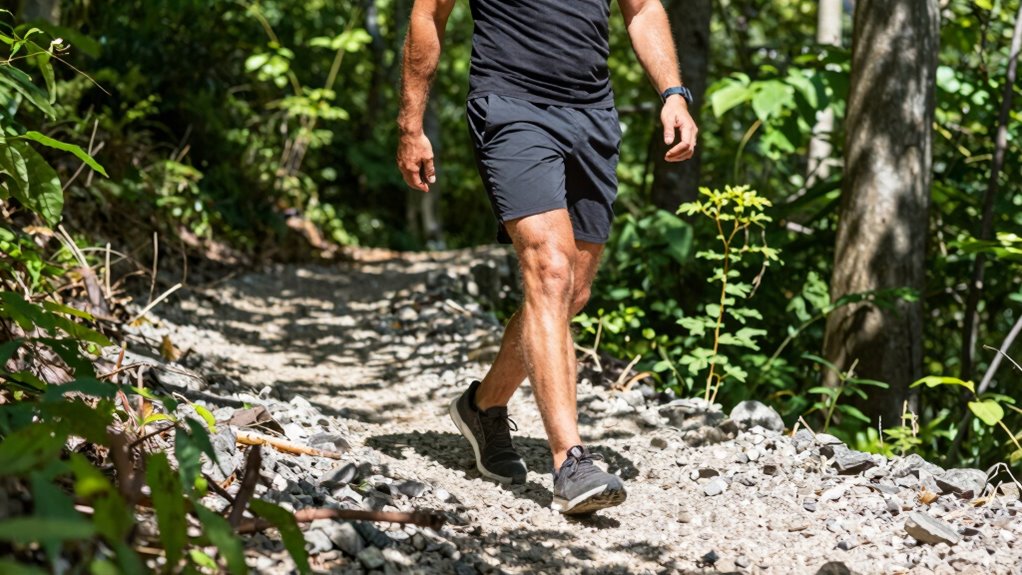

To use incline walking safely and avoid calf fatigue, start with a moderate incline and gradually increase it over time. Keep your posture upright, engage your core, and use your arms for balance. Incorporate interval training by alternating high and moderate intensities to boost benefits while preventing overuse. Listen to your body, hydrate well, and stretch after your workout. If you want more tips on protecting your calves while maximizing fitness, there’s plenty more to explore.
Key Takeaways
- Gradually increase incline and duration to prevent calf strain and allow your muscles to adapt.
- Incorporate interval training with moderate recovery periods to reduce calf fatigue.
- Maintain proper posture and engage your core to distribute effort evenly and avoid overloading calves.
- Stretch calves and hamstrings after workouts to improve flexibility and reduce soreness.
- Listen to your body, hydrate well, and adjust intensity if you experience calf discomfort or cramping.

If you’re looking to boost your fitness routine, incline walking offers an effective way to burn more calories and strengthen your lower body muscles. To maximize these benefits without overtaxing your calves, consider integrating interval training into your incline walking sessions. Alternating between high-intensity bursts and recovery periods keeps your workout dynamic and efficient. For example, walk briskly at a steep incline for 30 seconds, then reduce to a moderate pace for a minute. This pattern not only boosts calorie burning but also improves cardiovascular endurance. The key is to push yourself during the high-intensity intervals without overdoing it, which helps prevent calf fatigue and soreness.
Incorporate interval training into incline walking to boost calories and prevent calf fatigue.
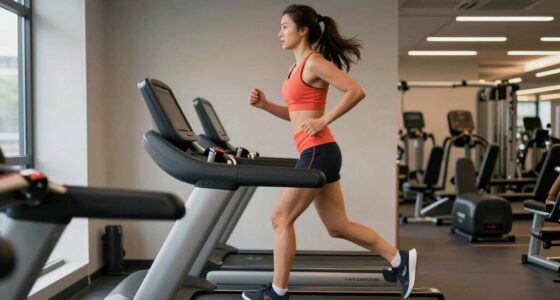
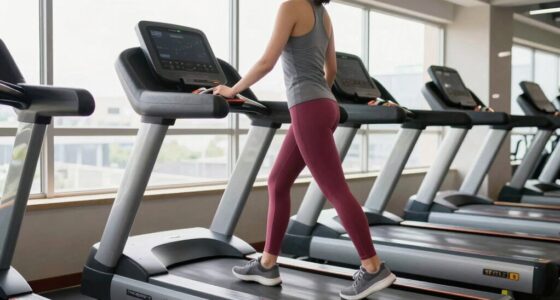
When you’re doing incline walking, it’s important to pay attention to your form. Keep your posture upright, engage your core, and avoid leaning forward excessively. This helps distribute the effort evenly across your legs and reduces strain on your calves. Use your arms to maintain momentum and balance, which can also enhance your calorie burning. Walking at an incline naturally increases the workload on your lower body, but by varying the intensity and duration of your intervals, you can prevent the calves from becoming overly fatigued. If you notice your calves tightening or feeling sore, slow down or reduce the incline slightly to give them a chance to recover. Incorporating proper warm-up routines can further help in prepping your muscles and preventing injury. Additionally, managing your exercise intensity is crucial to avoid overworking your calves and ensuring a sustainable workout.
Another way to prevent calf fatigue is to incorporate proper warm-up and cool-down routines. Spend five to ten minutes walking at a flat or gentle incline before increasing the intensity. This prepares your muscles for the workout and helps prevent injury. After your session, take time to stretch your calves and hamstrings. Stretching promotes flexibility and aids recovery, making it easier to stick with incline walking regularly. Incorporating muscle recovery strategies can significantly improve your overall comfort and progress. Incorporating hydration into your routine is also essential, as staying properly hydrated supports muscle function and recovery. Keeping your nutrition balanced can also play a vital role in muscle health and endurance during your workouts. Remember, paying attention to your body’s signals and adjusting accordingly is key to avoiding overuse injuries.
To keep your workout effective and safe, listen to your body. If your calves start to throb or cramp, back off on the incline or intensity. Hydrate well and consider adding low-impact cross-training activities like swimming or cycling on rest days. These alternatives give your calves a break while still helping you burn calories and build strength. With consistent interval training and mindful progression, you’ll notice increased calorie burning and improved endurance without the discomfort of overworked calves. Remember, the goal is to strike a balance between challenging yourself and respecting your body’s limits. By doing so, you’ll enjoy the many benefits of incline walking while keeping your calves healthy and happy.

Walking Pad Treadmill for Home, Walking Pad with Incline and Handle Bar
- Adjustable Incline and Handles: 4-degree incline with support handles
- LED Display & Speed Feedback: Shows exercise stats and real-time speed
- Compact & Easy to Store: Folds for space-saving storage
As an affiliate, we earn on qualifying purchases.
As an affiliate, we earn on qualifying purchases.
Frequently Asked Questions
Can Incline Walking Help With Weight Loss Effectively?
Yes, incline walking can help with weight loss effectively. It burns more calories than flat walking because the incline increases your calorie comparison and challenges your muscles. To maximize results, walk at a steady, brisk walking speed that keeps you in a moderate to vigorous effort zone. Incorporate incline walking into your routine regularly, and you’ll boost calorie burn, support weight loss, and improve your overall fitness.
How Often Should I Incorporate Incline Walking Into My Routine?
Think of your workout schedule as a balanced dance—you don’t want to overstep. You should incorporate incline walking 3 to 4 times a week, adjusting incline intensity and walking duration based on your fitness level. Start with moderate incline and 20-30 minutes, then gradually increase as your endurance builds. This way, you challenge yourself without risking burnout or calf strain, making each session a step closer to your goals.
Is Incline Walking Suitable for Beginners With Knee Issues?
Incline walking can be suitable for beginners with knee issues if you proceed carefully. Focus on maintaining proper joint support by starting with a gentle incline and short sessions, and listen to your body to avoid knee pain. Use supportive footwear and consider a softer treadmill surface. If discomfort persists, consult a healthcare professional. This approach helps strengthen muscles while minimizing strain on your knees.
What Are the Best Incline Settings for Calorie Burning?
The best incline settings for calorie burning are like a spicy kick—just enough to energize your workout. You should try an incline variation between 5% and 12%, depending on your fitness level, and adjust your speed to maintain a challenging yet sustainable pace. Incorporate gradual speed adjustments to maximize calorie burn without overexerting yourself. Keep your effort steady, and you’ll torch calories effectively while protecting your calves.
Should I Wear Specific Shoes for Incline Walking?
Yes, you should wear proper footwear for incline walking to prevent discomfort and injury. Choose shoe types with good arch support, cushioning, and a sturdy sole to handle the increased effort and uneven terrain. Opt for athletic shoes designed for walking or running, and avoid worn-out sneakers. Proper footwear helps absorb shock, reduces strain on your calves, and guarantees a more comfortable, effective workout on inclines.

BLITZU Calf Compression Sleeves, Footless Compression Socks for Men & Women
- Sizing Guide: Refer to size chart for best fit
- Effective Compression: Reduces swelling and varicose veins
- Pain Relief: Eases shin splints and muscle fatigue
As an affiliate, we earn on qualifying purchases.
As an affiliate, we earn on qualifying purchases.
Conclusion
Incorporating incline walking into your routine can boost your fitness without overtaxing your calves. Just remember, a recent study shows that adjusting the incline gradually can reduce calf strain by up to 40%. So, start slow, increase intensity wisely, and listen to your body. With consistent effort and mindful progression, you’ll enjoy the benefits of increased stamina and strength without the discomfort. Keep at it—your healthier, fitter self is within reach!

Gymboss Interval Timer and Stopwatch – Violet/Pink Metallic Gloss
- Compact Interval Timer: Times 1 or 2 intervals from 2 sec to 99 min
- Includes Stopwatch and Clock: Built-in stopwatch and clock features with belt clip
- Auto Repeat Mode: Repeats intervals up to 99 times with notifications
As an affiliate, we earn on qualifying purchases.
As an affiliate, we earn on qualifying purchases.

comness Foot and Calf Stretcher-Stretching Strap For Plantar Fasciitis, Heel Spurs, Foot Drop, Achilles Tendonitis & Hamstring. Yoga Foot & Leg Stretch Strap. (Black)
- Pain Relief and Circulation: Improves blood flow and relieves pain
- Enhances Flexibility and Strength: Supports foot, leg, and back flexibility
- Ergonomic and Durable Design: Comfortable cradle with adjustable orientation
As an affiliate, we earn on qualifying purchases.
As an affiliate, we earn on qualifying purchases.