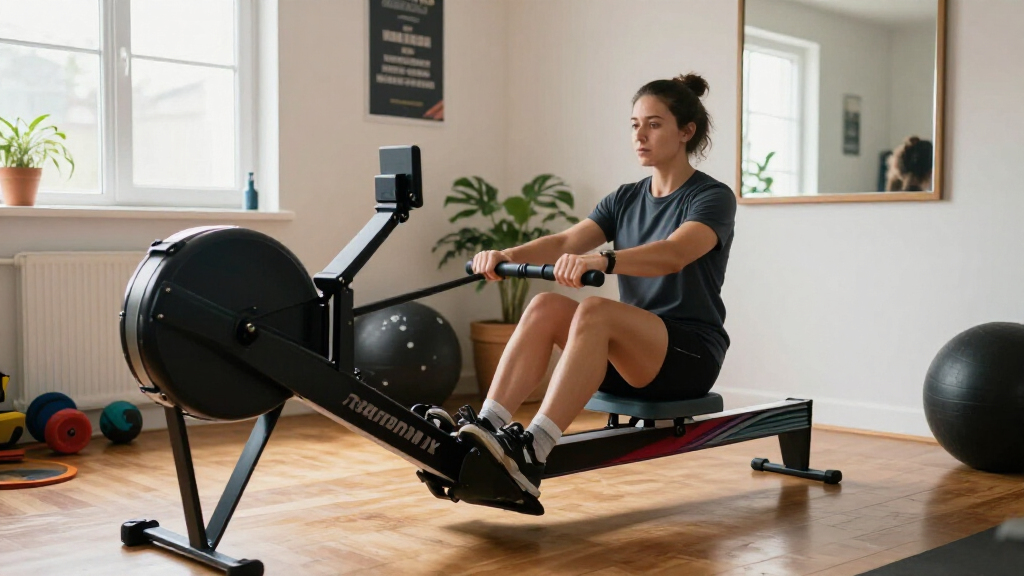

Shopping for home gym rowing machines comes down to one main tradeoff: quiet, affordable magnetic resistance versus the durability and performance tracking of air resistance. The Concept2 RowErg with PM5 earns my best overall pick because its air resistance system and PM5 monitor deliver the most accurate workout data and the longest track record of any rower here, which is why gyms and CrossFit boxes use it almost exclusively. If budget leads your decision, the Merach Q1S offers a smooth dual-rail magnetic setup at a fraction of the price, while the Dripex upgraded magnetic rower balances quiet operation, adjustable resistance, and full-body comfort for casual home users. Cheaper hydraulic models like the GYMAX and Sunny Health compact rowers save money and floor space, but expect a less fluid stroke and lighter build. Keep reading for the full breakdown of all 15 machines and which one fits your space, budget, and training goals.
Complete the kit

Key Takeaways
- The Concept2 RowErg separated itself from every magnetic option through its PM5 monitor accuracy and gym-grade durability — no magnetic rower in this lineup matched its data quality or resale value.
- This roundup contained four near-identical budget magnetic rowers (two YOSUDA models, three Dripex listings, two Merach Q1S entries); the differentiators came down to rail design, seat comfort, and resistance level count, not brand.
- Hydraulic rowers (GYMAX, Sunny Health compact) were consistently the cheapest and most storage-friendly, but their piston resistance felt less smooth than magnetic systems at similar stroke rates — a real drawback for steady-state cardio.
- Magnetic rowers with 16 resistance levels dominated the mid-range, but the resistance ceiling was the real limit: stronger users outgrew them faster than air-resistance machines that scale automatically with effort.
- Noise and living-situation fit mattered as much as price: magnetic models were quiet enough for apartments and early mornings, while the Concept2’s fan made it the loudest pick despite being the best performer.
| Merach Q1S Magnetic Rowing Machine Indoor, Dual Slide Rail, Quiet & Smooth |  | Best Value Magnetic Rower | Resistance: 16 levels of electromagnetic resistance | Max Weight Capacity: 350 lbs | Assembly Time: ~30 minutes | VIEW LATEST PRICE | See Our Full Breakdown |
| MERACH Pro-Grade Magnetic Rowing Machine for Home |  | Best for High-Intensity Training | Resistance: Up to 130 lbs | Max Load: 400 lbs | Display: 11.4-inch console | VIEW LATEST PRICE | See Our Full Breakdown |
| Dripex Magnetic Rowing Machine for Home – Upgraded, Quiet, Adjustable Resistance |  | Best Quiet Performer | Flywheel Weight: 12 lbs | Resistance Levels: 16 | Maximum User Weight: 350 lbs | VIEW LATEST PRICE | See Our Full Breakdown |
| Dripex Magnetic Rowing Machine for Home – Upgraded Full-Body Workout |  | Best for Beginners | Flywheel Weight: 12 lbs | Resistance Levels: 16 | Maximum User Weight: 360 lbs | VIEW LATEST PRICE | See Our Full Breakdown |
| Rowing Machine for Home with 350 LB Capacity and 16-Level Magnetic Resistance |  | Best Compact and Foldable Pick | Weight Capacity: 350 lbs | Resistance Levels: 16 magnetic | Max User Height: 6’3″ | VIEW LATEST PRICE | See Our Full Breakdown |
| Concept2 RowErg Indoor Rowing Machine with PM5 Monitor |  | Best Overall — The Gold Standard | Monitor: PM5 performance monitor | Resistance Type: Adjustable air | Connectivity: Bluetooth and ANT+ | VIEW LATEST PRICE | See Our Full Breakdown |
| YOSUDA Rowing Machine for Home, Magnetic Rower with 16-Level Resistance |  | Best Value Magnetic Rower | Resistance Type: Magnetic, 16 levels | Flywheel: Upgraded heavy-duty (+66% mass) | Slide Rail Length: 50.2 inches | VIEW LATEST PRICE | See Our Full Breakdown |
| YOSUDA Magnetic Rowing Machine for Home – Full-Body Low-Impact Cardio, 16 Resistance Levels |  | Best for Small Spaces and Beginners | Resistance Type: Magnetic, 16 levels | Maximum User Weight: 350 pounds | Dimensions: 59 x 19 x 25 inches | VIEW LATEST PRICE | See Our Full Breakdown |
| Dripex Rowing Machine, Upgraded Magnetic Rower for Home Fitness |  | Best Stability and Storage Combo | Resistance Type: Magnetic, 16 levels | Flywheel Weight: 12 lbs | Slide Design: Dual slide rails | VIEW LATEST PRICE | See Our Full Breakdown |
| GYMAX Rowing Machine for Home, Hydraulic Rower with LCD Monitor, Adjustable Resistance up to 110 lbs |  | Best Budget Entry Point | Resistance Type: Hydraulic, adjustable up to 110 lbs | Maximum User Weight: 265 lbs | Monitor: LCD display | VIEW LATEST PRICE | See Our Full Breakdown |
| Merach Q1S Magnetic Rowing Machine Indoor, Dual Slide Rail, Quiet & Smooth |  | Best Stability Pick | Product Dimensions: 65L x 19.3W x 24.8H inches | Product Weight: 42 pounds | Maximum User Weight: 350 pounds | VIEW LATEST PRICE | See Our Full Breakdown |
| Wenoker Magnetic Rowing Machine for Home, Quiet & Smooth, Full Body Workout |  | Best for Small Spaces | Resistance Levels: 16 | Max User Weight: 350 lbs | Slide Rail Length: 39 inches | VIEW LATEST PRICE | See Our Full Breakdown |
| Sunny Health & Fitness Smart Magnetic Rower |  | Best for App-Guided Training | Slide Rail Length: 45.7 inches | Inseam Capacity: 40.9 inches | Maximum User Weight: 300 lbs | VIEW LATEST PRICE | See Our Full Breakdown |
| Merach RS3 Magnetic Rowing Machine for Home Gym, Full-Body Workout, Bluetooth Connectivity |  | Best Full-Size Magnetic Rower | Resistance: 16 levels magnetic | Max User Weight: 350 lbs | Dimensions: 60.6L x 29.5W x 28.3H inches | VIEW LATEST PRICE | See Our Full Breakdown |
| Sunny Health & Fitness Compact Hydraulic Rower with 12-Level Resistance |  | Best Budget Starter Pick | Resistance Levels: 12 hydraulic | Weight: 22.4 lbs | Material: Alloy steel | VIEW LATEST PRICE | See Our Full Breakdown |
| home gym rowing machine | Connectivity | Maximum User Weight |
|---|---|---|
| Merach Q1S Magnetic Rowing Mac | Smart app with customizable courses | — |
| MERACH Pro-Grade Magnetic Rowi | MERACH app with interactive classes | — |
| Dripex Magnetic Rowing Machine | Bluetooth with LCD monitor | 350 lbs |
| Dripex Magnetic Rowing Machine | Bluetooth | 360 lbs |
| Rowing Machine for Home with 3 | — | — |
| Concept2 RowErg Indoor Rowing | Bluetooth and ANT+ | 500 pounds |
| YOSUDA Rowing Machine for Home | Bluetooth with app tracking | 350 pounds |
| YOSUDA Magnetic Rowing Machine | Smart app for guided training | 350 pounds |
| Dripex Rowing Machine | Bluetooth-enabled devices | 360 pounds |
| GYMAX Rowing Machine for Home | — | 265 lbs |
| Merach Q1S Magnetic Rowing Mac | — | 350 pounds |
| Wenoker Magnetic Rowing Machin | — | — |
| Sunny Health & Fitness Smart M | SunnyFit app | 300 lbs |
| Merach RS3 Magnetic Rowing Mac | Bluetooth | — |
| Sunny Health & Fitness Compact | — | — |
More Details on Our Top Picks
Merach Q1S Magnetic Rowing Machine Indoor, Dual Slide Rail, Quiet & Smooth
The Merach Q1S hits a sweet spot that most budget rowers miss: a dual slide rail that keeps the seat tracking straight and stable, paired with 16 levels of electromagnetic resistance that adjust through the app rather than a clunky manual dial. Compared with the Dripex magnetic rowers in this lineup, the Q1S stands out for letting you program resistance changes into workouts, which matters if you want interval training without stopping mid-stroke to turn a knob.
The tradeoff is honest: at 350 pounds of capacity and moderate top-end resistance, this is a fitness-and-cardio machine, not a strength builder. Stronger rowers will outgrow the highest setting, and anyone taller than about 6’3″ should check the rail length before buying. For apartment dwellers and casual users, the near-silent flywheel and upright storage make it easy to live with.
Pros:- App-controlled resistance enables true interval training
- Dual slide rail keeps the seat stable under hard strokes
- Folds upright to roughly 1.6 x 2.1 feet for storage
- Quiet magnetic flywheel works in shared living spaces
Cons:- Top resistance level is too low for strong, fit rowers
- Needs a clear 1.6 x 5.7 foot floor area during use
Best for: Apartment dwellers and intermediate users who want app-guided workouts and quiet operation without paying premium prices
Not ideal for: Advanced rowers or users over 350 pounds — the resistance ceiling and capacity will feel limiting
- Resistance:16 levels of electromagnetic resistance
- Max Weight Capacity:350 lbs
- Assembly Time:~30 minutes
- Dimensions (Use):1.6 x 5.7 feet
- Dimensions (Storage):1.6 x 2.1 feet
- Connectivity:Smart app with customizable courses
Our verdict“The Q1S is the smart pick if you want app-driven magnetic rowing and quiet apartment-friendly design at a midrange price.”
MERACH Pro-Grade Magnetic Rowing Machine for Home
Most magnetic rowers in this roundup, including the Merach Q1S and the YOSUDA models, top out at resistance levels that serious athletes blow past within months. The MERACH Pro-Grade solves that with up to 130 pounds of resistance, enough to make rowing a genuine strength workout rather than pure cardio. The 400-pound load rating also clears the field — the Dripex rowers cap out at 350 to 360 pounds.
The self-powered design with an 11.4-inch display means no outlet needed and no monthly battery swaps, but that large console and pro-grade frame come with a footprint to match. Beginners may find the resistance adjustment system less intuitive than the simple dial on the YOSUDA rowers, and the price sits well above entry-level magnetic options.
Pros:- 130 lbs of resistance supports genuine strength training
- 400 lb load capacity is the highest in this batch
- Self-powered — no outlet or external power required
- 11.4-inch display with 49.2-inch slide fits tall users
Cons:- Resistance controls have a learning curve for newcomers
- Large footprint demands dedicated gym space
- Premium price point well above entry magnetic rowers
Best for: Strong, experienced rowers and heavier users who need resistance headroom and a 400-pound capacity
Not ideal for: Beginners or casual users — the adjustment system and price are overkill for light cardio a few times a week
- Resistance:Up to 130 lbs
- Max Load:400 lbs
- Display:11.4-inch console
- Sliding Distance:49.2 inches
- Seat Height:11.4 inches
- Power:Self-powered with Type-C reverse charging
- Connectivity:MERACH app with interactive classes
Our verdict“If you’ve outgrown 16-level magnetic rowers and want the heaviest resistance and capacity available, this is the upgrade path.”
Dripex Magnetic Rowing Machine for Home – Upgraded, Quiet, Adjustable Resistance
Plenty of rowers claim to be quiet; the Dripex Upgraded actually quantifies it at below 15 decibels — quieter than a whisper, which makes it the strongest choice in this lineup for rowing beside a sleeping child or during a work call. Compared with the Wenoker magnetic rower, which is also marketed on quiet operation, the Dripex backs it with a 12-pound flywheel and a dual slide rail that keeps the stroke smooth at every resistance level.
Where it falls short of the Merach Q1S is connectivity: the Bluetooth monitor tracks basics, but there’s no app-driven resistance programming, so interval workouts mean manual adjustments. Dripex also doesn’t publish full folded dimensions or warranty details, which makes it harder to plan placement or buy with confidence long-term.
Pros:- Below 15 dB operation is the quietest claim in this batch
- 16 resistance levels suit beginners through intermediates
- Dual slide rail adds stability under heavier users
- Partial pre-assembly gets you rowing in about 20 minutes
Cons:- No app-based resistance control — manual adjustment only
- Missing published dimensions and warranty information
Best for: Anyone who trains in noise-sensitive spaces — apartments, offices, or homes with light sleepers
Not ideal for: Data-driven users who want app-controlled workouts and detailed specs before buying
- Flywheel Weight:12 lbs
- Resistance Levels:16
- Maximum User Weight:350 lbs
- Slide Length:48.8 inches
- Noise Level:Below 15 decibels
- Assembly Time:~20 minutes
- Connectivity:Bluetooth with LCD monitor
Our verdict“This is the rower for people whose first requirement is silence, provided manual resistance changes don’t bother you.”
Dripex Magnetic Rowing Machine for Home – Upgraded Full-Body Workout
The Dripex Full-Body Workout model takes the same quiet dual-slide platform as its sibling above but frames itself around ease of entry: partial pre-assembly, transport wheels, and a resistance curve that starts gentle enough for a first-time rower. Compared with the GYMAX hydraulic rower, which also targets beginners at a lower capacity of 265 pounds, this Dripex offers a smoother magnetic stroke and a higher 360-pound weight limit for not much more complexity.
The catch is that its 16 resistance levels plateau early for anyone already fit, and several features — including workout tracking depth — depend on a Bluetooth connection, so training without a paired device feels incomplete. The dual Dripex models are so similar that choosing between them comes down to whether you value the lower noise claim or the slightly higher capacity more.
Pros:- Gentle starting resistance levels build confidence safely
- 360 lb capacity edges out most budget magnetic rowers
- Transport wheels make repositioning easy
- Full pre-assembly takes roughly 20 minutes
Cons:- Bluetooth connection needed to unlock full tracking features
- Resistance tops out too low for trained users
- No published dimensions complicate space planning
Best for: Fitness newcomers who want a forgiving, low-impact entry point that grows with them for a year or two
Not ideal for: Conditioned athletes — the resistance ceiling arrives quickly once you build a base
- Flywheel Weight:12 lbs
- Resistance Levels:16
- Maximum User Weight:360 lbs
- Slide Length:48.8 inches
- Noise Level:Below 15 decibels
- Connectivity:Bluetooth
- Assembly Time:~20 minutes
Our verdict“A low-friction starting machine for new rowers, as long as you accept you may outgrow it within a couple of years.”
Rowing Machine for Home with 350 LB Capacity and 16-Level Magnetic Resistance
Storage is where most rowers fail buyers, and this foldable model attacks that problem directly: it collapses to a 2.9-square-foot footprint, tighter than the upright-storage Merach Q1S and far more apartment-friendly than the pro-grade MERACH, which demands a permanent corner of the room. The added 6.5-percent fixed incline is a genuine differentiator in this price bracket — it shifts more work into the legs and glutes, giving the stroke a slightly different training character than the flat-rail YOSUDA and Wenoker models.
Two limits temper the appeal. The 46-inch rail is the shortest in this batch, capping comfortable use at users 6’3″ and under, and the 16 resistance levels won’t challenge strong rowers the way the 130-pound MERACH Pro can. For small-space buyers of average height, those are acceptable tradeoffs.
Pros:- Folds down to just 2.9 square feet of floor space
- Built-in 6.5% incline adds leg and glute engagement
- 350 lb steel frame capacity with app-guided training
- Easy mobility for moving between rooms
Cons:- 46-inch rail is the shortest here, limiting taller users
- 16 resistance levels won’t satisfy advanced rowers
Best for: Small-apartment residents under 6’3″ who need a machine that disappears when not in use
Not ideal for: Tall users over 6’3″ or advanced trainees — the short rail and capped resistance will both hold you back
- Weight Capacity:350 lbs
- Resistance Levels:16 magnetic
- Max User Height:6’3″
- Frame Material:Steel
- Slide Rail Length:46 inches
- Folded Footprint:2.9 sq. ft.
- Incline:6.5%
Our verdict“The most space-efficient rower in this lineup, best for average-height users in tight quarters who value storage over maximum intensity.”
Concept2 RowErg Indoor Rowing Machine with PM5 Monitor
If rowing is going to be the centerpiece of a home gym, this is the machine the rest of the lineup is measured against. The air resistance system responds automatically to how hard you pull, which means no fiddling with dials mid-workout — something magnetic models like the YOSUDA 16-Level can’t replicate, since their resistance stays fixed until you change it manually. The PM5 monitor is the most accurate performance tracker in this batch, and compatibility with 40+ apps puts it in a different class than the Dripex, which lacks a built-in display entirely. The tradeoffs are real: it eats a 9×4 foot footprint, needs D batteries, and costs more than every magnetic option here. But nothing else in this roundup matches its durability or data accuracy for serious training.
Pros:- Air resistance adjusts naturally to effort for a realistic on-water feel
- PM5 monitor is the most accurate data tracker in the category, with Bluetooth and ANT+
- 500-pound weight capacity dwarfs every other rower in this lineup
- Separates into two pieces and rolls away on caster wheels for storage
Cons:- Requires the largest floor space of any machine here at 9×4 feet
- Two D batteries must be replaced over time
- Assembly is more involved than the largely pre-built magnetic alternatives
Best for: Dedicated home-rowers and CrossFit-style trainers who want competition-grade accuracy and equipment that lasts a decade or more
Not ideal for: Apartment dwellers on a budget — it’s the most expensive option here, needs a 9×4 foot zone, and air resistance is louder than the sub-20dB YOSUDA or Dripex magnetic rowers
- Monitor:PM5 performance monitor
- Resistance Type:Adjustable air
- Connectivity:Bluetooth and ANT+
- Seat Height:14 inches
- Maximum User Weight:500 pounds
- Construction:Aluminum front legs, steel rear legs
- Storage:Separable design with caster wheels
- Power Requirement:Two D cell batteries
- Space Needed:9×4 feet
Our verdict“Buy this if rowing is your primary workout and you want the benchmark machine everyone else compares themselves to; skip it if budget or square footage is tight.”
YOSUDA Rowing Machine for Home, Magnetic Rower with 16-Level Resistance
This is where price and performance meet for most home gyms. The upgraded 66% heavier flywheel solves the most common complaint about budget magnetic rowers — jerky, dead-zone strokes — and puts it a clear step above the GYMAX hydraulic model, whose piston resistance feels less fluid with every rep. The 50.2-inch slide rail accommodates users up to 6’3″, which is genuinely generous at this price; the compact YOSUDA (B0C1VGRX2P) taps out around 5’11”. Operation stays under 20 decibels, making it apartment-friendly where the Concept2’s air fan would be intrusive. It won’t match the Concept2’s 500-pound capacity or its data precision, and the frame is mono-rail rather than the dual-slide stability you get on the Dripex, but for the money, few rowers balance quiet operation, range of motion, and build quality this well.
Pros:- Heavy-duty flywheel delivers smooth strokes with no dead zones
- 50.2-inch rail suits users up to 6’3″, taller than most budget rowers allow
- Near-silent operation below 20dB works for apartments and early mornings
- 16 resistance levels span recovery paddling through HIIT intensity
Cons:- 350-pound weight capacity is well short of the Concept2’s 500 pounds
- Mono-rail frame is less inherently stable than the Dripex dual-slide design
- No advanced onboard monitor — metrics depend on your phone and Bluetooth connection
Best for: Taller budget-conscious buyers (up to 6’3″) who want near-silent magnetic resistance for shared living spaces
Not ideal for: Users over 350 pounds or anyone who wants pro-grade performance data — the tracking is app-dependent and less precise than the Concept2’s PM5
- Resistance Type:Magnetic, 16 levels
- Flywheel:Upgraded heavy-duty (+66% mass)
- Slide Rail Length:50.2 inches
- Max User Height:6’3″
- Maximum User Weight:350 pounds
- Noise Level:Under 20 dB
- Connectivity:Bluetooth with app tracking
- Frame:Reinforced mono-rail
- Storage:Rolls away upright
Our verdict“The smartest middle-ground pick for taller riders who want quiet, smooth magnetic rowing without paying Concept2 money.”
YOSUDA Magnetic Rowing Machine for Home – Full-Body Low-Impact Cardio, 16 Resistance Levels
At 59 inches long overall, this is the compact sibling in the YOSUDA lineup, and that footprint is the whole story. Compared with the longer-rail YOSUDA (B095JR2FTV), it trades a few inches of stroke length for a machine that fits in a corner of a bedroom or apartment — though that means riders taller than 5’11” will feel cramped at the finish of each stroke. What it does share is the same 16-level magnetic resistance and whisper-quiet operation, plus a wider track base that keeps the seat steady for nervous first-timers. App connectivity gives beginners guided workouts, which the bare-bones GYMAX hydraulic rower completely lacks. It engages over 85% of muscle groups while staying gentle on knees, making it a low-pressure entry point. Just know the assembly instructions divide buyers, and the 350-pound capacity matches — not beats — its rivals.
Pros:- Compact 59-inch footprint fits where full-size rowers can’t
- Whisper-quiet magnetic resistance ideal for apartment living
- Wider track and stable base build confidence for new rowers
- App connectivity provides guided training for beginners
Cons:- Height limit of 5’11” excludes a large share of adult men
- Assembly experience varies, with some buyers reporting fiddly setup
- Underspecified track width makes pre-purchase stability comparison difficult
Best for: Beginners and casual exercisers in apartments who want a quiet, knee-friendly starter rower that tucks into a small corner
Not ideal for: Tall users over 5’11” — the shorter rail restricts stroke range, and serious trainees will outgrow the resistance ceiling quickly
- Resistance Type:Magnetic, 16 levels
- Maximum User Weight:350 pounds
- Dimensions:59 x 19 x 25 inches
- Suitable User Height:4’5″ to 5’11”
- Track Design:Wide-track for stability
- Connectivity:Smart app for guided training
- Noise Level:Quiet magnetic operation
- Workout Type:Full-body, low-impact cardio (85%+ muscle engagement)
Our verdict“A sensible first rower for shorter users in tight spaces — anyone tall or training seriously should stretch to the longer YOSUDA rail instead.”
Dripex Rowing Machine, Upgraded Magnetic Rower for Home Fitness
The Dripex carves out its niche through its dual slide rail design, which gives the seat a wider, more planted path than the mono-rail YOSUDA models — a difference you notice during hard sprint finishes when cheaper single-rail rowers start to feel tippy. Its sub-15 decibel rating makes it arguably the quietest machine in this batch, edging out even the YOSUDA’s 20dB claim, which matters for rowing during a sleeping baby’s nap or in an office. The 360-pound capacity sits between the YOSUDA’s 350 and the Concept2’s 500. The honest weakness is data and programming: there’s no built-in display and no structured workout library, so unlike the Concept2 with its PM5, you’re entirely dependent on a third-party Bluetooth app. Assembly and folding, though, are among the easiest here, making it a strong pick for anyone who stores the machine between sessions.
Pros:- Dual slide rails deliver superior stability during high-intensity strokes
- Below 15 dB operation is the quietest claim in this lineup
- 16 resistance levels plus a 12-lb flywheel suit all fitness levels
- Fast assembly and easy fold-and-move storage
Cons:- No built-in display or screen of any kind
- No structured workout programs — guidance depends entirely on external apps
- 360-pound capacity is lower than the Concept2’s 500-pound rating
Best for: Buyers who row hard and need a rock-stable, ultra-quiet frame they can fold and wheel away between sessions
Not ideal for: Data-driven athletes — with no built-in monitor or workout programs, it offers the weakest tracking experience of the five machines here
- Resistance Type:Magnetic, 16 levels
- Flywheel Weight:12 lbs
- Slide Design:Dual slide rails
- Slide Length:48.8 inches
- Maximum User Weight:360 pounds
- Noise Level:Below 15 dB
- Connectivity:Bluetooth-enabled devices
- Storage:Foldable and easy to move
Our verdict“The pick for stability-obsessed, noise-sensitive rowers who don’t care about onboard metrics; analytics fans should pay up for the Concept2 instead.”
GYMAX Rowing Machine for Home, Hydraulic Rower with LCD Monitor, Adjustable Resistance up to 110 lbs
This is the cheapest way into home rowing in this batch, and it earns a spot only at that price. Hydraulic resistance up to 110 pounds is adjustable, but it can’t match the smooth, consistent pull of magnetic systems like the YOSUDA or Dripex — pistons tend to feel stickier and less fluid, especially as they warm up. Where it holds its own is comfort and simplicity: the large cushioned seat is plusher than anything else here, and the LCD monitor gives real-time metrics out of the box, which the Dripex notably can’t do at twice the complexity. The 265-pound weight cap is the lowest in the lineup, though, and there’s no folding mechanism, so it actually stores less conveniently than pricier rowers. If the choice is between this machine and no rower at all, it’s a defensible start — but stretch the budget if you possibly can.
Pros:- Lowest price point in the roundup for a full-body cardio machine
- Large cushioned seat is the most comfortable in this batch
- LCD monitor tracks real-time metrics without needing a phone
- Sturdy steel frame feels solid for its price class
Cons:- Hydraulic resistance is less smooth and less durable than magnetic or air systems
- 265-pound capacity is the lowest of all five machines
- No foldable design means it takes up permanent floor space
Best for: Absolute beginners or very casual users who want the lowest-cost full-body machine with basic workout tracking included
Not ideal for: Anyone over 265 pounds or expecting a fluid stroke — hydraulic resistance feels noticeably less smooth than the magnetic YOSUDA and Dripex options
- Resistance Type:Hydraulic, adjustable up to 110 lbs
- Maximum User Weight:265 lbs
- Monitor:LCD display
- Seat:Large cushioned
- Frame Material:Steel
- Storage:Non-foldable
- Workout Type:Full-body aerobic exercise
Our verdict“A fair trial run for rowing on a tight budget, but the resistance feel and 265-pound cap make it a machine most buyers will outgrow within a year.”
Merach Q1S Magnetic Rowing Machine Indoor, Dual Slide Rail, Quiet & Smooth
The dual slide rail design is what separates the Q1S from nearly every budget rower here, including the Wenoker and both YOSUDA models, which use a single central rail. That extra rail translates into a seat that wobbles less under hard drives, which matters most for taller or heavier rowers — this unit accommodates users up to 6’5″ and 350 pounds, among the most generous fits in this batch. App integration adds guided courses and workout tracking, a nice step up from basic monitor-only machines like the GYMAX hydraulic rower. The tradeoff is footprint: at 65 inches long, it needs about 5.7 feet of clearance in use, though it folds to a slimmer storage profile. Assembly is manageable but not the fastest in the lineup.
Pros:- Dual slide rails keep the seat stable during aggressive strokes
- 350 lb weight capacity and 6’5″ height fit exceed most budget magnetic rowers
- Quiet magnetic resistance works for apartments and early-morning sessions
- App connectivity adds structured courses and workout tracking
- Folds down to roughly 1.6 x 2.1 feet for storage
Cons:- Longer assembly time than claimed for some users
- Requires your own phone or tablet for app features — no included display upgrade
- Indoor-only design with no weatherproofing or outdoor option
Best for: Tall or heavier rowers (up to 6’5″, 350 lbs) who want a stable, wobble-free magnetic rower under an apartment-friendly noise floor
Not ideal for: Buyers in very tight quarters — the 65-inch rail demands nearly 6 feet of open floor during workouts
- Product Dimensions:65L x 19.3W x 24.8H inches
- Product Weight:42 pounds
- Maximum User Weight:350 pounds
- Height Fit:Up to 6’5″
- Space for Use:1.6 x 5.7 feet
- Space for Storage:1.6 x 2.1 feet
- Slide Design:Dual slide rail
Our verdict“If stability and user-size headroom are your priorities, the Q1S justifies its spot over single-rail rivals like the Wenoker.”
Wenoker Magnetic Rowing Machine for Home, Quiet & Smooth, Full Body Workout
Where the Merach Q1S prioritizes a long dual rail, the Wenoker bets everything on compactness: it needs just 3.1 square feet of floor space and stores vertically against a wall. That makes it the strongest option here for studio apartments or shared rooms where a full-length rower like the Concept2 RowErg simply won’t fit. Despite the small footprint, it retains 16 resistance levels and a 350 lb weight capacity, matching bigger machines on paper. Operation under 30 dB is quieter than most magnetic rowers in this roundup. The compromise is the 39-inch slide rail, which is shorter than the Sunny Smart Rower’s 45.7 inches — taller users may feel cramped at full leg extension.
Pros:- Smallest footprint in this batch at roughly 3.1 square feet
- Vertical storage and transport wheels make repositioning easy
- 16 resistance levels with under-30 dB operation
- Claims a 20-minute assembly, faster than most rivals
- 350 lb weight capacity matches larger machines
Cons:- 39-inch slide rail restricts stroke length for taller users
- App features depend on having a compatible smart device
- Compact frame sacrifices some of the rock-solid feel of dual-rail designs
Best for: Apartment dwellers and small-space lifters who want a full magnetic rowing experience that disappears into a corner after workouts
Not ideal for: Rowers over roughly 6’1″ — the short slide rail limits full leg drive and stroke length
- Resistance Levels:16
- Max User Weight:350 lbs
- Slide Rail Length:39 inches
- Noise Level:Less than 30 dB
- Assembly Time:About 20 minutes
- Floor Space:3.1 sq ft
- Storage:Vertical with transport wheels
Our verdict“The Wenoker earns its place by trading rail length for livability — the right call if floor space, not stroke range, drives your decision.”
Sunny Health & Fitness Smart Magnetic Rower
Sunny’s Smart Magnetic Rower stands out for the depth of its SunnyFit app ecosystem, which adds scenic routes and personalized training plans on top of the usual metrics — more structured than the generic app pairings on the Merach RS3. The 45.7-inch slide rail and 40.9-inch inseam capacity give it a longer stroke envelope than the compact Wenoker, making it a better fit for mid-height rowers who found that machine cramped. Sixteen magnetic resistance levels cover a wide intensity band, and the padded seat plus foam grip keep longer sessions comfortable. The catch: a 300 lb weight cap, noticeably lower than the 350 lb ratings on both Merach machines, and assembly is fiddlier than average.
Pros:- SunnyFit app adds scenic routes and personalized training plans
- 45.7-inch rail with 40.9-inch inseam capacity suits most mid-height users
- Dual-track design delivers a controlled, stable stroke
- 16 quiet magnetic resistance levels span easy recovery to hard intervals
Cons:- 300 lb weight capacity trails the 350 lb ratings on Merach and Wenoker models
- Assembly is more involved than comparable budget rowers
- Full feature set requires a connected smart device
Best for: Motivation-driven beginners who want guided workouts and scenic rowing content to stay consistent
Not ideal for: Rowers over 300 lbs or those who want a set-and-forget machine without pairing a phone or tablet
- Slide Rail Length:45.7 inches
- Inseam Capacity:40.9 inches
- Maximum User Weight:300 lbs
- Resistance Levels:16 magnetic
- Connectivity:SunnyFit app
- Frame Material:Sturdy metal
- Seat:Padded
- Handlebar:Foam-covered
Our verdict“Pick this over the Wenoker if guided content and a longer rail matter more than a tiny footprint.”
Merach RS3 Magnetic Rowing Machine for Home Gym, Full-Body Workout, Bluetooth Connectivity
The RS3 is Merach’s more premium take compared with the Q1S: it keeps the 350 lb capacity and 16-level magnetic resistance but adds multiple workout modes and a more integrated performance monitor out of the box, rather than leaning as heavily on your phone. Bluetooth pairing unlocks interactive workouts, and the frame feels planted during hard sessions in a way lighter machines like the Wenoker don’t quite match. The price of that sturdiness is literal size — at 29.5 inches wide and 60.6 inches long, it’s one of the bulkier magnetic rowers in this roundup, and it lacks the Wi-Fi connectivity you’d get stepping all the way up to a Concept2 RowErg. Setup of the digital features can also take some patience.
Pros:- Sturdy frame supports up to 350 lbs with minimal flex during hard drives
- Multiple workout modes add variety beyond basic manual rowing
- Included performance monitor works without a phone
- Bluetooth connectivity opens interactive app-based workouts
- Accommodates users up to 6’4″
Cons:- Bulky footprint at 29.5 inches wide — wider than most rivals here
- Digital features take longer to set up and learn
- Bluetooth only; no Wi-Fi support for richer connected training
Best for: Home gym owners with dedicated workout space who want a sturdy, monitor-equipped rower with interactive training modes
Not ideal for: Small-apartment buyers — the wide footprint and limited foldability make it a poor fit where space is at a premium
- Resistance:16 levels magnetic
- Max User Weight:350 lbs
- Dimensions:60.6L x 29.5W x 28.3H inches
- Height Compatibility:Up to 6’4″
- Connectivity:Bluetooth
- Included Components:Performance monitor, user manual, screws, batteries
Our verdict“If you have the room and want a self-contained training experience, the RS3 outguns the Q1S; space-strapped buyers should look at the Wenoker instead.”
Sunny Health & Fitness Compact Hydraulic Rower with 12-Level Resistance
At 22.4 pounds, this hydraulic rower is less than half the weight of machines like the Merach Q1S, and it shows in both portability and performance ceiling. The 12 hydraulic resistance levels deliver smooth, quiet, adjustable effort that’s plenty for low-impact cardio and beginners, but they can’t replicate the progressive magnetic tension of the Sunny Smart Magnetic Rower or push a fit rower into serious interval territory. What you get in exchange is honest simplicity: a digital display, a device holder for streaming during workouts, quick assembly, and a price that undercuts every magnetic model in this lineup. It’s the machine I’d point a skeptical first-timer toward before committing hundreds more.
Pros:- Featherweight 22.4 lb frame is easy to carry and store anywhere
- 12 resistance levels suit a genuine beginner-to-intermediate range
- Quiet hydraulic system works in shared living spaces
- Digital display and device holder add convenience at a low price
- Quick, tool-light assembly
Cons:- Hydraulic resistance tops out lower than magnetic rowers for hard training
- No heart rate monitoring or advanced workout tracking
- Lighter frame feels less planted during aggressive strokes
Best for: Beginners and casual exercisers wanting a cheap, light, quiet entry point to test whether rowing sticks
Not ideal for: Intermediate or advanced rowers — hydraulic resistance caps intensity well below what magnetic models like the RS3 can deliver
- Resistance Levels:12 hydraulic
- Weight:22.4 lbs
- Material:Alloy steel
- Display:Digital monitor
- Extras:Device holder, adjustable straps, pivoting foot pedals
- Assembly:Quick and easy
Our verdict“A low-risk first rower for casual users — anyone training seriously should spend up for a magnetic machine like the Merach RS3.”
How We Picked
I evaluated each rower against five buyer-relevant criteria: resistance quality and range (how smooth the stroke feels and whether the top setting challenges fit users), build quality and weight capacity, noise level for apartment and shared-space use, data and connectivity (monitor accuracy, Bluetooth app support), and value for money including warranty and storage footprint. Because this list leans heavily toward budget magnetic rowers from overlapping brands, I focused on the small differences that actually change the ownership experience — dual versus single rails, seat and handle comfort, folding mechanisms, and whether the resistance dial offers meaningful steps or vague increments.
The ranking logic favors machines that solve a specific buyer problem rather than the cheapest or most feature-stuffed option. The Concept2 RowErg took the top spot on performance and longevity alone. Mid-tier magnetic models like the Merach Q1S and RS3, Dripex, and YOSUDA rowers were ordered by stroke smoothness, monitor quality, and app integration. Hydraulic models ranked lower because piston resistance degrades over time and produces a less natural pull — a tradeoff worth naming even at their attractive prices.
Factors to Consider When Choosing Home Gym Rowing Machines
Beyond the individual machines, a few category-wide decisions will shape whether your rower gets used daily or becomes a clothes rack. These are the factors I weighed most heavily, plus the mistakes I saw buyers make repeatedly.Resistance Type Is the Biggest Decision You’ll Make
Every rower in this category uses one of three systems: magnetic, air, or hydraulic piston. Magnetic resistance is silent and consistent, which makes it the default for apartments and shared living spaces, but it has a fixed ceiling — once you max out the dial, there’s no more challenge. Air resistance (only the Concept2 here) scales automatically with how hard you pull, so it grows with your fitness indefinitely, at the cost of fan noise. Hydraulic pistons are the cheapest and most compact, but they wear out, feel less fluid, and can drift in resistance as they heat up during long sessions. My advice: choose magnetic if quiet consistency matters most, air if you’re serious about progressive training, and hydraulic only if budget and storage are the deciding factors.
Don’t Overpay for Resistance Levels You Won’t Use
A common marketing trap in this category is the resistance level count — 16 levels sounds better than 8, but the number of levels tells you nothing about the resistance range. Two machines with ’16 levels’ can have completely different maximum tension, and cheaper rowers often bunch their levels at the low end, leaving levels 12–16 feeling nearly identical. What matters is the top-end resistance ceiling relative to your strength. If you’re a fit adult doing interval training, many budget magnetic rowers will feel maxed out within a few months. Check user weight capacity as a proxy for build sturdiness too — a 350 lb capacity usually signals a heavier frame and more robust rail than a 265 lb one.
Seat, Rail, and Stroke Length Determine Long-Term Comfort
The spec sheets rarely highlight this, but stroke length and seat comfort cause more returns than resistance complaints. Taller users (over 6’2″) should verify the rail accommodates a full leg extension — shorter rails force a compressed, inefficient stroke. Seat quality varies widely: budget rowers ship with thin cushions that get uncomfortable past 20 minutes, which is why some models here advertise ‘upgraded’ or ‘large cushioned’ seats as a selling point. Dual-rail designs like the Merach Q1S tend to feel more stable than single-center rails, especially during hard sprints. If you plan sessions longer than 30 minutes, budget for a padded seat cover regardless of which machine you buy.
Monitors and Connectivity: Useful Data or Gimmick?
Almost every rower here ships with an LCD showing time, count, and calories, but the accuracy gap between monitors is enormous. The Concept2 PM5 is the industry standard — its data is consistent enough to compare your times with rowers worldwide, and third-party apps all support it. Mid-range magnetic models from Merach and Sunny Health add Bluetooth app connectivity, which adds structured workouts and progress tracking that basic LCDs can’t match. The mistake to avoid: paying extra for connectivity you won’t use. If you row while watching TV and just want total time, a basic monitor is fine. If you’re chasing splits and following training plans, monitor quality should heavily influence your choice.
Storage Footprint and Noise: Where Budget Rowers Win
Before buying, measure your space in both configurations — in use and stored. Most magnetic rowers fold vertically to roughly half their footprint, but the folded depth still needs wall clearance, and some models are heavy enough that moving them daily becomes a chore. Hydraulic rowers are usually the most compact and lightest, which is their genuine advantage despite weaker resistance. Noise is the other living-situation factor: magnetic rowers are near-silent, hydraulic models add a faint mechanical sound, and air rowers produce a whooshing fan noise that’s audible through thin walls. If you row at 5 a.m. above a light sleeper, that difference decides your purchase more than any performance spec.
When to Pay More — and When the Cheap Option Is Enough
The honest answer is that the price jump from $150–$300 to $1,000+ buys durability, resistance range, and data accuracy, not a dramatically different workout. A casual user rowing 2–3 times per week for general cardio will get full value from a $200 magnetic rower and won’t notice what they’re missing. Paying Concept2 money makes sense when rowing becomes a primary training method, when multiple family members of different strengths will share the machine, or when you want a piece of equipment that still works in a decade — the RowErg famously holds resale value, which softens the upfront cost. The middle zone ($300–$600) is where I’d be most careful: make sure you’re getting app connectivity or a genuinely higher resistance ceiling, not just a bigger brand name.
Frequently Asked Questions
Is a magnetic rowing machine good enough, or do I need an air rower like the Concept2?
For most home users, magnetic resistance is genuinely good enough — it’s quiet, smooth, and requires almost no maintenance. The reason to pay Concept2 money is if you want resistance that scales automatically with your effort, highly accurate performance data for tracking progress, and a machine built to survive decades of daily use. Magnetic rowers have a fixed ceiling, so stronger or more ambitious users eventually outgrow them. If you row for general fitness a few times a week in an apartment, a quality magnetic model will serve you well and save you $700 or more.
Why are there so many similar Dripex, YOSUDA, and Merach models — does the brand matter?
This category is crowded with near-identical magnetic rowers from budget brands, and the honest answer is that brand matters less than the specific model’s specs. Two rowers from different brands with the same resistance type, rail design, and weight capacity will feel very similar in practice. Focus instead on the details that vary: dual versus single rails, weight capacity as a build-quality proxy, monitor features, and warranty terms. Retailer listings sometimes duplicate the same machine under slightly different names, so compare the actual specs rather than the product title before assuming you’re looking at different machines.
Are hydraulic rowers a waste of money?
No, but they’re a different tool with clear tradeoffs. Hydraulic rowers like the GYMAX and Sunny Health compact models are the cheapest way to get a full-body, low-impact workout at home, and they’re light and small enough to store in a closet. The compromises are a less fluid stroke, resistance that can fade as the piston warms up, and seals that wear out over years of use. They make the most sense for beginners, seniors, or anyone testing whether they’ll actually stick with rowing before committing more money. If you already know you’ll row regularly, spending a bit more on magnetic resistance is the better long-term call.
How much space do I need for a home rowing machine?
Plan for a footprint of roughly 8 feet by 2 feet while in use, since most rowers need that length for a full stroke — this is where buyers underestimate most often. Measure your tallest user’s potential leg extension if anyone in the household is over 6 feet tall, because rail length varies between models and short rails force cramped strokes. For storage, most magnetic rowers fold vertically against a wall to about 2 feet by 2 feet of floor space, though you’ll still need ceiling height clearance. Hydraulic models are the smallest both in use and stored, which is their main practical advantage if you’re working with a small room or multi-use space.
Will a budget rower’s resistance still challenge me after a few months?
It depends on your starting fitness and how you train. Budget magnetic rowers with 16 resistance levels are usually adequate for beginners and intermediate users, but the top settings on cheaper models often max out around what a moderately fit adult produces during steady-state cardio. If you plan to do high-intensity intervals or you already have a strength-training background, you may hit the ceiling within three to six months. Air resistance solves this by scaling with your effort, which is a major reason the Concept2 holds its value for serious users. A practical middle path: choose a magnetic model known for a higher resistance ceiling and heavier frame rather than the cheapest option available.
Conclusion
The right choice here depends less on specs and more on your training intent and living situation. For best overall, the Concept2 RowErg with PM5 is the clear pick — unmatched durability, accurate data, and resistance that grows with you forever. For best value, the Merach Q1S delivers a smooth, quiet, dual-rail magnetic rowing experience at a budget price that punches well above its cost. The Merach RS3 with Bluetooth is my pick for connected training on a budget, adding app-based workouts without a big price jump.
For beginners and casual users, the Dripex and YOSUDA magnetic rowers offer forgiving, low-impact cardio with simple setup and quiet operation — ideal if you’re building the habit before committing serious money. For small spaces and tight budgets, the GYMAX and Sunny Health hydraulic rowers fold away easily and cost the least, accepting a smoother-stroke tradeoff. Whatever you choose, match the resistance type to your goals and noise constraints first — that single decision eliminates most of this list and makes the final call much easier.