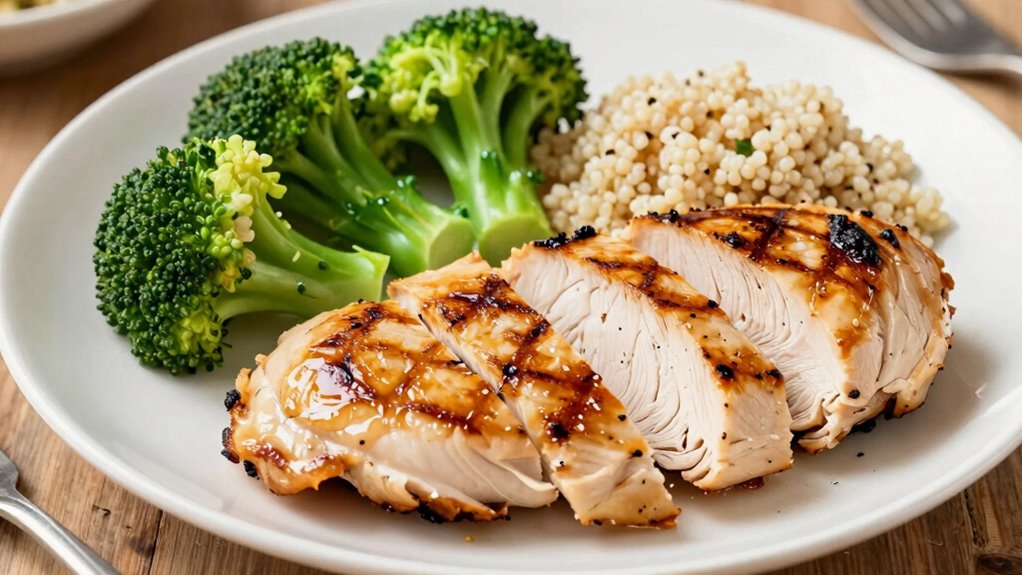

To maximize muscle growth, spread high-quality protein evenly across your day with 20-30 grams every 3-4 hours. This “per meal” approach keeps amino acids steady, especially leucine, and stimulates continuous protein synthesis. Proper timing supports muscle repair and prevents gaps that hinder progress. Focus on quality sources like lean meats, eggs, or dairy, and adopt this simple strategy to improve your results. Keep going to discover how fine-tuning your intake can boost muscle gains even more.

Get workout gear delivered free with Prime
- Fast, free delivery on millions of items
- Prime Video, Amazon Music and more included
- Member-only deals all year
Key Takeaways
- Distribute 20-30 grams of high-quality protein evenly every 3-4 hours to maximize muscle synthesis.
- Focus on quality sources like lean meats, dairy, eggs, beans, and legumes for complete amino acids.
- Consistent protein intake throughout the day maintains a positive nitrogen balance essential for muscle growth.
- Proper timing and even distribution support ongoing muscle repair and reduce periods of amino acid deficiency.
- The ‘per meal’ approach aligns with natural physiology, making muscle building easier and more effective.

Have you ever wondered why protein is often called the building block of muscle? It’s because your body relies heavily on protein to repair and grow muscle tissue after workouts. When you consume dietary protein, it triggers a process called protein synthesis, which is fundamentally the body’s way of turning that protein into new muscle fibers. The key to maximizing muscle gains is to provide your body with enough high-quality dietary protein at the right times, especially during each meal.
Protein synthesis happens constantly, but it spikes after resistance training or intense physical activity. To take full advantage of this, you need to guarantee your meals contain enough protein to support this process. That’s where the “per meal” trick comes in. Instead of cramming all your daily protein into one or two meals, you distribute it evenly across your day. Eating, for example, 20 to 30 grams of high-quality protein every 3 to 4 hours keeps your body in a state of muscle-building readiness. This consistent supply of dietary protein provides your body with the necessary amino acids—especially leucine, which is a key trigger for initiating protein synthesis.
Distribute 20-30g of high-quality protein every 3-4 hours to optimize muscle growth.
By focusing on each meal, you’re preventing periods of significant amino acid deficiency, which can hinder muscle repair and growth. When your body has a steady stream of dietary protein, it can efficiently repair damaged muscle fibers and synthesize new ones. This approach also helps maintain a positive nitrogen balance, which is vital for muscle growth. Plus, evenly spreading your protein intake helps you avoid overeating at one meal and under-consuming at others, leading to better overall nutrition and muscle development.
Furthermore, selecting high-quality sources of dietary protein, like lean meats, dairy, eggs, or plant-based options such as beans and legumes, ensures you get a complete set of amino acids necessary for ideal protein synthesis. This timing of protein intake is crucial because it aligns with the body’s natural processes and maximizes muscle repair. Remember, the goal isn’t just about hitting a daily protein number but making sure each meal contributes enough to keep your muscles in an anabolic state.
high protein lean meat supplements
As an affiliate, we earn on qualifying purchases.
As an affiliate, we earn on qualifying purchases.
Frequently Asked Questions
How Much Protein Should I Consume per Meal for Optimal Muscle Growth?
You should aim for about 20-30 grams of protein per meal to maximize muscle growth. This amount optimizes protein absorption and supports muscle repair. Spacing your meals every 3-4 hours helps your body use protein efficiently, preventing wastage. Consuming this consistent amount across your meals guarantees you provide your muscles with a steady supply of amino acids, boosting your gains and recovery effectively.
Does Timing of Protein Intake Affect Muscle Repair and Development?
Timing your protein intake is like catching the right wave—it’s essential for muscle repair and growth. Consuming protein evenly throughout your meals boosts nutrient absorption and keeps your muscles fueled. While immediate post-workout intake helps, the overall meal timing matters more for sustained development. Focus on spreading your protein intake to maximize muscle repair, ensuring your body has a steady supply of amino acids when it needs them most.
Are Plant-Based Proteins as Effective as Animal-Based Sources for Muscle Building?
Plant-based alternatives can be just as effective as animal-based proteins for muscle building if you choose options with complete amino acid profiles, like quinoa or soy. While many plant proteins are incomplete, combining different sources guarantees you get all essential amino acids. Focus on variety and adequate intake, and you’ll support muscle repair and growth effectively, even without animal products.
Can Consuming Protein Too Frequently Be Harmful or Counterproductive?
Consuming protein too frequently can lead to protein overload, which strains your kidneys and may cause dehydration. It can also cause nutrient imbalance, making it harder for your body to absorb other essential nutrients. Instead, space your protein intake evenly throughout the day to optimize muscle building and avoid these issues. Listening to your body’s signals and sticking to recommended amounts helps prevent counterproductive effects from excessive protein consumption.
What Are the Best Protein Sources for Lactose Intolerant Individuals?
Did you know that up to 75% of the world’s population is lactose intolerant? For you, dairy alternatives and lactose-free options are great choices. Consider plant-based proteins like beans, lentils, tofu, and tempeh, or lactose-free dairy products like lactose-free milk and yogurt. These sources provide quality protein without causing discomfort, helping you meet your muscle goals comfortably and effectively.
best whey protein powder for muscle building
As an affiliate, we earn on qualifying purchases.
As an affiliate, we earn on qualifying purchases.
Conclusion
So, are you ready to maximize your muscle gains? Remember, spreading your protein intake evenly across meals makes a difference. It’s simple, effective, and easy to implement—no need for supplements or complicated routines. Just focus on hitting that ‘per meal’ target and stay consistent. Why not give it a try today? Your muscles will thank you, and you’ll see progress faster than you might expect. Ready to take your nutrition to the next level?
plant-based protein powder for muscle gain
As an affiliate, we earn on qualifying purchases.
As an affiliate, we earn on qualifying purchases.
protein shaker bottle for workout
As an affiliate, we earn on qualifying purchases.
As an affiliate, we earn on qualifying purchases.
Halloween Picks
halloween
As an affiliate, we earn on qualifying purchases.