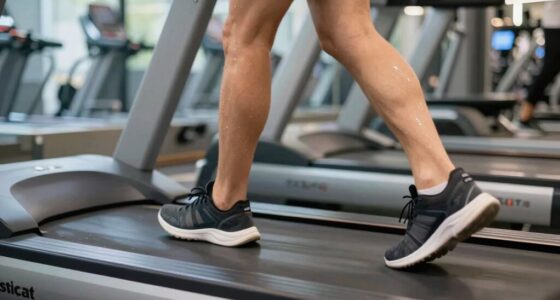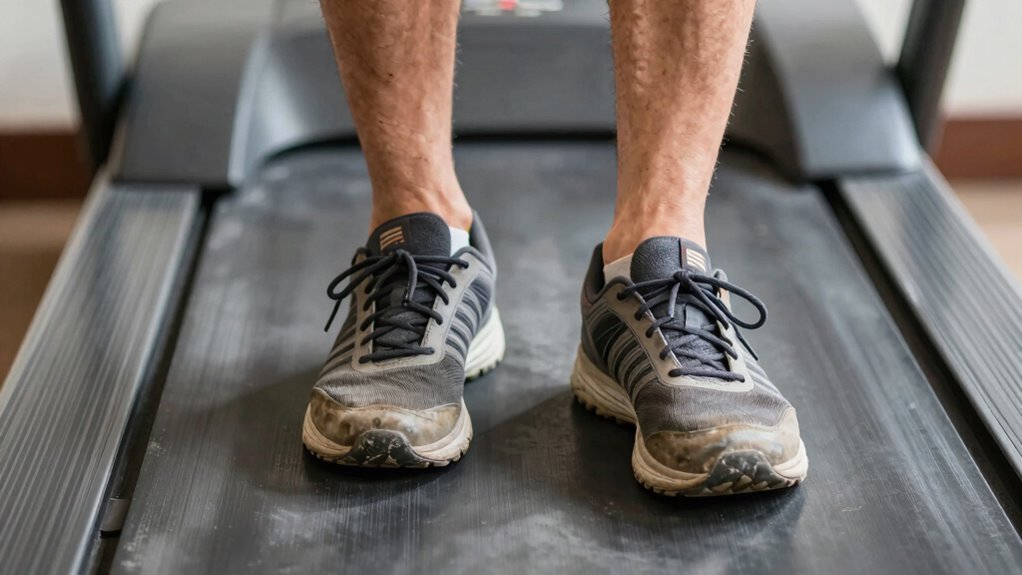
If your feet go numb on a treadmill, start by checking your footwear fit—shoes that are too tight cut off circulation, while loose ones cause friction. Also, examine your gait and running form; overstriding or poor posture can increase pressure on certain areas. Adjusting the treadmill incline may help reduce pressure points. If numbness persists, there are additional factors to take into account—keep exploring for ways to keep your feet comfortable and healthy during workouts.

Get workout gear delivered free with Prime
- Fast, free delivery on millions of items
- Prime Video, Amazon Music and more included
- Member-only deals all year
Key Takeaways
- Ensure your shoes fit properly with enough toe box room to prevent pressure points and nerve compression.
- Check and adjust the treadmill incline to avoid uneven pressure distribution on your feet.
- Maintain proper running technique, including soft landing and avoiding overstriding, to reduce foot pressure.
- Take regular breaks, stretch, and monitor circulation to prevent numbness caused by fatigue or swelling.
- Seek professional advice if numbness persists despite adjustments, indicating possible nerve or circulation issues.
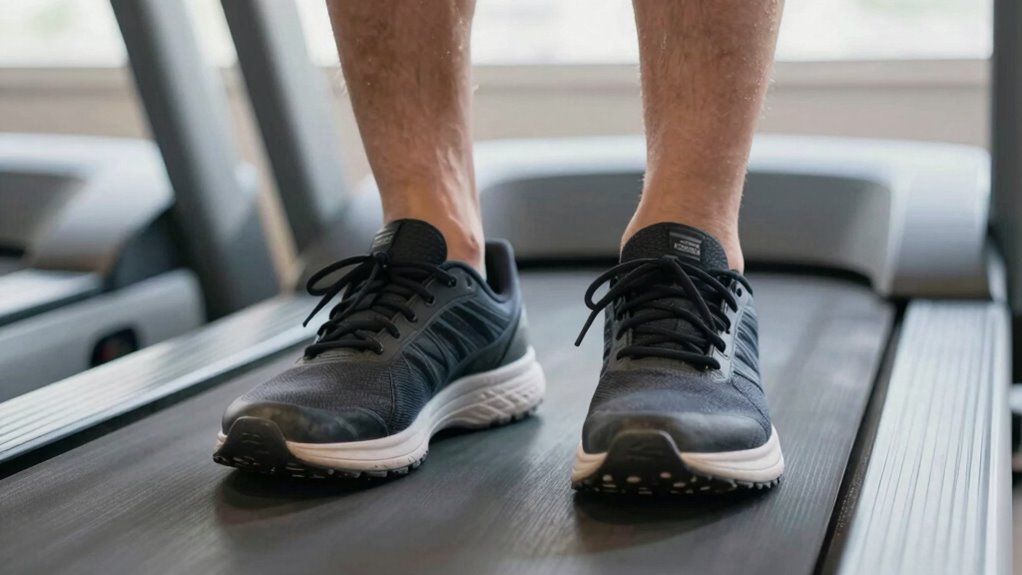
Have you ever noticed your feet going numb while running on a treadmill? It’s a common experience, and often, the cause isn’t something serious. Instead, it’s usually linked to how your footwear fits or the treadmill’s incline setting. When your shoes don’t fit properly, they can compress nerves or blood vessels in your feet, leading to numbness. Shoes that are too tight cut off circulation, while shoes that are too loose cause your foot to slide, creating friction and pressure points. Ensuring your footwear fit is just right can make a big difference. You want a snug fit that secures your foot without squeezing it. Look for shoes with enough room in the toe box to prevent pinching, but not so loose that your foot slides around. Proper fit helps distribute pressure evenly and reduces nerve compression, which are common culprits of numbness.
Properly fitting shoes prevent nerve compression and pressure points, reducing numbness during treadmill runs.
Another factor to consider is the treadmill incline. When you increase the incline, it shifts your foot’s positioning and alters your gait. A steep incline can put extra pressure on certain parts of your foot or cause you to change your stride to compensate. This adjustment might lead to uneven weight distribution, increasing the likelihood of numbness or tingling sensations. You might find that running at a flat or moderate incline feels more comfortable, especially if you’re prone to foot numbness. Experimenting with different incline levels can help you identify the setting that minimizes pressure points and keeps your feet healthy during your workout. Additionally, proper footwear fit and treadmill settings work together to prevent discomfort and numbness during exercise. Paying attention to foot mechanics can also help you identify any gait issues that contribute to numbness and address them proactively. Incorporating foot strengthening exercises into your routine can improve overall foot stability and reduce numbness. Being aware of circulation and how it affects your feet during exercise can also provide insight into preventing numbness. Regularly adjusting your exercise routine and paying attention to your body’s signals can help prevent discomfort and ensure a safer workout.
Check your running technique. Sometimes, improper form—like overstriding or not engaging your core—can increase pressure on your feet and legs, contributing to numbness. Make sure you land softly and maintain a natural stride. Proper posture, combined with appropriate footwear fit and controlled treadmill incline, can significantly reduce discomfort. Also, consider your running duration; prolonged activity without breaks can lead to swelling or fatigue that exacerbates numbness. Taking short breaks or stretching your feet and ankles during your workout can improve circulation and lessen numbness.
Ultimately, paying attention to these details can help you enjoy your treadmill sessions without the distraction of numb feet. Double-check your footwear fit, adjust the treadmill incline to a manageable level, and refine your running form. If numbness persists despite these adjustments, it’s wise to consult a healthcare professional, as it might indicate underlying nerve issues or circulation problems. But generally, a little tweaking in how you approach your treadmill workouts can keep your feet comfortable and healthy every time you hit the belt.
Products Worth Considering

Hyperice Hypervolt 3 Pro Percussion Massage Gun with Heated Head and Carry Case

BowFlex Results Series SelectTech Adjustable Dumbbells, Pair

Therabody Theragun Mini 3rd Generation Percussive Massage Gun, Black
As an affiliate, we earn on qualifying purchases.
Frequently Asked Questions
Can Improper Footwear Cause Foot Numbness During Treadmill Exercise?
Yes, improper footwear can cause foot numbness during treadmill exercise. If your shoes lack proper arch support or don’t fit well, they can restrict blood flow and compress nerves, leading to numbness. Make certain you wear shoes with good arch support and a proper fit, avoiding tight or loose shoes. Prioritize comfort and support to prevent numbness and guarantee a safer, more enjoyable workout.
Does Dehydration Contribute to Numbness in the Feet While Running?
Dehydration can contribute to numbness in your feet while running because it impacts your hydration level and electrolyte balance. When you’re dehydrated, your body struggles to maintain proper nerve and muscle function, which can cause tingling or numbness. Staying well-hydrated and replenishing electrolytes helps support nerve signaling and muscle performance, reducing the risk of numbness during treadmill exercise. Make sure to drink fluids and include electrolytes in your routine.
How Does Foot Posture Affect Numbness on the Treadmill?
Your foot posture plays a vital role in numbness on the treadmill. Poor ankle alignment or inadequate arch support can cause uneven pressure and nerve compression, leading to numbness. If your arches collapse or your ankles shift inward or outward, it disrupts blood flow and nerve signals. Ensuring proper arch support and correcting ankle alignment can help prevent this numbness, keeping your run comfortable and safe.
Are There Specific Medical Conditions Linked to Treadmill Foot Numbness?
Yes, certain medical conditions like circulatory health issues and nerve compression are linked to treadmill foot numbness. Poor circulatory health can restrict blood flow, causing numbness during exercise. Nerve compression, often from herniated discs or tight footwear, can also lead to numbness or tingling. If you experience persistent numbness, it is crucial to consult a healthcare professional to identify underlying issues and prevent further complications.
Can Treadmill Incline or Speed Impact Foot Numbness?
Adjusting treadmill incline or speed can definitely impact foot numbness. For example, a runner increasing the incline without proper footwear might experience pressure on nerves, causing numbness. Your treadmill settings, especially high speeds or steep inclines, strain your feet and legs, while footwear compatibility guarantees proper support. To avoid numbness, start with moderate settings and wear well-fitted shoes that support your arches and cushion impact effectively.
Conclusion
Next time your feet go numb on the treadmill, imagine your shoes as a gentle bridge, guiding blood smoothly through your toes. Take a moment to check your laces, your sock fit, and your stride—each step can restore the steady flow of energy. With a little attention, you’ll feel that rush of freshness returning, like a invigorating breeze clearing the fog. Keep moving confidently, knowing you’re tuned in to your body’s signals, ready to conquer every mile.