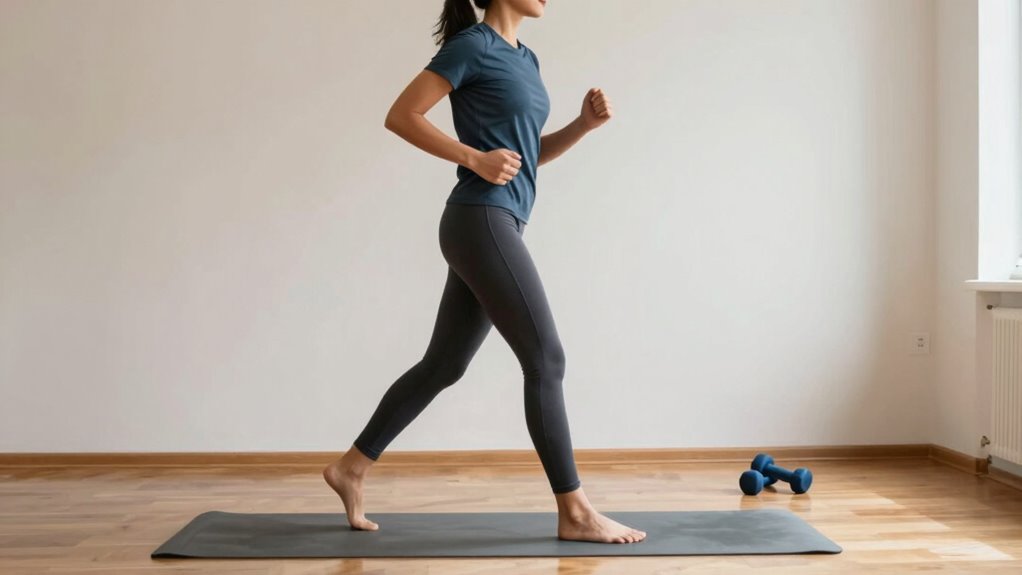

To shift from walking to jogging at home safely, start by adding short jogging intervals into your walks, gradually increasing their duration over time. Maintain proper running form, focusing on an upright posture, relaxed shoulders, and soft midfoot landings. Breathe steadily and deeply to prevent fatigue. Remember to rest and recover between sessions, and incorporate strength and flexibility exercises. Keep progressing slowly, and you’ll master the shift smoothly—there’s more to optimize your journey ahead.

Get workout gear delivered free with Prime
- Fast, free delivery on millions of items
- Prime Video, Amazon Music and more included
- Member-only deals all year
Key Takeaways
- Gradually increase your pace by alternating brisk walking with short jogging intervals.
- Focus on maintaining proper running form, including upright posture and relaxed shoulders.
- Incorporate deep, rhythmic breathing to build endurance without fatigue.
- Ensure adequate rest days between sessions to allow muscle recovery.
- Add strength and flexibility exercises to support your transition and prevent injury.

Thinking about switching from walking to jogging at home? Making that shift can boost your fitness, but it’s essential to do it gradually to avoid injury or burnout. The first step is understanding your running form. When you start jogging, focus on maintaining an upright posture, keeping your shoulders relaxed, and landing softly on your midfoot rather than your heels. Proper running form helps reduce the impact on your joints and makes your jogs more efficient. Keep your arms bent at about 90 degrees, swinging them naturally with each stride, which helps with momentum and balance. As you pick up pace, avoid leaning forward or backward excessively—staying centered over your hips ensures better control and reduces strain.
Equally important are your breathing techniques. When you’re just beginning to jog, it’s common to feel out of breath, but controlling your breathing can make the experience more comfortable. Try to breathe deeply through your nose and mouth in a steady, rhythmic pattern—inhale for about three to four steps and exhale for the same. This helps deliver oxygen more efficiently to your muscles, preventing fatigue early on. Focus on maintaining a relaxed breathing pattern; tense shoulders or shallow breaths will only tire you faster. As your endurance improves, you can experiment with different breathing rhythms, but initially, a consistent, deep breathing pattern will serve you well. Incorporating proper technique during your jogs can help prevent injuries and improve overall performance. Additionally, incorporating adequate rest and recovery time between sessions will help your muscles adapt and grow stronger, reducing the risk of overuse injuries. It’s also beneficial to incorporate muscle strengthening exercises to support your running and improve stability. Incorporating core stability exercises can further enhance your running efficiency and reduce injury risk. Including flexibility training, such as stretching or yoga, can also contribute to better muscle elasticity and reduce tightness that may lead to injury. Also, incorporate some warm-up exercises beforehand, such as leg swings or light stretching, to prepare your muscles and reduce injury risk. After each session, spend a few minutes cooling down with gentle walking and stretching, especially focusing on your calves, hamstrings, and hip flexors.
As an affiliate, we earn on qualifying purchases.
Frequently Asked Questions
How Often Should I Jog Each Week as a Beginner?
As a beginner, start by jogging 2-3 times a week, giving your body time to adapt. Before each session, do a proper warm-up to prevent injury, and stay hydrated with water or electrolyte drinks. Listen to your body—if you feel sore or tired, take extra rest days. Gradually increase your jogging duration and intensity, and remember that consistency over time will help you build endurance safely.
What Are the Signs I Should Stop Jogging Immediately?
Imagine the cool breeze suddenly turns sharp, and your chest tightens—stop jogging immediately. Signs to halt include dizziness, severe pain, or shortness of breath. Stay hydrated with hydration tips like sipping water regularly, and make certain proper stretching before jogging to prevent injury. If you feel faint or experience joint pain, it’s time to rest. Listening to your body keeps you safe and helps you avoid overexertion.
How Long Should My First Jogging Session Last?
For your first jogging session, aim for about 10-15 minutes, gradually increasing if comfortable. Start with a proper warm-up to loosen muscles and prevent injury. Remember to stay hydrated by sipping water before and after your run, and listen to your body. Keep the pace light and steady, focusing on form. If you feel tired or uncomfortable, it’s okay to cut it short and build up gradually.
What Footwear Is Best for Transitioning From Walking to Jogging?
Think of your feet as explorers setting out on a new journey. For this adventure, choose footwear options that offer support and cushioning, like neutral running shoes or stability trainers, which are designed for switching. Running shoe types vary from lightweight racers to cushioned trainers; pick the one that matches your comfort and gait. This helps prevent injury and makes your shift from walking to jogging smooth and enjoyable.
How Can I Prevent Injuries During the Transition Process?
To prevent injuries during your shift, always do a proper warm-up to loosen muscles and increase blood flow. Stay hydrated by drinking water before, during, and after your session to keep your body functioning well. Listen to your body; if you feel pain or excessive fatigue, scale back and rest. Gradually increase your jogging intensity and duration, allowing your muscles and joints to adapt safely.
As an affiliate, we earn on qualifying purchases.
Conclusion
Remember, shifting from walking to jogging is like climbing a gentle hill—you don’t want to rush and risk losing your momentum. Take small steps, listen to your body, and celebrate each milestone. With patience and consistency, you’ll find yourself smoothly gliding into jogging, feeling stronger each day. Keep your goal in sight, stay motivated, and enjoy the journey—your progress will be as steady as the sunrise, brightening your fitness path one step at a time.
breathable workout clothing for jogging
As an affiliate, we earn on qualifying purchases.
As an affiliate, we earn on qualifying purchases.
stretching and warm-up exercises for runners
As an affiliate, we earn on qualifying purchases.
As an affiliate, we earn on qualifying purchases.
Columbus Day / Indigenous Peoples' Day Picks
long weekend sales
As an affiliate, we earn on qualifying purchases.