TL;DR

Get workout gear delivered free with Prime
- Fast, free delivery on millions of items
- Prime Video, Amazon Music and more included
- Member-only deals all year
Fit&Well published a yoga therapist’s seven-part seated movement routine for older adults, including arm raises, twists, side bends and cat-cow. The therapist says the movements can be adapted to each person’s ability; the report does not present clinical evidence that the routine improves health outcomes.
Fit&Well has published a seven-part chair-based movement sequence recommended by a yoga therapist who works with older adults, including people with Parkinson’s disease, other movement disorders and chronic health conditions. The routine uses gentle seated movements and encourages participants to adapt them to their own capacity, offering an option for people who are uncomfortable with or unable to do floor-based yoga.
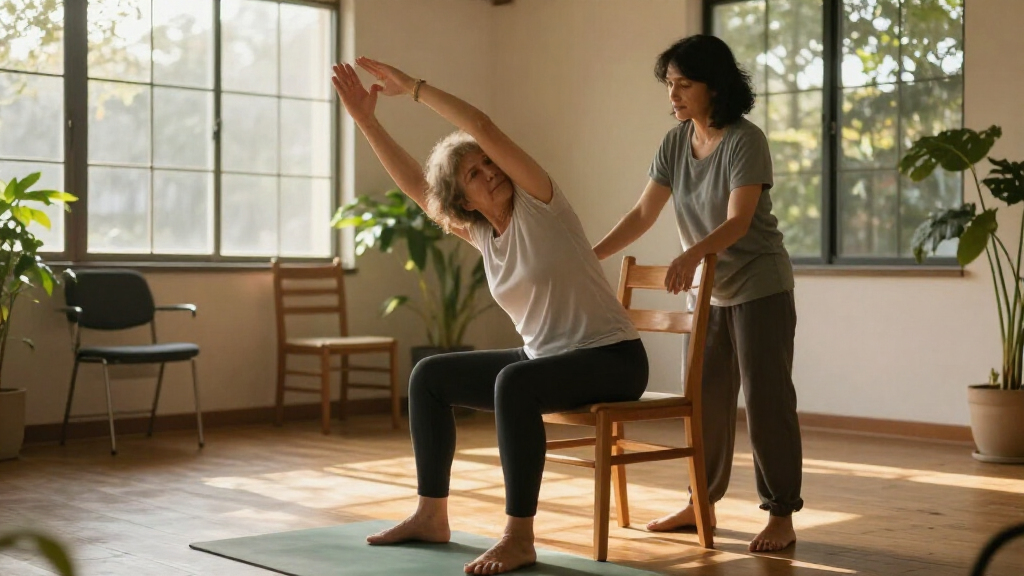
The sequence begins with a minute of settling into a supportive seated position: feet flat on the floor, torso upright and hands resting in the lap. It then moves through arm sweeps into a prayer position, seated torso twists, single- and double-arm raises, side bends, a seated version of cat-cow and forward folds. The report suggests repeating most movements three to five times, or three times on each side for the twists and bends.
Several moves pair breath with movement. Participants inhale while lifting their arms or returning upright, and exhale while lowering their arms, rotating or folding forward. For a side bend, the report suggests holding the chair rather than extending the lower arm if extra stability is needed. During forward folds, participants can keep their hands on their knees for support. Looking up at raised hands is optional.
The therapist says the practice is intended to support mindful movement, including stretching muscles and mobilizing joints, while allowing people to move from a chair. Those are the therapist’s descriptions of the practice, not measured outcomes reported in the article. The supplied report does not cite a clinical trial or provide evidence that this particular routine treats a health condition or produces specific fitness results.
A Seated Option for Gentle Movement
The routine gives readers a practical example of how movement can be adjusted for people who find floor exercises inaccessible or prefer the security of a chair. Its instructions include alternatives for two movements, and the therapist’s central guidance is to work within the range and capacity available to each person rather than trying to achieve a prescribed pose. That approach may make the sequence easier to adapt, though the article does not establish that it is suitable for every older adult or every medical condition.
For readers and caregivers, the distinction between an accessible movement idea and a proven health intervention matters. The report presents the flow as gentle and potentially energizing based on the therapist’s experience with classes. It does not provide data on safety, participation, changes in mobility or other outcomes. Anyone weighing exercise options for a particular condition may need advice from a clinician or qualified movement professional familiar with their needs.
Products Worth Considering

Fitbit Charge 6 Fitness Tracker – Porcelain/Silver

LEVOIT Vital 200S-P Smart Air Purifier for Large Rooms

Oral-B iO Series 9 Limited Rechargeable Electric Toothbrush with 7 Cleaning Modes
As an affiliate, we earn on qualifying purchases.
How the Chair Flow Is Structured
The therapist quoted in the Fit&Well report says chair-based yoga is used with people who lack the mobility for floor-based movement as well as those who are simply more comfortable seated. The therapist describes working mainly with older adults living with Parkinson’s, other movement disorders and chronic health conditions, and says the postures are gentle while still capable of leaving participants feeling uplifted. These are observations from the therapist’s work, rather than findings from a study detailed in the report.
The sequence is designed to be done with a sturdy chair and enough clear space to raise the arms. It progresses from settling and breathing to larger movements of the arms and torso, then finishes with spinal movements and forward folds. The article stresses that there is no required shape or position: participants are encouraged to explore the movement accessible to them. The supplied source does not specify the therapist’s name, the routine’s publication date, or a formal screening process for participants.
““I encourage everyone to move within the range and capacity of their body—there’s no particular shape or position to achieve.””
— The yoga therapist quoted in Fit&Well
Evidence and Individual Suitability
The supplied article does not identify the therapist, give the report’s publication date or cite research testing this specific seven-move sequence. It also does not establish how often the routine should be practiced, whether it has been evaluated for particular diagnoses, or what outcomes participants may expect. The therapist’s descriptions of feeling calmer or more energized should be understood as experience-based observations, not guaranteed effects.
The report advises readers to stay within their own ability, but it does not provide detailed medical screening instructions or explain what symptoms should prompt someone to stop. The routine may not suit everyone, particularly where balance, pain, recent surgery or another health concern affects movement. Readers with pre-existing conditions or uncertainty about safe activity should seek guidance from a healthcare professional before trying it, and should stop if a movement causes pain, dizziness or unusual discomfort.
How Readers Can Approach the Routine
The Fit&Well article presents the sequence as an activity readers can try with a stable chair and clear space, adjusting or skipping movements to match their comfort and ability. It offers no follow-up study, clinical guidance or announced update in the supplied material. Readers should treat it as general exercise guidance rather than a prescribed program, and seek professional advice when a health condition may affect safe movement.
Key Questions
What exercises are included in the chair routine?
The seven parts are a seated settling exercise, arm arcs into prayer, torso twists, single- and double-arm raises, side bends, seated cat-cow and forward folds. Most are suggested for three to five repetitions; the twists and side bends are done on both sides.
What equipment does the routine require?
The report calls for a sturdy chair and enough surrounding space to raise the arms comfortably. It does not list other equipment.
Can the movements be modified?
Yes. The report suggests holding the chair during side bends for extra stability and placing hands on the knees during forward folds for support. The therapist also advises moving within personal capacity rather than trying to achieve a particular position.
Does the report prove the routine improves health or energy?
No. Fit&Well reports the therapist’s experience and describes the routine as gentle and energizing, but the supplied material does not cite a clinical study or provide measured health outcomes.
Should someone with a health condition check before trying it?
People with pre-existing conditions or concerns about balance, pain or safe movement should ask a healthcare professional for individualized guidance. Stop if a movement causes pain, dizziness or unusual discomfort.
Source: fitandwell.com