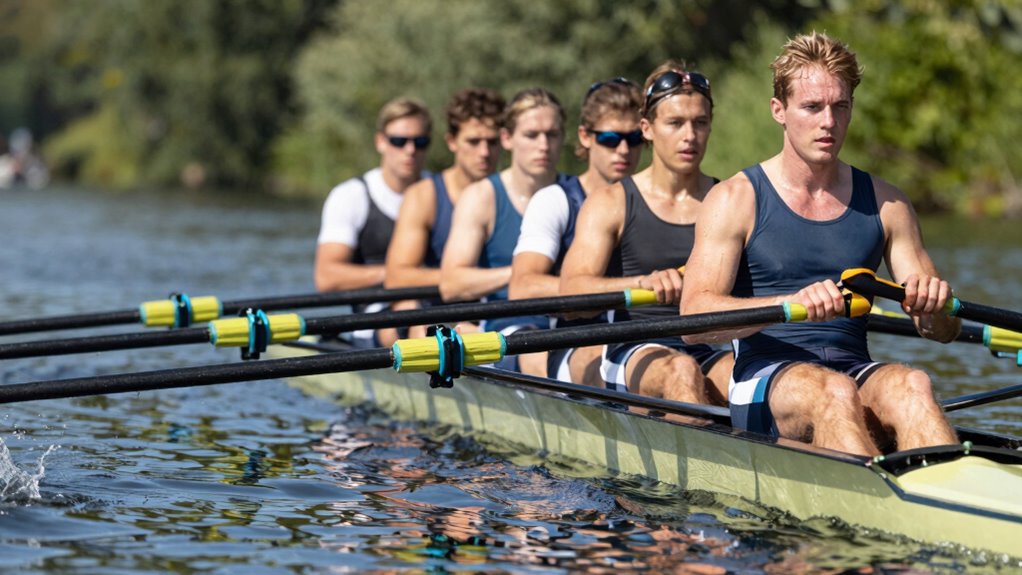
To avoid burning out early, start your rowing workout at a steady, manageable pace by focusing on consistent effort instead of speed. Keep your back straight, drive with your legs, and monitor your stroke rate and split times to stay balanced. Avoid going all-out at the start—set a challenging yet sustainable rhythm that you can maintain beyond minute 3. Continue this approach, and you’ll learn more about mastering your pacing for maximum endurance.
Key Takeaways
- Start with a moderate, sustainable pace to conserve energy for the entire workout.
- Use a consistent stroke rate and split time to avoid early burnout.
- Focus on proper technique—drive with legs, keep back straight—to maximize efficiency.
- Monitor your effort regularly and adjust intensity to maintain a steady effort.
- Incorporate interval training to build pacing skills and prevent sudden fatigue.
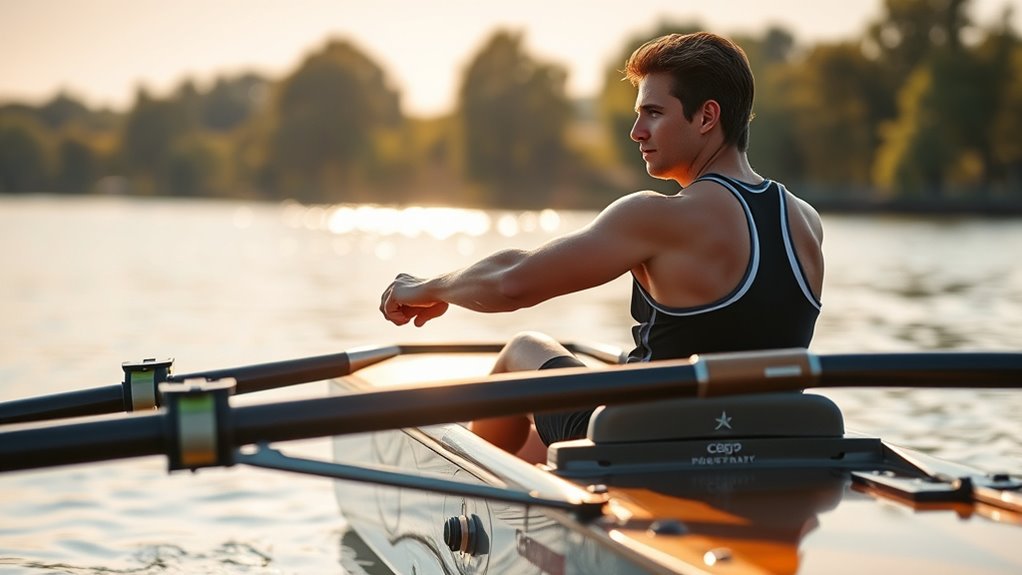
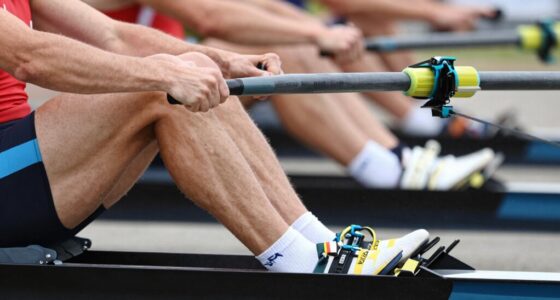
Pacing a rowing workout effectively is essential to maximize your performance and prevent burnout. When you start, it’s tempting to go all-out, but maintaining a consistent pace ensures you stay strong throughout the session. One of the key aspects to focus on early on is your rowing technique. Proper form not only conserves energy but also reduces the risk of injury. Keep your back straight, engage your core, and drive with your legs rather than relying solely on your arms. As you pull the handle, imagine pushing through your heels and squeezing your shoulder blades together. This efficient movement pattern helps you conserve stamina and maintain a steady rhythm. If you’re new to rowing, practicing proper technique might feel awkward at first, but it becomes second nature with consistent effort. Perfecting your form also means you’re less likely to waste energy, which is vital for pacing your workout effectively.
Alongside technique, equipment selection plays a significant role in how well you can pace yourself. Make sure your rowing machine is set up correctly—adjust the foot straps so your feet are snug but comfortable, and set the damper or resistance level to suit your fitness level. A higher damper setting might feel more intense, but it can lead to quicker fatigue if you’re not used to it. For pacing purposes, it’s better to start with a moderate resistance that allows for smooth, controlled strokes. This setup helps you focus on maintaining a consistent stroke rate and power output, instead of fighting against the machine. Invest in a good-quality rowing machine if possible, as it provides more reliable feedback and smoother operation, making it easier to keep an even pace. Remember, equipment that’s poorly maintained or improperly adjusted can throw off your rhythm and cause you to burn out early.
Once your technique is sound and your equipment is properly set up, you’ll find it easier to establish a sustainable pace from the outset. Use a stopwatch or the built-in monitor to keep track of your stroke rate and split times. Aim for a pace that feels challenging but manageable—something that pushes you without pushing you over the edge early on. As your workout progresses, focus on maintaining that same effort, rather than trying to sprint or slow down drastically. This balance between effort and conservation will help you avoid the dreaded minute three burnout and keep you rowing strong through the entire session. Additionally, incorporating interval training can help improve your pacing skills over time. Remember, pacing is about consistency, not speed, and mastering your technique along with proper equipment selection will set you up for success every time.

YPOO Rowing Machine for Home, 350 LB Capacity, 16-Level Silent Resistance, Magnetic Rowing Machines for Home Foldable, Full-Body Workout Compact Rowing Machine for Cardio & Strength with APP Support
【Power & Silent Magnetic Resistance】Enjoy powerful and quiet workouts with the YPOO Magnetic Rowing Machine. Featuring 99 lbs...
As an affiliate, we earn on qualifying purchases.
Frequently Asked Questions
How Do I Adjust My Pace for Different Rowing Distances?
To adjust your pace for different rowing distances, start by setting a steady stroke rate based on your target distance. For shorter distances, increase your split time and stroke rate to push harder, while for longer rows, lower both to conserve energy. Keep an eye on your split time throughout, and adapt your stroke rate to maintain a consistent effort, ensuring you don’t burn out early or finish too slowly.
What Are Signs of Overexertion During a Workout?
If you notice rapid, shallow breathing, muscle fatigue, or dizziness, you’re likely overexerting yourself. These signs show your body struggles to keep up, so slow down and focus on breathing techniques—deep, controlled breaths—to recover. Stay hydrated with hydration tips like sipping water regularly. Recognizing these signs early helps prevent burnout and ensures you stay safe and effective during your workout.
How Can I Improve My Rowing Endurance Quickly?
To improve your rowing endurance quickly, incorporate interval training into your routine. Alternate high-intensity efforts with recovery periods to boost stamina and cardiovascular fitness. Focus on strength building by consistently increasing resistance and maintaining proper form. Stay consistent, challenge yourself gradually, and listen to your body. This approach helps you develop endurance faster, making each workout more effective and pushing you closer to your fitness goals.
Should I Warm up Before or After Pacing Strategies?
Think of your muscles as a car engine—warming up before you start racing keeps everything running smoothly. You should do warm-up routines before your pacing strategies to prepare your body for the effort ahead. Don’t forget the cooldown importance afterward; it helps your muscles recover and reduces soreness. Skipping warm-up or cooldown risks injury and hampers progress, so make these routines part of your rowing rhythm.
How Does Pacing Differ for Novice Versus Advanced Rowers?
As a novice, you should focus on steady, manageable pacing to develop technique refinement and build mental stamina. Advanced rowers can push harder, using pacing strategies that challenge their limits while maintaining efficiency. You’ll need to adjust your pace based on your experience level, ensuring you don’t burn out early. Proper pacing helps you refine technique, conserve energy, and strengthen mental stamina, whether you’re just starting or an experienced athlete.

Rowing Machine, LUBBYGIM Magnetic Rower Machine, Foldable, LCD Display
🎁✨【Build Your Dream Body】Ultimate Healthy Choice!This Magnetic Rower Machine for Beginners and Pros Full Body Workout Exerciser Training...
As an affiliate, we earn on qualifying purchases.
Conclusion
Mastering your rowing pace is the secret to surviving—no, conquering—those brutal workouts. Stick to your plan, listen to your body, and don’t let the temptation to push too hard in the first few minutes ruin everything. If you stay consistent and paced right, you’ll glide through each session like a rowing champion, not a victim of exhaustion. Remember, your stamina is the true powerhouse—treat it like royalty, and you’ll never fear minute three again!

Rowing Machine for Home, 350 LB Capacity, 16-Level Silent Resistance, Magnetic Rowing Machines for Home Foldable, Full-Body Workout Compact Rowing Machine for Cardio & Strength with APP Support
【180° Foldable Design】: The innovative quick-folding design allows the rowing machines fold 180° effortlessly without any tools. With...
As an affiliate, we earn on qualifying purchases.

ANLUA Magnetic Rowing Machine for Home, Sculls-Style 120° Arc Handles, 16-Level 80lbs Ultra-Quiet <25dB Resistance, Heavy-Duty 350lbs Capacity Compact Full-Body Rower (Entry - Standard)
1. SCULLS-STYLE ROWING WITH 120° ARM MOTION Unlike straight-bar rowers, dual arc-shaped handles simulate sculling with 120° outward...
As an affiliate, we earn on qualifying purchases.