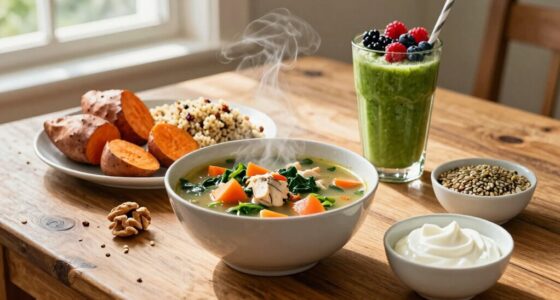

Eating protein at every meal helps keep your amino acid levels steady, making muscle recovery easier and more efficient. It supports energy, reduces soreness, and promotes muscle growth by providing a consistent supply of nutrients. Pairing plant-based options like beans and grains boosts absorption and guarantees your body gets what it needs. Following this habit can improve your overall health and recovery process—stick with it, and you’ll discover even more ways to optimize your fitness routine.

Get workout gear delivered free — and shop member deals
- Fast, free delivery on millions of items
- Access to Prime Big Deal Days deals on October 6–7
- Prime Video, Amazon Music and more included
Key Takeaways
- Distributing protein evenly across meals maintains steady amino acid levels for continuous muscle repair.
- Consuming protein within 30-60 minutes post-workout accelerates recovery processes.
- Pairing plant proteins with grains enhances amino acid completeness, improving absorption and recovery.
- Regular, consistent intake prevents nutrient dips, supporting sustained energy and muscle health.
- Incorporating diverse plant-based proteins ensures a reliable amino acid supply for optimal recovery.

Eating protein at every meal can considerably boost your energy levels and support muscle growth. When you make a habit of including protein consistently throughout the day, you help your body recover faster from workouts and daily wear and tear. One way to diversify your sources is by exploring plant-based alternatives, which are gaining popularity for their nutritional benefits and environmental impact. These options, like beans, lentils, tofu, tempeh, and quinoa, provide high-quality protein that can be just as effective as animal products in supporting muscle repair and recovery. They also come with additional fiber and antioxidants, which promote overall health and inflammation reduction. Incorporating plant-based proteins into your meals guarantees you’re not only fueling your muscles but also maintaining a balanced diet rich in nutrients.
Timing and absorption are key when it comes to maximizing the benefits of your protein intake. Eating protein at regular intervals throughout the day keeps your amino acid levels steady, which is vital for muscle synthesis and repair. For example, having a source of protein within 30 minutes to an hour after your workout can jump-start recovery by supplying your muscles with the nutrients they need to rebuild. Spreading your protein intake evenly across meals prevents dips in amino acid levels, ensuring your body has a constant supply to support muscle maintenance. Additionally, understanding how different proteins are absorbed helps you optimize your intake. Plant-based proteins often contain fiber and phytochemicals that slow digestion, leading to a more sustained release of amino acids. While this slower absorption might seem like a downside, it actually helps sustain muscle repair over a longer period, especially when combined with other protein sources. Plant-based proteins can also contribute to a more sustainable and eco-friendly diet, aligning with healthier lifestyle choices.
To make the most of plant-based alternatives, pair them with other nutrient-dense foods that enhance absorption. For instance, combining legumes with grains like rice or corn creates a complete protein profile, maximizing amino acid availability. Cooking methods also influence how well your body absorbs nutrients; soaking, sprouting, or fermenting beans and grains can reduce anti-nutrients that hinder absorption. By paying attention to the timing and combining various plant-based options thoughtfully, you guarantee your muscles get a steady, reliable supply of amino acids, making recovery more efficient. When you prioritize consistent protein intake and choose your sources wisely, you’ll notice improvements not just in recovery times but also in overall energy and muscle health.
As an affiliate, we earn on qualifying purchases.
Frequently Asked Questions
Can Vegetarians Meet Protein Needs Without Animal Products?
Yes, as a vegetarian, you can meet your protein needs through plant-based sources like beans, lentils, tofu, and quinoa. To guarantee you’re getting all essential amino acids, focus on nutrient pairing—combine grains with legumes or nuts with seeds. Eating a variety of these foods throughout the day helps you maximize protein intake and supports your recovery and overall health without relying on animal products.
How Much Protein Should I Aim for per Meal?
Ever wondered how much protein you should aim for at each meal? Aim for about 20-30 grams to support your recovery and maintain energy levels. When meal planning, focus on incorporating protein diversity—think beans, nuts, seeds, or plant-based dairy—to guarantee you’re getting a variety of amino acids. This balanced approach helps your body recover more efficiently and keeps your meals interesting and satisfying.
Are Protein Supplements Necessary for This Habit?
Protein supplements aren’t necessary for this habit, but they can be helpful if your dietary preferences limit natural sources. Supplemental options like protein powders, bars, or shakes make it easier to reach your target, especially when you’re on the go or have busy schedules. Ultimately, you can meet your goals through whole foods, but supplements offer a convenient, flexible choice without compromising your dietary preferences.
Does Timing of Protein Intake Affect Recovery?
Think of your muscles as a garden that needs watering at just the right moments. Meal timing directly influences protein absorption, making your recovery more efficient. Eating protein soon after exercise fuels muscle repair when your body’s most receptive. Delaying intake, however, lets nutrients slip through the cracks. So, plan your meals to capitalize on these windows, ensuring your muscles get the nourishment they crave right when they need it most.
Can Too Much Protein Be Harmful During Recovery?
Yes, too much protein can be harmful during recovery. Excessive protein intake may overwhelm your body’s ability to absorb it effectively, leading to potential kidney strain or dehydration. While adequate protein supports muscle repair, overdoing it doesn’t speed up recovery and might cause discomfort or health issues. Focus on balanced meals, ensuring your body can absorb what it needs for ideal muscle repair without risking overload.
As an affiliate, we earn on qualifying purchases.
Conclusion
By incorporating protein into every meal, you create a steady rhythm in your recovery journey, like a well-tuned symphony. This habit keeps you energized, repairs muscles, and curbs cravings, making progress feel smoother and more achievable. Think of it as fueling your body’s engine with premium fuel; each meal becomes a step closer to your goals. Stay consistent, and watch how this simple change transforms your path to wellness.
As an affiliate, we earn on qualifying purchases.
As an affiliate, we earn on qualifying purchases.
Fall Picks
fall essentials
As an affiliate, we earn on qualifying purchases.