TL;DR
Adjustable dumbbell sets put several weight options into one pair of handles, saving room while supporting common home workouts. Compare weight range and increments, adjustment mechanism, comfort, footprint, and warranty before buying, and handle the set according to the maker’s instructions.
A full dumbbell rack can turn a corner of your home into a miniature gym—and eat up the whole corner. Adjustable dumbbell sets put several weight options in one pair of handles, giving you more room for your mat, bench, or simply walking through the room.

Get workout gear delivered free with Prime
- Fast, free delivery on millions of items
- Prime Video, Amazon Music and more included
- Member-only deals all year
This guide explains what they are, how selectorized and plate-loaded designs differ, and which details matter when you compare a set. You’ll see why the maximum weight isn’t the only number worth checking, how to think about progress, and what to ask before paying for a pair.
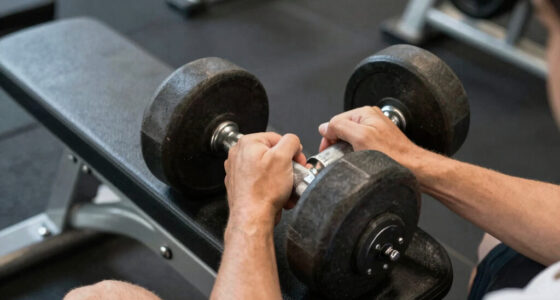
Imagine moving from curls to rows in a spare room, with a selector dial or a few plates instead of a line of steel pairs. That convenience can make home training easier to organize. It depends on the set, though: comfort, adjustment speed, available load, and careful handling all matter.
Selectorized sets usually change weight quickly, while plate-loaded sets require manual plate swaps.
Compare each adjustment increment as well as the maximum weight, especially if you want gradual progression.
Measure the dumbbells and their cradle together; product photos can make the storage footprint hard to judge.
Check whether the price includes a pair, the cradle, and accessories before comparing listings.
Follow the maker’s handling instructions and avoid dropping the set unless the manufacturer explicitly allows it.
Understand How One Pair Covers Several Weights
Adjustable dumbbell sets combine several weight options in a pair of handles, letting you change the load with a dial, pin, lever, or removable plates. You get a range of weights without lining up a separate fixed pair for every exercise. For a small apartment gym, that can mean one tray beside a bench instead of a row of iron heads along the wall.
Most designs fall into two groups. Selectorized models hold plates in a cradle; you choose a load with a dial or pin, then lift the dumbbell free. Many require you to return the weight to the cradle before changing the setting. Plate-loaded models use collars to secure plates on the handle, so you change the load by hand.
The tradeoff is speed versus simplicity. A selectorized set may suit you if you switch loads often during a workout, while a plate-loaded set can appeal if you prefer a straightforward mechanism and don’t mind taking extra time between exercises. If you do curls, presses, and lunges in one session, either design can cover those movements, but the adjustment routine will feel different.
The phrase adjustable dumbbells combine several loads in one compact setup, but “compact” doesn’t mean invisible. Measure the tray and the dumbbells on the floor, then picture where you’ll set them down between sets. A careful footprint check can save you from discovering that your new home gym blocks the closet door.
Products Worth Considering

BowFlex Results Series SelectTech Adjustable Dumbbells, Pair

Bowflex SelectTech 840 Adjustable Kettlebell

Oura Ring 4 Smart Ring, Silver, Size 8
As an affiliate, we earn on qualifying purchases.
Choose Between Fast Dial Changes and Simple Plate Swaps
Selectorized dumbbells usually make weight changes quicker, while plate-loaded sets give you a more manual, straightforward routine. The right choice depends on how you train and how much you value adjustment speed. Here’s the practical difference to keep in mind when comparing adjustable dumbbell sets.
| Feature | Selectorized | Plate-loaded |
|---|---|---|
| How you change weight | Set a dial, pin, or lever, often in a cradle | Add or remove plates and secure collars |
| Workout pace | Often faster between loads | Usually takes more hands-on time |
| Design | More moving parts and a storage cradle | Simpler format, with plates and collars |
| What to check | Mechanism, warranty, and replacement parts | Collar fit, plate handling, and total setup |
Say you alternate between a light shoulder raise and a heavier row. With a dial model, you may change the setting in moments, although you may need to dock the dumbbell first. With a plate-loaded set, you’ll handle each collar and plate; that pause may be fine during a relaxed session, but it can interrupt a fast circuit.
Neither design is automatically right for everyone. Compare the total set contents, too: listings may show a single dumbbell rather than a pair, and the cradle or accessories may affect the total cost. A quick look at those details can prevent an expensive surprise at checkout.
Match the Weight Range to the Moves You Plan to Do
The right weight range starts light enough for controlled movement and reaches high enough for the exercises you expect to progress. Check the minimum and maximum load per dumbbell, then check how much each adjustment adds. A high maximum can look impressive, but if the smallest jump feels too large for a movement, you may find it harder to increase gradually.
Think through your own workout rather than guessing from a single number. A beginner who wants to practice curls, shoulder raises, presses, and rows may need different loads across those movements. Many people use less weight for raises than for rows. If you’re starting out, choose a set that lets you move with control and gives you room to increase gradually as your training changes.
Small increments can help when a jump between settings feels like too much. For example, if you can complete your curls comfortably but struggle to keep good form after the next available increase, a smaller step could give you a useful middle ground. This depends on the model: the available settings vary, so look at the actual sequence of weights rather than only the maximum.
Also ask whether one pair meets your workout needs. Some routines call for two different weights at once, and one pair may mean stopping to change a setting. For many home workouts, several weight options in one pair cover presses, curls, rows, squats, and lunges. If you expect particularly heavy loads or want multiple dumbbell pairs ready at once, a single adjustable set may not be enough.
Check How the Dumbbells Feel in Your Hands
Comfort depends on more than the number on the dial. Handle diameter, grip texture, shape, and balance all affect how a dumbbell feels during a set. If a handle feels too thick in your hand or a texture bothers you, a five-minute tryout can reveal what a product photo never shows.
The ends can also feel different from those on fixed dumbbells, particularly at lighter settings. Bulkier heads may sit awkwardly near your chest or shoulders during certain pressing movements. Imagine lowering the weights for a chest press in a narrow space: if the ends crowd your body, the movement may feel less natural, even though the load is technically right.
If you can, try a set in person. Hold it for a curl and a shoulder press, and notice whether your grip feels secure and the weight seems balanced. If trying it first isn’t possible, read product dimensions and reviews that mention handle feel or bulk, then check the return policy.
A helpful rule: choose for the workout you’ll repeat, not just the one you can picture in a showroom. If you mainly plan to row and curl, one shape may suit you well; if you often rest the dumbbell near your shoulder, another may feel better. Real comfort makes a set easier to use consistently.
Build a Safe Routine Around the Adjustment Mechanism
Adjustable dumbbells are safest when you follow the maker’s instructions for changing loads, lifting, and storage. Before each set, check that the plates are secure and the selected weight is properly engaged. With a selectorized model, return the dumbbell to its cradle before adjusting if the instructions require it.
Think of the cradle as a parking spot that also manages the weight selection. If you lift a dial model out and try to change its setting in midair, you may skip a step the design relies on. A calm check before your first repetition takes little time and helps you catch a plate or selector that hasn’t seated as intended.
Most adjustable dumbbells are not designed to be dropped. An impact can damage plates, the selector, or the storage tray, and a damaged mechanism may no longer hold a chosen load as intended. If a movement ends with the dumbbells hitting the floor, adjust your routine or select equipment that the manufacturer explicitly says can take that impact.
Care matters over time, too. Follow the manufacturer’s directions for cleaning and storage, and find out whether replacement parts are available before you buy. For instance, if a selectorized set sees frequent use, a clear warranty and access to parts can matter as much as a polished finish. Handle mechanisms gently and treat the tray as part of the equipment.
Use This Quick Checklist Before You Buy
Compare the details that shape your everyday workout: weight range, adjustment increments, comfort, footprint, and support. These key facts for choosing adjustable dumbbell sets can help you look past the shiny dial or a large maximum-weight number. They also make it easier to compare two listings that look similar at first glance.
- List your exercises. Note whether you plan to train with presses, rows, curls, lunges, or squats, and whether you need one or two weights ready at a time.
- Check the loads. Confirm minimum, maximum, and the size of each weight increase per dumbbell.
- Compare the mechanism. Try the dial, pin, or plate-and-collar routine if possible. Check whether adjustments require the cradle.
- Measure the setup. Include the dumbbells and tray, and check where they’ll sit between sets.
- Read the full listing. Verify it includes a pair, storage cradle, and any accessories you expect.
- Check support. Review the warranty, replacement-part availability, and care instructions.
For example, someone training in a spare room might choose a compact selectorized pair with small weight increments, then store it beneath a bench. A lifter who has space and prefers hands-on adjustments might favor a plate-loaded set. Neither choice wins on every measure: what matters is whether its load range, pace, and feel suit your routine.
Product features, prices, availability, warranties, and included parts can change, so check current manufacturer or retailer listings before deciding. App-connected training and digital tracking appear on some products, but they don’t change the basic job of selecting a load. Start with the dumbbell itself and treat extra features as optional.
Frequently Asked Questions
Are adjustable dumbbell sets worth it?
They can be a good fit when you want several weights without storing many fixed pairs. A set may cost less than buying a rack, though prices vary with capacity and construction. If you want very heavy loads or several pairs ready at once, fixed dumbbells may suit you better.
What weight range should I choose?
Pick a range that covers your current exercises and leaves room to progress. Curls and raises often use less weight than rows, presses, or many lower-body movements. Compare the load for each adjustment, not just the maximum.
Are adjustable dumbbells safe to use?
They can be used safely when you follow the manufacturer’s instructions. Check that plates are engaged before lifting, return selectorized models to the cradle for changes when required, and don’t drop the weights unless the maker explicitly says you can.
Do they replace a full dumbbell rack?
They can cover many common home exercises while taking up less space than several pairs. Some models feel bulkier, offer less maximum load, or take longer to change than fixed dumbbells. Your training needs and storage space decide how close the match is.
How can I tell whether a listing includes a pair?
Read the full product description and check the package contents; don’t assume the photo or title makes it clear. Confirm the listing includes two dumbbells, the storage cradle, and any accessories you expect. That quick check helps you compare the actual price of each set.
Can I use them for every dumbbell exercise?
Adjustable models work for many familiar movements, including presses, rows, curls, lunges, and squats. Their shape or bulk can feel awkward when the ends rest close to your chest or shoulders. If those exercises matter to you, try the set in person or check its dimensions and return terms.
Conclusion
Choose a set around your real exercises, available floor space, and preferred adjustment routine. Check the weight increments, comfort, included parts, and maker’s care guidance before you commit; a high maximum load can’t make an awkward set feel right in your hands.
When you finish your workout, the weights should return to their cradle and leave the floor clear for your next move. That’s the quiet promise of a good home setup: room to train, and room to live.