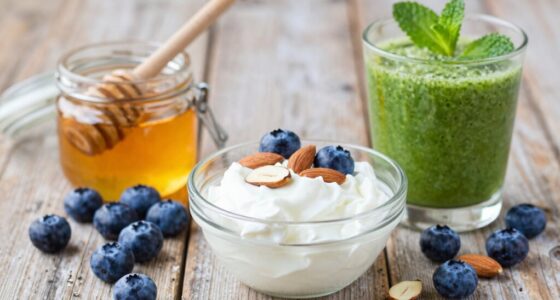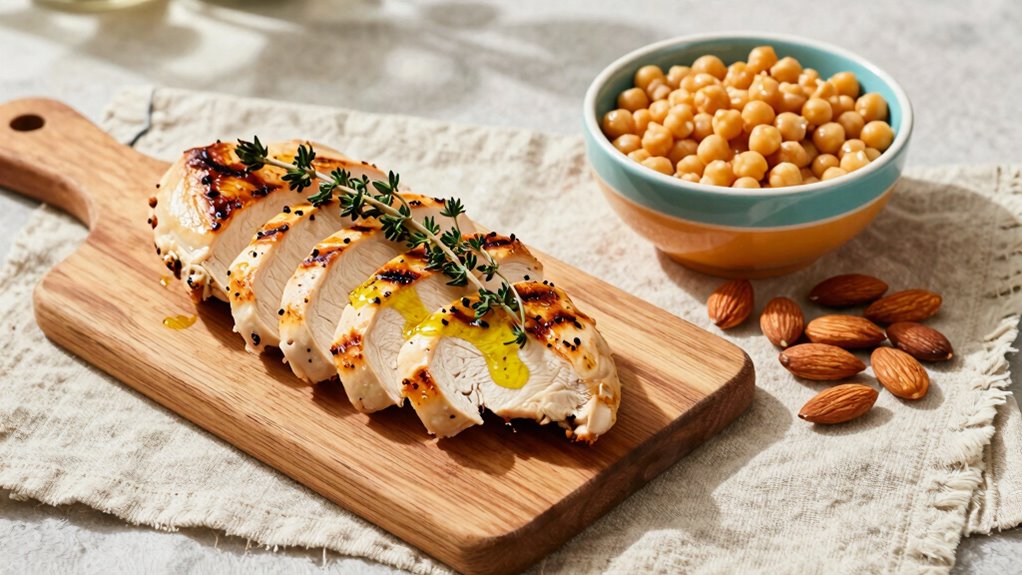
To meet your protein goals without shakes, focus on adding high-protein foods like lentils, Greek yogurt, cottage cheese, tofu, nuts, and seeds to your meals. Prepare large batches of beans or roasted veggies for quick bowls or wraps, and store handy options like boiled eggs or pre-cooked chicken. Combining plant-based foods such as rice and beans guarantees complete proteins. If you want practical tips to boost your intake easily, keep exploring for more helpful ideas.

Get workout gear delivered free with Prime
- Fast, free delivery on millions of items
- Prime Video, Amazon Music and more included
- Member-only deals all year
Key Takeaways
- Incorporate high-protein plant foods like lentils, chickpeas, Greek yogurt, and tofu into your meals.
- Prepare meal preps with protein-rich ingredients such as beans, quinoa, and roasted vegetables for easy access.
- Add nuts and seeds like almonds, chia, and hemp seeds to salads, oatmeal, or yogurt for a protein boost.
- Combine plant-based sources, such as rice with beans or hummus with whole wheat pita, to ensure complete proteins.
- Diversify protein sources by including legumes, nuts, seeds, and dairy, reducing reliance on shakes and improving nutritional variety.

If you’re looking to increase your protein intake without relying on more shakes, there are plenty of tasty and nutritious options to contemplate. You don’t have to depend solely on supplements to meet your goals; instead, incorporating a variety of high-protein foods into your daily meals can make a significant difference. Vegetarian options, in particular, offer diverse sources of protein that can be both satisfying and easy to prepare. Lentils, chickpeas, Greek yogurt, cottage cheese, and tofu are all excellent choices. These foods are not only rich in protein but also versatile, allowing you to incorporate them into many dishes without sacrificing flavor.
Meal prep strategies can streamline your efforts and ensure you’re consistently hitting your protein targets. By planning your meals ahead of time, you avoid the temptation of grabbing less nutritious options or skipping meals altogether. Prepare large batches of beans, quinoa, or roasted vegetables to quickly assemble protein-packed bowls or wraps during the week. Hard-boiled eggs and pre-cooked chicken can be stored in the fridge for quick additions to salads or snacks. When you incorporate these strategies, you’re setting yourself up for success by making high-protein foods readily available and easy to incorporate into your daily routine. Additionally, exploring balanced nutrition helps ensure you’re meeting all your dietary needs while boosting protein intake.
Adding nuts and seeds, such as almonds, chia seeds, or hemp seeds, to your meals or snacks is another simple way to boost your protein intake. Sprinkle them over oatmeal, yogurt, or salads for a crunch and extra nutrients. For vegetarians, combining different plant-based sources—like rice and beans or hummus and whole wheat pita—can create complete proteins, ensuring you get all essential amino acids. These combinations are not only nutritious but also satisfying, helping you feel full longer and reducing the need for constant snacking. Incorporating diverse protein sources like nuts, seeds, and legumes can also optimize your nutrition and support muscle maintenance. In addition, choosing plant-based proteins can contribute to a more sustainable diet and reduce your environmental impact. Including a variety of protein options can also promote biodiversity in your diet, which benefits overall health and sustainability.
As an affiliate, we earn on qualifying purchases.
Frequently Asked Questions
Can Plant-Based Foods Provide Enough Protein Without Supplements?
Yes, plant-based foods can provide enough protein without supplements. You can incorporate soy alternatives like tofu and tempeh, which are rich in protein. Legume varieties such as lentils, chickpeas, and black beans are also excellent sources. Combining these with whole grains like quinoa or brown rice guarantees you get all essential amino acids. With thoughtful planning, your plant-based diet can meet your protein needs effectively without relying on supplements.
How Can I Increase Protein Intake on a Low-Calorie Diet?
Think of your diet as a balanced symphony—you want each note, or food, to hit the right tone. To boost protein intake on low calories, focus on nutrient-dense options like lean meats, eggs, and dairy, and optimize dietary protein timing by spreading intake evenly. Prioritize high-quality protein sources to enhance absorption, ensuring your body efficiently uses every gram without tipping your calorie count.
Are There Quick, High-Protein Snacks I Can Prepare?
You can prepare quick, high-protein snacks like homemade protein bars packed with nuts and seeds, or spread nut butter on whole-grain crackers or apple slices for a satisfying boost. These options are easy to grab and provide a good dose of protein without the need for shakes. Keep a stash of protein bars in your bag or pantry for instant energy and muscle support whenever you need it.
What Are Some Affordable Protein-Rich Food Options?
You can find budget-friendly protein sources like eggs, canned tuna, and beans that pack a punch without breaking the bank. Additionally, purchasing chicken thighs or ground turkey in bulk offers affordable options. Incorporate inexpensive dairy such as Greek yogurt or cottage cheese into your meals. These options help you meet your protein goals while staying within your budget, making it easier to maintain a high-protein diet without expensive or costly foods.
How Does Cooking Affect the Protein Content of Foods?
Cooking methods influence protein retention in your foods, often making it more digestible and easier to absorb. Gentle methods like steaming or poaching preserve more protein, while high-heat techniques like frying or grilling may cause slight protein loss through denaturation. To maintain maximum protein content, opt for cooking methods that preserve nutrients, and avoid overcooking. This way, you’ll get the most out of your foods without sacrificing flavor or nutritional value.
As an affiliate, we earn on qualifying purchases.
Conclusion
Now that you know how to incorporate more protein into your meals without relying on shakes, you’re armed with smarter choices that fit into your busy life. Think of your plate as a canvas, where each protein-rich food adds a brushstroke of strength and energy. With these simple swaps, you’ll turn your diet into a nourishing masterpiece, ensuring your body gets the fuel it needs without the monotony of another shake. Keep moving forward—you’ve got this!
As an affiliate, we earn on qualifying purchases.
As an affiliate, we earn on qualifying purchases.
Halloween Picks
halloween
As an affiliate, we earn on qualifying purchases.